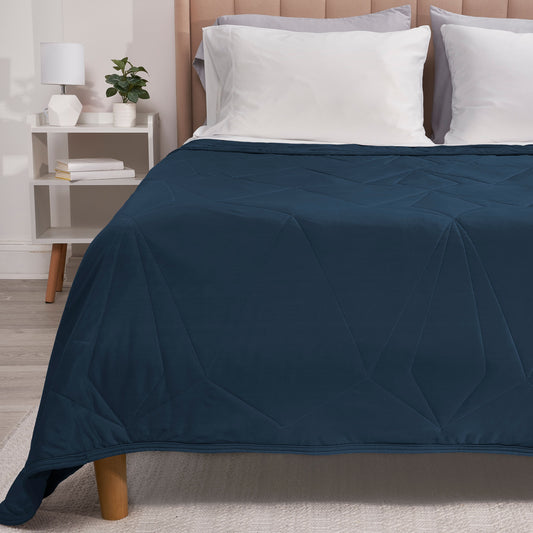
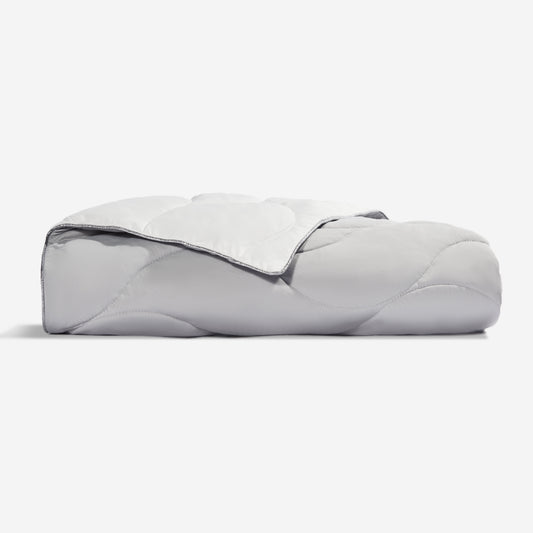
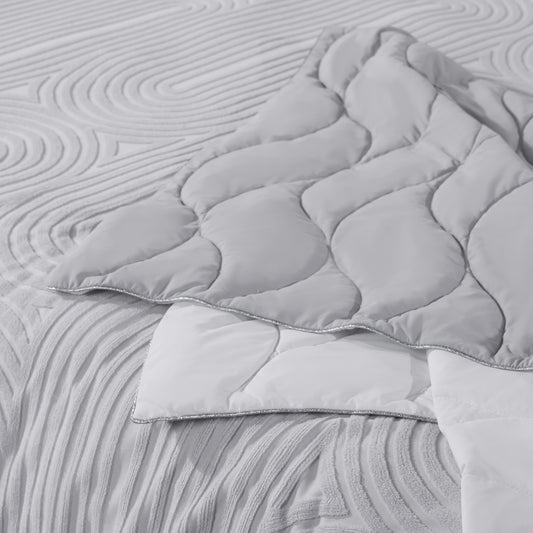
Most people don't think about their blanket until it stops working. Until they're kicking it off at 2am because they're overheating, or pulling it tighter at 6am because they've been cold all night, or waking up with it on the floor because it kept sliding off. That said, the blanket is the most adjustable layer in your sleep system, and most people are sleeping under the wrong one.
The good news? We have your back. This guide covers everything: blanket types, comforter types, the difference between a duvet and a comforter, sizing, and how to match the right layer to how you actually sleep. Whether you run hot, run cold, or share a bed with someone who runs completely differently than you do, the right blanket exists, and our blanket buying guide is how you find it.
Blankets Explained
This may sound dumb at first, but there's value in explaining the role of the blanket. So, first things first, a blanket is a single-layer covering; no fill, no shell, just fabric. What makes one blanket different from another is the material it's made from and the weight it carries.
Those two variables determine everything: how warm it keeps you, how it breathes, how it feels against your skin, and how well it holds up over time. The right blanket for a cold sleeper in January is not the right blanket for a hot sleeper in July. Here's every type worth knowing.
Throw
Versatile and compact — best as a secondary layer or couch staple, not a primary sleep covering
Cooling
Heat-dissipating and moisture-wicking — built for hot sleepers who need active thermal management
Sherpa
Maximum warmth and soft texture — a seasonal cold-weather layer, not a year-round system
Weighted
Deep pressure for anxiety and restlessness — runs warm, choose the right weight for your body
Cotton
Breathable, durable, year-round baseline — quality varies significantly by weave construction
Waterproof
Built for outdoor and travel use — not a primary sleep blanket, blocks airflow by design
Each blanket type solves a different problem. Here's the full breakdown of what each one does, who it's built for, and when it makes sense.
Throw Blankets
A throw blanket is smaller than a standard bed blanket, so typically around 50 by 60 inches, and designed for use on a couch, chair, or layered on top of a bed rather than as a primary sleep covering. It's the most versatile format in the category: easy to grab, easy to fold, and useful in any room of the house. For sleepers who get cold in the early morning hours and want something to pull over without fully adjusting their bedding, a throw is the practical answer.
As a standalone sleep blanket, though, a throw falls short. The dimensions don't cover a full adult body on a standard bed, and the weight is typically too light to serve as a primary layer in cooler months. Use it as a secondary layer, a couch staple, or a travel companion.
Cooling Blankets
Next, we have a personal favorite of ours: The cooling blanket. A cooling blanket is engineered specifically for sleepers who run hot; they're built with breathable, moisture-wicking, or heat-dissipating materials that actively work against the heat buildup that disrupts sleep. So, where a cotton blanket passively allows airflow, a cooling blanket is designed to move heat away from the body at the contact point. For hot sleepers who have tried lighter blankets and still wake up overheating, the material engineering is the difference.
BEDGEAR's approach to cooling extends to every layer of the sleep system, and the blanket is no exception. The same Ver-Tex and Dri-Tec technologies that define the Performance® pillow and sheet lineup are built around one principle: keep the sleep surface cooler and drier so your body can maintain the temperature drop it needs to stay in deep, restorative sleep.
Overall, a cooling blanket paired with breathable sheets and a performance mattress is the most complete thermal management system you can build at the surface level.
Sherpa Blankets
A sherpa blanket gets its name from the textured, fleece-like fabric on one side that mimics the look of a sheep's wool lining. It's one of the warmest standard blanket options available, making it a natural choice for cold sleepers, colder climates, and winter months when additional insulation is the priority. The soft, plush texture is a major part of the appeal. In fact, sherpa blankets are among the most tactilely comfortable options in the category.
The tradeoff is breathability. Sherpa blankets are built for warmth, not airflow, which means they become uncomfortable quickly for anyone who runs warm or sleeps in a heated room. They're also heavier than most blanket types, which some sleepers find comforting and others find restrictive. Treat it as a seasonal layer rather than a year-round solution.
Weighted Blankets
A weighted blanket is filled with glass beads or plastic pellets to add significant mass, typically between 5 and 25 pounds, creating a deep pressure sensation across the body during sleep. The pressure mimics the feeling of being held or hugged, which research suggests can reduce cortisol levels, lower heart rate, and promote a calmer nervous system state during sleep. For sleepers who experience anxiety, restlessness, or sensory processing differences, a weighted blanket is often one of the most impactful additions to a sleep setup.
Choosing the right weight matters. The general guideline is roughly 10 percent of your body weight, though personal preference plays a role. Too light and the pressure effect is minimal. Too heavy and it becomes physically uncomfortable to move under. Weighted blankets also run warm, and the added mass reduces airflow, so hot sleepers who want the pressure benefit may need to compensate elsewhere in their sleep setup.
Cotton Blankets
A cotton blanket is the reliable, year-round baseline. Cotton blankets are breathable, durable, easy to wash, and comfortable across a wide range of temperatures. It doesn't provide the warmth of a sherpa or weighted blanket, but it doesn't trap heat the way they do either. For sleepers in moderate climates or anyone who needs a consistent layer that works in multiple seasons, cotton is the default for good reason.
Quality varies significantly by weave and thread construction — the same way it does in cotton sheets. A tightly woven cotton blanket is warmer and more durable. On the other hand, a loosely woven cotton blanket breathes better and feels lighter. Therefore, know which problem you're trying to solve before you buy, and the right cotton blanket becomes obvious.
Waterproof Blankets
A waterproof blanket is built for a specific use case: outdoor use, travel, pet-friendly setups, or any situation where liquid resistance matters more than breathability. The waterproof layer is typically laminated or coated on one side, making it functional rather than luxurious. For camping, beach trips, or car travel, a waterproof blanket solves a problem no standard blanket can.
As a primary sleep blanket, though, waterproof options are generally not the right call; the coating that blocks moisture also blocks airflow, making them warm and uncomfortable for extended nightly use. If you need waterproof protection on your bed specifically, a waterproof mattress protector is the better solution. Therefore, make sure you use the waterproof blanket for what it's built for.
Comforters Explained
A comforter is a thick, quilted blanket filled with down, down alternative, wool, or synthetic material. Comforters are sewn shut and designed to be used directly on the bed without a separate cover. Therefore, it's the all-in-one top layer: insulation, weight, and aesthetic in one piece. The fill is what determines warmth, breathability, and how it performs night after night.
That said, there's a lot to learn about these comforters. Here's what you're actually choosing between when you buy a comforter. Of course, we also offer premium Performance® Comforters.
Duvet vs. Comforter
A duvet is an insert; a soft, flat bag filled with down or synthetic material that goes inside a removable cover called a duvet cover. The cover is what you sleep under and what you wash. The insert stays clean longer because the cover takes the daily contact. A comforter, on the other hand, is sewn shut and used directly on the bed, often with a decorative cover optional. You wash the whole thing together.
The practical difference comes down to maintenance and flexibility. A duvet system lets you swap covers for a different look without buying a new comforter, and washing a duvet cover is significantly easier than washing a full comforter. A comforter is simpler. It's one piece, no insert to stuff back in, ready to use out of the box. Still, neither is better. At the end of the day they solve the same warmth problem with different approaches to convenience and aesthetics.
Comforter Sizes
Comforter sizing follows mattress sizing, but with a few inches of overhang built in on each side so the comforter actually drapes over the bed rather than sitting flush on top of it. The right comforter size depends on your mattress size, how much drape you want on the sides, and whether you're using it with a duvet cover or on its own.
| Size | Comforter Dimensions | Fits Mattress | Best For |
|---|---|---|---|
| Twin | 64" × 86" | 38" × 75" | Kids, bunk beds, guest rooms |
| Twin XL | 68" × 90" | 38" × 80" | Dorms, tall solo sleepers |
| Full | 76" × 86" | 54" × 75" | Solo sleepers, smaller bedrooms |
| QueenMost popular | 86–88" × 86–90" | 60" × 80" | Couples, most bedrooms |
| King | 102" × 86" | 76" × 80" | Couples who want max coverage |
| Cal KingLongest size | 104" × 92" | 72" × 84" | Tall sleepers over 6'2" |
Each size comes with its own fit considerations. Here's what to know about each one before you buy.
Twin Comforter
A twin comforter typically measures around 64 by 86 inches, designed to fit a 38 by 75 inch mattress with enough overhang to drape on both sides. It's the right call for kids' beds, bunk beds, and guest rooms — and it's the most affordable entry point in the comforter category.
Twin XL Comforter
A twin XL comforter runs around 68 by 90 inches, matching the longer twin XL mattress used in most dorms and taller solo sleeper setups. The extra length over a standard twin comforter is the whole point — on a twin XL mattress, a standard twin comforter leaves the foot of the bed exposed.
Full Size Comforter
A full size comforter measures approximately 76 by 86 inches, sized for a 54 by 75 inch mattress. For solo sleepers on a full, this gives enough drape on both sides without the excess fabric of a queen comforter.
Queen Comforter
A queen comforter typically measures 86 by 86 inches or 88 by 90 inches — the most widely available size across every fill type, material, and price point. For couples on a queen bed, the overhang gives each person enough coverage without negotiating.
King Comforter
A king comforter measures around 102 by 86 inches, built for the widest standard mattress size. At this size, fill quality matters more — a low-density fill loses its loft faster across a larger surface and creates cold spots over time.
California King Comforter
A California king comforter measures approximately 104 by 92 inches — longer and slightly narrower than a standard king, matching the California king mattress's unique dimensions. Like California king sheets, this is its own category and not interchangeable with standard king bedding.
How to Choose the Right Blanket
The right blanket isn't the warmest one or the most expensive one. It's the one that matches how your body actually behaves at night. A few variables narrow it down quickly, and we cover them in detail below.
Start With Your Sleep Temperature
Everything else follows from this. If you consistently wake up too hot, you need a blanket engineered for breathability and heat dissipation; not just a lighter version of a warm one. If you're always cold, you need insulation, not just thickness.
Now, if you share a bed with someone who runs at a completely different temperature, the blanket you choose needs to account for both of you; or you need two separate blankets entirely. It's a more common solution than most people realize, and it works.
Match the Blanket to the Season
A sherpa blanket in August and a cotton blanket in January are both the wrong answer. The most practical approach is a blanket rotation; a lighter, breathable layer for warmer months and a heavier, more insulating option for winter. If you want one blanket year-round, a mid-weight cotton or cooling blanket covers the widest range of conditions without overcorrecting in either direction.
Consider Who's Sleeping Under It
A weighted blanket that's perfect for an adult can be too heavy for a child. A plush sherpa that feels cozy to a cold sleeper becomes unbearable for a hot one. If you're buying for a kid, keep it lighter and firmer than your instinct says — kids sleep warmer than adults and need less insulation than most parents assume. If you're buying for a partner with different sleep needs, involve them in the decision or buy separately.
Think About Maintenance
A blanket you can't wash easily is a blanket that gets replaced sooner than it should. Weighted blankets, sherpa blankets, and certain comforters require specific wash settings or professional cleaning. Cotton and most cooling blankets are machine washable and hold up well under regular laundering.
Whatever you buy, check the care label before you commit.
The Right Blanket Is the One That Lets You Stop Thinking About It
The best blanket is the one you don't notice. It's not too hot, not too cold, stays on the bed, and does its job quietly while everything else in your sleep system does its job too. When that happens, sleep gets better. Recovery gets better. The whole system works the way it's supposed to.
Getting there isn't complicated. In fact, it just requires matching the right material and weight to how your body actually behaves at night. So, a cooling blanket for the hot sleeper, a weighted blanket for the restless one, and a sherpa blanket for the person who's always cold. And if the person next to you needs something completely different, that's fine too. Two blankets on one bed is not a compromise. It's the most practical sleep decision most couples never think to make.
BEDGEAR builds every layer of the sleep system around the same principle: what does this specific body actually need to recover? The blanket is no different.
Frequently Asked Questions
Have more questions about blankets and comforters? We've answered the most common ones below.