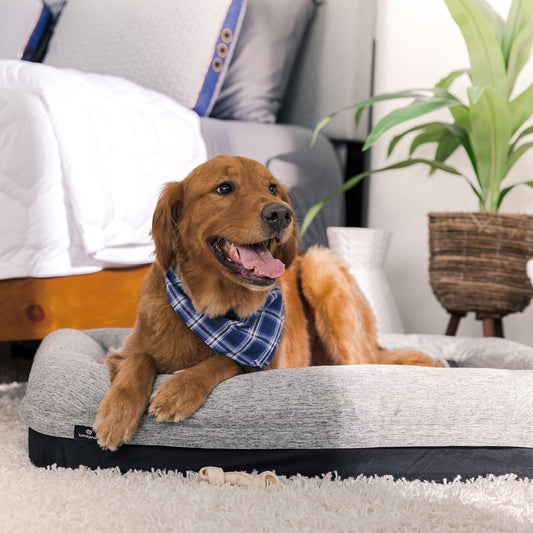
Sharing your bed with your dog is a common and practical choice that can have noticeable benefits, plus, who doesn't love sleeping next to their cuddly canine companion? While some of the immediate benefits show up for your mental health, your physical health, and the relationship you have with your pet, there's more to it than that. In fact, when it comes to sleeping, it's all about creating a comfortable environment, just like you would with any other part of your life. Here's how having your furry friend by your side can positively impact yours.
Feel Safer and Sleep Better
Having your dog nearby can provide a comforting sense of security that helps you relax and sleep more soundly. Whether it's their keen senses or simply their presence, knowing your pup is there can ease anxiety and help you drift off more easily. This added peace of mind is especially beneficial if you live alone or have had unsettling experiences in the past.
Dogs are naturally attuned to their environment in a way humans aren't. They hear things before you do. They react to changes in the room. That awareness, even when you're not conscious of it, translates into a baseline sense of calm that makes it easier for your nervous system to settle into sleep. It's not just psychological comfort. It's your body responding to a genuine signal that the environment is safe.
Dogs don't just make the bed warmer. They change the environment your nervous system is sleeping in. Here's how that actually works.
Your Nervous System Notices Before You Do
Most of the security benefit from sleeping with a dog happens below the level of conscious thought. Your nervous system is constantly scanning for threat signals — sound, movement, changes in the environment. A dog's presence introduces a secondary alarm system that your brain registers even while you're asleep. When the dog is calm, your nervous system reads that as a signal that the environment is safe. That baseline calm makes it easier to fall asleep faster and stay there longer without the micro-arousals that fragment sleep without fully waking you.
Dogs Are Particularly Helpful for People Who Live Alone
The security benefit scales with how vulnerable you feel in your sleep environment. For people who live alone, that vulnerability is higher — there's no one else in the home to register a sound or respond to a disturbance. A dog fills that gap in a way that a security system doesn't quite replicate. It's not just about detection; it's about presence. Knowing something living and responsive is in the room with you shifts the baseline anxiety level in a way that translates directly into more restful sleep.
The Effect Is Measurable, Not Just Anecdotal
This isn't purely subjective comfort. Research published by the Mayo Clinic found that people who slept with their dogs in the bedroom — not necessarily in the bed — reported higher sleep efficiency scores than those who didn't. The key variable was the sense of security the dog provided, not physical warmth or companionship alone. That distinction matters: even a dog sleeping on the floor nearby produces a measurable benefit to sleep quality.
Mental Health Boost

Dogs are natural mood lifters. Their presence can increase levels of oxytocin, which is often called the "love hormone," and decrease cortisol, the stress hormone. That hormonal shift can reduce feelings of anxiety and depression, making it easier to approach your day with a clearer head and a steadier mood. Therefore, the routine of caring for a pet also adds structure to your life, which can be incredibly grounding for mental health over time.
In fact, the effect compounds overnight. When cortisol stays lower through the night, your body spends more time in genuine recovery rather than low-level stress response. You wake up not just rested, but more emotionally regulated. For people dealing with anxiety or depression, that difference is meaningful, and it starts with something as simple as a dog at the foot of the bed!
The mood lift you feel around your dog during the day doesn't clock out when the lights go off. Overnight, the mental health benefits keep running — and some of them are more significant than most people realize.
The Oxytocin Effect Is Real
Oxytocin is the hormone associated with bonding, trust, and emotional safety. Physical proximity to a dog, yes, even during sleep, sustains elevated oxytocin levels in a way that reduces the baseline activation of the stress response. Lower stress activation means your body spends less energy managing anxiety overnight and more energy on the recovery processes that sleep is actually for. The hormonal environment your dog creates is not incidental to sleep quality. It's a direct input into it.
Routine and Structure Matter More Than People Realize
One of the underappreciated mental health benefits of dog ownership is the structure it creates. Your dog has a bedtime. They signal when it's time to wind down. They create a consistent pre-sleep routine that your body begins to associate with the transition into sleep. For people who struggle with irregular sleep schedules or difficulty switching off at night, a dog's natural rhythm can function as an external anchor that makes the whole process easier without requiring deliberate effort.
Co-Sleeping Specifically Helps With Anxiety and PTSD
General dog ownership helps with anxiety. Co-sleeping takes that further. A study published in the Journal of Clinical Sleep Medicine (opens in a new tab) found that veterans with PTSD who slept with a trained psychiatric service dog reported fewer nightmares and less sleep disruption than those without. The dog's proximity during sleep provided a grounding presence during the night's most vulnerable hours — when anxiety most often surfaces. For people managing anxiety at any level, that overnight presence is doing meaningful work.
Physical Health Perks

Sleeping with your dog can offer surprising physical benefits. From lowering blood pressure to potentially boosting your immune system, your dog's companionship contributes to better overall health in ways that go beyond comfort. Dogs also run warmer than humans (their body temperature is naturally a few degrees higher) so their presence can act as a natural source of warmth, which is particularly useful for people who deal with chronic pain or tension in the joints and muscles overnight.
The immune system angle is worth noting too. Regular exposure to pet dander and the microbiome dogs carry has been associated with reduced allergy sensitivity over time, particularly in households where pets have been present since childhood. Co-sleeping adds consistent overnight exposure that, for most healthy adults, does more good than harm.
The mental health case for co-sleeping is well documented. The physical one is less talked about, but it's just as, if not more, compelling.
Blood Pressure Benefits That Carry into the Day
The connection between dog ownership and lower blood pressure is well established. What's less discussed is how overnight proximity specifically contributes to that effect. Blood pressure follows a natural dip during sleep — a process called nocturnal dipping — that's essential for cardiovascular health. Disrupted sleep blunts that dip. A dog that helps you sleep more soundly supports the full nocturnal blood pressure cycle, which means the cardiovascular benefit of dog ownership isn't just about daytime interaction. It extends through the night.
Natural Warmth That Serves a Real Purpose
Dogs run at a body temperature between 101 and 102.5 degrees Fahrenheit — measurably warmer than a human's 98.6. That warmth isn't just comfortable; it can be genuinely therapeutic. For people dealing with arthritis, muscle tension, or chronic joint pain, the low-level heat from a dog functions similarly to a heating pad; so, relaxing muscles, improving circulation, and reducing the stiffness that disrupts sleep and compounds pain overnight. Overall. it's one of the more overlooked physical benefits of co-sleeping, and it costs nothing.
The Immune System Connection
Exposure to the microbiome a dog carries has been linked to reduced allergy sensitivity and stronger immune function over time. A study (opens in a new tab) found that children raised in homes with dogs had lower rates of asthma and allergic sensitization. The mechanism is microbial diversity. So, this is due to the fact that dogs introduce a broader range of environmental microbes into the home, and overnight exposure during co-sleeping adds to that consistent contact. For healthy adults, the immune case for sharing your bed with a dog is stronger than most people assume.
Strengthen Your Bond with Your Dog
Sharing a bed deepens the bond between you and your dog in a way that daytime interaction alone doesn't replicate. In fact, that extended time together reinforces loyalty and companionship. So, your dog feels more secure, more connected, and more settled in the relationship. Moreover, it's an especially useful way to strengthen the bond if your schedule leaves limited time for it during the day.
For dogs with separation anxiety or rescue dogs still adjusting to a new environment, co-sleeping can be a meaningful part of the transition. Furthermore, the close proximity signals safety. It builds trust. And a dog that feels genuinely secure tends to be calmer, better behaved, and more responsive, which benefits both of you well beyond the bedroom.
So, while most bonding happens during waking hours, sleep might be the most underrated relationship-builder in a dog owner's toolkit. Plus, this applies to people, too.
Overnight Time Builds Trust in a Unique Way
The bond between a dog and their owner is built through shared experience — and sleep is one of the most vulnerable shared experiences there is. When a dog sleeps alongside you, they're not just resting; they're learning your breathing patterns, your movement habits, your baseline. You become familiar to them at a level that daytime interaction alone doesn't reach. That familiarity translates into a dog that is more attuned to you, more responsive to your moods, and more settled in your presence throughout the day.
Especially Valuable for Rescue Dogs
For dogs coming out of shelters or difficult situations, co-sleeping can be one of the most effective tools for building security in a new environment. A rescue dog arrives with an elevated baseline of stress and uncertainty. Sleeping in close proximity to their new owner provides consistent reassurance during the hours when external stimulation drops and anxiety is most likely to surface. Many rescue dog advocates recommend co-sleeping specifically during the adjustment period (opens in a new tab) — not as a permanent arrangement necessarily, but as a trust-building tool that accelerates the transition from anxious to settled.
A Dog That Feels Secure Behaves Better
The bond benefits aren't just emotional for dogs — they're behavioral. A dog that feels genuinely secure in their relationship with their handler tends to exhibit less destructive behavior, less separation anxiety, and greater responsiveness to training. Furthermore, co-sleeping contributes to that security by providing consistent, low-key reinforcement of the bond during hours that would otherwise be spent apart. Overall, the dog that sleeps well next to you is, in most cases, the dog that performs better across every other dimension of behavior during the day.
Built for Both of You
Whether your dog sleeps in the bed or next to it, BEDGEAR has the products to keep both of you comfortable — and your mattress protected.
Keep Your Mattress Clean with a Mattress Protector

To maintain a clean and healthy sleep environment, especially when sharing your bed with your dog, the Performance® Mattress Protector (opens in a new tab) is a must-have. It's designed to protect your mattress from dirt, spills, and pet dander, it ensures a fresh and hygienic sleep surface for you and your dog. Its breathable, moisture-wicking fabric helps your body regulate temperature, keeping both of you cool and comfortable through the night.
Performance® Mattress Protectors also feature a patented elastic Powerband® for a secure fit that won't slip. So, even with a restless dog sharing the surface, you won't have to worry about any slipping and sliding escapades. What's more, they're easy to remove and wash, which makes maintaining a clean sleep environment straightforward rather than a project. For these reasons, if you're going to share your bed with a dog, this is the one addition that makes the whole thing practical for the long run.
Not a Bed Sharer? Get Your Dog a Dog Bed

For those who prefer not to share their bed with their dog but still want to give them excellent rest, Performance® Dog Beds (opens in a new tab) are the answer. These beds use the same breathable, supportive materials as BEDGEAR's human sleep lineup — so your dog gets the same quality of rest you do, just on their own surface.
They're built to keep dogs cool, properly supported, and comfortable through the night. Durable enough for regular washing. Practical enough for everyday use. Your dog's recovery matters as much as yours — and a Performance® Dog Bed is designed around that same principle. Keeping your dog off your bed doesn't mean keeping them from great sleep. It just means they have their own.
A Winning Sleep Strategy for Both of You
Incorporating your dog into your sleep routine is more than a comforting choice — it's a lifestyle decision that can genuinely enhance your overall well-being. With a Performance® Mattress Protector keeping your bed clean and a Performance® Dog Bed ready for when your dog needs their own space, you can make sure both of you get the rest you need.
That said, the right setup makes co-sleeping sustainable. Plus, it protects your mattress, keeps your sleep environment hygienic, and gives your dog a quality alternative when they need it. Embrace the benefits of sharing your space with your dog and get ready to build the sleep system that supports both of you for the long run!