Jeff Byers doesn't position himself as a supplement expert. That's actually the first thing he'll tell you. What he is: a former NFL offensive lineman who spent years surrounded by the best performance staff and dieticians in professional sports, then built a supplement company because he got tired of watching the industry fail the people it was supposed to help.
BEDGEAR hosted Jeff for a wellness event focused on longevity and performance. What followed was one of the most direct, no-fluff breakdowns of the supplement industry we've heard. Here's what he covered, and what it means for how you think about your own health stack.
The Industry Has a Noise Problem
Jeff's opening point is hard to argue with. A $200 billion industry, and the health of the average person is trending in the wrong direction. Why?
His answer: noise. Confusion. A complete lack of regulation that allows anyone to make almost any claim on a label. The result is a category so cluttered that even people who care about their health don't know what to trust.
"My industry is about $200 billion globally — and the health of our society is the worst it's ever been. Why would those two things trend like that? It's because there's so much noise, confusion, and lack of clarity in this category." Jeff Byers, Co-Founder & CEO, Momentus
Jeff played professional football. When he retired, he faced the same problem everyone else does: he didn't know what to take, why to take it, or who to trust. He ended up saying no to building a supplement company for a long time, precisely because he knew how shaped the industry was. When he eventually said yes, it was with a specific mandate: simplify it, and build to the highest standard available.
Simple, Not Easy
One of Jeff's core frameworks applies well beyond supplements. He calls it "simple, not easy." Your health is simple. It's not easy.
The 80/20 version of optimal health isn't complicated. Sleep, diet, exercise, and community are the foundation. No supplement can replace any one of those. When the industry sells you the next big thing, it's selling something that doesn't exist; because the next big thing has always been those four fundamentals.
The other piece of this: consistency beats everything. One great night of sleep doesn't move the needle. One dose of creatine doesn't move the needle. Do it for days, weeks, and years at a time, and that's when you actually change the landscape. Jeff calls it "bone-crushing consistency." It's not sexy. It works.
Sleep First — Then Supplements
This one landed at a BEDGEAR event for obvious reasons, but Jeff's point stands on its own merits. If your sleep is broken, no supplement stack is going to fix it.
The sleep environment comes first: your behaviors, your bedroom setup, your mattress and bedding. Momentus has a sleep stack; Jeff will tell you directly that it's not going to solve a problem rooted in a bad sleep environment. You address the foundation first, then you supplement on top of it. We'll get into exactly why sleep sits at the top of the recovery pyramid — but first, here's what Jeff had to say about evaluating everything else.
What to Look for on a Label
Before getting into what to take, Jeff walked through a non-negotiable checklist for evaluating any supplement. This is the part most people skip, and it's the part that matters most.
Know Your Why
Start here every time. Why are you taking it? If you can't answer that question clearly, you're not ready to buy anything. Purpose-driven supplementation is effective supplementation. Taking something because someone online said so is how you end up with a cabinet full of things that don't do anything for you specifically.
Does It Work in Human Studies?
Not one study. Not a study in mice. A robust body of clinical evidence in humans. A lot of what's sold in this industry has very limited research behind it; or research that sounds impressive until you look at who funded it. The bar Jeff sets is high, and it should be.
Certification Matters More Than You Think
Here's where Jeff gets specific. Not all third-party certifications are equal. There are really two that matter: NSF and Informed Sport.
NSF is the highest standard available. Professional sports organizations trust it so much that many collective bargaining agreements ban athletes from taking anything that isn't NSF certified. The reason: contamination risk, banned substances, and products that don't actually contain what the label says they do. If you're going to invest in your health, Jeff's argument is simple; why wouldn't you want the highest standard?
Proprietary Blends Are a Red Flag
A proprietary blend is how a manufacturer hides underdosed ingredients behind a curtain. The label looks impressive; the doses are ineffective. Jeff's take is blunt: if you see a proprietary blend, revisit that product. You can't evaluate what you can't see.
Read the Ingredient List Like You Read a Food Label
Artificial sweeteners, artificial flavors, fillers, and unlisted ingredients have no place in something you're taking every day to support your health. Jeff uses sucralose as his example; generally considered safe, but the only meaningful research on it shows a negative interaction with gut microbiome health. If you're using a protein powder daily, that's a material daily exposure. The purity of what you're putting in your body compounds over time, the same way the benefits do.
| Check | What to Look For | Red Flag |
|---|---|---|
| Certification | NSF Certified for Sport or Informed Sport | No third-party certification, or unknown certifiers |
| Dosing | Transparent, individual doses listed on label | Proprietary blends that hide individual amounts |
| Ingredients | Clean, readable ingredients you can verify | Artificial sweeteners, fillers, unknown additives |
| Evidence | Robust human clinical trial data | Single studies, animal studies, or no citations |
| Your Why | Clear, specific reason tied to your health goals | Taking it because someone else does |
The Momentous Three: Start Here
Jeff asked the smartest people he knows one question: if every human needed three supplements, what would they be? The answer came back almost unanimously.
Protein, creatine, and omega-3s. Tens of thousands of clinical trials behind all three. Minimal interaction with medications. Hard to get in sufficient quantities through diet alone. Short-term and long-term performance benefits. Everything else, in Jeff's framework, is condition-specific — and ideally guided by bloodwork, not guesswork.
Protein: The Building Block of Everything
Protein is made up of amino acids. Jeff's analogy is good: think of amino acids as Legos. Your body uses those Legos to build muscle cells, ligaments, hair, skin, and nails. Carbs and fats don't give you Legos. Only protein does.
For active individuals, the target is roughly 0.8 to 1.2 grams per pound of body weight per day. That's a significant amount; more than most people are hitting through food alone. High-quality protein supplementation fills the gap without the heavy metals and saturated fats that can come with heavy meat consumption.
Omega-3s: The Cell Membrane Lubricant
Omega-3 fatty acids are critical to almost every function in the body. They're also one of the few things you genuinely can't make yourself; you have to get them from food or supplementation. Fatty fish is the best dietary source, but eating it every day is impractical for most people.
The research on omega-3s is deep: anti-inflammatory effects, cognitive function support, and emerging evidence around attention and mood. For longevity specifically, omega-3s are one of the most consistently supported supplements in the literature.
Creatine: More Than a Gym Supplement
Creatine has a reputation problem. Most people associate it with muscle gains and gym culture. Jeff's point is that the real story is more interesting.
Creatine helps the body produce ATP, which is essentially the energy currency of your cells. Your brain uses an enormous amount of energy; creatine supports that process, which is why researchers in professional sports and the U.S. military started using it as a neuroprotective agent. There's emerging evidence around creatine's role in slowing cognitive decline, including Alzheimer's and dementia progression.
One more thing worth knowing: women have roughly 70% less creatine than men. That makes supplementation more important for women, not less.
What Jeff Actually Takes
Jeff gets asked this constantly. His answer used to be more specific; now it's more honest. By 22, he'd had two hip surgeries, two back surgeries, two foot surgeries, a partial quadricep tear, and years of head impacts playing offensive line. What he takes is specific to his body, his history, and his goals. It's not what his wife takes. It's almost certainly not what you should take.
His point: the question "what should I take?" only has a useful answer when it starts with bloodwork. Get it done. Most people are deficient in vitamin D and magnesium; those are easy to identify and address. Everything beyond the core three should follow from what your actual labs show, not from what someone on the internet recommends.
"Know your why. If you don't know why you're doing something, you're wrong. And if you sleep terribly, fix your bed before you fix your supplement stack." Jeff Byers, Co-Founder & CEO, Momentus
Brands Worth Trusting
Jeff was asked directly about brands outside of Momentus. He named a few he respects: Thorne, Transparent Labs, and Clean Athlete. His criteria was simple; they certify their products, they're transparent about dosing, and they're not the cheapest option at the biggest retailer. That last part is a feature, not a bug. Quality costs money. Cutting corners is how you end up with products that don't contain what the label says.
Momentus itself fails 2% to 4% of its production runs for quality. That's not a problem; that's the standard working. Passing every batch would mean the bar isn't high enough.
Why Sleep Is the Most Underrated Recovery Tool
Jeff made this point plainly at the event: if your sleep is broken, no supplement stack is going to fix it. But it's worth going deeper on why sleep sits at the top of the recovery pyramid — above protein timing, above creatine, above everything else.
Sleep is when your body does its most important work. Human growth hormone, which drives muscle repair and tissue regeneration, is released primarily during deep sleep stages. Your brain clears metabolic waste through the glymphatic system — a process that only runs efficiently during sleep. Cortisol resets. Inflammation markers drop. The overnight window isn't passive recovery; it's the most active repair cycle your body runs all day.
When that window gets cut short or fragmented, everything downstream suffers. Protein synthesis slows. Creatine's cognitive benefits are blunted by sleep deprivation. Omega-3s support cell membrane function, but your cells can't fully capitalize on that during a recovery window that doesn't actually recover you.
Temperature Is the Variable Most People Ignore
Your core body temperature needs to drop about 1 to 2 degrees Fahrenheit to initiate and maintain deep sleep. A sleep surface that traps heat fights that process directly. You spend less time in slow-wave sleep, wake more frequently, and produce less growth hormone overnight — all of which compounds existing fatigue and undermines everything you're doing on the supplement side.
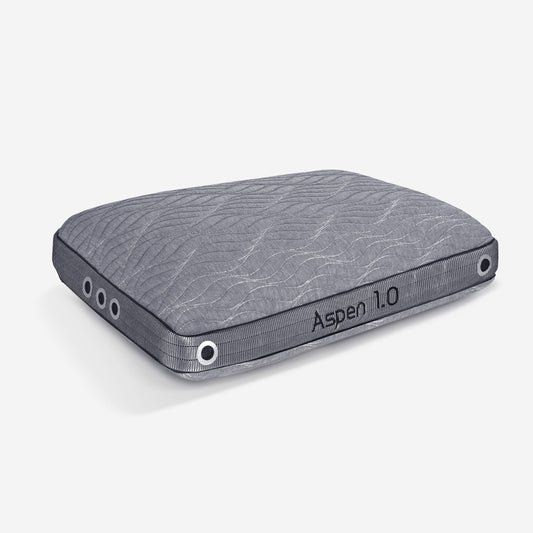
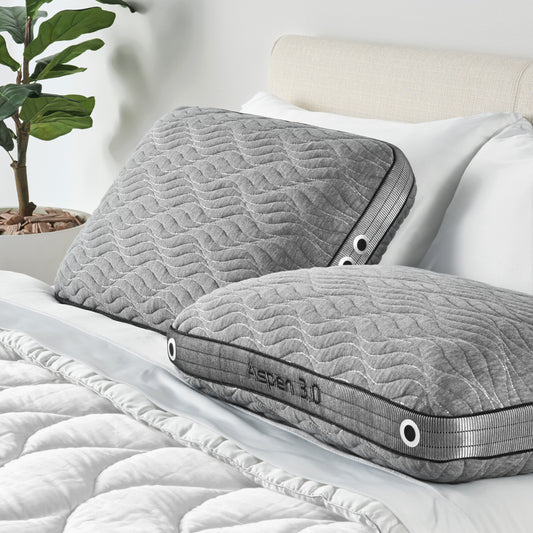
BEDGEAR's Performance® Mattresses and pillows are engineered specifically around this. Ver-Tex® and TENCEL® cover fabrics respond to body heat and actively dissipate it. Ventilated foam layers and airflow channels keep the sleep surface breathable throughout the night. The goal is the same one Jeff talks about with supplements: remove the variables that work against your body, and let the biology do what it's designed to do.
Creatine, Sleep Deprivation, and What the Research Shows
One of the more interesting points Jeff raised was around creatine research coming out of special forces programs. Studies on sleep-deprived soldiers found that creatine supplementation helped preserve cognitive performance under conditions of severe sleep loss. That's not a reason to shortchange your sleep and compensate with creatine; it's evidence that the two are deeply connected.
The takeaway is the same one Jeff kept returning to throughout the talk: the supplements support the foundation. They don't replace it. If sleep is the foundation, the environment you sleep in is the infrastructure that makes the foundation possible.
Build the Foundation First
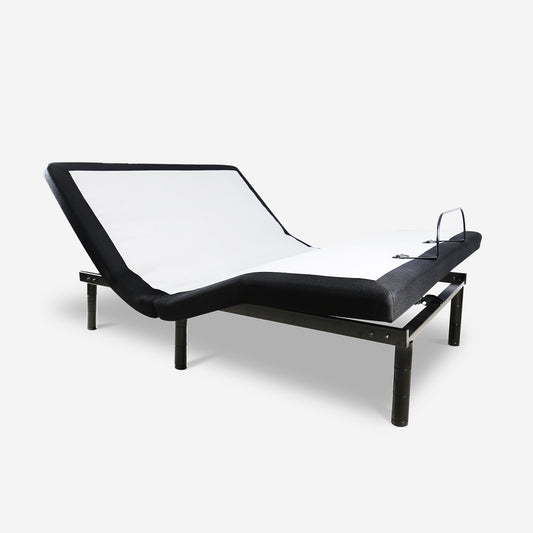
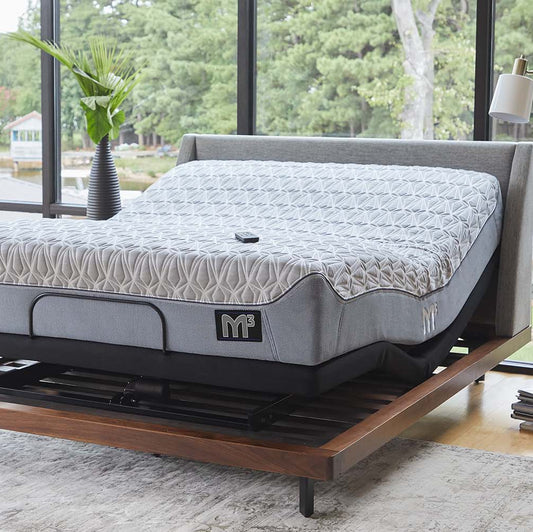
Temperature regulation, pressure relief, spinal alignment — BEDGEAR's Performance® sleep systems are engineered around the variables that determine whether sleep actually recovers you. Everything else builds on top of that.
Frequently Asked Questions
Here are the questions that came up most during Jeff's talk at BEDGEAR.