New parents have a lot of decisions to make before baby arrives, and most of them are bigger than crib sheets. But crib sheets are one of those things you regret not thinking about sooner; specifically at 2am, when you are stripping a wet mattress and reaching for a spare that is not there.
The quantity question is straightforward once you understand the variables. The quality question matters just as much. Here is how to get both right.
How Many Crib Sheets Do You Need?
Three is the floor. One goes on the crib, one goes in the wash, and one waits on the shelf. That rotation works fine if you do laundry frequently and your baby sleeps without incident most nights.
In reality, most parents find four to six sheets more comfortable. Diaper blowouts, spit-up, and sweaty nights do not arrive on a predictable schedule. Having extras means you are not scrambling at midnight or putting a damp sheet back on the mattress because the clean ones are still in the dryer.
| Situation | Recommended Quantity |
|---|---|
| Average newborn, laundry every few days | 3 sheets |
| Frequent diaper leaks or spit-up | 4–6 sheets |
| Warm climate or a baby who runs hot | 4–5 sheets |
| Laundry done weekly or less | 5–6 sheets |
Use the table as a starting point rather than a rule. Most families land somewhere in the middle and adjust after the first month.
What to Look for in a Crib Sheet
Quantity only solves part of the problem. If the sheets you buy do not fit well or trap heat, you will notice. Babies sleep lighter than adults and are more sensitive to discomfort at the surface, so material, fit, and the safety details all matter.
Material and Breathability
Babies regulate body temperature less efficiently than adults. A sheet that traps heat or holds moisture creates discomfort that disrupts sleep, and disrupted sleep is something neither of you needs more of.
Look for breathable, moisture-wicking fabrics. Our Dri-Tec Performance® Crib Sheets are built for this; the performance fabric feels cool to the touch and keeps airflow moving so heat does not build up against your baby. For colder months, our Hyper-Wool Performance® Crib Sheet offers the same breathability with more warmth.

Fit and Safety
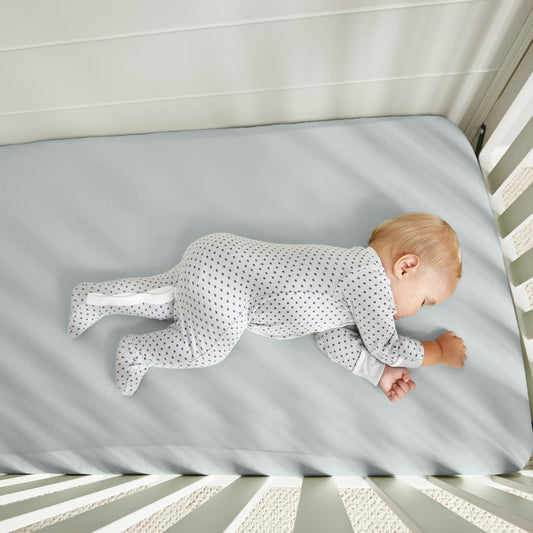
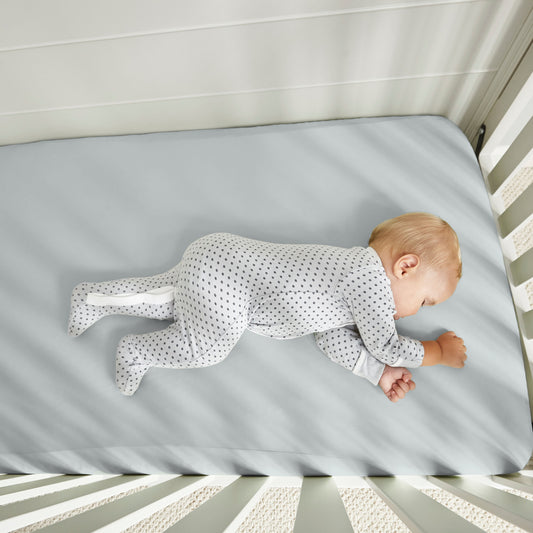
Pediatric safe sleep guidance advises against loose bedding in a crib, and a loose sheet falls into that category. Fabric that bunches or shifts can gather around a baby's face or legs, and unlike adult bedding there is no easy fix for an ill-fitting sheet mid-sleep.
Sheets should fit snugly over the mattress with no excess fabric at the edges. Look for deep pockets or an elasticized band that grips the mattress firmly and does not pull away at the corners; ours use an elasticized Powerband for that job. Skip anything with ribbons, strings, or decorative elements. Boring is fine here; safe is better.
Durability and Easy Washing
Crib sheets get washed constantly. A sheet that pills, shrinks, or loses its shape after a handful of cycles is a recurring cost disguised as a bargain.
Choose machine-washable sheets that hold their softness and fit over time. Higher-quality sheets cost more upfront, but they tend to come through repeated washing without going stiff or losing the snug fit that keeps them safe. Paired with a crib mattress protector underneath, they generally last longer too.
Do Not Forget the Layer Underneath
A crib mattress protector sits between the sheet and the mattress and takes the hit on leaks and spills before they reach the mattress itself. It is an easy addition that extends mattress life and makes middle-of-the-night changes faster.
Other Variables That Affect How Many You Need
The three-sheet floor is a starting point, not a fixed answer. Three things shift the number up or down for most families.
Your Laundry Routine
If you do laundry every two to three days, three to four sheets keeps the rotation clean. If you batch laundry once a week, you want more cushion. A wet sheet sitting around waiting for wash day is not a great outcome for anyone.
Climate and Season
In warmer months or hotter climates, babies sweat more. That means more frequent sheet changes even without a diaper incident. If you are heading into summer or live somewhere that stays warm, add an extra sheet or two. Breathable fabrics help here, since a sheet that does not trap heat needs changing less often.
Your Baby's Habits
Some babies are clean sleepers and some are not. You will figure out which category yours falls into within the first few weeks. If you are burning through sheets faster than expected, adding two more is easier than running an emergency load every other day. Start at three and adjust from there.
Sizing matters alongside quantity, so it is worth checking what your crib takes before you buy in bulk. Our crib mattress size guide covers standard and mini dimensions.
Frequently Asked Questions About Crib Sheets
A few more questions new parents commonly have about crib sheets.
How Many Crib Sheets Do I Need?
What Material Is Best for Crib Sheets?
How Should Crib Sheets Fit?
How Often Should You Wash Crib Sheets?
How Many Crib Sheets Do I Need? The Short Answer
Three is the minimum, four to six is the comfortable range, and your own number depends on laundry habits, climate, and the baby you happen to have. Buy at the low end if you are unsure; adding a sheet later is easy, and you will know within a month whether you need more.
Beyond how many crib sheets you need, the fit is the part worth being picky about. Snug corners, breathable fabric, and nothing loose in the crib will serve you better than a large stack of sheets that do not stay put.