Kids sleep is not one neat little checkbox. It changes constantly; newborns sleep in bursts, babies build rhythm, toddlers negotiate like tiny attorneys, preschoolers develop strong opinions about shadows, school-age kids get busy, and teenagers somehow become both exhausted and allergic to bedtime. Cute? Sometimes. Simple? Absolutely not.
The good news is that parents do not need to guess. Sleep needs follow a general age-by-age pattern, and the right routine can make the whole night less chaotic. The goal is not perfection; it is a sleep setup that supports your child's stage and gives you fewer reasons to run the washer at midnight.
How Much Sleep Do Kids Need by Age?
Sleep recommendations are ranges, not hard rules. Some kids naturally need more sleep than others, and naps, growth spurts, illness, temperament, and school schedules can all shift the target. Still, the chart below gives you a clean baseline for what most parents are aiming at.
| Age Group | Typical Sleep Range | What Changes | Parent Move |
|---|---|---|---|
| Newborns 0–3 months |
14–17 hours a day | Sleep comes in short, uneven stretches | Keep nights quiet and the sleep surface safe |
| Babies 4–12 months |
12–16 hours a day, including naps | Naps and nighttime sleep get more predictable | Build a consistent nap and bedtime rhythm |
| Toddlers 1–2 years |
11–14 hours a day, including naps | Nap frequency often drops | Protect the routine like it pays rent |
| Preschoolers 3–5 years |
10–13 hours a day | Naps may fade; bedtime resistance shows up | Start winding down earlier and limit screens |
| School-Age Kids 6–12 years |
9–12 hours a night | Homework, sports, and screens compete with sleep | Keep a firm bedtime and a cooler room |
| Teenagers 13–18 years |
8–10 hours a night | Later body clocks meet early school schedules | Reduce weekend sleep swings and late-night screens |
The headline is simple. Children need more sleep than adults because they are growing, learning, recovering, and regulating mood all at once. The schedule changes; the job of sleep stays huge.
Kids Sleep Schedule by Age: What Parents Should Know
The numbers matter, but the reasoning behind each stage matters more. A newborn's sleep problem is not the same as a preschooler's sleep problem, and a teenager's bedtime battle is a different beast entirely.
Newborns: Short Sleep Bursts, Big Sleep Needs
Newborns can need around 14 to 17 hours of sleep across a full day (opens in a new tab), though those hours rarely arrive in a way that suits adults with jobs, laundry, or functioning eyelids. Sleep is broken into shorter stretches at this age because newborns are still developing a day-night rhythm.
Pediatric safe sleep guidance is consistent on the setup: baby on their back, on a firm flat crib or bassinet mattress, with a snug fitted sheet and nothing else in the crib. That means no loose bedding, pillows, bumpers, or stuffed toys. Keep middle-of-the-night wakeups calm and boring; your baby needs sleep cues, not a full production.
Babies: More Rhythm, Still Plenty of Naps
From roughly 4 to 12 months, many babies need 12 to 16 hours of sleep per day, naps included. This is when sleep can start to feel a little more predictable. Not always; let us not get dramatic. But you may begin to see steadier nap windows and longer nighttime stretches.
It is also the stage where a temporary sleep regression can turn a decent routine into a small overnight protest movement, and where the sleep setup starts to show its value. A breathable crib mattress, fitted crib sheets, and a waterproof crib mattress protector make cleanup easier and keep the sleep surface comfortable. Babies are small; their laundry footprint is not.
Toddlers: Routine Becomes the Main Character
Toddlers usually need 11 to 14 hours of sleep per day, including naps. Many shift from multiple naps down to one, and some will test bedtime boundaries because independence has entered the chat. Suddenly water is urgent, socks are wrong, and the stuffed animal lineup has a seating chart.
Consistency wins here. A predictable bedtime routine, a cool dark room, and bedding that feels comfortable all make the transition smoother. If your child is moving from crib to toddler bed, use a sleep surface built for the stage they are in now rather than the one they just left.
Preschoolers: Less Napping, More Bedtime Opinions
Preschoolers often need 10 to 13 hours of sleep per day (opens in a new tab). Some still nap, some drop naps completely, and some skip the nap, melt down at dinner, and then insist they are not tired. Iconic. Exhausting, but iconic.
As naps fade, bedtime may need to move earlier. Screens can make falling asleep harder, so build in a screen-free wind-down window before bed. Keep the room quiet, dark, and cool, and give your child a routine they can predict.
School-Age Kids: Sleep Has to Compete Now
School-age kids typically need 9 to 12 hours of sleep each night (opens in a new tab). The challenge is that their days fill up fast with school, homework, sports, activities, friends, and screens. Sleep becomes the thing that gets squeezed unless someone actively protects it.
If your child struggles to wake up, loses focus, or gets cranky late in the day, look at bedtime before assuming they are just being difficult. A supportive kids mattress, breathable bedding, and a consistent routine help create a room that supports rest instead of fighting it.
Teenagers: Still Growing, Still Need Sleep
Teenagers usually need 8 to 10 hours of sleep per night. That is more than most teens actually get, partly because puberty shifts the body clock later while school schedules pull mornings earlier.
Help teens reduce big weekend sleep swings, limit screens late at night, and upgrade the sleep setup when they physically outgrow the childhood bed. If their feet are off the end, their mattress is no longer fine; it is furniture from a previous era.
Is Your Child Getting Enough Sleep?
Because kids vary so much, it is not always obvious when your child needs more sleep. Some get sleepy. Others get wired, emotional, distracted, or ready to audition for a courtroom drama at 7:45 p.m. Watch the patterns rather than just the clock.
| Sign | What It Can Look Like | First Thing to Check |
|---|---|---|
| Hard mornings | Difficult to wake, slow to get moving, morning headaches | Bedtime, screen use, room comfort |
| Daytime sleepiness | Falling asleep in the car, during homework, or at odd times | Total sleep hours and nap timing |
| Irritability | Crankiness, meltdowns, emotional swings | Consistency of the bedtime routine |
| Focus struggles | Trouble concentrating, schoolwork slipping, forgetfulness | Sleep duration and sleep quality |
| Restless nights | Frequent waking, overheating, tossing, uncomfortable bedding | Temperature, mattress support, bedding layers |
If sleep issues are persistent or intense, or if they come with snoring, breathing concerns, significant behavior changes, or trouble functioning during the day, talk to your child's pediatrician. Content on a mattress site is useful; your child's doctor still gets the final whistle.
How Many Crib Sheets Do You Actually Need?
Short answer: most families do well with three to five fitted crib sheets. One on the mattress, one or two clean in the drawer, and one in the laundry, because babies treat clean fabric as a personal challenge. If your child has frequent leaks, spit-up, reflux, or daycare changes, more backups are strategy rather than excess.
- 01On the MattressOne fitted crib sheet, secure on the mattress during sleep.
- 02Clean BackupAt least one clean sheet ready for middle-of-the-night changes.
- 03Laundry BufferAnother sheet covers the inevitable laundry delay.
- 04Extra InsuranceAdd more if leaks, spit-up, or daycare handoffs are routine.
Crib sheets should fit snugly, because loose fabric does not belong in an infant sleep space. We go through sizing, fabric, and washing rotation in more detail in our full guide to how many crib sheets you need.
How to Build a Better Kids Sleep Setup
Sleep is not only about the schedule; the room matters too. Kids settle more easily when the sleep environment is predictable, clean, cool, and built around their stage.
Keep the Room Cool, Quiet, and Boring
A cooler, darker room helps signal that bedtime is not a negotiation. Keep stimulating toys, screens, and bright lights out of the wind-down window. The room does not need to be photogenic; it needs to be sleep-friendly.
For hot sleepers, or kids who sweat through bedding, breathable materials make a real difference. Our Baby & Kids collection is built around airflow, moisture management, and washable layers so the setup can keep up with childhood.
Match the Mattress to the Stage
Infants need a firm, flat sleep surface. Toddlers need a surface that supports growth and transition. Kids moving into a twin or full need support, breathability, and durability, because they are not exactly gentle with beds. Shocking update from the field: kids jump on things.
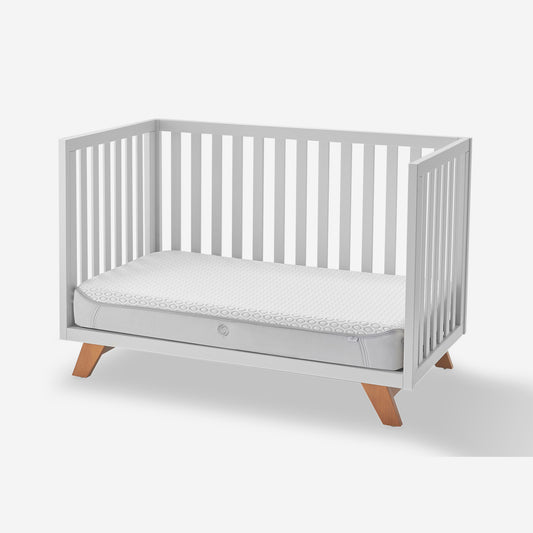
Our Air-X Performance® Crib and Toddler Mattress is a two-stage mattress with a firmer infant side and a softer, more responsive toddler side. It is built with a breathable Air-X® comfort layer, mesh sides for airflow, and a noiseless waterproof barrier.
Protect the Mattress From Day One
Mattress protectors are not optional in kids rooms; they are defensive strategy. Spills, sweat, leaks, accidents, and the mystery liquids children somehow generate all land somewhere. Better on a protector than inside the mattress core.
For crib setups, use a fitted crib sheet plus a crib mattress protector sized for that mattress. For bigger kids, a breathable kids mattress protector keeps the sleep surface cleaner without trapping heat.
Air-X Performance® Crib and Toddler Mattress

A two-stage crib and toddler mattress with breathable Air-X® construction, a firmer infant side, a softer toddler side, washable layers, and a waterproof barrier designed for cleaner sleep.
- 52" L × 28" W
- Two-stage comfort
- Washable cover
- Waterproof barrier
Kids Sleep Essentials, Matched to the Need
Parents do not need a complicated sleep system. They need the right layers doing the right jobs: a breathable mattress, fitted sheets that stay put, a protector that handles messes, and an age-appropriate pillow only once your child is ready for one.
| Sleep Need | Our Option | Why It Helps |
|---|---|---|
| Infant and toddler mattress | Air-X Performance® Crib and Toddler Mattress | Two-stage support, airflow, washable layers, waterproof barrier |
| Crib sheet backups | Dri-Tec Performance® Crib Sheet | Moisture-wicking backups for leaks, spit-up, and laundry lag |
| Crib protection | Crib Mattress Protectors | Helps protect the mattress from moisture, stains, and everyday mess |
| Big-kid bed | X1 Performance® Mattress | Built for kids moving into twin or full-size sleep surfaces |
| Kids pillow | Astro Kids Pillow | Kid-sized loft and support for children old enough to use a pillow |
Build the Bedtime Setup Before the 2 A.M. Problem
Backup crib sheets, a breathable mattress, and a washable protector do not feel exciting until the first leak, spill, or mystery incident. Then suddenly? Elite parenting.
Frequently Asked Questions About Kids Sleep
Quick answers for parents trying to make bedtime less of a nightly sport.
How much sleep do kids need by age?
How many crib sheets do I need?
What should be in a baby’s crib for sleep?
What are signs a child is not getting enough sleep?
When can my child use a pillow?
What BEDGEAR products are best for kids sleep?
How Much Sleep Do Kids Need? Final Thoughts for Parents
No parent wants to watch their child struggle through drowsy, irritable mornings. The right routine helps, the right room helps, and the right sleep surface helps. None of it guarantees a perfect night, because children remain children, but it gives sleep a much better chance.
Start with the basics: a consistent bedtime routine, limited screens, a cool room, age-appropriate sleep surfaces, and clean backup bedding ready to go. From breathable crib mattresses to sheets, protectors, kids pillows, and big-kid mattresses, our Baby & Kids products are built to support how much sleep kids need at every stage, so you can sleep soundly too.