

What to Look for in a Crib Mattress: Firmness, Breathability and Safety Explained
Shopping for a crib mattress feels like it should be simple. Then you see forty options, a dozen buzzwords, and price tags all over the map; suddenly it is not so simple.
A crib mattress is one of the few purchases your baby will use every single day, for hours at a time (we hope). No pressure though, right? The good news is that choosing the right toddler or crib mattress is easier than the crowded mattress aisle makes it look.
At the end of the night, strip away the marketing and three things decide whether a crib mattress is worth buying: crib mattress firmness, breathability, and safety. In this guide we will walk through each one, why it matters, and how to check it yourself. By the end, you will be able to size up any crib mattress in about two minutes. Read on to learn more below.
Why Crib Mattress Firmness Matters Most
Let us start with the big one. Firmness is not a comfort preference for babies; it is a safety feature. Pediatric safe sleep guidance consistently calls for infants to sleep on a firm, flat surface, and the mattress is that surface.
Here is the counterintuitive part for adults: what feels too hard to you is exactly right for your baby. We sink into plush mattresses and love it. Babies need the opposite, because a surface that conforms to their body can conform to their face; that is the risk firmness protects against, so you don't want your child leaving behind a divot.
How Firm Should a Crib Mattress Be?
Firm enough that it surprises you. A proper crib mattress should feel noticeably harder than anything you would choose for yourself. It should not hug, cradle, or contour a sleeping infant; it should support them evenly from head to toe.
Resist the instinct to pick something softer because it seems cozier. At the end of the day, your baby is simply not a tiny adult with adult preferences. Therefore, firm is what safe looks like in the first year.
The Quick Press Test
You can check firmness in seconds, right in the store. Press your hand into the center of the mattress, then into the edges. A good crib mattress springs back quickly and completely; it should not hold the shape of your hand or leave a lingering dent.
Do the same test near the corners, where cheaper mattresses often go soft. If any spot feels mushy or slow to recover, keep shopping. Consistent firmness across the whole surface is the goal.
Firm for Infants, Comfort for Toddlers
Firmness needs change as your child grows. The strict firm-and-flat guidance applies hardest in the first year; toddlers can handle, and enjoy, a bit more give. That is why dual-stage designs have become the smart buy for a lot of families.
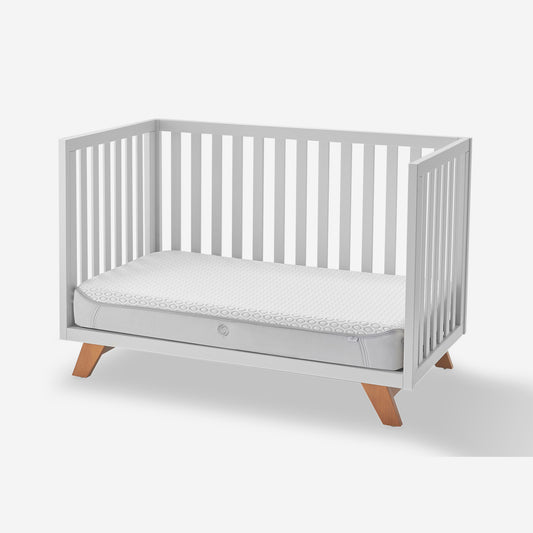
A crib and toddler mattress that spans both stages saves you a purchase and a headache later. Our Air-X® Performance® Crib and Toddler Mattress is built exactly for that arc, supporting your child from the crib years into the big kid bed. When the time comes to make that move, timing matters too; watch for the readiness signs before you switch. And don't worry, we have a guide that can help you choose the right time.
Breathability and Temperature Control
If firmness is the safety pillar, breathability is the comfort pillar; and for little sleepers, comfort and sleep quality are the same thing. Babies and toddlers run warm. They also cannot kick off a blanket, flip to the cool side, or tell you they are overheating. So, this one falls on you for a while.
That is where the mattress itself has to do some work. An airflow-friendly sleep surface helps reduce heat buildup underneath your child, which means fewer sweaty wake-ups and a more settled night. Sleep Fuels Everything®, and for growing kids that is not a slogan; it is their biology.
Why Airflow Matters for Little Sleepers
Heat gets trapped where a warm body meets a flat surface. Adults solve this by rolling over; babies, though, they mostly just wake up. A breathable crib mattress lets air move through and around the sleep surface, so heat has somewhere to go.
The payoff is practical: a more comfortable baby settles faster and stays asleep longer. Every parent of a warm sleeper knows exactly how much that is worth at 2am. Plus, more sleep for your baby means more sleep for you, so it's a win-win, right?
Materials That Breathe
Next, it's time to consider the materials. Look for open, airflow-focused construction rather than dense, heat-trapping padding. Mesh-style surfaces, ventilated cores, and moisture-wicking covers all help air circulate. Our Air-X® technology is built around exactly this idea; maximizing airflow through the sleep surface to keep it cool to the touch.
One more underrated perk: breathable materials tend to dry faster after cleaning. With a baby in the house, you will clean that mattress more than you think.
Crib Mattress Safety Essentials
Firmness handles the sleep surface itself; the rest of safety comes down to fit, standards, and keeping the mattress clean and intact. None of it is complicated. It is a short checklist, and once you know it, you know it forever.
The Snug-Fit Rule
A crib mattress has to fit its crib snugly, with no gap larger than about two fingers between the mattress edge and the crib frame. A bigger gap is a hazard, because little limbs can slip into it. Run the two-finger check on all four sides, not just one.
The good news: in the US, standard full-size cribs and crib mattresses are built to federal dimension standards, so a standard mattress fits a standard crib. Fit problems usually show up with non-standard, mini, or older cribs, so measure before you buy if your crib is any of those.
Certifications and Standards to Check
You do not have to take a brand's word on safety; the labels do the talking. In the US, full-size crib mattresses are covered by federal safety standards, so buying new from a reputable retailer already puts a floor under you. From there, third-party certifications tell you about materials and emissions.
Look for names like GREENGUARD Gold, which covers low chemical emissions, and CertiPUR-US for foam components. Skip secondhand mattresses when you can; you cannot verify their history, their standards era, or what has soaked into them. A new mattress is one of the few places where the safe choice and the simple choice are the same.
Waterproofing and Easy Cleaning
Diapers leak. Bottles spill. Toddlers are toddlers. A crib mattress that cannot be kept clean will not stay hygienic for long, so plan for mess from day one.
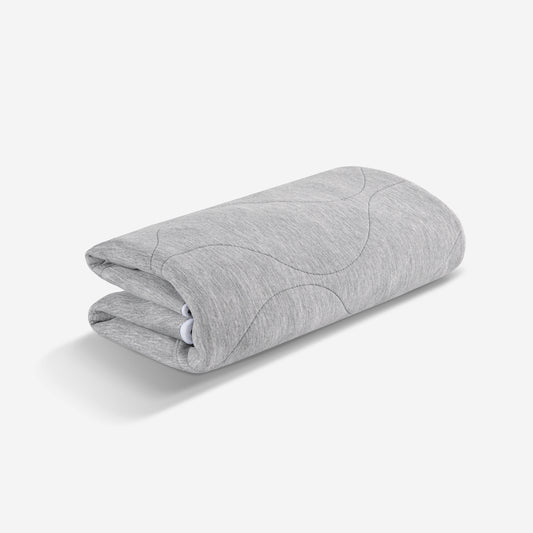
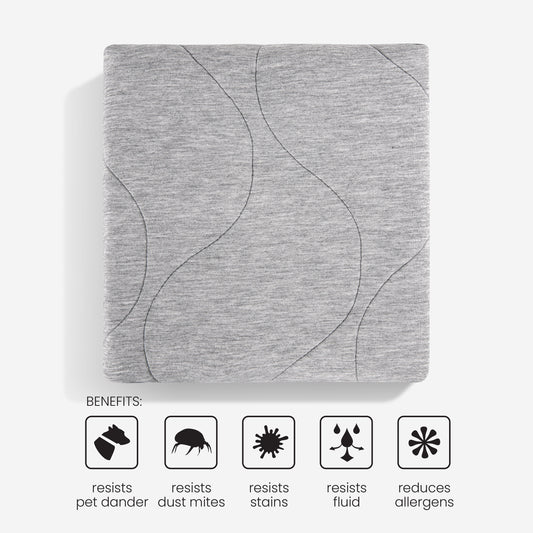
The easiest answer is a waterproof, breathable mattress protector; it guards the mattress without turning the sleep surface into a crinkly heat trap. Our crib mattress protectors are built to manage moisture while keeping airflow moving. Protect the mattress from night one and it will still be fresh when the toddler stage arrives.
Building the Nursery Right Now?
Start with the two pieces that work the hardest: a breathable, supportive crib mattress and a protector that keeps it fresh through every surprise.
How to Choose the Right Crib Mattress
Time to put it all together. Here is the whole guide condensed into a checklist you can run in the store, on your phone, in about two minutes.
-
Press Test It
Center, edges, corners. It should spring back fast everywhere, with no soft spots.
-
Check the Fit
Two-finger gap max between mattress and crib frame, on all four sides.
-
Read the Labels
Buy new, from a reputable seller, and look for certifications like GREENGUARD Gold.
-
Prioritize Airflow
Breathable construction means a cooler, more comfortable sleeper and easier cleaning.
That is the quick-scan version. Here is each check in a little more detail, so you know exactly what you are looking for.
1. Press Test It
Push your hand into the center, then the edges, then the corners. Every spot should push back fast and firm; no slow recovery, no lingering handprint. Soft corners are the classic tell on a cheap build, so do not skip them.
Shopping online? You can still run this test; just do it the day the mattress arrives, before you set up the crib. Most retailers have return windows built for exactly this. Test on day one, not week six.
2. Check the Fit
Slide two fingers between the mattress and the crib frame. If they fit snugly, you are good; if there is room to spare, the gap is too big for that crib. Run the check on all four sides, because a mattress can sit tight on one end and loose on the other.
Recheck the fit any time something changes. New crib, hand-me-down frame, or a move to a different room; each one is a reason to run the two-finger test again. It takes ten seconds and it is the cheapest safety check you will ever do.
3. Read the Labels
Buy new, from a seller you trust, and let the certifications do the vetting for you. GREENGUARD Gold covers low chemical emissions; CertiPUR-US covers the foam. If a mattress has no certifications to show, that silence is your answer.
One more label habit worth building: check the law tag and the listing for the word "full-size." That tells you the mattress is built to standard crib dimensions, which is what makes the snug fit work. Vague sizing language is a red flag; standard products say so plainly.
4. Prioritize Airflow
Look for ventilated, breathable construction over dense padding. A cooler surface means a more settled sleeper and fewer 2am wake-ups. It also dries faster after cleanup, and there will be cleanup.
Airflow is also the check that keeps paying off after the crib years. A breathable mattress stays comfortable as your child grows into a hotter-sleeping toddler, and it pairs perfectly with a waterproof protector without turning the bed into a heat trap. Buy it once, benefit for years.
That is genuinely the whole game. If a mattress passes all four checks, you are choosing between good options; from there, pick the one that fits your budget and grows with your child. And as always, this is general guidance; your pediatrician is the right call for anything specific to your baby.
Crib Mattress Firmness, Breathability, and Safety: The Bottom Line
At the end of the night, it's important to understand the key principles of mattress firmness, breathability, and safety.
Crib mattress firmness is the non-negotiable; firm and flat is what safe sleep looks like in the first year. Breathability is the difference between a sweaty 2am wake-up and a settled night. Safety is a short checklist: snug fit, real certifications, bought new, kept protected.
Nail those three? Well, you have done the hard part of the nursery. Your baby gets a safe, cool, supportive place to sleep; you get a mattress that carries them from newborn nights to toddler bedtimes. That is a purchase you only have to get right once.
Frequently Asked Questions
Still comparing options? Here are the questions parents ask most about choosing a crib mattress.
How Firm Should a Crib Mattress Be?
Is a Firmer Crib Mattress Safer for My Baby?
When Can My Baby Sleep on a Softer Mattress?
Is a Breathable Crib Mattress Worth It?
What Size Crib Mattress Do I Need?
Give Your Baby a Cooler, Safer Night's Sleep
Firm where it counts, breathable where it matters. Explore crib mattresses built to grow with your child.
You May Also Like
-
 Regular price $349.99Sale price $349.99 Regular priceUnit price per
$349.99 -
 Maximum BreathabilityRegular price $79.99Sale price $79.99 Regular priceUnit price per
$79.99
