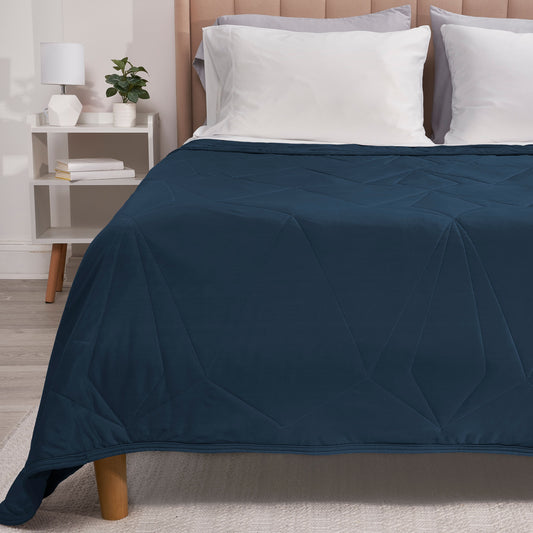
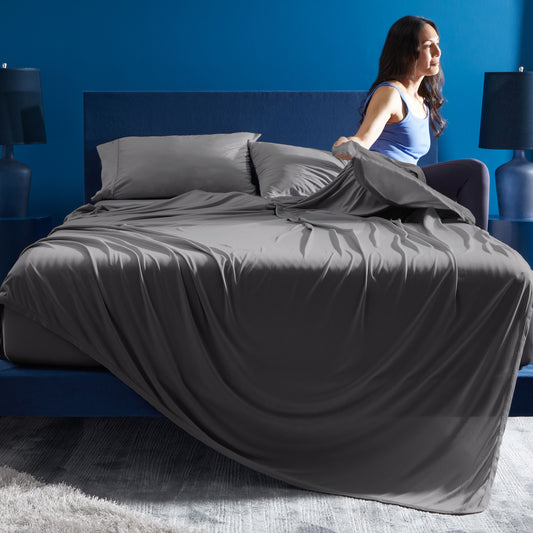
Most people upgrading their sleep start and stop at the mattress. It is the biggest purchase and the most visible one, so it gets the attention. That instinct is reasonable; it is also incomplete.
Our founder and CEO Eugene Alletto puts it this way:
Consumers are not just buying a place to lie down; they are buying solutions. Essentials like pillows, sheets, and protectors are not add-ons. They are critical components of performance sleep.Eugene Alletto, Founder and CEO
Think of it like buying running shoes without socks. You can technically wear them. Your comfort and your results will both fall short, and you will blame the shoes.
What Is a Sleep System?
A sleep system is the full set of components you sleep on and under, treated as one unit rather than four separate purchases. Mattress, pillow, sheets, protector. Four pieces, four different jobs.
The distinction matters because these components do not overlap. Nothing about a mattress can correct a pillow that is the wrong height for your shoulders. No pillow can fix a sheet that traps humidity against your skin. When one piece is wrong, the others cannot compensate for it.
This is closely related to performance sleep, which is the broader idea that sleep can be engineered rather than left to chance. A sleep system is what that idea looks like in your actual bedroom.
What Each Component Actually Does
Every piece owns a specific variable, and knowing which piece owns which problem makes troubleshooting far easier. The table below breaks the four down side by side.
| Component | Its Job | Symptom When It Is Wrong |
|---|---|---|
| Mattress | Support and pressure distribution | Hip and lower back soreness; sagging in the middle |
| Pillow | Head and neck alignment | Morning neck stiffness; shoulder pressure |
| Sheets | Surface climate and moisture | Waking up damp; kicking off covers at 2 a.m. |
| Protector | Barrier and mattress longevity | Congestion or irritation; mattress aging faster than it should |
Scroll sideways to see all columns.
Read down the symptom column and you can usually diagnose your own bed. Neck stiffness is almost never a mattress problem, and waking up damp is almost never a pillow problem. Most people replace the wrong component because they never separated the jobs.
Pillows: Alignment
The wrong pillow can leave you with neck stiffness, shoulder pressure, or a head sitting at an angle your spine has to accommodate all night. The right one fills the gap between your head and the mattress so your neck continues the natural line of your spine.
That gap changes with sleep position and shoulder width, which is why loft is the variable that matters most. Side sleepers need the most, stomach sleepers need almost none, and back sleepers land in between.
Sheets: Surface Climate
Sheets are the only component in direct contact with your skin, which makes them the main lever on how the surface feels. Breathable, moisture-wicking fabrics move heat and moisture away rather than holding them against you.
This matters more than most people expect because your body lowers its core temperature to initiate sleep. A fabric that traps heat works against that process; one that breathes supports it. Our guide to which bedding materials breathe best covers the fabric differences in detail.
Protectors: Barrier and Longevity
A protector is not only about keeping a mattress clean. It creates a barrier against moisture, dust mites, and allergens that otherwise accumulate in a mattress over years of nightly use.
The catch with most protectors is that they solve for the barrier and ruin everything else, adding a crinkly plastic layer that blocks the airflow the mattress was built around. A performance protector has to do the barrier job without becoming the hottest layer in the bed.

How the Components Work Together
The reason to think in systems rather than products is that the variables interact. Your sheets sit on top of your protector, which sits on top of your mattress, and all three influence the same thing: the layer of air and moisture immediately around your body.
That layer has a name, the sleep microclimate, and it is what you are actually experiencing when a bed feels hot or clammy. A breathable mattress underneath a sealed protector produces a hot bed, because the weakest layer sets the ceiling.
Support works the same way. A mattress can only hold your spine in a neutral position from the shoulders down; the pillow governs everything above that. Get one right and the other wrong and you have a spine that is aligned for two thirds of its length.
When the pieces are matched, the practical differences show up in ordinary ways:
- A surface that supports your body's natural temperature drop instead of fighting it.
- Fewer of the small disruptions that pull you out of deep sleep without fully waking you.
- Support that holds position through the night rather than flattening by 3 a.m.
- A mattress that stays cleaner and lasts closer to its intended lifespan.
None of that requires more products in your bedroom. It requires the ones you already need to be chosen deliberately and to work with each other. For the mechanics of why airflow matters so much here, our breakdown of how airflow affects sleep quality goes deeper.
What Makes Our Sleep System Different
Most bedding brands treat accessories as an afterthought, which is why they tend to be sold by thread count and color rather than by fit. We build them the same way we build mattresses, around the sleeper rather than the category.
Every piece is designed against the same three inputs:
- Body type: No two sleepers are built the same, and shoulder width alone changes what a pillow needs to do.
- Sleep position: Side, back, and stomach sleepers have genuinely different requirements, not slightly different preferences.
- Temperature preference: Hot sleeper, cold sleeper, or somewhere in between, with a partner who may be the opposite.
Designing to those three inputs is what makes it a Performance® Sleep System rather than a collection of matching products. The mattress, pillow, sheets, and protector are specified together, so the airflow the mattress provides is not undone by the layer sitting on top of it.
Start With the Piece That Is Easiest to Get Right
Our PillowID® quiz matches loft and fill to your body size and sleep position in about a minute. It is the fastest way to fix the most commonly mismatched component in the system.
What to Expect When Shopping for a Sleep System
A good retailer will do more than walk you past mattress models. The signal that someone is actually fitting you rather than selling you is the kind of questions they ask before they point at anything.
Expect questions about you, not the product. How do you usually sleep, hot or cold or somewhere in between? What pillow are you using now, and how long have you had it? How much does keeping your mattress clean and lasting matter to you?
Those questions are not small talk. They are the three inputs above, gathered in conversational form, and an associate who skips them is guessing.
Expect recommendations that connect to your actual complaint. If you wake up sweaty, the answer should involve sheets and airflow. If you wake with neck stiffness, you should be fitted for a pillow rather than shown a firmer mattress.
Expect to touch things. Sleep is sensory, and the shopping experience should be too. The better retailers put accessories out where you can flip a pillow to feel the cooling side, handle the fabrics, and see how the components stack together instead of leaving them boxed on a back shelf.
Building a Sleep System That Works for You
Buying only a mattress is buying part of the solution and hoping the rest sorts itself out. Sometimes it does. More often it produces the specific frustration of having spent real money on a bed that still leaves you sore or sweating.
A complete sleep system pairs the mattress with a pillow, sheets, and a protector chosen against the same three inputs: your body type, your sleep position, and how you run temperature-wise. That is the whole method, and it is less complicated than the number of products in a showroom suggests.
If you are starting somewhere, start with the pillow. It is the least expensive component, the most frequently mismatched, and the one people notice fastest when it finally fits.
Frequently Asked Questions
Here are the questions we hear most often about building a complete sleep system.