Most people pick a pillow size the same way they pick a pillowcase; basically by choosing whatever came with the bed or whatever was on the shelf. And we get it.
Choosing a pillow is one of those decisions that feels minor until you're sleeping on a pillow that's too small for your shoulder width, too large for your bed frame, or stuffed into a pillowcase that doesn't fit right. That said, size affects support, aesthetics, and how well your pillow actually does its job through the night.
The good news is that this in-depth pillow size guide covers every standard pillow size; this includes what it measures, which beds it fits, and who it's actually built for. If you already know your size, the chart below has everything at a glance. If you're not sure, keep reading.
Pillow Sizes at a Glance
Not all pillows are created equal, and that's something we take seriously around here. What's more, not all of them are built for the same bed, body, or purpose. For these reasons, the chart below covers every standard size at a glance, from the compact standard to the full-length body pillow.
| Pillow Size | Dimensions (inches) | Fits These Bed Sizes |
|---|---|---|
| StandardMost popular | 20 × 26 | Twin, Twin XL, Full |
| Super Standard | 20 × 28 | Twin to Queen |
| Queen | 20 × 30 | Queen |
| King | 20 × 36 | King, California King |
| Euro | 26 × 26 | All sizes (decorative/accent) |
| Body | 20 × 54 (or longer) | Full, Queen, King |
Those are the industry numbers, and they're the ones pillowcases are cut to. BEDGEAR's own footprints run a little differently in places, which we cover further down. Each size has a specific job to do, so keep reading for the full breakdown of what each one measures, who it's built for, and when it actually makes sense.
Every Pillow Size Explained
The difference between pillow sizes isn't just a few inches on paper. The wrong size affects how your pillow sits on the bed, how well it supports your head and neck, and whether it actually fits the pillowcase you're trying to put it in. Here's every standard size; we cover what it measures, who it's built for, and when it makes sense.
What is the Standard Pillow Size?

First and foremost, we have to start with the basics. The standard pillow measures 20 inches wide by 26 inches long and is the most common pillow size in most homes. It fits cleanly on twin, twin XL, and full size beds without overhanging the edges, and it's the size most pillowcases are designed around. For lighter-framed sleepers, children, and anyone who prefers a smaller, more manageable pillow that stays where they put it, the standard delivers everything a larger pillow does in a format that doesn't take over the bed.
That said, the limitation shows up for broader-shouldered sleepers or anyone on a queen or king bed. On a queen, for example, a single standard pillow looks undersized against a wider headboard. Plus, two standard pillows side by side cover the width but create a seam in the middle.
Style aside, for back and side sleepers with wider shoulders who need more lateral support, stepping up to a queen or king pillow is the more practical answer. For everyone else, the standard is exactly what it says it is.
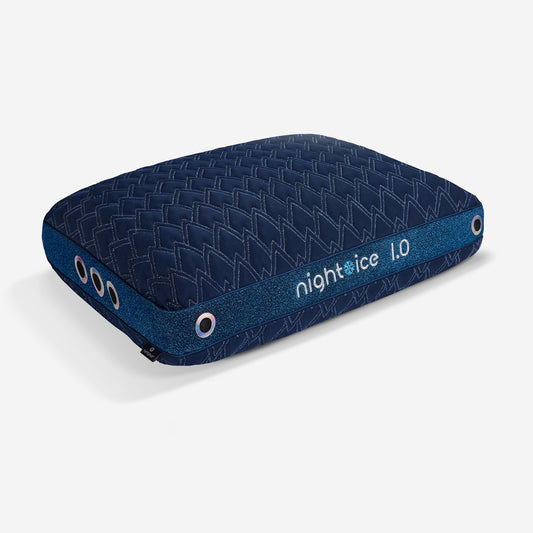
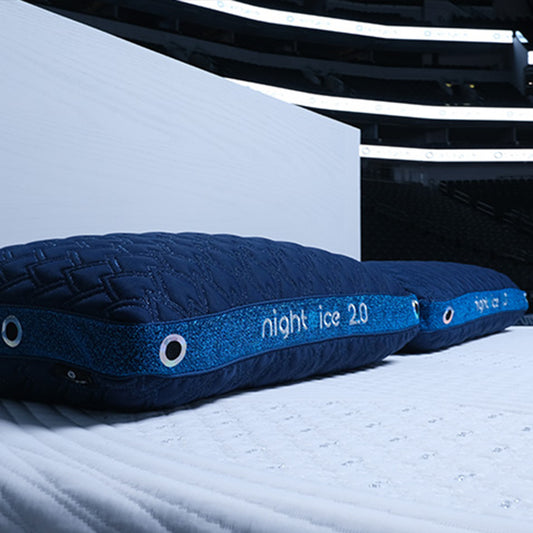
Worth knowing if you're shopping BEDGEAR specifically: our standard-size lineup uses two different footprints. Storm, the Cuddle Curve family, Level, and Gemini use the traditional 20 by 26. Night Ice, Cosmo, Aspen, Balance, and Summit use a 24 by 16 footprint instead; wider relative to its length, engineered to sit closer to average shoulder width. Both fit standard pillowcases.
What is the Super Standard Pillow Size?
The super standard measures 20 inches wide by 28 inches long, so around two inches longer than a standard and two inches shorter than a queen. It's a transitional size that bridges the gap between the two, fitting comfortably on beds from twin through queen without the full length of a queen pillow. For sleepers who find a standard too short but don't want the extra length of a queen, the super standard hits the middle ground.
Still, it's worth noting that the super standard is less widely available than standard or queen sizes, particularly across performance and specialty pillow categories.
Therefore, if you're building a full sleep system with matched pillowcases and protectors, verify that your preferred brand offers the super standard in the construction you want before committing to the size.
What is the Queen Pillow Size?

The queen pillow measures 20 inches wide by 30 inches long, so around four inches longer than a standard and six inches shorter than a king. This makes the queen pillow size the most versatile size in the lineup, fitting proportionally on both queen and king beds without looking undersized in either direction.
In fact, for most adult sleepers, the queen pillow hits the right balance between surface area and manageability, and it's the most widely available size across every material and technology category.
For couples on a queen bed using two pillows side by side, queen size keeps things proportional without crowding the sleep surface. If you're unsure which size to start with, queen is the right default. One caveat: BEDGEAR doesn't currently make a dedicated queen-size pillow, so on a queen bed the choice is between our standard footprints and stepping up to king.
What is the King Pillow Size?

The king pillow measures 20 inches wide by 36 inches long, which makes it the longest rectangular pillow size in common use. A king size pillow is the natural fit for king and California king beds, where a standard or queen pillow leaves visible mattress surface on either side and looks undersized against a wide headboard.
For sleepers who move frequently during the night, the extra length means more surface area to land on without running out of pillow. On the other hand, for broader-shouldered back sleepers who need more lateral support, the king delivers without requiring a custom size.
Still, you'll find that on a queen bed a king pillow becomes unwieldy; it hangs over the sides and creates more bulk than the bed can accommodate cleanly. So, stick to standard or queen size on a queen bed.
BEDGEAR's king pillows run slightly shorter than the industry number at 34 inches by 20 inches, which is the same performance-width thinking behind our 24 by 16 standard. Five models come in king; Summit, Night Ice, Cosmo, Storm, and Aspen, each in all four loft profiles. King pillowcases still fit, with a small tuck rather than an end-to-end fill.
What is the Euro Pillow Size?
The euro pillow measures 26 inches wide by 26 inches long, but things are a little different here. That square format sets it apart from every other standard pillow size. For this reason, it's used primarily as a decorative or accent pillow at the back of a made bed rather than as a sleep pillow, and it works across all bed sizes in that role.
The square shape and larger surface area make it visually distinctive, and it's a staple of the layered pillow aesthetic that most styled bed setups use.
Sleeping on a euro pillow is possible but not ideal; the square format doesn't align naturally with the head and neck the way a rectangular pillow does, and the larger surface area creates more bulk than most sleepers need. If you're using euro pillows as part of your bed setup, treat them as the decorative layer they're designed to be. Take them off before you sleep, put them back in the morning, and let the actual sleep pillow do the recovery work.
What is a Body Pillow Size?
Looking for one of the biggest pillows out there? Look no further than a body pillow. The body pillow typically measures 20 inches wide by 54 inches long, though some run longer, making it the largest standard pillow size available. It's designed to run the full length of the torso and is used primarily by side sleepers to maintain spinal alignment from the shoulders through the hips.
Without support between the knees, a side sleeper's top leg drops forward and rotates the pelvis, creating a chain of misalignment that runs through the lower back. A body pillow stops that rotation and keeps the spine neutral through the night.
Beyond sleep position support, body pillows are widely used during pregnancy for abdominal support and hip pressure relief. The fill density matters more at this size than any other; a body pillow that's too soft compresses under the weight of the leg and loses the support it's supposed to provide. Look for a fill that holds its loft under sustained pressure rather than flattening by morning.
BEDGEAR's Body Pillow runs the full 54-inch length in a narrower profile than the 20-inch industry width, which keeps the support focused without the extra fill mass. It brings the same performance material construction as the rest of the lineup into the longer format, so the size upgrade doesn't come at the cost of the breathability and support you need to actually recover through the night.
BEDGEAR Pillow Sizes: Finding Your Perfect Fit
Most pillow brands give you soft, medium, or firm and call it a day. BEDGEAR does it differently. Instead of generic feel categories, BEDGEAR pillows come in four profile heights; 0.0, 1.0, 2.0, and 3.0, each matched to your body type and sleep position for proper cervical alignment. It's not about preference. It's about fit, and you'll see why in a moment.
| Profile | Loft | Best For | Sleep Position |
|---|---|---|---|
| 0.0 | Lowest | Petite / small-framed sleepers | Stomach |
| 1.0 | Low–Medium | Small to medium-framed sleepers | Stomach / Back |
| 2.0 | Medium–High | Medium-framed sleepers | Back / Side |
| 3.0 | Highest | Large / broad-framed sleepers | Side |
The same four profiles apply at every size we make, so picking a bigger pillow never means giving up the fit. Here's what the numbers actually refer to.
What Do the BEDGEAR Pillow Numbers Mean?
The numbers refer to loft height of the pillow. So, how tall the pillow sits under your head. A 0.0 is the lowest profile, designed for stomach sleepers and smaller-framed sleepers who need minimal elevation to keep the spine neutral.
On the other hand, a 3.0 is the highest profile, built for side sleepers and broader-framed sleepers who need more fill to bridge the gap between their head and the mattress. A 1.0 and 2.0 fall in between, covering back sleepers and combination sleepers depending on body type.
The right number isn't about what feels comfortable when you first lie down; it's about what keeps your cervical spine aligned through the night. Too low and your head tilts down. Too high and it tilts up. Either way, your neck muscles compensate for hours, and you feel it in the morning.
How the PillowID Quiz Works
Don't worry, because if any of this sounds confusing we have your back. BEDGEAR's PillowID quiz (opens in a new tab) takes the guesswork out of the number. It asks three questions: your gender, your t-shirt size, and your primary sleep position. From those three inputs, it recommends the profile height most likely to put your spine in neutral alignment. It also flags a secondary option, so if you're between sizes or a combination sleeper, you have a starting point and a fallback.
The quiz takes about thirty seconds and gives you a specific recommendation rather than a range. If you're not sure where to start with BEDGEAR's pillow system, the PillowID quiz is the fastest way to land on the right number for your body.
Not Sure Which Profile Is Right for You?
Answer three questions about your body type and sleep position. BEDGEAR's PillowID quiz matches you to the right profile height in about thirty seconds.
Tips for Choosing the Right Pillow Size
Pillow size isn't a one-size-fits-all decision, and it's not just about matching your bed. The right size depends on your body, how you sleep, and what you need your pillow to actually do. Here are the most useful pillow size tips to know before you buy.
Match Your Pillow Size to Your Bed
First, start with the bed. A standard or super standard pillow works on twin, twin XL, and full beds. A queen pillow is the right fit for a queen bed and works well on a king.
On the other side of the aisle, a king pillow belongs on a king or California king. Unfortunately, on anything smaller it overhangs and creates more bulk than the bed can handle. Getting the proportions right makes the bed look intentional and keeps the pillow in the right position through the night.
Match Your Pillow Size to Your Body
Bed size is the starting point, not the whole answer. Broader-shouldered sleepers need more lateral surface area; a standard pillow won't provide enough support at the head and neck for a side sleeper with a wider frame. Lighter-framed sleepers often find king pillows too large and unwieldy. If you're between sizes, err toward the larger option, because you can always adjust loft with the profile height but you can't add surface area after the fact.
Consider Your Sleep Position
Side sleepers need more pillow, both in terms of loft and surface area, than back or stomach sleepers. If you move frequently through the night and end up in multiple positions, a queen or king pillow gives you more surface to land on without running out of support mid-sleep. Stomach sleepers typically need the least pillow of any position, so a standard or low-profile option is usually the right call.
Don't Forget the Pillowcase
Whatever size you choose, make sure your pillowcase matches. A standard pillowcase on a queen pillow bunches at the end and creates a loose, unsecured fit that shifts through the night. A king pillowcase on a standard pillow has too much fabric and won't stay in place.
Match the pillowcase size to the pillow size, and if you're using a performance pillow, match the pillowcase material to the pillow technology to get the full benefit of both.
Pillow Size Guide Takeaway: Get the Size Right and Everything Else Works Better
Pillow size is one of those decisions that feels minor until it isn't. Too small and your support system has gaps. Too large and you're fighting the pillow instead of sleeping on it. Get it right and it disappears beneath you, doing its job quietly while everything else in your sleep system does its job too.
That's what this pillow size guide comes down to. The size is the foundation and the profile height is the fine-tuning. If you're not sure where either of those numbers should land for your body, BEDGEAR's PillowID quiz gets you there in thirty seconds. Start there, match your pillowcase, and build the rest of the system around it.
Frequently Asked Questions About Pillow Sizes
The most common questions about pillow dimensions, bed fit, and choosing between sizes.