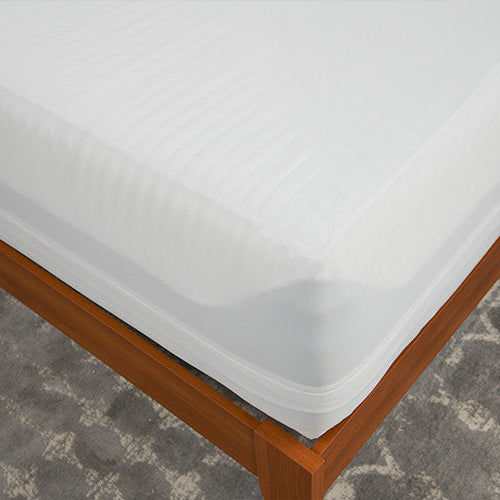
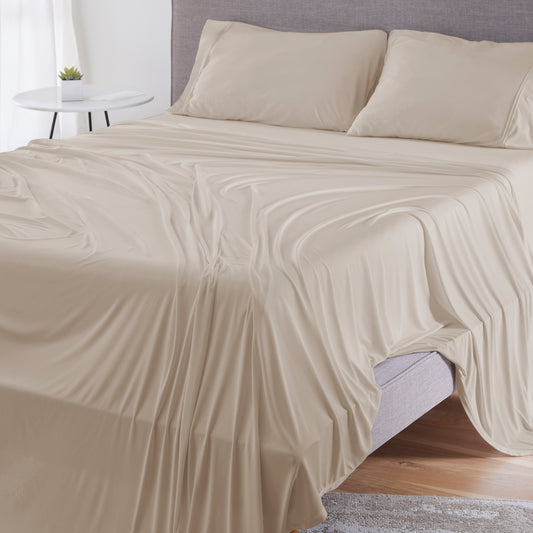
This guide covers what actually makes a protector allergen-proof, how the marketing labels differ from one another, and which of our protectors are built for allergy sufferers who also happen to sleep hot.
Let's start with why the bed is the problem in the first place. Read on to learn more below.
Why Your Mattress Is the Main Allergen Source in Your Bedroom
Your bed is the warmest, most humid, most consistently fed environment in your home. That combination is exactly what dust mites need to thrive.
It is also why a mattress accumulates far more of them than your carpet, your upholstery, or your curtains ever will. Learn more about why you need a protector to make your mattress allergy-friendly below.
What Dust Mites Actually Are
Dust mites are microscopic arachnids, far too small to see, but they're all over the place. They do not bite, they do not burrow into skin, and they are not a sign of an unclean home; they exist in essentially every occupied bedroom on the planet. They feed on the skin cells that every sleeper sheds overnight.
The mites themselves are not what sets off your immune system, though. The trigger is the protein in their waste and in the fragments of dead mites, which goes airborne when you move around on the mattress.
Every time you roll over, sit down on the bed, or pull back the covers, you send up a fresh dose and then breathe it in.
That is the mechanism behind morning congestion, itchy eyes, sneezing fits that fade by mid-morning, and nighttime coughing.
Why Washing Your Sheets Is Not Enough
Washing bedding weekly in hot water is absolutely worth doing, and it handles the allergen that has migrated up into your sheets.
What it cannot touch is the population living several inches down inside the mattress itself, which is where the bulk of it sits. Vacuuming a mattress has the same limitation, and it can make things worse in the short term by stirring allergen into the air, so holster that vacuum for a second.
A barrier protector changes the math in both directions at once. It stops skin cells from reaching the mites below, which limits what the existing population has to feed on, and it stops allergen from working its way back up to you.
At the end of the night, that two-way seal is the entire point of the product category.
What Makes a Mattress Protector Allergen-Proof
Plenty of protectors are labeled for allergies, but it's important to understand what that really means. The ones that earn the label share four characteristics, and it is worth knowing all four before you buy; the cheap end of the category tends to nail one and fail the rest.
It's for this reason that we prefer to use the term "Allergy-Friendly" when referring to our protectors.
1. A Tightly Woven Barrier Fabric
Dust mite allergen particles are extremely small, so an allergen-friendly cover needs a weave tight enough that they cannot pass through it. This is the single specification that separates a genuine barrier from a basic fitted cover. It is also the one most likely to be buried or left off a product page entirely.
If a listing calls itself hypoallergenic but says nothing about the weave or the barrier construction, treat that as a gap in the description rather than an assurance.
The word is doing marketing work, not engineering work.
2. Breathability, or You Will Not Keep It on the Bed
Here is the tradeoff that sinks most allergy bedding. The easiest way to build an impermeable barrier is a vinyl or plastic-backed laminate, and it does work; it also traps every bit of body heat and moisture against you. The result is a hot, clammy, crinkling sleep surface that a lot of people quietly strip off after a few weeks.
The protector you should buy is the one whose barrier is built into a breathable performance fabric, so it moves heat and moisture away from you while still sealing the mattress.
Blocking allergen and sleeping cool are not opposing goals. They just require better material engineering than a plastic sheet.
3. Fitted Protector or Full Encasement
A fitted protector covers the top and sides of the mattress and stays put with an elasticized skirt. For dust mite allergies this is usually the right call: mites concentrate in the sleep surface, which is exactly what a fitted protector seals, and it is far easier to strip and wash on a schedule.
A full encasement zips around all six sides. It is the stricter option, and it is the necessary one if you are dealing with bed bugs rather than allergies.
There is more on that distinction below, because the two problems send people to the same product page and the products are not interchangeable.
Our guide to what a mattress encasement is walks through the difference in more detail.
4. Machine Washable, at a Temperature That Matters
An allergen barrier is a maintenance item, not a set-and-forget one. Allergen still collects on top of the protector, so it needs regular laundering to keep doing its job. Check that the care instructions allow the warmest wash the fabric will tolerate.
Confirm it is machine washable at all before buying. Some laminated covers are spot-clean only, which makes them close to useless for this particular purpose.
Hypoallergenic vs. Allergen-Proof vs. Waterproof: What the Labels Mean
These three terms appear side by side on product pages and mean entirely different things.
Here is how they break down before we get into the details of each one. We also provide a more comprehensive breakdown below.
| Label | What It Means | Blocks Dust Mite Allergen? |
|---|---|---|
| Hypoallergenic | The material itself is unlikely to provoke a reaction. Unregulated term. | Not on its own |
| Allergen-Proof | Barrier construction that allergen cannot pass through in either direction. | Yes, this is the one |
| Waterproof | Liquid resistance against spills, sweat, and accidents. | Indirectly, by limiting moisture |
Hypoallergenic
Describes a material that is itself unlikely to provoke a reaction. It is an unregulated marketing term with no certification behind it. A hypoallergenic fill or fabric tells you the product will not be the source of a reaction; it does not tell you the product blocks anything.
Cotton is the classic example, frequently called hypoallergenic because untreated cotton fiber rarely irritates skin, even though a standard cotton weave is nowhere near tight enough to stop dust mite allergen on its own.
Allergen-proof
Sometimes written as dust mite proof, describes barrier function. The cover is constructed so allergen cannot pass through it in either direction. This is the property that actually matters for allergy sufferers, and it is the one to look for on the spec list.
We like to use allergy-friendly around these parts because allergy-proof is really just a fancy marketing claim.
Waterproof
Describes liquid resistance, which protects the mattress from spills, sweat, and accidents. It is related to allergen protection without being identical to it. A waterproof layer also limits the moisture that dust mites need to thrive, which is a real secondary benefit; just do not read waterproof as a guarantee of allergen barrier, or the other way around.
The short version: you want allergen-friendly construction first, breathable fabric second, and waterproofing as a useful bonus depending on your household.
If you are still deciding whether you need one at all, this post covers the case for a protector more broadly.
Our Protectors Built for Allergy Sufferers
We build protectors around performance fabric rather than plastic film, which is the direct answer to the breathability problem described above.
Both options below are machine washable and sized across the standard mattress range, so they slot into an existing setup without changing how you make the bed. Learn more about how BEDGEAR's mattress protectors can help below.

Dri-Tec Performance Mattress Protector
The Dri-Tec Performance Mattress Protector is built around moisture management via moisture-wicking fabric. The fabric moves sweat and humidity away from the sleep surface and lets it evaporate rather than settling into the mattress below.
For an allergy sufferer that is a double benefit. You get the barrier layer, and you get a drier mattress environment, which is a considerably less hospitable one for mites. This is the everyday pick for most sleepers.

Ver-Tex Performance Mattress Protector
The Ver-Tex Performance Mattress Protector adds a cool-to-the-touch surface to the same protective role. If you run hot, or if you have abandoned an allergy cover in the past because it turned the bed into a sauna, this is the version built for that exact problem.
The cooling surface is what keeps the protector on the bed year-round, and staying on the bed is what makes any protector effective in the first place. It is a comfort feature doing compliance work.
Not Sure Which Protector Fits Your Setup?
Our sleep experts can match you to the right protector based on how hot you sleep, what you are trying to block, and what is already on your bed. No upsell to the most expensive option on the floor.
Do Not Forget Your Pillows!
A mattress protector on its own leaves the second-largest allergen reservoir in the bed completely unaddressed. Your pillow sits directly under your face, collects skin cells and moisture at close range, and typically gets replaced far less often than people assume.
Anyone buying an allergen barrier for the mattress should be adding pillow protectors to the same order. The mattress is the bigger reservoir, but the pillow is the closer one, and closer matters when you are breathing through it for eight hours.
The same four criteria apply: barrier construction, breathable fabric, machine washable, and a zip closure rather than an open envelope so allergen cannot work its way in at the opening. While you are at it, it is worth checking how often a pillow should be replaced, because a protector on a ten-year-old pillow is treating the wrong problem.
Allergies vs. Bed Bugs: You Need Different Mattress Protectors
These two problems send people to the same product page, and the products genuinely are not interchangeable. Getting this wrong wastes money and leaves the actual issue in place.
A fitted mattress protector will not solve a bed bug problem. It leaves the underside of the mattress exposed, so it neither traps an existing infestation nor prevents bugs from harboring in the seams below. For bed bugs you need a fully zippered six-sided encasement built for that purpose, and you need it on the box spring as well as the mattress.
For dust mites, the opposite is true. A fitted allergen-barrier protector covers the surface where the mites concentrate and is much easier to remove and wash on a regular schedule, which is exactly the habit an encasement discourages.
If you are not sure which problem you have, the tell is bites. Dust mites do not bite. Bed bugs leave marks on skin, and they leave visible physical evidence around the mattress seams.
How to Care for an Allergen-Barrier Mattress Protector
Getting the protector on the bed is most of the work, sure, but the maintenance schedule is what sustains the benefit over time. Five habits cover it, and we provide some more context for each one below.
- Wash every one to two months: More often during allergy season or if symptoms flare. Allergen accumulates on top of the protector even though it cannot get through it.
- Use the warmest wash the care label allows: Heat is what breaks down allergen protein, so a cold wash removes far less than a warm one.
- Tumble dry per the label: Complete drying matters; residual dampness works against everything the protector is doing.
- Skip fabric softener and dryer sheets: They coat performance fabric and degrade its moisture-wicking behavior over time.
- Keep washing your sheets weekly: The protector handles the mattress; your sheets still collect allergen on top of it.
None of that is complicated, and it takes about the same effort as the laundry you already do.
The one habit worth building deliberately is the wash cadence, because a protector that never gets laundered slowly becomes the allergen reservoir it was meant to seal off.
Choosing the Best Mattress Protector for Allergies
Better nights come from removing the reservoir rather than chasing the symptoms around the room. The best mattress protector for allergies is the one that seals the sleep surface in both directions and stays breathable enough that you never even have to think about taking it off.
Put an allergen barrier on the mattress, matching protectors on the pillows, and a regular wash schedule on the calendar, and you're all set. That combination does more for how you feel at 6am than anything else you can add to the bedroom, and it costs a fraction of what most people spend on the alternatives.
Frequently Asked Questions About Mattress Protectors for Allergies
Still working through the details of allergy-friendly mattress protectors? Here are the questions we get asked most often about allergen barrier protectors.
What Is the Best Mattress Protector for Allergies?
Do Mattress Protectors Help With Dust Mite Allergies?
Are Mattress Encasements Machine Washable?
Is Cotton Hypoallergenic?
Do Mattress Protectors Prevent Bed Bugs?
How Often Should You Replace a Mattress Protector?