Alright, alright, alright. Matthew McConaughey went on Fox News and dropped a relationship tip nobody saw coming: the best thing you can do for your marriage is get rid of the king-size mattress. Sleep in a queen instead. Get close.
His reasoning is charming and pretty funny. He described waking up with his wife what felt like a football field away, then having to negotiate a 12-foot commute in each direction just to snuggle. Big bed, big distance.
Here is where we gently push back. Before you drag your king to the curb, it is worth asking what is actually pushing you apart at night. For most couples heading toward a sleep divorce, it is not inches. It is comfort.
What Is a Sleep Divorce?
A sleep divorce is when partners stop sharing a bed. Sometimes it starts as an occasional guest-room night. Sometimes it becomes permanent. Either way, it usually begins with a specific, fixable irritation rather than a relationship problem.
It is worth saying plainly that a sleep divorce is not a failure, and it does not mean you're doomed to be divorced. In fact, couples who sleep apart often report being kinder to each other, because chronic sleep loss makes everyone worse company. The real cost is the wind-down time and the closeness you give up to get there.
Here is the part worth sitting with. Couples do not need to sleep the same way to sleep well together. They need a bed that stops forcing them to.
What Causes a Sleep Divorce
The triggers are almost always the same short list, and none of them are really about the relationship, so don't panic yet. Snoring wakes the lighter sleeper on repeat. Movement travels across a mattress that should be absorbing it. One of you kicks off the comforter at 2am while the other layers up. And one of you is lying on a firmness level that was chosen by the other person.
Notice what all four have in common. They are properties of the sleep setup, not the people. That is genuinely good news, because setups are a lot easier to change than partners.
Does Mattress Size Prevent a Sleep Divorce?
This is where McConaughey's advice gets tested. Before the comfort conversation, it helps to know exactly what you gain and lose with each size, because the gap between a queen and a king is bigger than most people picture.
| Size | Dimensions | Per Person | Best For |
|---|---|---|---|
| Queen | 60" x 80" | 30" of width | Smaller rooms; couples who sleep close |
| King | 76" x 80" | 38" of width | Restless sleepers; kids and pets in the bed |
| California King | 72" x 84" | 36" of width | Taller sleepers who want the extra length |
| Split-Head King | 76" x 80" | 38" of width | Couples who want independent head adjustment |
The takeaway is that a king buys each of you roughly eight extra inches of personal territory, which is close to a full pillow's width. That is meaningful if one of you sprawls out across the bed. On the other hand, it is meaningless if the real issue is that one of you is overheating.
So, size answers the space question and nothing else. It does not touch snoring, heat, or firmness, which is why couples who upsize to a king and still sleep badly are usually surprised. They solved the argument they were not having.
Sleep Is Personal and Your Mattress Should Be Too
No two people sleep the same way. Period. One of you runs hot and one of you steals blankets, while one likes a plush sink-in feel; the other wants firm support or nothing at all. Body type, sleep position, bedtime routine; all different.
That is exactly where traditional mattresses fall down. A single fixed surface forces one of you to compromise every night, and nightly compromise is how sleep compatibility problems turn into separate bedrooms.
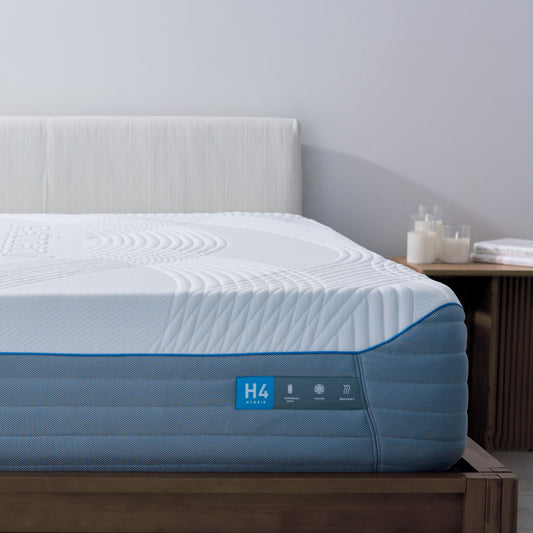
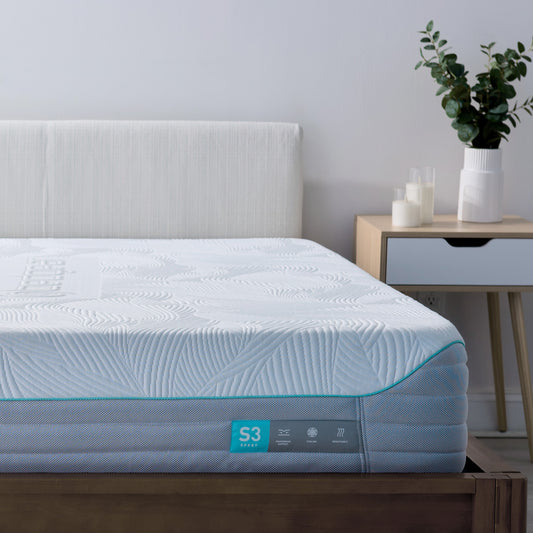
Our modular mattresses flip that script. Comfort layers are swappable per side, so each partner picks their own feel from firm, medium firm, medium plush, or plush, without changing anything about the other half of the bed.
Such a cool mattress. We were able to move the mattress by unzipping and taking off the 2 layers to make it less heavy. That is so awesome. That was a big reason we purchased but it's a great sleep mattress. Melissa, verified reviewer
How to Fix a Sleep Divorce Without Separate Bedrooms
Once you stop shopping by size alone, the checklist gets a lot more useful. These four variables map directly onto the four causes above, and they are worth testing in person before you buy. Learn more about how to prevent sleep divorce from turning into actual divorce below.
Independent Firmness on Each Side
The biggest threat to a good night's sleep is not snoring. It is compromise. When one partner needs firm support and the other wants a plush feel, a single-surface mattress guarantees somebody loses.
Look for a system where firmness is configured per side rather than averaged across the bed. Our M3 Performance® Mattress does this with swappable comfort layers, so the bed is built for two specific people instead of a statistical middle.
Airflow and Breathable Construction
Night sweats are not exactly a romance enhancer. Performance® fabrics and multi-directional airflow channels move heat and moisture away from the body so you are not waking at 2am to flip the pillow or kick off a layer.
This matters twice as much with two people, since two bodies generate twice the heat under the same comforter. Breathable, cool-to-the-touch construction reduces heat buildup and keeps both of you on the same side of the temperature argument.
Motion Isolation
If your partner gets up at 5am and you feel it in your spine, the mattress is transmitting motion it should be absorbing. Individually wrapped coil systems isolate movement to the side it started on.
This is the quiet fix for a lot of sleep divorces. Plenty of couples do not actually mind sharing a bed; they mind being woken up four times a night by someone rolling over.
Split-Head Options for Independent Adjustment
Sometimes closeness means letting each other read, watch TV, or scroll at completely different angles. A split-head king divides only the head section, so one of you can sit upright while the other lies flat.
The foot of the bed stays continuous, which means it still looks and feels like one bed rather than two twins pushed together. You keep the shoulder-to-shoulder part; you just stop fighting over the position of the base.
Built for Two People, Not an Average of Them
Our sleep experts fit both partners individually, then build one bed that works for both. No compromise, no ultimatums, no guest room.
Ending a Sleep Divorce Without Ending the Shared Bed
McConaughey is right that closeness is worth protecting. He is just prescribing a smaller bed for a problem that a smarter bed solves better. Shrinking your mattress reduces the distance between you, but it does nothing about the firmness mismatch, the heat, the snoring, or the 5am roll-over.
A sleep divorce is worth taking seriously, and it is also worth troubleshooting before you commit to it. Independent firmness per side, real airflow, strong motion isolation, and a split-head option for separate angles will resolve most of what sends couples to separate rooms. Keep the king if you love the king; just make it a bed that is configured for two different people.
If you are not sure where you land, go try one together. Both of you lying down on the same bed with different configurations is the fastest way to end the debate, and it is a much better use of an afternoon than shopping for a guest room mattress.
Frequently Asked Questions About Sleep Divorce
Still working out whether a sleep divorce is the answer? Here are the questions couples ask us most often.