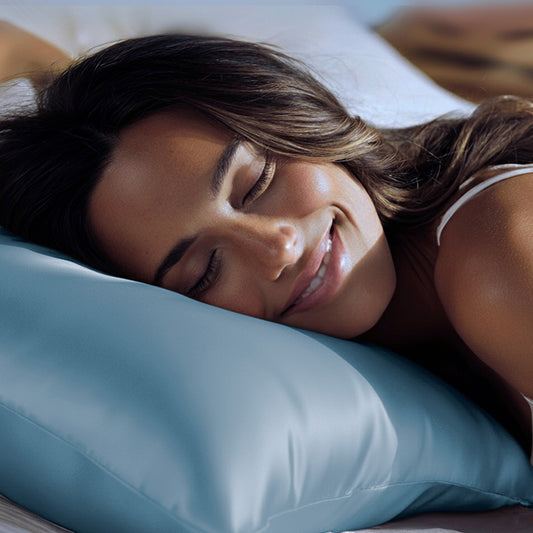
Your pillowcase touches your face and hair for roughly eight hours a night. That's more contact time than any serum, cream, or leave-in conditioner ever gets. So, the fabric doing all that touching matters a whole lot more than most people think.
In fact, the satin vs silk pillowcase question comes up constantly in beauty sleep conversations, and the answer is less obvious than it looks. This is due to the fact that both fabrics are smooth, and both beat cotton for friction. But one is a natural fiber and one is usually polyester wearing a very convincing costume; that difference shapes everything from breathability to your washing routine.
Let's break down how each one actually performs, for your hair, your skin, and your sleep. Read on to settle the debate.

The Difference Most People Miss: Fiber vs Weave
Here's the part that trips everyone up right out of the gate, and we can't fault anyone for it. Silk is a fiber; it's the natural protein thread spun by silkworms. Mulberry silk, the grade you'll see on premium bedding, comes from silkworms raised on mulberry leaves and produces the longest, smoothest strands.
In fact, satin isn't a fiber at all. It's a weave pattern that floats threads over one another to create that glossy, slippery surface. Most satin pillowcases are woven from polyester because it's affordable and durable; technically, you can even weave silk in a satin pattern, which is why the labels get confusing.
So when you compare the two, you're really comparing a natural fiber against a synthetic weave. Both feel smooth under your cheek. Where they split is breathability, moisture behavior, care, and cost.
Silk vs Satin at a Glance
Before we get into what each one does for your hair and skin, here's the side-by-side view of how the two materials stack up. Learn more in the chart below.
| Factor | Silk | Satin |
|---|---|---|
| What it is | Natural protein fiber from silkworms | A weave, most often made from polyester |
| Feel | Soft, smooth, subtle natural sheen | Glossy, slippery, high-shine surface |
| Breathability | High; helps release excess heat | Lower; polyester holds more warmth |
| Moisture behavior | Absorbs less; helps hair and skin keep natural moisture | Low absorbency, similar slip benefit |
| Care | Delicate or hand wash, air dry | Usually machine washable |
| Price | Premium investment | Budget friendly |
The table tells the short version: silk is the premium natural option, satin is the accessible one, and both are smooth enough to earn a spot in a beauty sleep routine.
Now, let's talk about what that actually means overnight.
Silk vs Satin Pillowcase for Hair
Every time you move in your sleep, your hair drags across your pillowcase. On cotton, that drag creates friction; friction roughs up the cuticle, and a roughed-up cuticle shows up in the morning as frizz, tangles, and breakage.
So, how do the two contenders handle it?
Round one: friction. Honestly, it's close to a tie. Both surfaces are slippery enough to let strands glide instead of snag, which may help reduce the overnight tugging behind friction-related breakage.
If you've ever wanted a blowout to survive until morning, either fabric is a real upgrade over cotton.
Round two: moisture. This is where silk pulls ahead. As a natural fiber, it absorbs noticeably less than cotton, which helps your strands hold onto hydration and natural oils through the night.
Polyester satin is also low-absorbency, so it protects moisture too; silk just does it while staying more breathable against your scalp.
Silk vs Satin for Curly and Textured Hair
Curls raise the stakes. Textured hair is more prone to dryness and frizz, so both the friction question and the moisture question hit harder here. That's why smooth pillowcases are a staple of curly routines; less drag means curls keep their definition instead of getting fluffed into frizz by morning.
Between the two, satin is the community favorite mostly on practicality; it's affordable enough to put on every pillow and tough enough to wash often. Silk delivers the same glide with better moisture behavior, which matters for coils that fight dryness.
Many sleepers with curls or protective styles skip the debate entirely and add a silk turban or bonnet for full coverage; more on that below.
Silk vs Satin Pillowcase for Skin
Your face gets the same eight hours of contact your hair does, and the matchup plays out across three fronts: sleep lines, product absorption, and sensitivity.
Round one: sleep lines. Press your face into a rough fabric for hours and you'll see the evidence in the mirror; those creases across your cheek take their time fading.
Both smooth surfaces create less drag as you shift positions, which may help minimize those temporary sleep lines. To be clear, no pillowcase prevents wrinkles; this is about friction, not skincare miracles.
Round two: your skincare budget. Absorbent fabrics soak up whatever you apply before bed; cotton takes a cut of that expensive serum every single night. Silk and polyester satin both take less, so more of your routine stays on your skin doing its job. Call this round even.
Round three: sensitive skin. A smoother surface gives reactive skin less to react to, and low-absorbency fabrics hold onto less oil and buildup between washes; some breakout-prone sleepers prefer them for that reason.
Silk's breathability edge helps here too, since a cooler surface is a calmer one. A pillowcase isn't an acne treatment; a clean, smooth one is just a friendlier place to spend the night.

The BEDGEAR Answer: Hyper-Silk Performance Pillowcase
The Hyper-Silk Performance Pillowcase is built for exactly this job: a silky-smooth, low-friction surface for your hair and skin, engineered with the breathability BEDGEAR builds into every Performance® fabric. It's beauty sleep without the heat penalty.
Silk vs Satin for Hot Sleepers
Here's the category most beauty blogs skip, and it's the one with the clearest winner. A pillowcase can be wonderful for your hair and still leave you flipping to the cool side at 2am, and an overheated night undoes plenty of the good your beauty routine is trying to do.
Silk is naturally breathable; it helps release excess warmth instead of trapping it against your face. Polyester satin, for all its slip, is still polyester; it tends to hold more heat, which warm sleepers notice by the second half of the night. This isn't a knock on satin's smoothness, just its physics.
If you already run hot, this category might outweigh every other one in the article. Quality sleep is the original beauty treatment; a fabric that helps you stay comfortable protects the recovery hours your skin and hair depend on.
For more on that connection, read the secret to waking up beautiful.
Silk vs Satin for Care, Durability, and Cost
The practical stuff decides more pillowcase purchases than the glamour stuff, so let's be honest about it. Polyester satin is the low-maintenance champ; most versions go straight into a normal machine cycle and come out fine. It's also the budget play, often costing a fraction of what real silk does.
Silk asks more of you, and if you have the time, that's a good thing. Cold delicate cycles or hand washing, gentle detergent, no bleach, and air drying away from direct sun; skip those steps and an expensive pillowcase ages fast. In exchange, you get the natural fiber benefits and that unmistakable feel.
Whichever way you go, please wash it regularly. Your pillowcase collects oils, product residue, and everyday buildup, and all of it ends up back on your face; every three to four days is the sweet spot.
While you're refreshing your routine, it's worth remembering the pillow itself matters just as much; our beauty sleep buying guide covers the full setup.
Satin vs Silk Pillowcase: The Final Score
Tally the categories and you get a split decision, which is exactly why this debate never dies. We know we said we'd settle it earlier, but settling it is personal.
Silk takes hair, hot sleepers, and sensitive skin; satin takes care and cost, and holds its own everywhere else. So match the winner to your priorities.
- You run hot at night: silk, or a performance fabric built to breathe. Trapped heat is the dealbreaker with standard polyester satin.
- You're on a budget: satin. You get most of the smoothness benefits for a fraction of the price.
- Curly or textured hair routine: either works; prioritize full coverage with a turban or bonnet alongside the pillowcase.
- Sensitive skin or a serious skincare routine: silk's breathability and low absorbency make it the premium pick.
- You hate hand washing: satin, no contest. Machine wash and move on with your life.
And if you'd rather not choose between smoothness and staying cool, that's exactly the gap BEDGEAR's beauty lineup was built to close.

Complete the Beauty Sleep Routine
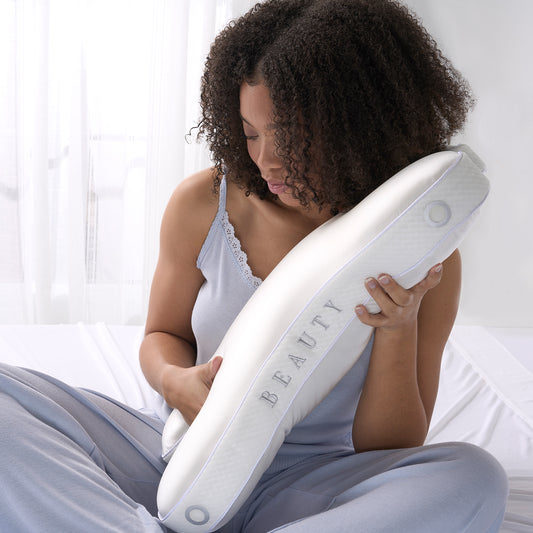
The pillowcase is step one. The Beauty Performance Pillow pairs your smooth surface with the support underneath, while the Hyper-Silk Turban, Hyper-Silk Sleep Mask, and Hyper-Silk scrunchies in skinny and plush keep hair protected from every angle.
Satin vs Silk Pillowcase: The Real Winner Is Your Routine
The satin vs silk pillowcase decision is simpler than the internet makes it. Both give your hair and skin a smoother night than cotton ever will. Silk brings natural breathability and the premium feel; satin brings the slip at an easier price with easier care.
Pick based on how you actually sleep, not just how the fabric photographs, and you won't have to worry about too much of a debate. If you run warm, prioritize breathability. If you're testing the waters, start with satin and upgrade later. At the end of the night, sometimes it's that simple.
And if you want the smooth-surface benefits engineered into a fabric built for performance, the BEDGEAR Beauty Collection was made for exactly that; your morning mirror will notice the difference before anyone else does.
Frequently Asked Questions About Satin and Silk Pillowcases
Still weighing the two fabrics? Here are the satin and silk questions that come up most.
Is Satin or Silk Better for Your Hair?
Are Satin Pillowcases Good for Curly Hair?
Do Silk Pillowcases Help With Wrinkles?
What Is Polyester Satin?
What Is the Difference Between Mulberry Silk and Satin?
How Often Should You Wash a Silk or Satin Pillowcase?