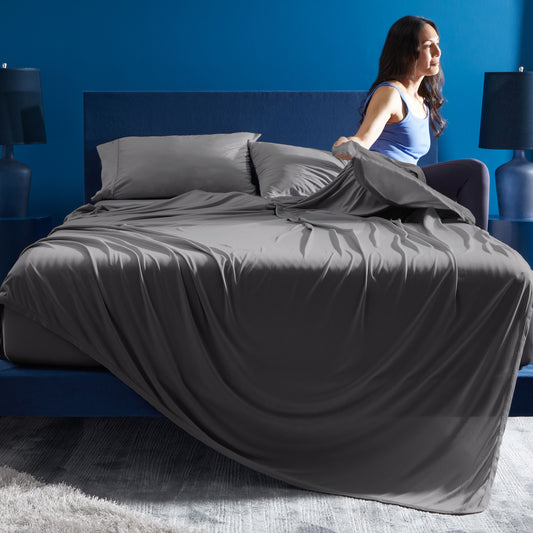
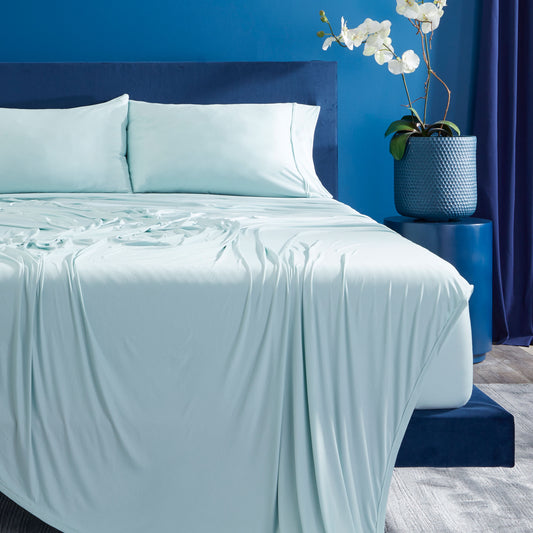
If you spend summer nights kicking off the covers and hunting for the cold side of the pillow, your sheets are probably working against you. Fabric matters more than most people realize; the wrong material traps heat and holds moisture right where you don't want it.
The best cooling sheets for summer come down to three things: breathability, moisture-wicking, and how the fabric feels on contact. Cotton percale, bamboo-derived fabrics, and linen all sleep cooler than heavy weaves. Performance fabrics like Ver-Tex® take it further with a surface engineered to feel cool to the touch.
Get the fabric right and summer nights stop being a fight; here's what to look for and which sheets actually deliver.
Why Your Sheets Matter More in the Summer
Your body needs to drop in temperature to fall asleep and stay asleep. That's not a preference; it's actually your biology. When your core temperature can't come down, you wake more often and spend less time in the deep sleep stages that actually restore you.
In the winter, bedding that holds warmth works in your favor. In summer, the same bedding becomes a massive heat trap. The sheet layer is where that battle is won or lost, because it sits directly against your skin for eight hours straight.
How Heat Gets Trapped in Bedding
Heat leaves your body two ways at night: radiating into the air and evaporating through sweat. Dense, tightly woven fabrics block both exits. The heat radiates into the fabric, the fabric holds it, and the warmth reflects right back at you.
Moisture makes it worse... much worse. When sweat can't evaporate, it sits on your skin and in the fabric, creating that clammy, stuck-to-the-sheets feeling. A damp sheet also clings, which cuts airflow even further; it's a cycle that feeds itself until you wake up.
What Hot Sleepers Should Look For
Hot sleepers need sheets that do two jobs at once: let air move through the fabric and pull moisture away from the skin. Breathability handles the radiant heat. Moisture-wicking handles the sweat.
A third trait matters more than people expect: contact feel. Some fabrics feel cool the moment you touch them, while others feel warm before you've even settled in. If you run hot, that first-contact coolness sets the tone for the whole night. Our bed sheet buyer's guide covers the full checklist if you want to go deeper.
What Makes Sheets Cool to the Touch
"Cooling" gets slapped on a lot of packaging, so it helps to know what actually creates the effect. It comes down to three levers: the fiber, the weave, and the finish. Each one changes how a sheet handles heat and moisture.
No single lever does everything. A breathable fiber in a dense weave still sleeps warm; a great weave in a moisture-holding fiber still gets clammy. The best cool bed sheets for summer get all three working together.
Breathability and Airflow
Breathability is about how easily air passes through the fabric. Open weaves like percale allow steady airflow; heavy sateen and microfiber restrict it. More airflow means body heat vents out instead of pooling under the covers.
This is also where thread count myths do real damage. Cramming more yarns into every inch closes the gaps air needs to move through. A moderate thread count in a breathable weave will outperform a sky-high count nearly every time; we break down why in our post on thread count myths.
Moisture-Wicking Performance
Wicking is the fabric's ability to pull sweat off your skin and spread it out so it evaporates fast. It's the difference between a sheet that stays dry to the touch and one that feels damp by midnight. For hot sleepers, this trait is non-negotiable.
Natural fibers wick to different degrees; bamboo-derived fabrics and linen do it well, standard cotton less so. Engineered fabrics are built for it. Our Dri-Tec® sheets, for example, are designed around moisture-wicking as the headline feature, which makes them a strong pick for sleepers who sweat through summer nights.
Bamboo vs. Cotton Sheets for Summer
This is the matchup everyone searches, and for good reason; they're the two most common natural options on the shelf. Both can sleep cool in summer, but they get there differently and trade off in breathability, moisture-wicking, durability, and price. Here's how they stack up side by side.
| Factor | Bamboo | Cotton |
|---|---|---|
| Breathability | Very good; light, airy drape | Excellent in percale; weaker in sateen |
| Moisture-Wicking | Strong; pulls sweat off skin quickly | Absorbs moisture but dries slower |
| Feel | Silky, smooth, drapes close | Crisp and dry, softens over time |
| Durability | Good with gentle care; can pill | Very good; handles frequent washing |
| Price | Typically mid to premium | Wide range; strong budget options |
The short version: bamboo edges out cotton on wicking and softness, while cotton wins on durability, crispness, and price flexibility. Neither is a bad summer choice. The right call depends on which traits match how you actually sleep.
Where Bamboo Wins
Bamboo-derived fabrics shine for sleepers who sweat. The fibers pull moisture away fast and the fabric keeps a light, silky drape that doesn't cling when things get humid. If your summer problem is waking up damp, bamboo addresses it directly.
The trade-off is care. Bamboo fabrics tend to be more delicate, prefer gentle wash cycles, and can pill or thin faster than sturdy cotton. They also usually cost more per set, so factor lifespan into the math.
Where Cotton Holds Up
Cotton's summer strength is the percale weave: a crisp, matte, one-over-one-under construction that breathes beautifully. That's the crisp hotel-sheet feel, and it stays cool because air moves through it freely. Cotton also survives hot summers of frequent washing better than almost anything.
Standard cotton's weakness is drying speed; it absorbs sweat but holds onto it. Enhanced cotton constructions close that gap. Our Hyper-Cotton sheets pair the natural cotton feel with a performance knit built for airflow and quick-drying, which gets you cotton comfort without the clammy downside.
Performance Fabrics: The Third Option
Bamboo vs. cotton is the classic debate, but it's not the whole menu, and this last one might surprise you. Performance fabrics are engineered from the ground up to manage heat and moisture, rather than relying on what a natural fiber happens to do well. For genuinely hot sleepers, this category is usually where the search ends.
Think of it like athletic wear. Nobody runs a July 5K in a heavy cotton tee anymore; technical fabrics took over because they breathe, wick, and dry faster. The same engineering has come to bedding, and summer is exactly when it earns its keep.
How Ver-Tex® Technology Works
Ver-Tex® is our cool-to-the-touch performance fabric, and the contact feel is the first thing people notice. The surface is engineered to feel cool the instant your skin hits it; no waiting for the fabric to "catch up" to you. On a humid night, that first impression matters.
Beyond the initial touch, Ver-Tex® is built to reduce heat buildup through the night and move moisture away from your body. The fabric stays smooth and dry-feeling instead of turning damp and clingy. If summer heat is your main sleep complaint, the Ver-Tex® sheet set is the most direct answer in our lineup.
Beyond Ver-Tex®: Other Performance Options
Different hot sleepers have different problems, which is why performance bedding isn't one fabric. Dri-Tec® leads with moisture-wicking for sleepers whose main issue is sweat. Hyper-Cotton delivers a natural cotton hand with performance airflow built in.
Then there's linen, the old-school summer favorite, reimagined. Our Hyper-Linen sheets keep the airy, relaxed breathability linen is famous for while softening the rough, wrinkled texture that scares people off. It's a strong pick for sleepers who want that light, beachy feel with less fuss.
Not Sure Which Fabric Fits Your Sleep?
Every sleeper runs a little different. Compare cool-to-the-touch, moisture-wicking, and breathable options side by side and match the fabric to how you actually sleep.
How to Choose Cool Sheets for Summer
By now the pattern is clear: the best summer sheets balance breathability, moisture-wicking, and contact feel. The last step is matching those traits to your specific situation. Two hot sleepers can need two different sheets.
Run through two quick filters before you buy: how you sleep, and how much maintenance you're willing to do. Those two answers narrow the field fast.
Match the Fabric to How You Sleep
Start with your main complaint. If you wake up sweaty, prioritize moisture-wicking; Dri-Tec® and bamboo-derived fabrics lead there. If you just run warm and hate that trapped-heat feeling, breathability and cool-to-the-touch contact matter most; that's Ver-Tex® and percale territory.
Couples should plan for the warmer sleeper. A cool sheet does no harm to someone who sleeps comfortably, but a warm sheet ruins the night for someone who runs hot. Solve for the person flipping their pillow at 2am.
Care and Durability Considerations
Summer sheets get washed a lot; sweat, sunscreen, and open windows all see to that. Check the care label before you buy. Cotton and performance knits generally handle frequent washing well, while delicate bamboo weaves prefer a gentler routine.
One rule protects every cooling fabric: skip the fabric softener. Softeners and dryer sheets coat the fibers that do the wicking work, and that coating builds up wash after wash. Cold water, mild detergent, low heat; that's the whole playbook.
Frequently Asked Questions About Cool Sheets for Summer
Stay Cool This Summer With the Right Cool Sheets for Summer
The best cooling sheets for summer aren't a luxury upgrade; they're the fix for a problem you deal with every single night from June through September. Breathability, moisture-wicking, and cool-to-the-touch feel are the three traits that matter. Everything else is marketing.
Whether you land on crisp percale, silky bamboo, airy linen, or an engineered fabric like Ver-Tex®, choose the top cooling sheets for summer based on how you actually sleep. Hot and sweaty points one direction; warm and restless points another. Get that match right and the 2am pillow flip becomes a thing of the past.