

Stop Counting Threads and Start Counting Zzzs™: Exploring Thread Count Myths
Thread count is one of the most repeated numbers in bedding. It's also one of the most misleading. A higher count doesn't mean better sleep; it often means the opposite.
What actually determines how well you sleep is airflow. Your body needs to drop in temperature to reach deep, restorative sleep. Sheets that trap heat fight that process all night long.
Thread count is one of the most repeated numbers in the bedding industry. It's on every tag, in every product description, and behind most of the "premium" pricing you've seen on sheets. The problem is that it doesn't actually tell you what you think it does. A higher number doesn't mean better sleep; it often means the opposite.
What actually determines how well you sleep is actually airflow and breathability. In fact, your body needs to drop in temperature to reach deep, restorative sleep; sheets that trap heat fight that process from the moment you get into bed.
For these reasons, BEDGEAR doesn't engineer sheets around thread count. Instead, we engineer them around the conditions your body needs between 2 and 6 a.m., when sleep quality is doing its most important work.
Thread Count Is a Marketing Myth
Here's what thread count actually measures: the number of threads woven into one square inch of fabric, horizontal and vertical combined. That's it. It's a measure of weave density; nothing more. It tells you nothing about yarn quality, fabric type, durability, or how the sheet will actually feel after six months of washing.
The luxury bedding industry turned thread count into a proxy for quality because it's a number that's easy to print on a label. Higher sounds better. But past a certain point, cramming more threads into an inch of fabric requires thinner, lower-quality yarn — and the resulting weave is so dense that air can't move through it. That's not a performance upgrade. It's the opposite of one.
What Is a Good Thread Count for Sheets?
A good thread count for sheets falls between 200 and 400. Below that range, sheets tend to feel rough and wear out quickly. Above it, the weave becomes so dense that airflow is restricted; that works directly against the temperature drop your body needs to reach deep sleep.
The number itself matters less than the material and construction behind it. A 300-thread-count sheet built with performance fabric will outperform a 1,000-thread-count sheet built to trap heat. Focus on what the fabric is engineered to do, not the number on the tag.
The Luxury Lie: High Thread Count Sheets
So, what's all this about a luxury lie and high thread count sheets? Well, don't worry, we'll tell it to you straight. Yes, dense weaves feel buttery in the store, but that's actually the whole trick. So, it's for this reason that a 600 or 800-thread-count sheet creates that smooth, heavy feel that reads as "expensive" when you run your fingers across it — or, you know, watch an unboxing video. However, that density comes at a cost that shows up at 3 a.m., and not at the point of purchase.
So, here's what the numbers actually show. First and foremost, research on sleep and thermoregulation consistently finds that the body needs to drop roughly 1 to 2 degrees Fahrenheit to transition into deep sleep. What's more, dense fabric traps radiated body heat at the surface and slows that drop. The result is more time in light sleep, more frequent waking, and less time in the slow-wave and REM stages where physical recovery actually happens. You know, the sleep you actually need.
Single-Ply vs. Multi-Ply: How Thread Count Gets Inflated
A ply is the number of individual strands twisted together to form a single thread. Single-ply yarn is one strand; two-ply yarn is two strands twisted together. The weaving is the same either way, but some manufacturers count each thread strand separately when calculating thread count.
That means a sheet woven at 300 threads per inch using two-ply yarn gets labeled as 600 thread count. The weave didn't change. The fabric density didn't change. Instead, just the number on the tag doubled because of how they counted. In fact, this has become such an issue that the FTC has called this practice out as misleading; it's one of the main reasons thread count stopped being a reliable indicator of quality.
Single-ply construction at a moderate thread count actually produces a stronger, more breathable sheet than multi-ply at an inflated count. Finer single strands allow more air to pass through the weave. More air means better temperature regulation. Better temperature regulation means deeper sleep. The math isn't complicated once you know what the number actually represents.
What Actually Makes Bed Sheets High-Performance?
Thread count tells you how dense the weave is. That said, it tells you nothing about how the fabric manages heat, moves moisture, or holds up after a year of washing. Instead, performance comes from the materials and the engineering, so not just the number on the tag. Here's what that actually looks like.
Moisture-Wicking Bed Sheet Technology
Moisture is the other half of the overheating problem. When sweat builds up at the sleep surface, it raises humidity and keeps heat trapped against the skin. Moisture-wicking fabric pulls sweat away from the body and moves it through the weave so it can evaporate. The result is a drier, cooler surface through the night, and that's without the clammy feeling that wakes you up at 3 a.m.

The Dri-Tec Performance® Sheet Set is built around exactly this. Soft enough to feel like a performance upgrade; functional enough to actually be one. If moisture is your primary sleep disruptor, this is where to start.
Shop Dri-Tec SheetsQuick-Dry Fabric Bed Sheet Construction
Cotton has a reputation for softness, but traditional cotton holds moisture and dries slowly — which works against you as a sleep surface. Quick-dry construction moves moisture away from the body faster than standard cotton weaves, maintaining a cleaner microclimate through the night. You get the familiar feel of cotton with the thermal management standard cotton can't deliver.

That's the engineering behind the Hyper-Cotton Performance® Sheet Set. It's the entry point into BEDGEAR's performance sheet lineup; approachable price, genuine upgrade over conventional cotton construction.
Shop Hyper-Cotton SheetsInstant-Cooling Technology
Some fabrics manage heat passively — they allow airflow and hope for the best. Instant-cooling technology works differently. It reacts on contact, drawing heat away from the skin the moment you get into bed rather than waiting for ambient airflow to do the work. For hot sleepers who overheat before they even fall asleep, that distinction matters.

The Ver-Tex Performance® Sheet Set is BEDGEAR's most advanced cooling sheet. The cooling is active, not passive; it works with your body's thermoregulation from the first second of contact. If you've tried other sheets and still wake up hot, this is the next step.
Shop Ver-Tex SheetsClassic Bed Sheet Construction Done Right
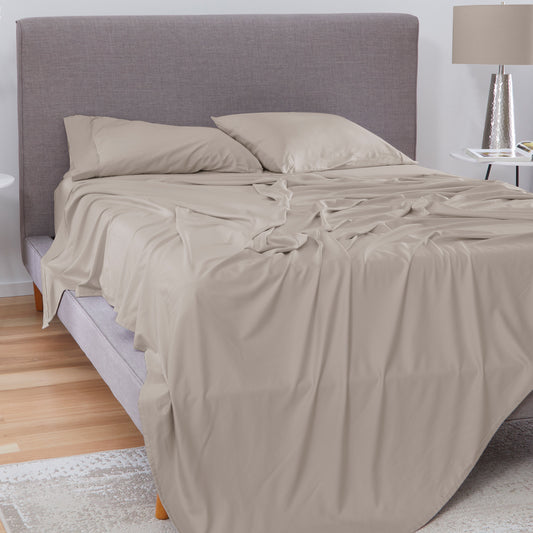
Not every sleeper needs active cooling or moisture-wicking technology. Some people run at a comfortable temperature and want a clean, well-made sheet that holds its feel over time. Straightforward construction; no performance claims it doesn't need to make. Sometimes the right sheet is just a well-built one.
The Basic Sheet Set is that sheet. It's BEDGEAR's no-frills option — built with the same quality standards as the performance lineup, without the added technology that a comfortable sleeper doesn't need.
Shop Basic SheetsBreathable Linen Construction Bed Sheets
Linen is one of the most naturally breathable fabrics available. The fiber structure allows air to move through it freely — which is exactly what the sleep surface needs to support temperature regulation. Looser weave, better airflow, and a texture that softens with every wash. For sleepers who want breathability without synthetic materials, linen construction is the answer.

The Hyper-Linen Performance® Sheet Set takes that natural breathability and builds it into a sheet engineered for consistent performance night after night. If you've been sleeping hot on cotton and want a natural-fiber alternative, this is worth a serious look.
Why Overheating Destroys Your Sleep
Most people know overheating feels uncomfortable at night. So, fewer people realize how specifically it damages sleep architecture. In fact, it doesn't just make you restless; it actively pulls you out of the sleep stages where your body does its most important work.
Your Body Temperature Has to Drop to Sleep
Sleep onset is triggered by a drop in core body temperature. Research published in the Handbook of Clinical Neurology found that the body needs to shed heat through the skin to initiate and maintain sleep; when that process is blocked, sleep latency increases and deep sleep decreases. A drop of just 2 to 3 degrees Fahrenheit in core temperature is what moves you from wakefulness into slow-wave sleep. Sheets that trap heat at the surface slow that process down every single night.
What Overheating Does to Your Sleep Stages
Deep sleep, or specifically slow-wave sleep, is where the body repairs tissue, consolidates memory, and releases growth hormone. It's also the stage most sensitive to thermal disruption. A 2019 study in the National Library of Medicine found that even modest increases in sleep temperature reduced slow-wave sleep duration significantly.
Unfortunately, less slow-wave sleep means slower physical recovery, higher cortisol the next morning, and lower pain tolerance. For athletes or anyone with an active recovery need, overheating isn't a minor inconvenience; it's a measurable performance hit.
Night Sweats, Restlessness, and the Wake Cycle
Night sweats are the body's emergency cooling response. When the sleep surface traps too much heat, core temperature climbs past the threshold the body can manage passively; sweating kicks in to compensate.
That process triggers partial arousal — you may not fully wake up, but you move out of deep sleep into lighter stages. Over the course of a night, those micro-arousals add up. You spend more time in light sleep, less time in REM, and wake up feeling like you didn't rest even if you were in bed for eight hours.
Soft Sheets Still Matter but It's Not Everything
Soft sheets aren't the problem. The problem is when softness becomes the only thing a sheet is engineered to deliver. A dense, buttery weave feels great between your fingers in a store; it feels a lot less great when it's trapping heat against your body at 2 a.m. Softness and performance aren't mutually exclusive — but one of them has to come first in the design process.

BEDGEAR sheets are soft. That's not an accident and it's not a compromise. The difference is that the softness is built around airflow, not in spite of it. For this reason, every material choice starts with breathability and moisture management; the feel follows from there. So, you don't have to choose between a sheet that's comfortable and one that actually lets you sleep.
Stop Buying Sleep Like You're Buying Status: Get the Right Thread Count
A linen closet full of high thread count sheets looks impressive, sure, but at 3 a.m., it means nothing. Your sheets aren't a status signal; they're a recovery tool. The only thing that matters is what they do while you're unconscious — whether they're keeping you cool, managing moisture, and staying out of the way of the sleep your body is trying to get.
Therefore, you need to shop for performance, not prestige. The number on the tag won't tell you how you'll feel in the morning. Instead, the engineering behind the fabric will.
It's for this reason that BEDGEAR Performance® Sheets are built around that principle; every material, every weave, every construction decision starts with the question of what your body actually needs between 2 and 6 a.m. That's the only thread count that matters. Still, thread count is only one piece of the puzzle; we offer a comprehensive bed sheet guide that can help you learn more.
Frequently Asked Questions
Still have questions about thread count and sheet performance? Here are the most common ones.
What is the best thread count for sheets?
The best thread count for sheets depends on what you're optimizing for. If you sleep hot or prioritize deep, uninterrupted sleep, a lower thread count in a breathable, performance-grade fabric will serve you better than a high thread count in a dense weave. BEDGEAR Performance® Sheets are engineered for airflow and moisture management rather than a thread count number.
What does thread count mean in bedsheets?
Thread count refers to the number of threads woven into one square inch of fabric — both horizontal and vertical threads combined. It's a measure of weave density, not quality. A higher number doesn't automatically mean softer, more durable, or better-performing sheets. Fabric type, yarn quality, and weave construction all have a greater impact on how sheets actually feel and perform over time.
Do high thread count sheets sleep hotter?
Yes. A denser weave leaves less space for air to move through the fabric. That restricts the airflow your body needs to maintain the temperature drop that drives deep sleep. High thread count sheets tend to trap body heat, which increases restlessness, night sweats, and light sleep — especially between 2 and 6 a.m. when sleep quality matters most.
Are 1000 thread count sheets worth it?
Not for sleep performance. A 1,000-thread-count sheet is extremely dense, which means minimal airflow and significant heat retention. That may feel luxurious to the touch in a showroom, but at 3 a.m. it works against the conditions your body needs for deep, restorative sleep. Performance fabric construction at a moderate thread count delivers a meaningfully better night's rest.
Ready to Sleep Smarter?
Engineered for airflow, not thread count. Built for the hours that actually determine how you feel in the morning.
You May Also Like
-

 ClassicRegular price $59.99Sale price $59.99 Regular priceUnit price per
 -

 Regular price $39.99Sale price $39.99 Regular priceUnit price per
$39.99


