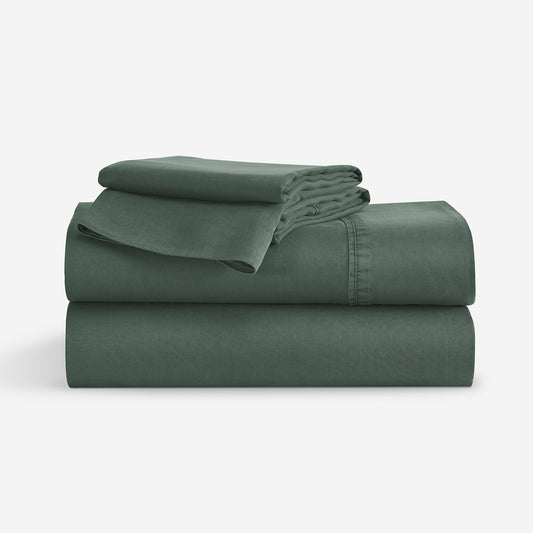
Bamboo sheets are everywhere right now, and the labels don't always make things clearer; we heard the message, and we're here to clear things up for you. First, you'll notice three fabrics: Rayon, viscose, lyocell, and bamboo-derived. Now, that's a lot of words for one kind of fabric, right? Well, here's a straight answer on what bamboo sheets are, how they're made, and who tends to love them.
What Even Are Bamboo Sheets?
Bamboo sheets are bed sheets woven from fibers that start as a little bamboo pulp. The plant is processed into a soft, smooth fiber called regenerated cellulose, and from there, it's spun into yarn and woven into the fabric you're looking for. What's more, the finished sheets feel silky and cool to the touch, with a fluid drape that's closer to silk than to crisp cotton.
That said, you'll also see them called bamboo viscose, bamboo rayon, or bamboo lyocell sheets. Still, all these names point to the same basic idea; they simply describe how the fiber was made. Don't worry, we'll sort out all these differences in a minute.
What Are Bamboo Sheets Made Of?
So, what are bamboo sheets made of? Bamboo sheets are made of regenerated cellulose fiber sourced from the bamboo plant. Cellulose is the structural material in plants, and it's the same base used for fabrics like modal and standard rayon. Therefore, the bamboo plant is the raw material, and the fiber is what comes out the other side. So, no, you're not sleeping on bamboo stalks or anything like that.
This all matters because no raw bamboo fiber survives the process. Therefore, sheets aren't woven from crushed stalks, which is why "100% bamboo" on a label should raise an eyebrow. Accurate phrasing names the fiber, such as lyocell made from bamboo, and does not dive into flashy buzz words to move the sales needle.
How Bamboo Sheets Are Made
Curious how a bamboo stalk becomes a sheet? It's a five-step trip, and one that's more interesting than you may think.
- Harvest: Mature bamboo is cut and chipped into small pieces and harvested.
- Pulping: Bamboo chips are broken down into a soft cellulose pulp that's useful for fabrics.
- Dissolving: The pulp is dissolved in a solvent until it becomes a thick solution.
- Spinning: The bamboo solution is pushed through fine holes to form long fibers, which are then washed, dried, and prepped for further use.
- Weaving: Finally, the fibers are spun into yarn, woven into fabric, then finished and cut into the sheets you sleep on.
Now, it's that solvent step is what separates one bamboo fiber from another. Conventional viscose uses harsher chemicals, while lyocell runs a closed-loop process that captures and reuses most of its solvent. In fact, that single difference drives most of the quality and sustainability talk around the bamboo bedding industry.
Rayon, Viscose, and Lyocell: What's the Difference?
These three fabric types, Rayon, Viscose, and Lyocell, are what cause most of the confusion in the bamboo aisle. We cover how they compare to one another in the chart below.
| Fiber | How It's Made | How It Feels | Good to Know |
|---|---|---|---|
| Rayon From Bamboo | Pulp is dissolved with chemical solvents, then spun into fiber | Soft, smooth, and drapey | Rayon is the umbrella term for regenerated cellulose fibers |
| Viscose From Bamboo | The most common rayon process | Silky with a slight sheen | On a label, rayon and viscose are essentially the same fiber |
| Lyocell From Bamboo | A closed-loop process that recovers and reuses most of its solvent | Smooth, cool, and a bit more substantial | Typically stronger when wet and a common pick for premium sets |
So, is bamboo rayon the same as bamboo viscose? On a sheet label, essentially yes, actually. Lyocell, therefore, is the real outlier, and that's thanks to its closed-loop process and better wet strength. Plus, our own Bamboo Performance® Sheet Set uses lyocell made from bamboo for exactly that reason.
Is Rayon From Bamboo a Natural Fiber?
Rayon is not quite a natural fiber, although it's not fully synthetic, either. Rayon from bamboo is usually called semi-synthetic or regenerated, because the raw material is a plant but the fiber is created through a chemical process.
Why the Label Says "Rayon Made From Bamboo"
The FTC requires textiles to be labeled by their actual fiber, which makes sense for the consumer. Because bamboo sheets are rayon, the label has to say so, usually as "Rayon made from bamboo" or "Viscose from bamboo." Only fabric made from mechanically processed bamboo fiber can be called bamboo outright, and that's rare in the bedding industry. You can read the FTC's guidance on bamboo labeling (opens in a new tab) for the full rules.
All that being said, this is good news for shoppers. A brand that names the fiber is telling you exactly what you're buying, and while a vague, the "100% bamboo" tag is a reason to ask questions, that's for sure.
What Do Bamboo Sheets Feel Like?
The first thing most people notice is the cool, smoothness that bamboo materials can offer. Bamboo-derived fabric sits flat against your skin, so it feels cool the moment you climb in. Moreover, it's silky rather than crisp, with a fluid drape that settles over you instead of tenting up.
Plus, sets with a stonewashed finish take it a step further and feel broken-in from the very first night. For the full picture on comfort, though, see our guide to the benefits of bamboo sheets. There, we cover how these sheets can be even more helpful for your sleeping needs.
What Sleeper Are Bamboo Sheets For?
Bamboo sheets suit some sleepers better than others, and it's helpful to understand that before you dive right in. We cover some sleep traits that go well with bamboo sheets below.
Hot Sleepers
You want a cool touch and fabric that moves moisture instead of holding it.
Silky-Feel Fans
You love the slip of silk but want something washable and practical.
Restless Sleepers
A smooth, low-friction surface means less drag as you shift positions.
Maybe Not You If...
You wash hot, dry on high, and want sheets that shrug off rough treatment.
That last one isn't a dealbreaker; it just means bamboo asks for a gentler laundry routine. If you'd rather not think about wash settings at all, cotton is the easier fit, especially if you don't want to wait a long time for them to wrap up.
How Bamboo Sheets Compare to Cotton and Linen Fabrics
Bamboo is the silkiest of the three and that leads to cool-to-the-touch feel that the other two fabrics can't quite match. Cotton is the most durable and the easiest to care for, with crisp percale winning on airflow. Last but not least, linen is the most textured and breathable, though regular linen takes a while to soften up.
We break both matchups down in our bamboo vs. cotton sheets guide and our bamboo vs. linen sheets guide.

Bamboo Performance® Sheets
Lyocell from bamboo, stonewashed for a relaxed feel, with a cool touch and engineered airflow.
Explore Bamboo PerformanceHow Do You Care for Bamboo Sheets?
Bamboo sheets are easy to live with once you know the rules; otherwise, you can ruin them quick. Be sure to wash on cool or cold and on a gentle cycle with a mild detergent. Also, do yourself a favor and skip the bleach and fabric softener. Lastly, tumble dry on low or line dry, and then pull them out promptly to keep wrinkles to a minumum.
Those few habits protect the softness and cool feel that made you buy them in the first place. Our bed sheet buyer's guide covers how often to wash them, and offers some additional sheet buying insight you can leverage.
So, What Are Bamboo Sheets? The Bottom Line
At the end of the night, bamboo sheets are woven from rayon, viscose, or lyocell made from bamboo pulp, and they're best-known for a silky feel and a cool touch. It's also important to note that the fiber type, weave, and finish matter far more than the word bamboo written on the front of the package. So, make sure you look for a label that names the fiber and you'll know exactly what you're getting.
Are you ready to feel the difference? Our Performance® sheets pair cool-to-the-touch fabrics with a Powerband® fit that stays put all night.
Frequently Asked Questions About Bamboo Sheets
Still sorting out what bamboo sheets are? Or do you have a few more questions? Here are the questions we hear about bamboo sheets the most.