So you've narrowed it down to two finalists: hybrid or memory foam. Congratulations! You've already survived the hardest part of mattress shopping, which is realizing that "luxury plush euro-top gel cloud" is not a category. Now you just need a straight answer, and most comparisons won't give you one because they're written to sell you whatever's in stock.
Here's ours, and we'll referee it honestly. Memory foam earns real wins; hybrid earns more of them for more people; and the newest evolution of the hybrid makes the whole "pick one feel forever" premise optional.
Let's break it down.
What Is a Memory Foam Mattress?
A memory foam mattress is built entirely from foam layers: a dense support foam base with softer, viscoelastic foam on top. That top layer is the famous part. It responds to heat and pressure, softening where your body presses in and cradling your shape with that slow, sinking hug memory foam is known for.
The strengths for them are real. That contouring distributes weight beautifully, which is why foam feels so pressure-relieving at the shoulders and hips. It also absorbs movement better than almost anything else; a partner can toss and turn and the wave mostly dies before it reaches you as you sink further into bliss.
The weaknesses are structural, though, not cosmetic. Dense foam traps body heat with nowhere for it to go, the deep sink can make changing positions feel like a small workout, and foam softens over the years until body impressions set in.
Every all-foam mattress is negotiating with those three problems, so it's a real give and take.
What Is a Hybrid Mattress?

A hybrid mattress pairs foam comfort layers with a support core of individually wrapped coils. The foam up top handles contouring and pressure relief; the coils underneath handle responsive support, edge stability, and, crucially, airflow.
Instead of a solid block of heat-trapping material, a hybrid has open space inside where air can actually move.
That structure is why hybrids answer memory foam's three big problems. Coils spring back instantly, so repositioning is easy rather than a slow-motion escape. Air circulates through the coil layer, so heat has an exit. And a well-built coil core holds its support for years after an all-foam build would have started sagging.
In our mattresses, airflow isn't an accident of the coil layer; it's engineered on purpose. Air vents, breathable mesh side panels, and ventilated foams create continuous cross-ventilation through the build, an approach reflected in our patented airflow mattress design.
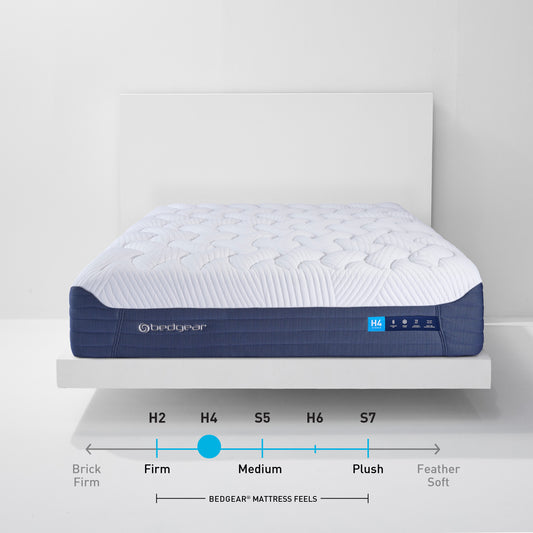
Our H Performance® Pillowtop Mattress is the clearest example of the modern hybrid: an integrated React™ Blend Pillowtop that conforms like foam lovers want, over foam-encased coils that support like foam can't.
Hybrid vs Memory Foam Mattress: A Side-by-Side Comparison Chart
Here's the whole debate in one table to make your life a little bit easier. We'll unpack the wins on both sides below, but if you're the skim-and-decide type, this is your section.
Hybrid vs Memory Foam at a Glance
| Factor | Memory Foam | Hybrid |
|---|---|---|
| Feel | Slow, deep, body-hugging sink | Conforming on top, responsive underneath |
| Support | Good at first; relies entirely on foam density | Responsive coil support that keeps the spine aligned |
| Cooling | Dense foam retains body heat | Coil layer allows airflow; heat has an exit |
| Motion Isolation | Excellent; foam absorbs nearly all movement | Very good with individually wrapped coils |
| Edge Support | Weak; edges compress under weight | Strong; usable surface edge to edge |
| Durability | Foam softens; body impressions over time | Coil core resists sagging for longer |
| Best For | Light sleepers who prize contour and stillness | Most sleepers, hot sleepers, couples, combination sleepers |
Scoreboard says hybrid takes more categories, but two of memory foam's wins matter a lot to specific sleepers. The good news? We're going to dive even deeper into this below.
Where the Memory Foam Mattress Wins
Motion isolation is memory foam's signature move. Foam absorbs energy instead of transferring it, so a restless partner's movement mostly stays put. If you're an extremely light sleeper sharing a bed with a human rotisserie, that's a genuine argument.
The deep contouring is the other win; nothing hugs pressure points quite like viscoelastic foam, which is why side sleepers with sharp pressure complaints often gravitate toward it.
All-foam builds also tend to cost less, since foam is cheaper to produce than a quality coil system. If budget is the deciding factor and you sleep cool, alone, and mostly in one position, memory foam is a defensible pick.
That's a fairly specific sleeper, though, and it's worth being honest about whether it's you. Once another human body is in that bed, or even a pet, that foam can heat up in a hurry.
Where The Hybrid Mattress Wins
Everywhere else, frankly. Support is the big one: coils push back as your body presses in, keeping the spine aligned instead of letting the midsection slowly sink out of position. That responsiveness also makes repositioning effortless, which matters more than people expect; combination sleepers change positions all night, and fighting foam every time adds up.
Cooling is nearly a forfeit. A coil core is mostly air, so heat moves through and out of a hybrid while it just accumulates in dense foam. Edge support goes the same way; foam edges collapse when you sit or sleep near them, while a reinforced coil perimeter keeps the full surface usable. For couples, that's effectively extra mattress you're not paying extra for. And if two of you share the bed, the case gets even stronger; hybrids check the boxes our guide on sleep compatibility keeps coming back to.
The Mattress Durability Question
The data says a lot of you are asking how long each type of mattress lasts, and it's the right question; a mattress is a decade-long purchase pretending to be a one-night decision. The honest answer favors hybrids.
Foam softens with every night of compression, and eventually the spot where you sleep becomes a permanent impression. A quality coil core resists that fate much longer, which is why the support side of a hybrid usually outlives the comfort side.
That last sentence is the interesting part. In any mattress, the comfort layer wears out first; in a conventional mattress, that means the whole thing goes to the curb because one layer got tired. Our modular design breaks that logic.

In our modular mattresses, the comfort layer is a component, not a commitment. When it wears, or when your preferences change, you swap in a replacement comfort layer and keep the coil core that's still doing its job.
What's more, our patented serviceable design turns durability from a countdown into a maintenance plan; no other construction in this comparison can say that.
Hybrid vs Memory Foam by Sleep Position and Need
Categories are useful, sure, but you sleep in a position, not a category, right? So, let's get into that for a little bit.
Here's the quick verdict for the situations people actually need.
For Side Sleepers
Side sleepers need contour at the shoulder and hip plus support that keeps the spine level, and that combination is exactly what a hybrid with a conforming comfort layer delivers.
Pure memory foam contours beautifully but can let the hips sink too deep, especially for heavier sleepers. A pillowtop hybrid like the H Performance® Pillowtop gives side sleepers the plush landing with the structure underneath.
For Back Pain
Support that keeps the spine in neutral alignment is the priority, and the responsive coil core of a hybrid holds that alignment more reliably than foam alone as the night (and the years) wear on.
The right firmness still depends on your body and position; conforming layers over coils may help relieve pressure while the support holds. Our mattress buyer's guide covers how to match firmness to your sleep position.
For Stomach Sleepers
Stomach sleepers are the sleepers memory foam serves worst. Deep sink at the midsection arches the lower back, and foam's slow response makes it worse the longer you lie there.
A hybrid with a firmer comfort configuration keeps the hips up and the spine flatter; this is the clearest positional win for coils.
For Hot Sleepers
Hybrid, and it isn't close. Foam's heat retention is structural; a coil core's airflow is structural too, and airflow wins.
If you run especially hot, a hybrid engineered for cooling, with a cool-to-the-touch cover and ventilated construction, compounds the advantage.
For Couples
Couples need motion isolation, edge support, and cooling all at once, and hybrids with individually wrapped coils are the only construction strong in all three.
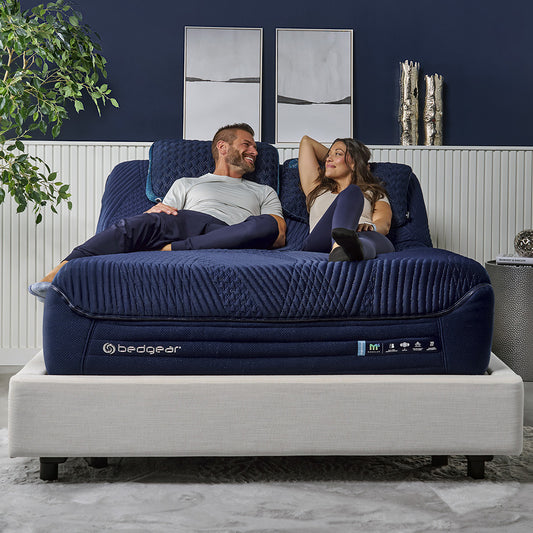
A modular hybrid adds the fourth thing couples actually need: per-side firmness, so two different sleepers stop negotiating over one surface.
What About Spring vs Memory Foam vs Hybrid?
Traditional innerspring mattresses use an open coil network with minimal foam; they're bouncy, cool, and cheap, but they transfer motion freely and offer little contouring.
Think of the hybrid as the peace treaty: foam's pressure relief, spring's support and airflow, neither one's biggest flaw. Our comparison of hybrid versus traditional mattresses goes deeper on that matchup.
What About Gel Memory Foam?
Gel infusion is memory foam's apology for sleeping hot. The gel absorbs some body heat, which helps the surface feel cooler at first contact, but the heat still has nowhere to go once the gel saturates.
It treats the symptom; airflow treats the cause. A breathable hybrid doesn't need the apology.
The Modular Hybrid Mattress: Skip the Tradeoffs

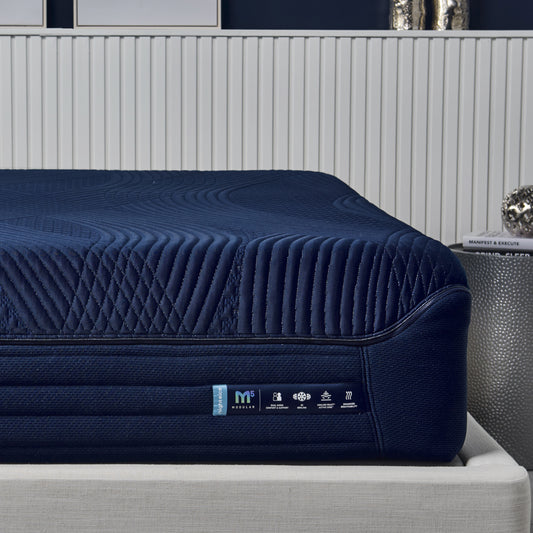
Here's the part the classic hybrid-versus-foam debate never accounts for: both sides assume you pick one feel and live with it. Our modular Performance® Mattresses, the M3 and M5, are hybrids built on a patented modular design with swappable comfort layers and independent suspension units.
Prefer a foam-forward, conforming feel? Configure it. Want firmer and more responsive? Configure that instead; and if you share the bed, configure each side differently.
That flexibility rewrites the question this whole article is answering. "Hybrid or memory foam?" assumes the answer is permanent; modular means it doesn't have to be. You get the coil support, airflow, and durability that win the comparison, plus the ability to tune the comfort feel as your body, your partner, or your preferences change.
At the end of the night, it's the hybrid's advantages without the hybrid's one remaining limitation.
Why Choose One Feel Forever?
Our modular Performance® Mattresses deliver hybrid support and airflow with comfort layers you can swap, per side, over time. Pick a feel today; change your mind whenever you want.
Hybrid vs Memory Foam Mattress: BEDGEAR's Verdict
In the hybrid vs memory foam mattress debate, memory foam wins two categories that matter to a narrow group: maximum motion absorption and the deepest contour, usually at a lower price. Hybrid wins everything else: support, cooling, edge-to-edge usability, easier repositioning, and a lifespan that doesn't hinge on how fast foam softens. For most sleepers, and almost all couples, hot sleepers, and combination sleepers, the hybrid is the better mattress.
If you want the plushest version of that answer, the H Performance® Pillowtop delivers memory-foam-style conforming comfort on a coil core. If you want to stop answering the question entirely, go modular with the M3 or M5 and make "which feel?" a setting instead of a sentence.
Either way, your next mattress should work with how you sleep; not ask you to adapt to it.
Frequently Asked Questions
Still comparing? These are the questions sleepers ask most about hybrid and memory foam mattresses.