Your heart doesn't clock out when you go to bed. During deep, restorative sleep, heart rate slows, blood pressure drops, and your cardio system gets the recovery window it simply can't get anywhere else. That nightly reset isn't a bonus; no, it's a biological requirement. And the quality of your sleep determines whether your heart actually gets it or not.
The research is clear: sleep duration, sleep quality, and sleep consistency all carry independent weight when it comes to cardiovascular health. Poor sleep doesn't just leave you groggy. Over time, it keeps blood pressure elevated, disrupts hormonal balance, and increases the risk of heart disease. Here's what the science says, and what you can do about it right this second because sleep is no joke. Read on to learn more below.
Why Sleep Matters for Your Heart
Sleep is the body's most underrated cardiovascular tool. Most people know diet and exercise matter for heart health; fewer realize that the hours they spend unconscious carry equal weight. The American Heart Association now includes sleep as one of its Life's Essential 8 (opens in a new tab) pillars of cardiovascular health; sleep is now alongside diet, physical activity, and blood pressure management. That's not a footnote; no, it's a fundamental shift in how the medical community thinks about heart health, and we're just happy to finally see that shift taking place.
Sleep Duration Influences Heart Disease Risk
Adults who regularly sleep fewer than seven hours a night are significantly more likely to develop high blood pressure; one of the primary drivers of heart disease and stroke. In fact, the association isn't subtle. We found that research published in the American Journal of Lifestyle Medicine found that short sleep duration appears causally related to cardiovascular risk, independent of other lifestyle factors. The hours matter.
It's not just about falling short of seven hours on a bad night. Chronic short sleep is the issue. When the body is regularly denied adequate rest, blood pressure stays elevated longer than it should, inflammatory markers rise, and your cardio system never fully recovers from the previous day. That accumulates over time in ways that don't show up until they do.
What Happens to Your Heart While You Sleep
Sleep isn't passive. During deep sleep stages, the body undergoes a process called nocturnal dipping; a natural 10–20% decrease in blood pressure that gives the heart a genuine rest. In fact, research from the American Heart Association's journal Hypertension (opens in a new tab) shows that inconsistent sleep schedules directly reduce the depth of that nightly dip. Therefore, less dipping means the heart works harder through the night instead of recovering.
Heart rate also slows during deep sleep, reducing the total workload on the cardio system over those hours. Tissue repair accelerates. Stress hormones fall. The body is doing real work during that time; it just doesn't feel like it because you're unconscious, but there's a lot going on under the hood when you're tuckered out. A sleep surface that disrupts those stages, through heat, pressure points, or partner movement, cuts that recovery short every single night.
The Cost of Cutting Sleep Short
Most people understand that a bad night's sleep makes the next day harder. However, fewer people understand that consistently poor sleep makes the next decade of your life much harder. A 2024 review in the American Journal of Preventive Cardiology (opens in a new tab) found short sleep duration strongly associated with cardiovascular mortality, cardiometabolic risk factors, and coronary artery disease. Sadly, these aren't fringe findings, and they tend to reflect a growing body of evidence pointing in the same direction.
On the bright side, the mechanism isn't all that complicated. Essentially, every night of poor sleep is a night the cardiovascular system doesn't get its full recovery window. Do that consistently and the cumulative load adds up. Blood pressure trends higher. Inflammation persists. The risk profile shifts. At the end of the day, sleep isn't a lifestyle nice-to-have; it's one of the most direct levers people have on long-term heart health.
The Science Behind Sleep & Cardiovascular Function
The connection between sleep and heart health isn't theoretical. There are specific, measurable processes happening in your body every night that either support or strain your cardiovascular system. Understanding what those processes are makes it a lot easier to understand why sleep quality matters as much as sleep duration. We cover them in detail below.
Blood Pressure Regulation
First and foremost, the nocturnal blood pressure dip is one of the most important cardiovascular events that happens every day — and most people have never heard of it. During healthy sleep, systolic blood pressure drops by roughly 10–20%. That reduction gives the arterial walls a nightly rest from the mechanical stress of full daytime pressure. Research published in the American Journal of Physiology (opens in a new tab) found that disrupting deep slow-wave sleep directly attenuates that dip. Miss the deep sleep; miss the pressure drop.
When the dip doesn't happen — a pattern called non-dipping — the cardiovascular system stays under load through the night. Non-dippers show higher rates of hypertension, left ventricular hypertrophy, and cardiovascular events than people whose blood pressure follows a healthy nocturnal pattern. The mattress, the bedroom temperature, the pillow — anything that fragments sleep and keeps the body from reaching deep stages is a factor in whether that dip actually occurs.
Hormones & Metabolic Balance
Poor sleep doesn't just affect the heart directly; it affects the hormonal environment the heart operates in. Cortisol, the body's primary stress hormone, is supposed to follow a predictable daily rhythm — high in the morning, low at night. Disrupted sleep throws that rhythm off, keeping cortisol elevated during hours when it should be falling. The National Sleep Foundation (opens in a new tab) notes that chronically elevated cortisol promotes arterial inflammation; one of the core mechanisms behind long-term cardiovascular disease.
Moreover, insulin sensitivity is also tied to sleep quality. Even a few nights of poor sleep measurably reduces the body's ability to regulate blood glucose, which over time contributes to metabolic syndrome — a cluster of conditions that significantly elevates cardiovascular risk. As you can see, sleep is the reset button for these systems. Without it, the imbalances compound.
Consistency Is Key
Did you know that how regularly you sleep matters as much as how long? Well, The American Heart Association (opens in a new tab) has linked irregular sleep patterns to higher risks of obesity, cardiovascular disease, high blood pressure, and persistent inflammation. The body's circadian rhythm governs dozens of biological processes; when sleep timing shifts from night to night, those processes lose their anchor.
The practical implication is straightforward. Going to bed at wildly different times each night (even if total sleep hours add up) disrupts the hormonal and cardiovascular rhythms that depend on consistency. A regular schedule isn't just good advice for feeling rested. It's one of the more impactful things a person can do for long-term heart health.
Sleep Quality: Practical Actions to Protect Your Heart
Better sleep isn't just about logging more hours. Instead, it's all about what happens during those hours, and whether or not your body actually reaches the deep sleep stages where the real cardiovascular recovery occurs. Environment, comfort, and consistency all play a role. Here's where to start.
Create a Heart-Friendly Sleep Environment
The bedroom environment sets the conditions for everything that follows. A dark, quiet room reduces sensory input that can pull the brain out of deep sleep. A consistent bedtime and wake time anchors the body's circadian rhythm, which governs blood pressure patterns, cortisol levels, and heart rate variability overnight. These aren't complicated interventions; they're the foundation everything else builds on.
Temperature is the variable most people underestimate. The body needs to drop its core temperature by roughly 1–2 degrees Fahrenheit to initiate and maintain deep sleep. A room that's too warm fights that process, and so do a sleep surfaces that trap heat. For these reasons, getting the thermal environment right is one of the highest-leverage changes most people can make for sleep quality.
Airflow Starts at the Sleep Surface
Sheets and pillows are the first point of contact between your body and the sleep environment. If those materials trap heat and moisture, the body spends the night trying to regulate temperature rather than recovering. It's for this reason that BEDGEAR's Air-X® Technology (opens in a new tab) is engineered specifically to move air through the sleep surface rather than against it; pulling heat away from the body and keeping the microclimate around you cool and dry through the night.
The difference shows up in deep sleep time. When the body isn't working to manage heat, it stays in the restorative stages longer. That's where blood pressure drops, cortisol falls, and the cardiovascular system gets the recovery it needs. Performance® Sheets (opens in a new tab) built with Air-X® aren't a luxury upgrade; for hot sleepers, they're a direct input into sleep quality.
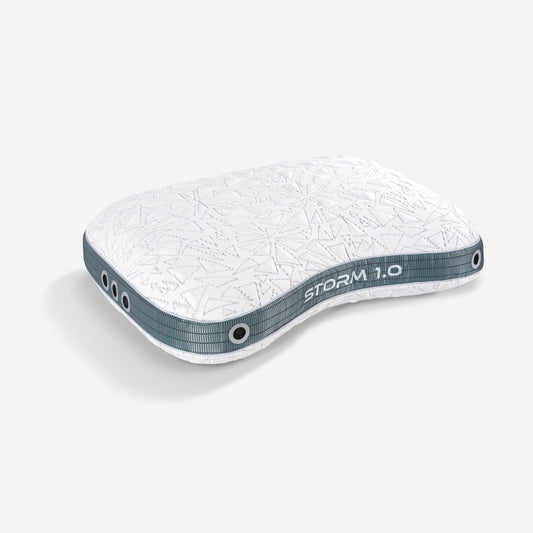
The Right Pillow Changes More Than You Think
Pillow fit affects spinal alignment from the neck down. A pillow that's too high or too low throws the cervical spine out of neutral, which creates tension that keeps the body in a lighter, more reactive sleep state. That tension doesn't have to be painful to be disruptive. Low-grade discomfort is enough to prevent the body from fully settling into deep sleep stages.
BEDGEAR's PillowID™ quiz (opens in a new tab) matches sleepers to the right pillow based on sleep position, shoulder width, and body type. It's a personalization tool, not a gimmick. The right fit means less repositioning, less tension, and more time in the sleep stages that actually matter for recovery.
Your Mattress Is the Foundation
Everything else in the sleep system sits on top of the mattress, so it really serves as your sleep foundation. If the mattress is creating pressure points, misaligning the spine, or trapping heat, no amount of good sleep hygiene fully compensates. A supportive, breathable mattress removes those variables from the equation. BEDGEAR's Performance® Mattresses (opens in a new tab) are built around airflow, zoned support, and individually wrapped coil systems that respond to the body rather than forcing the body to adapt to a fixed surface.
For the cardiovascular system specifically, what matters is whether the mattress supports uninterrupted deep sleep. Pressure points and heat buildup both cause micro-awakenings; brief disruptions that don't fully wake you but pull you out of deep sleep stages repeatedly through the night. A mattress that eliminates those disruptions is one that keeps the body in the recovery window longer.
Protect What You've Built
A mattress protector might be the least glamorous part of a sleep system. It's also one of the most practical. A protector keeps the mattress performing the way it was designed to; free of allergens, moisture, and the breakdown that comes from unprotected use over time. BEDGEAR's Performance® Mattress Protectors (opens in a new tab) are built with the same breathable construction as the rest of the lineup. They add a barrier without adding heat; which means the airflow and temperature regulation of the mattress underneath stays intact.
Allergens are worth calling out specifically. Dust mites and other common allergens that accumulate in an unprotected mattress can trigger nighttime congestion and inflammation; both of which fragment sleep and reduce the time spent in deep, restorative stages. Protection isn't just about extending the life of the mattress. It's about preserving the sleep environment you've built, and this is why you need a mattress protector, even if you have the best bed on Earth.
Sleep Hygiene Tips
Having the right sleep environment gets you most of the way there, even if you're not exactly ready for a bedding change quite yet. That said, the habits you build around it also close the gap. These five practices have the most direct impact on sleep quality and, by extension, your cardio health.
Stick to a Sleep Schedule
The body's circadian rhythm is a biological clock, and it runs on consistency. Going to bed and waking up at the same time every day and, yes, this includes weekends, keeps that clock calibrated. When it's calibrated, the body starts preparing for sleep before you even get into bed; core temperature begins to drop, melatonin rises, and heart rate starts to slow. That preparation is what makes falling asleep easier and staying asleep more likely.
The cardiovascular benefit is direct. A consistent sleep schedule supports the regular nocturnal blood pressure dip that the heart depends on for overnight recovery. Irregular schedules disrupt that pattern. Even shifting sleep timing by an hour or two on weekends — a phenomenon researchers call social jetlag — has been associated with measurable increases in cardio risk markers. For these reasons, consistency isn't just about feeling rested; it's about keeping the body's recovery systems on schedule.
Wind Down Before Bed
The transition from wakefulness to sleep isn't a switch. It's a gradual process the body needs time and the right conditions to complete. A wind-down routine in the 30–60 minutes before bed signals the nervous system to shift out of alert mode. That means dimming lights, stepping away from screens, and avoiding anything that demands active cognitive engagement. The goal is to lower arousal so the body can follow.
From a cardiovascular standpoint, the wind-down period matters because cortisol and adrenaline need time to fall before the heart can settle into its overnight recovery rhythm. Checking email or scrolling through news right up until lights out keeps those hormones elevated longer than they should be. A genuine wind-down isn't a luxury; it's the on-ramp to restorative sleep.
Optimize Your Bedroom for Sleep
The bedroom environment is an active input into sleep quality, not a neutral backdrop. Light, noise, and temperature all affect how quickly you fall asleep, how deeply you sleep, and how often you wake. Blackout curtains or a sleep mask eliminate the light exposure that suppresses melatonin. A white noise machine or earplugs buffer against sounds that cause micro-awakenings. A cool room — somewhere between 65 and 68 degrees Fahrenheit for most people — supports the core temperature drop the body needs to enter deep sleep.
Each of these variables has a downstream effect on cardiovascular recovery. Light exposure at the wrong time disrupts melatonin and circadian rhythm. Noise-induced micro-awakenings prevent the blood pressure dip from completing. Heat keeps the body in lighter sleep stages. Optimizing the bedroom isn't about comfort for its own sake; it's about removing the obstacles between you and the deep sleep where heart health recovery actually happens.
Watch What You Eat and Drink at Night
What goes into the body in the hours before bed has a direct effect on sleep quality. Caffeine has a half-life of roughly five to six hours, which means a 3pm coffee is still half-strength at 8pm. Alcohol is worth addressing specifically because it's widely misunderstood; it may help you fall asleep faster, but it fragments sleep in the second half of the night and suppresses REM sleep. Neither effect is good for cardiovascular recovery.
Large meals close to bedtime are also a factor. Digestion elevates heart rate and body temperature; both of which work against the conditions the body needs for deep sleep. A light snack is fine, sure, but a heavy steak dinner within two hours of bed is consistently associated with worse sleep quality. The rule of thumb is simple: the lighter and earlier the better, and caffeine should be cut off by early afternoon. As a quick side note, keep the protein on the lighter side before bed. We know your body needs it, but your body also uses more energy to digest it.
Move Your Body During the Day
Regular physical activity is one of the most well-documented interventions for both sleep quality and cardiovascular health. Exercise increases the proportion of deep slow-wave sleep, which is exactly the stage where blood pressure drops and the most meaningful cardiac recovery occurs. It also reduces baseline cortisol and improves heart rate variability; both markers of cardio resilience.
Still, timing matters, and you should not be doing sprints 30 seconds before bed. In fact, vigorous exercise within two to three hours of bedtime can elevate heart rate and core temperature enough to delay sleep onset for some people. Morning or afternoon exercise tends to deliver the sleep benefits without that trade-off. The type of exercise matters less than the consistency; moderate daily movement is more valuable for sleep quality than occasional intense sessions separated by long stretches of inactivity.
How BEDGEAR Helps You Sleep Better, Every Night
The science is clear on what the body needs to sleep well: the right temperature, the right support, and an environment that stays consistent through the night. BEDGEAR builds every Performance® Sleep Essential around those variables. Breathable construction, personalized fit, and airflow-focused materials aren't marketing language; they're the specific things that determine whether your body reaches deep sleep or spends the night just below it.
So, why do we do all of this? Well, because the sleep system you build matters, and we want to help you build the perfect one. A mattress that traps heat, a pillow that throws your neck out of alignment, or sheets that hold moisture aren't neutral. They're active obstacles to the restorative sleep your cardiovascular system depends on every night. BEDGEAR's lineup removes those obstacles; from the Performance® Mattress (opens in a new tab) underneath to the personally fit pillow (opens in a new tab) on top.
Not Sure Where to Start?
BEDGEAR's sleep experts are trained to match you to the right sleep system based on your body type, sleep position, and temperature preferences. No guesswork required.
Sleep Your Way to a Healthier Heart
Sleep is where the body repairs, resets, and recovers. Every night is an opportunity for the cardiovascular system to do work it can't do any other way; blood pressure drops, inflammation quiets, and the hormonal environment resets for the day ahead. That process doesn't require anything complicated. It requires consistent, deep, uninterrupted sleep in an environment built to support it.
Start with what you can control. A regular schedule, a cool room, and a sleep system that fits your body are the highest-impact changes most people can make. The rest follows. Your heart is working for you every hour of every day; giving it a proper recovery window every night is one of the most direct things you can do for your long-term health.
Frequently Asked Questions
Have more questions about sleep and cardiovascular health? We've answered the most common ones below.