Poor sleep isn't usually one big problem. Nope. It's a handful of small ones that compound. The caffeine you had at 3pm or the hour you spent scrolling before bed. It can even be the fact that the room is too warm or that the pillow's loft is slightly wrong. In fact, even something subtle, like an inconsistent bedtime, keeps your body guessing, which keeps you up at night. Sure, none of those things would ruin your sleep on their own, but together, they add up.
Thankfully, there's some good news to salvage out of all of this. For example, the science on sleep improvement is pretty consistent: small, repeatable changes to your habits and environment produce real results. You don't need a complete lifestyle overhaul. Instead, you just need the right levers, pulled in the right order. Stick around and learn more about what the research actually supports.
7 Science-Backed Tips to Sleep Better
These aren't hacks or quick fixes. Each one is backed by research, practical to implement, and builds on the others. Stack a few of them and you'll feel the difference quickly. Stack none of them an, well, get used to bad sleep.
Limit Afternoon Caffeine
First and foremost, let's take it easy with the caffeine. This is because Caffeine works by blocking adenosine receptors — the receptors responsible for making you feel sleepy. The problem is that it stays active in your system for six to eight hours after you drink it. So, that 3pm coffee is still doing something at 9pm; it's just making it harder to fall asleep rather than keeping you alert enough to be productive.
Luckily, we're not going to sit here and tell you to quit caffeine, because plenty of us at BEDGEAR dabble. So, no, the fix isn't quitting coffee, it's moving your cutoff earlier. Most sleep researchers recommend stopping by early-to-mid afternoon. If you're sensitive to caffeine, 1pm is a safer target. You'll likely notice the difference in how quickly you fall asleep within a few days.
Keep Moving During the Day
Regular physical activity increases the amount of slow-wave sleep you get — the deepest, most restorative stage. Now, you don't need an intense training session for it to count. A simple 30-minute walk, a lunchtime workout, an active commute: moderate movement during the day is enough to produce a measurable improvement in sleep quality by the time you get into bed.
One thing worth knowing: intense exercise within two to three hours of bedtime can raise your core body temperature and delay sleep onset for some people. Morning and afternoon workouts tend to work better for sleep, so if it's not a relaxing evening walk around town, you may want to try saving it for the morning. That said, we're an understanding bunch. If evenings are your only window, keep the intensity moderate and give yourself time to cool down.
"As a physical therapist, my work focuses on recovery from pain and injury, prevention, and helping people move better for longer. Better sleep quality supports better outcomes — whether you're rehabbing an injury, training hard, or simply trying to feel better day to day." Dr. Glen Rowell, PT, DPT, OCS
Give the Tech a Timeout
Blue light from phones, tablets, and televisions suppresses melatonin production and signals the brain to stay alert. Most sleep researchers recommend putting screens away at least 30 to 60 minutes before bed. But the light is only part of the problem. The content itself — news feeds, social media, work emails — is cognitively activating in ways that make it hard to wind down even after the screen goes off. We get it; it's tough to doom scroll and then pass right out.
Therefore, a book, a podcast, some light stretching: anything that doesn't require a screen gives your nervous system the space it needs to shift gears. The goal isn't perfection; it's creating a gap between the stimulation of the day and the stillness you're asking your brain to move into.
Create a Wind-Down Routine
Sleep doesn't switch on like a light, although, we really wish it did. Your body needs a transition period to move from the activation of the day toward the conditions that allow sleep to actually happen. A consistent wind-down routine creates that transition, and over time it becomes a signal your body starts to recognize and respond to before you even get into bed.
It doesn't need to be elaborate. Twenty to thirty minutes of something low-stimulation — a shower, some light reading, a few minutes of breathing or stretching — is enough. The consistency matters more than the specific activity. Do the same things in the same order and your nervous system starts to anticipate what's coming. So, cut back on the Call of Duty before bed, and consider light reading, meditation, or something else to help you relax before bed.
"When we get enough sleep, we are more empathic, and better communicators. When we are sleep-deprived, we are more reactive, less generous, and more prone to conflict." Dr. Wendy M. Troxel, PhD
Set the Mood
Light and temperature are the two biggest environmental signals your body uses to determine whether it's time to sleep. Bright overhead lighting in the evening delays melatonin release; dimming the lights an hour before bed accelerates it. A room temperature between 65 and 68°F supports the core temperature drop your body needs to initiate and maintain sleep.
Sound and scent play a supporting role. White noise or a fan can mask disruptive sounds and create a consistent auditory environment. What's more, lavender has some research behind it as a mild sleep aid. None of this needs to be complicated. At the end of the night, the point is that your environment either supports the sleep process or it competes with it. Therefore, small adjustments in the right direction add up.
Stick to the Schedule
Consistency is probably the single most effective lever in sleep improvement. Going to bed and waking up at the same time every day — including weekends — regulates your circadian rhythm and makes falling asleep, staying asleep, and waking up feeling rested significantly easier over time. Sleeping in on weekends feels like a recovery move; it's actually working against you by shifting your internal clock.
The wake time is the anchor. If you can only control one end of the schedule, control the morning. A consistent wake time pulls the rest of your sleep timing into alignment more reliably than trying to manage your bedtime directly. Lock in the morning, and the rest tends to follow.
Optimize Your Sleep Environment
Last but not least, don't forget about optimizing your sleep environment. Your bedroom should be doing active work to support sleep and not just serving as the room where sleep happens. Keep an eye on temperature, light, and sound are the big three; your pillow, mattress, and bedding are a close second. A pillow that holds your neck in the wrong position for six to eight hours is creating a problem that no wind-down routine can fix once you're actually in bed.
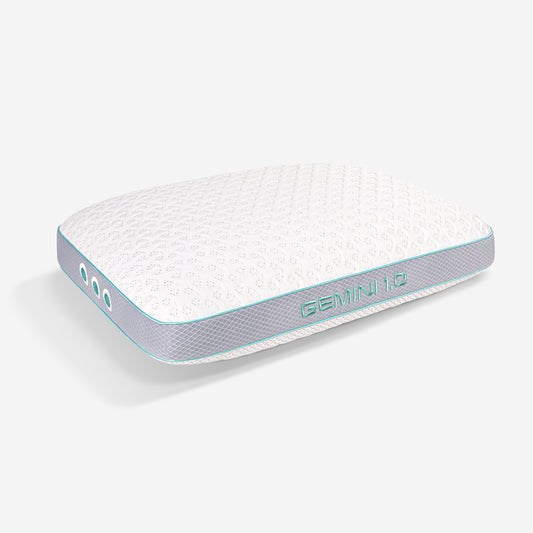
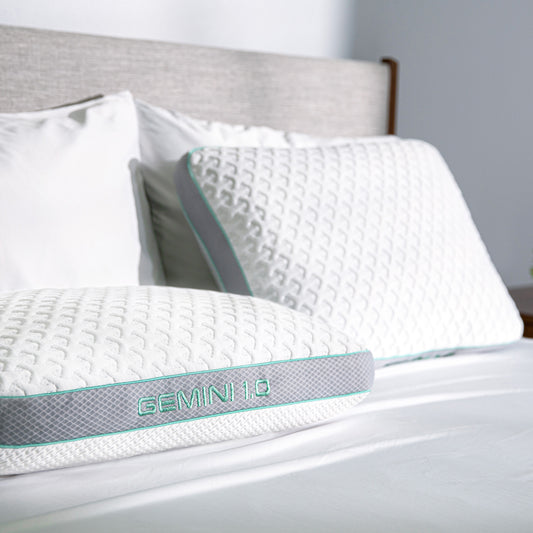
BEDGEAR's Performance® sleep systems are built specifically around this — breathable materials that support your body's natural temperature drop, pillows matched to your sleep position and body type, and mattresses engineered for the kind of deep recovery that actually changes how you feel the next day.
"Most people don't realize this, but your pillow plays a huge role in how your neck feels every morning. When your pillow is wrong, your neck is forced into a bad position for 6 to 8 hours straight." Dr. Patrick Malartsik, Pain & Mobility Specialist
How to Build a Nighttime Routine That Works
Knowing the tips is one thing. Putting them together into something repeatable is where most people stall. The good news is that a nighttime routine doesn't need to be long; it just needs to be consistent. Overall, the goal is a sequence your body starts to recognize as the signal that sleep is coming.
-
1
Set a hard cutoff for screens and stimulation
Pick a time — 30 to 60 minutes before bed — and treat it as non-negotiable. This is when the phone goes down and the cognitive load of the day stops being added to.
-
2
Do the same 2 to 3 things in the same order
A shower, some light reading, a few minutes of stretching — whatever works for you. The sequence matters more than the activity. Consistency trains your nervous system to recognize what's coming.
-
3
Set up your environment before you start
Cool the room, dim the lights, and make sure your sleep surface is ready. Don't leave that for the moment you're already tired. The environment should be working before you get into bed.
-
4
Protect your wake time above everything else
A consistent wake time anchors your circadian rhythm more effectively than any other single variable. Set it, stick to it on weekends, and the rest of your sleep schedule tends to fall into alignment around it.
For a deeper breakdown of how to structure your evening around recovery — including what to do in the hour before bed and how to build habits that actually stick — read our full guide: Build a Nighttime Routine That Fuels Recovery, Energy, and Better Days.
Your Sleep Environment Is Part of the Routine
The right pillow, mattress, and bedding don't just make sleep more comfortable — they make the rest of your routine actually work. BEDGEAR Performance® products are built to support recovery from the moment you get into bed.
Frequently Asked Questions
Still have questions about how to sleep better? Here are the ones we hear most often.