Back pain and poor sleep have a feedback loop most people don't think about until they're already in it. The pain disrupts sleep. The disrupted sleep makes the pain worse. And the mattress you're spending eight hours on every night is either helping break that cycle or feeding it.
The good news is that finding the right mattress for back pain comes down to three simple things: spinal alignment, pressure relief, and temperature. Get those right and your muscles can actually switch off overnight instead of compensating for a surface that isn't supporting them. BEDGEAR builds every mattress around those variables. Here's what to look for and which options actually deliver.
How Back Pain Affects Your Sleep
Back pain doesn't just hurt during the day. It follows you into bed. The discomfort that makes it hard to sit at a desk or stand for long periods is the same discomfort that keeps you shifting positions at 2am, prevents you from reaching deep sleep, and leaves you waking up more tired than when you went to bed. Over time, that sleep deficit compounds, and a body that isn't recovering overnight is a body that's less equipped to manage pain the next day.
The connection runs both directions. Poor sleep doesn't just result from back pain. In fact, it actively contributes to it, and studies have shown that chronic back pain leads to sleep disturbances, which lead to poor sleep, which creates a cycle that's only going to get worse. So, when the body doesn't get adequate restorative sleep, muscles don't fully relax, tissue repair slows, and the threshold for pain perception drops. For this reason, back pain that felt manageable after a good night's sleep can feel significantly worse after a poor one.
Therefore, addressing the sleep surface is one of the most direct ways to interrupt that cycle.
What Happens to Your Spine While You Sleep
Your spine has a natural curve that needs to be maintained through the night, not just during the hours you're upright. When your mattress is too soft, too firm, or worn unevenly, it forces your spine out of neutral alignment for the duration of your sleep. The muscles alongside your back, hips, and neck compensate by staying partially engaged; holding your body in position rather than switching off. That's not recovery. That's your body working through the night on a problem your mattress is creating.
The right mattress holds the spine in neutral alignment regardless of sleep position. For back sleepers, that means even support along the full length of the spine. On the other hand, for side sleepers, it means enough give at the shoulder and hip to prevent the spine from bowing.
Last but not least, for stomach sleepers — who face the most spinal strain of any position — it means enough surface firmness to prevent the midsection from sinking and pulling the lower back into hyperextension. We recommend checking out data from the Spine Health Foundation for more help choosing your sleep position.
Back Pain and the Workplace
Back pain doesn't clock out when the workday starts. Unfortunately, it tends to get worse. When it comes to people who sit for long periods, stand for long periods, or lift heavy objects as part of their job, pre-existing back pain turns routine tasks into a genuine obstacle. Concentration drops, productivity drops, and the pain that built up through the day follows them home and into bed, where a poor sleep surface extends the problem rather than resolving it.
At the end of the day, sleep is the body's primary recovery window. A mattress that supports that recovery doesn't just improve how you feel in the morning — it affects how you perform through the entire day that follows. The relationship between sleep quality and workplace performance is well documented. The relationship between mattress quality and sleep quality is equally clear. The two connect directly.
The Role of Mattresses in Managing Back Pain
A mattress doesn't treat back pain. What it does is remove the variables that make it worse overnight. We're talking pressure points, spinal misalignment, heat buildup, and partner movement are all things that a well-engineered mattress addresses directly — and each one, left unaddressed, adds to the load your body is already carrying. The right mattress doesn't solve the underlying condition. It stops the sleep surface from compounding it.
The challenge is that back pain is not a single condition with a single fix. For example, lower back pain from a herniated disc responds differently than upper back pain from muscle tension. On the other hand, hip pain from side sleeping has different surface requirements than lumbar pain from years of sitting at a desk.
Therefore, what works well for one person may not work for another, and a mattress that a colleague swears by may do nothing for your specific situation. The variables that matter — support level, firmness, pressure distribution, motion isolation — need to match your body and your sleep position, not a general recommendation.
Spinal Alignment
Proper spinal alignment during sleep means the spine maintains its natural curve rather than being forced into a position it has to compensate for. A mattress that's too soft allows the heaviest parts of the body to sink too deep, pulling the spine out of neutral. In comparison, a mattress that's too firm doesn't contour enough to relieve pressure at the shoulders and hips, creating a different kind of misalignment. The right level sits between those two; supportive enough to hold the spine in position, responsive enough to conform to the body's shape.
BEDGEAR's hybrid mattress construction addresses this directly. Individually wrapped coil systems provide targeted support under different body zones while foam comfort layers contour to the body's shape above them. The result is a surface that holds the spine in neutral alignment rather than forcing it to adapt to a fixed surface.
Pressure Relief
Pressure points form where the body's heaviest parts — shoulders, hips, lower back — make contact with a surface that doesn't distribute weight evenly. On a firm, unsupportive mattress, that concentrated pressure creates discomfort that pulls you out of deep sleep without fully waking you. So, you just feel it the next morning as stiffness or soreness that compounds existing back pain.
Memory foam and responsive gel foam layers work by conforming to the body's shape, distributing weight across a larger surface area and reducing the concentration of pressure at specific points. In fact, for side sleepers especially, this is one of the highest-impact variables in a mattress decision. The shoulder and hip need to sink slightly into the surface for the spine to stay level — and a mattress that doesn't allow that creates a chain of misalignment that runs from the hip through the lower back and into the upper spine.
Temperature and Sleep Quality
Heat disrupts sleep — and disrupted sleep amplifies pain perception. When the sleep surface traps body heat, the body responds by waking more frequently, spending less time in deep restorative sleep stages, and producing less of the growth hormone that drives overnight tissue repair. For back pain sufferers, that reduction in recovery quality shows up the next morning as increased stiffness and soreness.
BEDGEAR's Performance® Mattresses are engineered with breathable airflow systems, ventilated foam layers, and moisture-wicking covers that support the body's natural temperature drop rather than fighting it. The thermal performance of the mattress is not a secondary concern. For anyone whose back pain is already reducing sleep quality, a mattress that adds heat disruption on top of that is making a difficult situation measurably worse, and the data backs this up.
BEDGEAR's Best Mattresses for Back Pain
Every BEDGEAR mattress is built around the variables that matter most for back pain recovery: spinal alignment, pressure relief, airflow, and motion isolation. The right one depends on how you sleep, how hot you run, and what your current mattress is getting wrong. Here's the best option in each category.
| Mattress | Best For | Key Feature |
|---|---|---|
| M5 Night Ice Performance® Mattress | Hot sleepers with back pain | 3X cooling technology + modular construction |
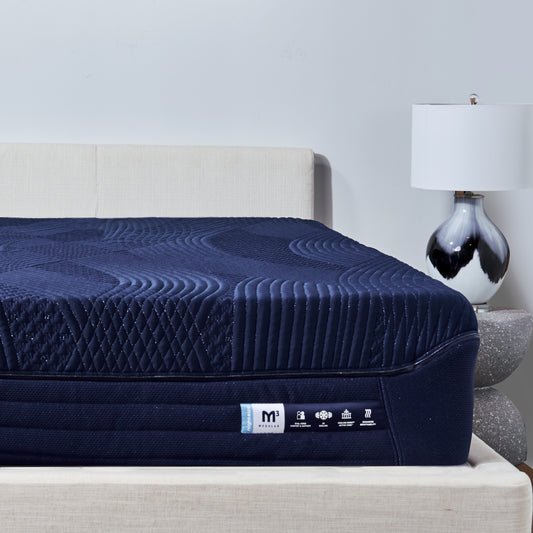
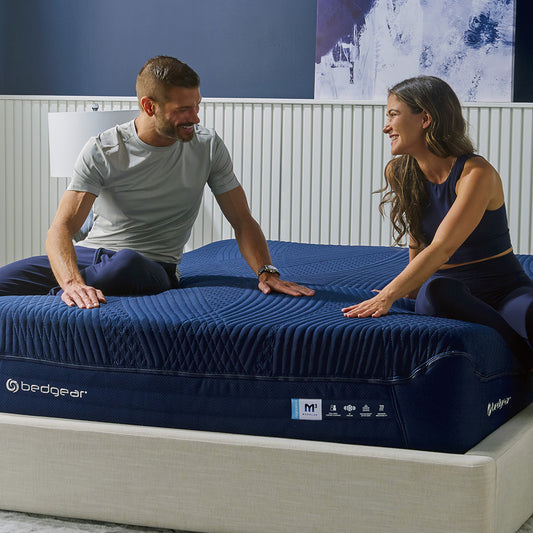
| M3 Performance® Mattress | Customization and couples | Swappable comfort layers + Ver-Tex cooling cover |
| H Performance® Mattress | Best all-around hybrid | Foam comfort + individually wrapped coils |
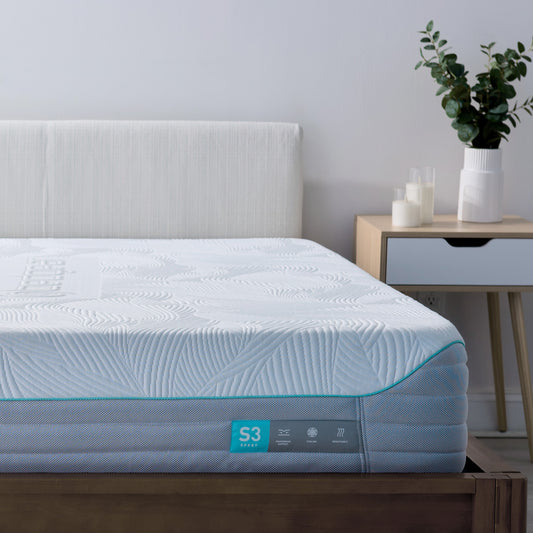
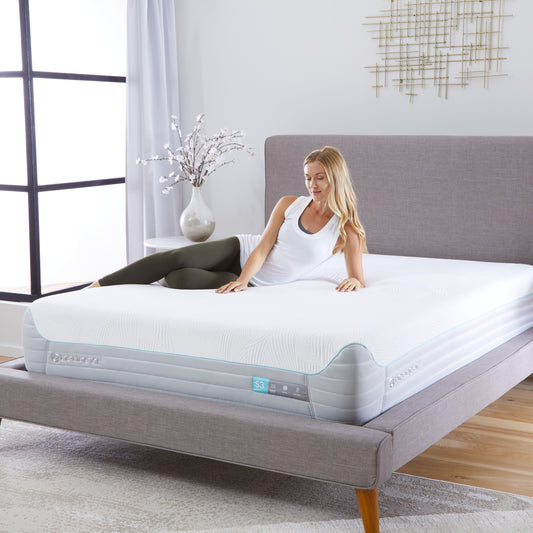
| S Performance® Mattress | Support on a budget | Plush, Medium, and Firm options |
| X1 Kids Performance® Mattress | Kids and spinal development | Adult-grade support scaled for younger sleepers |
Each mattress addresses back pain from a different angle. Learn more about each mattress and how it can help with sleep below.
Best for Hot Sleepers: M5 Night Ice Performance® Mattress for Back Pain
The M5 Night Ice is BEDGEAR's most advanced cooling mattress — and for back pain sufferers who also run hot, it's the most complete solution available. 3X cooling technology works at the surface level to dissipate heat on contact, while ventilated foam layers and a breathable mesh construction keep airflow moving through the night. The modular construction allows each side of the mattress to be independently configured for firmness and feel, which means couples with different back pain needs don't have to compromise on a single surface.
The pressure relief and spinal alignment performance matches the cooling credentials. Conforming foam layers distribute weight evenly across the sleep surface, reducing the concentrated pressure at shoulders, hips, and lower back that disrupts deep sleep and compounds existing pain. For sleepers who have been managing both back pain and overheating with workarounds, the M5 Night Ice addresses both at the source.
Best for Customization: M3 Performance® Mattress for Back Pain
The M3 Performance® Mattress is BEDGEAR's modular system — a mattress designed to be adjusted rather than replaced when your sleep needs change. Comfort layers are swappable, allowing firmness and feel to be dialed in precisely for each side of the bed without affecting the other. For back pain sufferers whose pain levels fluctuate, whose sleep position changes over time, or who share a bed with a partner who has completely different requirements, the M3 delivers a level of personalization that no fixed-construction mattress can match.
The Ver-Tex cooling cover provides a cool-to-the-touch surface from the first moment of contact, and the individually wrapped coil system underneath delivers responsive support that adapts to body weight and position. Motion isolation keeps partner movement contained to one side of the bed — which matters for back pain sufferers who are already sleeping lighter than they should.
Best All-Around: H Performance® Mattress for Back Pain
The H Performance® Mattress is BEDGEAR's hybrid — foam comfort layers above individually wrapped coils, in a construction that delivers the pressure relief of foam and the responsive support and airflow of a coil system simultaneously. For back pain sufferers who need a reliable, well-rounded sleep surface without the complexity of a modular system, the H Performance is the straightforward answer.
The coil system works independently, which means motion on one side of the bed doesn't transfer to the other. The breathable mesh border and air vents keep airflow moving throughout the night. And the foam layers contour to the body's shape, maintaining spinal alignment and reducing pressure point buildup in the positions that tend to generate the most back discomfort. It's a complete sleep system that doesn't require configuration — just a well-engineered surface that works from the first night.
Best on a Budget: S Performance® Mattress for Back Pain
The S Performance® Mattress is available in Plush, Medium, and Firm feels — which makes it the right starting point for back pain sufferers who know they need a specific support level but haven't found a mattress that delivers it at the right price point. The cool-to-the-touch cover and enhanced breathability address temperature without the premium of the cooling-specific lineup, and the conforming construction reduces pressure points and promotes spinal alignment regardless of which firmness level you choose.
For sleepers whose back pain is primarily driven by an unsupportive mattress they've been meaning to replace, the S Performance is the practical upgrade that delivers measurable improvement without the investment of a modular or hybrid system. Choose the firmness based on sleep position, so softer for side sleepers who need more give at the shoulder and hip, firmer for back sleepers who need more consistent lumbar support.
Best for Kids: X1 Kids Performance® Mattress
Children's spinal development makes mattress support more critical, not less, and when children inhale up to 10-times the chemicals when sleeping on a mattress, it's not just back pain you have to worry about. Moving on, a mattress that's too soft for a growing spine creates the same misalignment problems in a child that it creates in an adult; it just happens during years when the spine is still forming. The X1 Kids Performance® Mattress brings the same breathable, supportive construction as the adult lineup into a size and firmness level calibrated for younger sleepers.
The breathable construction regulates temperature for kids who tend to sleep warmer than adults, and the support level maintains proper spinal alignment through the night without the plush feel that feels comfortable to a parent but doesn't serve a growing body the same way. For parents whose child is waking up stiff or complaining of back discomfort, the mattress is the first place to look, and the X1 is the right answer at that stage.
Not Sure Which Mattress Is Right for Your Back?
BEDGEAR's sleep experts are trained to match you to the right mattress based on your sleep position, body type, and specific pain points — not to sell you the most expensive option on the floor.
The Right Mattress for Back Pain Changes How Your Body Recovers
Back pain is not going to be solved by a mattress. But a mattress that's creating misalignment, building pressure points, trapping heat, and transmitting partner movement is actively making it worse every single night. Removing those variables is what the right mattress does, and for most back pain sufferers, that removal alone produces a measurable difference in how they feel in the morning.
The variables that determine the right mattress for back pain are specific to your body, your sleep position, and what your current setup is getting wrong. BEDGEAR builds every Performance® Mattress around those variables rather than a one-size-fits-all assumption. If you know what the problem is, the right mattress follows from there. If you're not sure, BEDGEAR's sleep experts are trained to work through that conversation and find the configuration that actually works for your body.
Frequently Asked Questions
Have more questions about finding the right mattress for back pain? We've answered the most common ones below, and we have a guide that dives even deeper into the best mattresses for back pain.