Most people replace their mattress before they replace their pillow. Well, that's backwards. In fact, your pillow is the part of your sleep system that's in direct contact with your head, neck, and face every single night; it's absorbing oils, sweat, and heat while your cervical spine either sits in proper alignment or spends eight hours compensating for a surface that isn't doing its job.
The wrong pillow is one of the most common and most overlooked causes of neck pain, poor sleep quality, and morning stiffness that people write off as just getting older.
For these reasons, the right pillow isn't the softest one or the most expensive one. It's the one matched to your sleep position, your body type, and your temperature; three variables that most pillow guides skip entirely in favor of fill material comparisons that don't tell the whole story.
The good news? This comprehensive pillow guide covers everything: pillow types, sizes, fills, sleep position matching, and how BEDGEAR's PillowID system takes the guesswork out of a decision that affects your sleep more than most people realize.
Start here.
What Your Pillow Is Actually Doing All Night
Your pillow has one job, and that's to keep your cervical spine in neutral alignment while the rest of your body recovers. That's it. Everything else, whether it's the softness, the cooling, or the feel against your face, is secondary to that single mechanical function.
When your pillow does it well, your neck muscles switch off completely and your body gets the uninterrupted recovery it's designed for. When it doesn't, those muscles stay partially engaged all night, compensating for a head that's sitting too high, too low, or tilted at an angle that adds up to hours of low-grade strain.
The problem is that most people evaluate pillows the way they evaluate hotel beds, which is by how they feel in the first thirty seconds. That's just not enough information. A pillow that feels plush and luxurious when you first lie down can be the same pillow that has your neck stiff by 6am. In fact, the feel at the point of contact is only one data point, and the alignment it creates while you sleep is the one that actually matters.
The History of the Pillow: From Ancient Stones to Performance Sleep
Okay, let's get a little sidetracked for a moment. Did you know that the pillow is one of the oldest sleep tools in human history? And that for most of that history, it was nothing like what sits on your bed today? Well, you read that right, and the earliest known pillows date back to ancient Mesopotamia around 7,000 BC, where they were carved from stone. Not shaped foam.
Not down fill. Stone. The purpose wasn't comfort. No, it was status and hygiene, and keeping the head elevated off the ground to prevent insects from crawling into the ears, nose, and mouth during sleep. Comfort was not part of the brief.
From there, the Ancient Egyptians refined the concept without softening it much. Stone and wood pillows remained the norm among the wealthy, often elaborately carved and decorated as symbols of social standing. It wasn't until ancient China and Greece that softer materials began to appear.
This is when cloth bags filled with feathers, reeds, or plant material that at least gestured toward the comfort function a pillow is supposed to serve came to be. In fact, the Greeks and Romans were among the first to use feather-filled pillows widely, a technology that remained largely unchanged for centuries.
From Feathers to Fabric Technology in Pillows
Moving on from stone and wood pillows, minor advancements in pillow technology were made. That said, the classic feather and down pillow dominated for so long that most of the innovation in bedding moved elsewhere. It went to mattresses, to frames, and to textiles, all while the pillow sat largely untouched.
It wasn't until the 20th century that synthetic fills began to appear as alternatives to down, driven initially by allergy concerns and the search for materials that could be manufactured consistently and washed more easily than natural fills.
Polyester fiberfill became the standard alternative, and for decades the pillow market split cleanly between down and synthetic with little meaningful innovation in either direction.
Memory foam is what changed the conversation, though, and you can thank our astronaughts over at NASA for that. Originally developed by NASA in the 1960s for aircraft seat cushioning, viscoelastic foam found its way into the consumer sleep market in the 1990s and introduced a new way of thinking about pillow support; one based on conforming to the body's shape rather than simply providing a soft surface to rest on.
It was the first time fill material was engineered around a sleep function rather than just availability and cost. Now, the pillow has finally caught up to the idea that sleep performance is worth designing for.
Where BEDGEAR's Pillows Come into Play
BEDGEAR didn't set out to make a better version of what already existed. The founding premise was that athletic performance materials, you know, the breathable, moisture-wicking, temperature-managing fabrics that had transformed sportswear, had no reason to stop at the gym. Sleep is the body's primary recovery window.
The surface you sleep on should work as hard as the gear you train in. That idea led to the world's first Performance® Pillow: a pillow built not around tradition or convention but around the specific physiological demands of sleep and recovery.
The technologies that followed (Dri-Tec, Ver-Tex, Air-X, React, Boost, Hyper-Silk®) each came from the same question: what does this specific sleep problem actually require, and what material engineering solves it?
The PillowID system came from the recognition that no single pillow serves every body, and that matching the right pillow to the right sleeper produces measurably better outcomes than asking everyone to adapt to the same product. It's a different philosophy than most pillow brands operate from. The results speak for themselves.
BEDGEAR Pillow Technology Explained
Not all pillow fills are created equal — and BEDGEAR's Performance® lineup goes further than most. Each technology is engineered around a specific sleep problem: conforming support, elevated lift, heat dissipation, moisture management, maximum airflow, or skin care. Here's what each one does and who it's built for.
| Technology | What It Does | Best For |
|---|---|---|
|
React Conforming |
Breathable, conforming fill that adapts to the shape of your head and neck; pressure relief without the locked-in feel of traditional memory foam. | Sleepers who want contouring support without heat retention. |
|
Boost Responsive |
Spring-like foam with a gentle lift that pushes back without sinkage; responds quickly to position changes through the night. | Combination sleepers who move frequently; anyone who finds foam too slow. |
|
Ver-Tex Instant Cooling |
Instant-cooling fabric that dissipates heat on contact; works proactively rather than reacting after heat builds. | Hot sleepers who need thermal management at the contact surface. |
|
Dri-Tec Moisture Wicking |
Pulls sweat away from skin and moves it outward to evaporate; removable and washable cover keeps performance consistent. | Sleepers who run warm, experience night sweats, or want a drier surface. |
|
Air-X Max Airflow |
3D construction that actively promotes air circulation through the pillow; keeps the sleep environment fresher and cooler all night. | Hot sleepers who have tried standard breathable pillows and still run warm. |
|
Hyper-Silk® Beauty |
Silky smooth, breathable, cruelty-free fabric that reduces friction at the contact point; designed for skin and hair care during sleep. | Sleepers who wake with sleep creases, frizz, or skin irritation. |
React
First and foremost, let us introduce you to our old friend React. This React is our breathable, conforming fill; it's designed to adapt to the shape of your head and neck rather than pushing back against it.
The result is a weightless support feel that relieves pressure at the contact points without the dense, locked-in sensation that traditional memory foam creates. It's responsive enough to move with you when you shift positions without losing its shape by morning.
The breathability is built into the material itself, not just the cover. React foam allows air to circulate through the fill rather than trapping heat inside it, which matters at a contact point as heat-intensive as your head and neck.
Now, for sleepers who want conforming pressure relief without the temperature penalty that usually comes with it, React is the foundation to build from.
Boost
Boost is BEDGEAR's spring-like foam. It's responsive, elevated, and engineered specifically for sleepers who want support without any sinkage. Where React conforms and cradles, Boost pushes back with a gentle lift that keeps your head properly positioned without the feeling of being absorbed by the pillow beneath you. It's the fill for sleepers who have always found traditional foam too slow and too heavy.
The spring-like quality also makes Boost a strong choice for combination sleepers who move frequently during the night. It responds quickly to position changes rather than slowly reforming, which means consistent support regardless of where you end up at 3am. No heat retention, no resistance; just a reliable lift that holds its loft through the night.
Ver-Tex
Ver-Tex is BEDGEAR's instant-cooling fabric technology — and the operative word is instant. It's designed to dissipate heat on contact rather than waiting for airflow to carry it away. The moment your skin touches a Ver-Tex surface, the fabric pulls heat away from the contact point, preventing the buildup that turns a comfortable pillow into an uncomfortable one over the course of a night.
For hot sleepers, Ver-Tex addresses the problem at the source. Traditional cooling solutions — gel layers, phase-change materials — work reactively, responding to heat after it builds. Ver-Tex works proactively, stopping the buildup before it starts. Paired with a breathable fill like React or Air-X, it's the most complete thermal management system in BEDGEAR's pillow lineup.
So, if you need any type of cooling pillow, BEDGEAR has your back.
Dri-Tec
Dri-Tec is BEDGEAR's moisture-wicking fabric — built to pull sweat away from the skin surface and move it outward where it can evaporate rather than sitting against your face and neck through the night. For sleepers who run warm, experience night sweats, or simply want a sleep surface that stays drier, Dri-Tec handles the moisture problem that cooling fabrics alone can't fully solve.
The quick-dry construction means the fabric recovers between nights rather than retaining moisture in the material over time. Dri-Tec covers are also designed to be removable and washable — which matters more than most people think.
A pillow cover that accumulates sweat, oils, and allergens over months of nightly use is working against the sleep environment you're trying to create. Wash it regularly and the performance stays consistent.
Air-X
Air-X is BEDGEAR's maximum airflow technology — a 3D construction that maximizes the movement of air through the pillow rather than just allowing it passively. Where most breathable materials reduce heat retention, Air-X actively promotes circulation, keeping the sleep environment around your head fresher and cooler throughout the night. It's the fill for sleepers who prioritize airflow above everything else.
The conforming support and pressure point relief built into Air-X means it doesn't sacrifice function for ventilation.
The 3D structure holds its shape and distributes weight evenly while the open construction keeps air moving continuously. For hot sleepers who have tried standard breathable pillows and still found them running warm by the early morning hours, Air-X is the next step up.
Hyper-Silk®
Hyper-Silk® is BEDGEAR's beauty-focused technology — silky smooth, breathable, and cruelty-free. It's part of BEDGEAR's Beauty collection, designed for sleepers who want their sleep surface to work with their skin and hair rather than against it.
The smooth fabric reduces friction at the contact point, which matters for anyone who wakes up with sleep creases, frizz, or skin irritation that a rougher fabric surface causes over hours of nightly contact.
Cruelty-free construction means none of the softness comes from animal-derived materials — Hyper-Silk® delivers the smooth, luxurious feel of silk without it. The breathability keeps it from running hot despite the close-contact fabric feel. For sleepers who have prioritized performance and overlooked the skin and hair care component of their sleep environment, the Beauty collection built around Hyper-Silk® is worth a serious look.
Types of Pillows: Find the One Built for How You Sleep
Not every pillow is built for the same purpose. More often than not, you'll find that some are designed for a specific sleep position. Others solve a particular problem, like travel, body support, temperature, or even specific joint pain.
For these reasons, knowing which type you actually need is the fastest way to stop buying pillows that almost work and start sleeping on one that does. Here's every type of pillow worth knowing.
The Best for Hot Sleepers: The Cooling Pillow
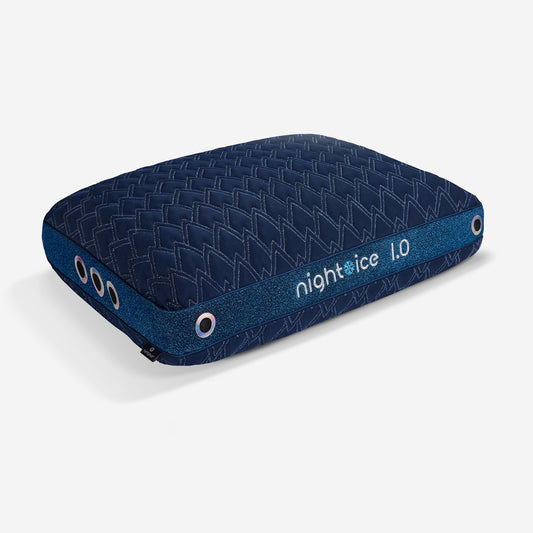
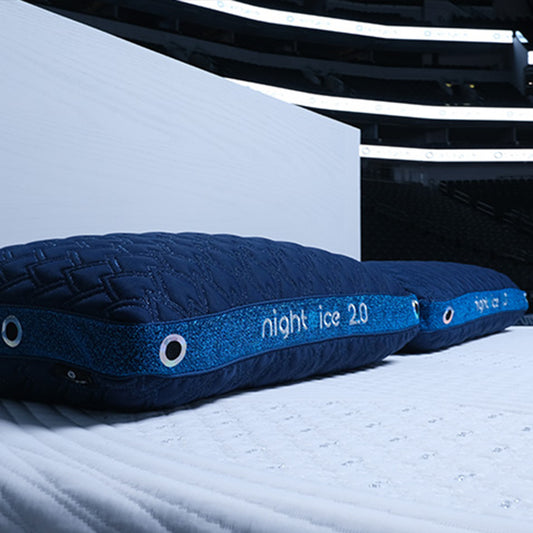
A cooling pillow, like the Night Ice Performance® Pillow, is built specifically to manage the heat that builds at one of the highest-output contact points on your body. Your head, neck, and face generate significant heat during sleep, and a pillow that traps that heat becomes noticeably uncomfortable in the early morning hours when sleep is lightest and disruptions matter most.
The good news is that cooling pillows address this through a combination of breathable fills, airflow construction, and in BEDGEAR's case, instant-cooling fabric technologies like Ver-Tex that dissipate heat on contact rather than waiting for it to build.
The distinction worth making is between a pillow marketed as cooling and one actually engineered for it. Gel inserts and phase-change materials react to heat after it accumulates.
BEDGEAR's Ver-Tex and Air-X technologies work proactively, moving heat away from the contact point continuously rather than playing catch-up through the night. For hot sleepers, that difference shows up clearly by 2am.
The Best for Neck Pain: The Neck Pillow
A neck pillow is designed around one specific function: maintaining proper cervical alignment while you sleep. The cervical spine has a natural curve, and a pillow that doesn't support that curve forces the surrounding muscles to compensate through the night.
That compensation is what causes the stiffness and soreness most people attribute to how they sleep — it's a pillow problem with a straightforward fix.
The right loft is the critical variable — too high and the head tilts forward, too low and the neck loses support entirely. BEDGEAR's PillowID system accounts for shoulder width and sleep position specifically because those two factors determine the correct loft for cervical alignment more accurately than any general size recommendation can.
The Best for Side Sleepers: The Body Pillow
A body pillow runs the full length of the torso and is used primarily by side sleepers to maintain spinal alignment from the shoulders through the hips. Without support between the knees, a side sleeper's top leg drops forward and rotates the pelvis, creating a chain of misalignment that runs through the lower back and hips.
A body pillow stops that rotation, keeping the spine neutral and the muscles alongside it switched off rather than compensating through the night.
Beyond sleep position support, body pillows are widely used during pregnancy to support the abdomen and reduce pressure on the lower back and hips. The fill density matters — too soft and it compresses under the weight of the leg, losing the support it's supposed to provide. Look for a fill that holds its loft under sustained pressure rather than flattening out by morning.
The Best for Travel: The Travel Pillow
A travel pillow is built for one environment: anywhere that isn't your bed. Planes, cars, trains, and overnight trips all create sleep conditions that a standard pillow can't address — awkward seating angles, limited space, and no surface to rest a full-size pillow against.
A good travel pillow maintains enough cervical support to prevent the neck stiffness that comes from sleeping upright or in a cramped position, in a form factor compact enough to carry without it becoming the most inconvenient thing in your bag.
The U-shaped neck pillow is the most recognized format, but it's not the only one worth considering. Compressible travel pillows that pack down to a fraction of their full size have improved significantly in recent years, offering genuine support in a portable form. BEDGEAR's travel pillow options bring the same performance materials as the full-size lineup into a travel-ready format, so the sleep quality gap between home and away gets smaller.
The Best for Lower-Body Support: The Knee Pillow
A knee pillow is a small, contoured pillow placed between the knees for side sleepers or beneath the knees for back sleepers. The purpose is the same in both cases: reducing the rotational stress on the hips and lower back that accumulates when the legs aren't properly supported through the night.
For side sleepers with hip or lower back pain, a knee pillow is often one of the first recommendations from physical therapists precisely because it addresses the mechanical cause of that pain rather than just the symptom.
The contoured shape of the knee pillow is what matters the most. A standard pillow placed between the knees shifts and compresses through the night, losing its position and its benefit. A dedicated knee pillow with a shape designed to stay in place maintains consistent support without requiring readjustment.
Overall, when it comes to side sleepers managing chronic hip or lower back issues, it's a small addition to the sleep setup with a disproportionate impact on how the morning feels.
The Best for Reading in Bed: The Backrest Pillow
A backrest pillow, sometimes called a reading pillow, is designed for use while sitting up in bed rather than lying down. The defining feature is the arm support on either side of the central back cushion, which allows the upper body to rest comfortably in a seated position without the spine having to hold itself upright unsupported.
For reading, working, or watching from bed, a backrest pillow converts the sleep surface into a functional seated space without the back fatigue that comes from leaning against a flat headboard. The fill density and back support angle are the key specs to evaluate.
A backrest pillow that's too soft compresses under body weight and stops providing the upright support it's supposed to deliver. One with an angle that's too reclined pushes the head forward rather than keeping the spine in a neutral seated position. Now, for anyone who spends significant time sitting up in bed, a quality backrest pillow makes a more meaningful difference than most people expect before they try one.
Fill density and back support angle are the key specs to evaluate. A backrest pillow that's too soft compresses under body weight and stops providing the upright support it's supposed to deliver. What's more, when it comes to anyone who spends significant time sitting up in bed, a quality backrest pillow makes a more meaningful difference than most people expect.
The Best for Cars: The Seatbelt Pillow
Yes, they exist, and yes, they’re awesome. A seatbelt pillow is a small, travel-specific pillow designed to cushion the shoulder and neck from direct contact with a vehicle seatbelt during long drives or passenger seat sleep. It sits between the seatbelt strap and the body, reducing the pressure and friction that makes sleeping in a moving vehicle uncomfortable and often results in the kind of neck stiffness that lasts well into the next day.
It's a narrow use case, but for frequent road travelers, families on long drives, or anyone who regularly sleeps as a passenger, a seatbelt pillow solves a specific problem that no other pillow format addresses.
BEDGEAR's seatbelt pillow brings the same breathable, performance-material construction as the rest of the lineup into a format built specifically for that environment.
Not Sure Which Pillow Is Right for You?
BEDGEAR's PillowID system matches you to the right pillow based on your sleep position, shoulder width, and temperature — not a best-seller list. Answer a few questions and walk away with a recommendation built around your body.
Pillow Sizes Explained
Pillow size is one of those decisions that feels straightforward until you're standing in a bedding aisle holding two options that look nearly identical and have no idea which one actually fits your bed or your sleep style. The size of your pillow affects how it sits on your mattress, how it fits inside a pillowcase, and critically, how much surface area it provides for your head and neck to rest on through the night.
The right pillow size isn't just about matching your bed. No, it's all about matching your body. So, while a standard pillow works perfectly for a petite sleeper, it may not provide enough surface area for a broader-shouldered back sleeper who needs more lateral support. What's more, a king pillow on a twin bed creates more pillow than mattress. Here's every standard size, what it measures, and who it actually makes sense for.
20" × 26"
Best for twin and full beds, children, and lighter-framed sleepers. Fits standard pillowcases precisely.
20" × 30"
Most versatile size — fits queen and king beds proportionally. Best entry point into the full BEDGEAR tech range.
20" × 36"
Natural fit for king and California king beds. Extra length for frequent movers and broader-shouldered sleepers.
Each size serves a different sleeper, so getting it right matters more than most people realize. Here's the full breakdown of what each one measures, who it's actually built for, and when it makes sense.
King Pillow Size: 20" × 36"
The widest standard pillow size available, and the natural choice for king and California king beds. For sleepers who move frequently during the night, the extra length means more surface area to land on without the pillow running out before you do. On the other hand, for broader-shouldered back sleepers who need lateral support beyond what a standard or queen pillow provides, a king delivers that without a special order.
That said, on a queen it becomes unwieldy, hanging over the sides and creating more pillow than the bed can accommodate cleanly. BEDGEAR's king pillow options are available across the full Performance® technology lineup — so the size upgrade doesn't mean sacrificing the cooling, airflow, or support properties that make the pillow worth buying.
Queen Pillow Size: 20" × 30"
Around six inches shorter than a king and two inches longer than a standard, and the most versatile size in the lineup, the queen size pillow is the queen of pillows. It fits comfortably on both queen and king beds without looking out of proportion in either direction. Plus, for most adult sleepers, the queen pillow hits the right balance between surface area and manageability.
BEDGEAR's queen Performance® Pillows are the most widely available size across the full technology range. This means you'll always have our Ver-Tex, Dri-Tec, Air-X, React, Boost, and Hyper-Silk® technologies.
Standard Pillow/Twin Pillow Size: 20" × 26"
Last but not least, we have the twin pillow, which is more commonly called a standard pillow. The standard pillow measures to around 20 inches wide by 26 inches long. It's the baseline size, so the one most pillowcases are designed around and the one that fits cleanly on a twin or full size bed without overhanging the edges.
For children, lighter-framed sleepers, and anyone who prefers a smaller, more manageable pillow that stays where they put it through the night, the standard size delivers everything a larger pillow does in a format that doesn't take over the bed.
That said, on a queen or king bed, standard pillows can work but tend to look undersized, particularly against a taller headboard. Still, two standard pillows side by side on a queen is a common setup that covers the width adequately, though a single queen pillow provides a cleaner look and equivalent support for most sleepers.
For kids transitioning into their first real pillow setup, the standard size paired with a proper kids pillowcase is the right starting point. Plus, it’s proportional to a smaller body and easier to manage through the night.
Pillowcases: What You Actually Sleep On
Pillowcases or, you know, what you actually sleep on, are also an important piece of the puzzle. A pillowcase, or pillow protector, is the removable fabric cover that goes directly over your pillow and sits against your skin through the night. It's the most frequently washed piece of bedding you own — or should be.
Sadly, oils, sweat, skincare products, and dead skin cells accumulate on a pillowcase faster than any other surface in your sleep environment, which is why washing it weekly is one of the highest-impact hygiene habits in your bedroom routine.
The fabric matters beyond cleanliness though. A rough or heat-trapping pillowcase works against the performance of whatever pillow is inside it, undermining the temperature management and comfort properties you paid for.
BEDGEAR's Performance® Pillow Protectors are built with the same fabric technologies as the pillow lineup itself — Dri-Tec moisture-wicking, Ver-Tex instant-cooling, and breathable construction that keeps the contact surface working through the night rather than against it. A cooling pillow wrapped in a standard cotton pillowcase loses a significant portion of its thermal advantage at the contact point.
Matching the pillowcase technology to the pillow technology is how you get the full performance out of both, and we have a little something for you down below.
Performance® Pillow Protector
Built with the same fabric tech as the pillow — Dri-Tec, Ver-Tex, breathable construction. Matches the pillow's performance at the contact point.
Cooling Pillowcase
Ver-Tex dissipates heat on contact. Dri-Tec pulls moisture away before it builds. Pair with a cooling pillow for full thermal management.
Standard Pillowcase
Most widely available — fits standard, queen, and king sizes. Wash weekly. Upgrade to a performance fabric if your pillow is doing real thermal work.
Pillow Sham
Decorative only — designed for daytime display. Remove before sleeping. Not breathable or durable enough for nightly use.
Performance® Pillow Protectors
BEDGEAR's Performance® Pillow Protectors are built with the same fabric technologies as the pillow lineup. So, yeah, you're getting Dri-Tec moisture-wicking, Ver-Tex instant-cooling, and breathable construction that keeps the contact surface working through the night rather than against it.
Therefore, a cooling pillow wrapped in a standard cotton pillowcase loses a significant portion of its thermal advantage at the contact point. Matching the pillowcase technology to the pillow technology is how you get the full performance out of both.
Cooling Pillowcase: When Temperature Is the Priority
A cooling pillowcase addresses heat at the first point of contact; the fabric surface your face and neck touch directly. Traditional cotton pillowcases absorb heat and hold it, which is why flipping the pillow to the cold side is such a universal experience.
What's more, a cooling pillowcase built with heat-dissipating or moisture-wicking fabric breaks that cycle, maintaining a cooler surface temperature throughout the night rather than warming up within the first hour of sleep.
In fact, for hot sleepers, a cooling pillowcase paired with a cooling pillow is the most complete solution available at the pillow level. Ver-Tex fabric dissipates heat on contact, Dri-Tec pulls moisture away before it builds up, and the combination keeps the sleep surface around your head cooler and drier through the night.
It's a straightforward upgrade that costs significantly less than a new pillow and makes a noticeable difference from the first night. So, make sure you consider pairing a Dri-Tech Pillow with a Dri-Tec Performance® Pillow Protector.
Pillow Shams: Decorative, Not Functional
A pillow sham is a decorative pillowcase. Most pillow shams are designed for the front of the bed during the day rather than for sleeping on at night, although that may depend on the night.
That said, the distinction is in the construction: shams typically feature a flap opening at the back rather than the side, a more finished edge or border, and fabrics chosen for appearance rather than performance. They dress the bed, they complete the aesthetic, and they come off before you actually get into it.
The confusion between shams and pillowcases comes from the fact that they look nearly identical at a glance and fit the same pillow sizes. But sleeping on a sham regularly, or leaving it on through the night rather than removing it, means sleeping on a fabric that wasn't designed for that purpose.
The materials are less breathable, less washable, and less durable under the nightly stress of actual sleep use. So, make sure you use shams for what they're built for: making the bed look good during the hours you're not in it.
Questions We Get All the Time About Pillows
Have more questions about choosing the right pillow? We've answered the most common ones below.
The Right Pillow Is the One Built Around You
At the end of the night, your pillow is in contact with your body for a third of your life. It shapes how your cervical spine sits for eight hours every night, how hot you sleep, how your skin and hair hold up over time, and whether the recovery your body is trying to accomplish actually happens the way it's supposed to. It is not a commodity purchase and it is not something to figure out by feel in a showroom.
The variables that determine the right pillow. In fact, sleep position, shoulder width, temperature, and fill preference are specific to your body. That's why BEDGEAR built the PillowID system: to take a decision that most people make by grabbing whatever's familiar and turn it into one that's actually informed by how you sleep. The technology is there. The options are there. The only thing left is matching them to you.
If you've made it through this guide and still aren't sure where to land, take the PillowID quiz. Answer a few questions about your sleep position, temperature, and preferences and walk away with a recommendation built around your body rather than a best-seller list.
That's the difference between a pillow you get used to and one that actually works.