Can a Mattress Encasement Help With Bed Bugs? The Quick Answer
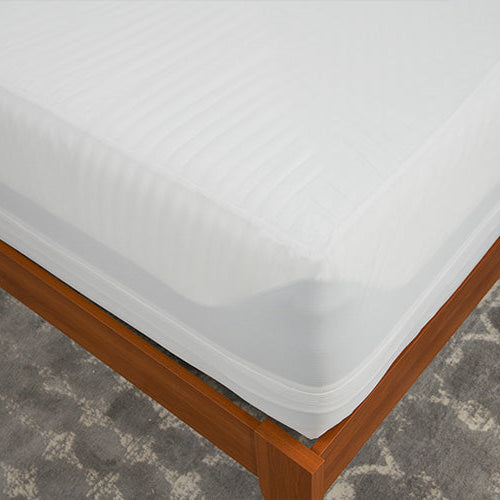
Yes, a mattress encasement can help with bed bugs, but only as one part of a much bigger plan. A zippered encasement, for example, covers the seams, piping and crevices where bed bugs like to hide. What's more, it keeps any bugs already in the mattress sealed away from you.
That being said, a mattress encasement doesn't treat the rest of the room, which is why the EPA's bed bug guidance lists encasements alongside inspection and professional treatment rather than in place of them.
Now, that's the short version, and there's a lot more to learn, or else we'd shut it down right here. The rest of this guide walks through the questions people ask most, starting with where bed bugs actually live in a bed.
A mattress protector covers the side you sleep on. An encasement covers every side, including the ones bed bugs like best.
Do Bed Bugs Live Inside the Mattress?
Mostly, bed bugs live on the mattress rather than deep inside of it. In fact, bed bugs tend to live in the walls, around floors, and just about anywhere else they can live. Overall, bed bugs are flat, about the size of an apple seed as adults, and they look for tight spaces close to where people sleep at night. They're like vampires.
On a bed, that usually means the seams, the structure around the edges, tufts, labels, bed frame, adjustable base, and even the corners of the box spring.
Bed bugs can get inside a mattress through a tear, a worn seam or an open vent, though. Once bed bugs get in, they're much harder to find and reach. So, covering those openings is a huge part of what a mattress encasement is good for.
What Do Bed Bugs Look Like on a Mattress?
When it comes to bed bugs, they tend to look the same. In fact, you're more likely to spot the signs of bed bugs than the actual bed bugs themselves. For this reason, you need to check the seams and corners of your mattress and box spring for more than creepy critters:
- Small rust-colored or reddish stains on the fabric.
- Tiny dark spots, about the size of a pen tip, often in clusters.
- Pale, empty shed skins.
- Very small, pale eggs tucked into seams and folds.
If you find any of these, make sure you take a photo and contact a pest professional for a proper inspection. Thankfully, a light-colored encasement can make spots like these easier to see later on, which helps with regular checks.
Do Mattress Protectors Prevent Bed Bugs?
When shopping for bed protection for bed bugs, a protector might be the first thing that comes to mind. And don't worry, this is one of the most common bed bug questions we get.
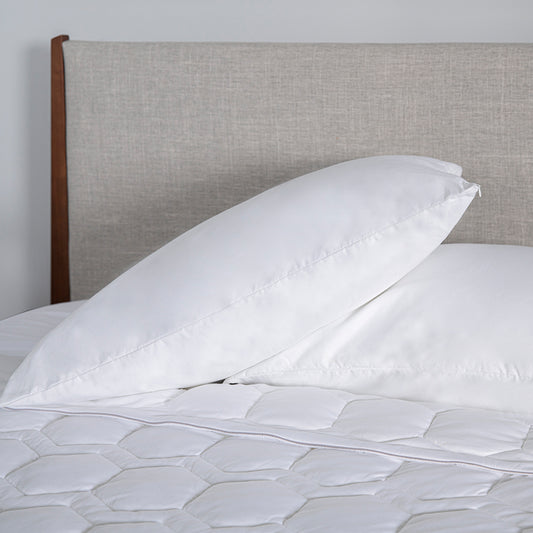
Well, the honest answer is that a standard fitted mattress protector isn't built for the job. A mattress or pillow protector is designed to guard against spills, sweat, allergens, and dust mites on the surface you sleep on. This is because it covers the top and wraps partway down the sides with an elastic and flexible edge, kind of the same way a fitted sheet does. For this reason, the underside of the mattress stays open, and so do many folds, seams, and exposed portions of your bed frame or bed.
Of course, that doesn't make protectors a bad idea; it just makes them suboptimal for bed bug protection. If you want to learn more about mattress protectors and how they can help, our guide to whether a mattress protector is necessary covers everything they're great at.
Can Bed Bugs Get Through a Mattress Cover?
Now, if you've covered your mattress you might be wondering if you've built something secure. Well, that depends on the cover that you choose. A fitted cover with an elastic edge leaves the bottom of the mattress uncovered, so bed bugs don't need to get through it at all. Sadly, bed bugs can simply go around the protector. A fully zippered encasement made from a tightly woven fabric, however, closes off that route and leaves far fewer gaps to work with.
In the chart below we cover how they compare side-by-side.
| Detail | Fitted Protector | Mattress Encasement |
|---|---|---|
| Coverage | Top and partway down the sides | All six sides |
| Closure | Elastic edge, like a fitted sheet | Zipper that closes around the mattress |
| Underside | Open | Covered |
| Seams and Crevices | Many left exposed | Covered when fully zipped |
| Takes On and Off | Easily, every wash day | Stays on long term |
| Best For | Everyday spills, sweat and wear | Bed bug plans and full mattress protection |
When it comes to spills and sweat, a mattress protector is the easier everyday choice, and you can browse our protectors for that solution. Now, when bed bugs enter the fold (literally), the covered underside and the zipper are what make the mattress encasement the better fit.
How a Mattress Encasements Help (and What They Can't Do)
So, how much can a mattress encasement help? And what are its limitations? At the end of the day, a mattress encasement is a simple tool with a specific job. Therefore, knowing both sides of that job helps you use it well and set the right expectations from the start. To help, we cover more about the strengths and weaknesses of mattress encasements for bed bugs below.
What the Best Mattress Encasement for Bed Bugs Can Help With
First, let's start with the good. A zippered mattress encasement does its best work on the mattress itself. Below, we offer a list of the benefits that a mattress encasement offers for your bed bug situation:
- Covering hiding spots: Seams, piping, tags and the underside all end up behind the fabric.
- Keeping bugs sealed in: The EPA notes that bed bugs trapped inside a closed encasement can't get out to feed and will eventually die.
- Making inspection easier: A smooth, light-colored surface makes it easier to spot new signs during regular checks.
- Protecting a new mattress: Encasing a mattress from day one keeps its seams from ever becoming a hiding spot.
At the end of the night, all of these benefits add up, especially when you pair the encasement with a box spring encasement of the same size.
What Even the Best Mattress Encasements Can't Do
A mattress encasement only covers what's inside of the casing. The bad news about bed bugs is that they don't just live on your mattress, even if they're called bed bugs. Sadly, bed bugs that hide elsewhere in the room are outside of a mattress encasement's reach, so there are a few things it can't do on its own. We cover them below.
- Treat bed bugs in the bed frame, headboard, furniture, carpet or walls.
- Get rid of an active infestation on its own.
- Guarantee you won't see bed bugs again.
Therefore, if you're dealing with an active bed bug infestation, work with a licensed pest professional. Most companies will recommend encasements as one step in their plan, so an encasement you buy now won't go to waste tomorrow.
What to Search for in a Bed Bug Mattress Encasement
Now, it's important to note that some mattress encasements are better than others for bed bugs. After all, not every mattress encasement is built to the same spec. So, if bed bugs are the reason you're shopping for a mattress encasement, these are the details worth checking first.
For a broader look at how encasements work, our guide to what a mattress encasement is covers the basics; this way, you can discover some additional benefits that go beyond bed bugs.
A Zipper That Closes All the Way
The zipper is the most important part of a mattress encasement. Make sure you look for one that closes completely, with no gap at the end of the track, and make a habit of checking it whenever you change your bed sheets.
Sealed and Sturdy Seams
The mattress encasement needs to be sturdy. Seams and folds are where fabric can wear first. Reinforced seams help the encasement hold up to years on the bed and regular trips through the wash, which is why we always focus on strength.
The Right Mattress Depth
A mattress encasement that's too tight puts a lot of strain on the zipper, and one that's too loose bunches under your sheets. Make sure you measure the full height of your mattress, including any pillowtop or topper, before you order. We have a mattress size guide that can help you out if you want the quick numbers.
Durable, Breathable Fabric
Since a bed bug encasement stays on for a very long time, it should be comfortable to sleep on. For this reason, it's a good idea to go with a fabric that breathes and doesn't crinkle. At the end of the night, this makes it easy to forget it's there.
Don't Forget the Box Spring
Box springs have corners and an open frame that bed bugs like just as much as a mattress, in fact, they might like it even more. So, if you use one, encase it too. The good news is that our Stretchwick® Mattress Encasement can be used on a box spring of the same size that fits within its 18" depth.
Are Plastic Mattress Covers Good for Bed Bugs?
Plastic and vinyl covers can seal a mattress, but the bad news is that they come with trade-offs. Plastic mattress covers tend to crinkle every time you move around. Plus, they trap heat and tear more easily, and a tear opens a gap for bed bugs to swarm. A fabric encasement with a built-in waterproof layer gives you full coverage while staying quieter and more comfortable night after night.
Can Bed Bugs Get on an Air Mattress?
Yes, of course. Bed bugs can crawl right onto any bed that you sleep on, including an air mattress. Sure, the smooth vinyl gives them fewer seams to hide in than a traditional mattress, but they can still tuck into folds, valves, handles and the bedding on top. What's more, they can burrow into mattress toppers, external and internal pumps, and other air mattress parts.
That being said, if you have guests on the way or plan on going somewhere with your air mattress, a few habits help you. Go ahead and inflate guest beds in a clean, uncluttered spot, look them over before you make them up, and store them sealed in their bag between visits. The good news is that our Performance® Pillowtop Air Mattress packs into its own storage bag, which makes that last step easy.
Meet the Stretchwick® Mattress Encasement
Our Stretchwick® Mattress Encasement wraps all six sides of your mattress and closes it off with a three-sided invisible zipper. Top this off with reinforced seams and a noiseless waterproof barrier, and you're in great shape. What's more, our mattress encasement also guards against spills and stains, and all without the crinkle you'd expect from waterproof bedding.
The Stretchwick® fabric is breathable and moisture-wicking, and it stretches for a snug fit that keeps your mattress feeling the way it should. It fits mattresses up to 18" deep in Twin, Twin XL, Full, Queen, King and Cal King, and it works with adjustable bases.
When it's time to clean it, machine wash cold and tumble dry low. Buy it with a BEDGEAR mattress and it extends your mattress warranty to 10 years.

6-sided mattress coverage, a three-sided invisible zipper and a noiseless waterproof barrier. Fits up to 18" deep, Twin through Cal King.
Shop the EncasementYou'll find it in our collection of mattress encasements for bed bugs, along with sizing details for every bed.
Can a Mattress Encasement Help With Bed Bugs? The Bottom Line
So, can a mattress encasement help with bed bugs? In summary, yes, as one part of a more complete and comprehensive plan. At the end of the night, a fitted protector leaves the underside of your mattress wide open, whereas a zippered encasement covers all six sides and the corners and hiding spots that bed bugs love to hide in.
Now, what it won't do is treat the rest of your room for you. So, always make sure you pair your encasement with regular inspection. Also, encase the box spring too, and bring in a licensed pest professional if you're dealing with an active bed bug infestation; they're the only ones that can help.
While they may be scary little bugs, the good news is that this combination gives your mattress the best chance of staying out of the picture.
Frequently Asked Questions About Mattress Encasements and Bed Bugs
Still have questions about mattress encasements and bed bugs? No need to worry. Below we bring you through quick answers to the ones we get the most at BEDGEAR.