Eighty-two games. Constant cross-country travel. Late-night tip-offs followed by early morning practices. The NBA season does not hand out many easy nights; the players who last are the ones who have figured out how to recover from all of it.
More of them are treating sleep like training. Not just as rest, but as a performance input with outcomes you can actually see. When you push your body to its limits day after day, what happens between games shapes what happens during them.
For P.J. Washington, power forward for the Dallas Mavericks, sleep is exactly that: a competitive edge. His BEDGEAR Performance® Sleep System is the gear he leans on to make it count.
Video: P.J. Washington walks through his sleep routine and the Performance® Sleep System he uses. Runtime is roughly two minutes.
"As a professional athlete, having a personalized sleep system is crucial to my performance and recovery, and BEDGEAR keeps me at my best. Their Performance® bedding helps me stay cool and sleep deep, so I always wake up feeling recharged and ready to put in the work."P.J. Washington, Dallas Mavericks Power Forward
P.J. treats sleep with the same intensity he brings to the weight room and to game day prep. His setup is designed to support recovery every night: managing temperature, cutting down on disruption, and dialing in the conditions that let his body do its work while he is out.
"P.J. embodies the mindset of a modern athlete. He understands that what you do off the court is just as important as what you do on it. Sleep is the most essential element of recovery; not just for professional athletes, but for all who are looking to take their game to the next level."Eugene Alletto, BEDGEAR Founder and CEO
Don't Sleep on Sleep
The science here is not subtle. Sleep researchers consistently describe sleep as one of the most powerful recovery tools available to any athlete. It is also one of the most underused.
"Sleep is the greatest legal performance enhancing drug that few athletes are abusing enough."Dr. Matthew Walker, Neuroscientist and Author of Why We Sleep
Athletes including Roger Federer, Usain Bolt, and LeBron James have reportedly described logging around 12 hours of sleep per day; often 10 at night plus a two-hour nap. That is not laziness. It is a deliberate recovery strategy, and the performance research points in the same direction.
A Stanford University study of collegiate basketball players (opens in a new tab) found that when players extended nightly sleep to around 10 hours, researchers measured faster sprint times and a 9% improvement in shooting accuracy. Separate research has linked insufficient sleep with slower reaction time and higher injury risk. Neither is something a pro can afford.
This is not news to the NBA. Many teams now treat sleep as a core part of their recovery programs. For eight seasons, BEDGEAR has served as the Official Sleep Partner of the Dallas Mavericks, outfitting players with personalized Performance® bedding built for the demands of a full season.
Recover Tonight, Rebound Tomorrow
Sleep is not passive. While you are out, your body is doing real work: repairing muscle tissue, replenishing energy stores, and regulating the hormones that influence everything from reaction time to mood. Deep sleep is a key window for that repair. Cut it short and even a finely tuned body starts to feel it.
Research covering more than 25,000 NBA games found that teams tended to perform better when their body clocks ran ahead of local time, such as an Eastern team playing a late game on the West Coast. In those matchups, West Coast home teams won noticeably more often. The mechanism is circadian rhythm; your internal clock affects alertness, reaction time, and energy output in ways that show up on the scoreboard.
Travel and time zones are not always in your control. Your recovery is. That is the argument for building a sleep setup that actually works; one that makes the most of every hour you get, not just the total number of them.
Keeping Cool: The Science of Sleep Temperature
Your core body temperature needs to drop slightly for your brain to reach the deepest stages of sleep. After hours of activity, or just the everyday demands of a busy week, that cooling can be slow. When you overheat at night, it is not only uncomfortable; it eats into the deep sleep where recovery happens.
For athletes especially, the sleep microclimate matters. A surface that traps heat is working against recovery every single night. The right bedding moves heat and moisture away from the body so it can get on with the job.
A Few Simple Ways to Sleep Smarter Tonight
You do not need to overhaul your whole routine. Small, consistent changes to your environment and habits can make a noticeable difference. Here are four worth starting with.
Go to Bed Earlier
More time in bed means more time in the deep sleep stages where physical recovery actually happens.
Cut Screen Time
Blue light can delay melatonin production. Putting the phone down 30 to 60 minutes before bed helps.
Keep Your Room Cool and Dark
Sleep research generally points to the mid to high 60s Fahrenheit. A dark, cool room gives your body the cues it needs.
Upgrade Your Bedding
Breathable sheets, a cooling pillow, and a mattress built to manage temperature can change the quality of your sleep, not just the comfort of it.
Sleep Like P.J.: His Full Performance® Setup
P.J.'s sleep system is not random. Every piece addresses temperature, support, and recovery; the same variables we engineer into every product we make. Here is what he runs with.
"For anyone serious about rest and results, BEDGEAR is a game changer."P.J. Washington, Dallas Mavericks Power Forward
M3 Performance® Mattress
The M3 is where P.J.'s recovery starts. It is our modular mattress, a first-of-its-kind design that lets each side of the bed be configured independently for firmness. He and his wife each get the support and feel that suits their body, without either of them compromising.
For a professional athlete, the construction details matter as much as the concept. The Ver-Tex® cover is cool to the touch on contact. The breathable support layers keep airflow moving through the night. Pressure relief and spinal alignment are built in rather than bolted on. Those are not selling points; they are recovery variables.
- Modular design
- Personalized firmness on both sides
- Instant-cooling Ver-Tex® cover
- Breathable support layers
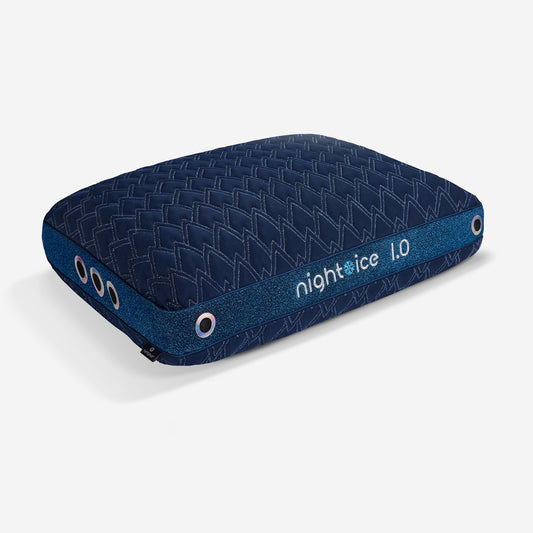
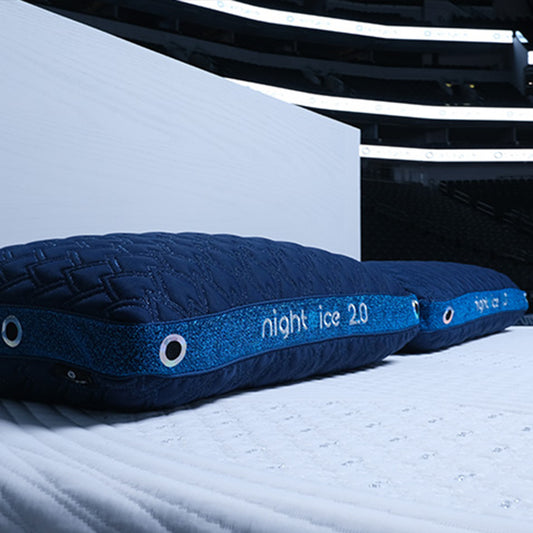
Night Ice Performance® Pillow
Cooling sleep has to run head to toe, literally. P.J.'s Night Ice Performance® Pillow uses three distinct cooling layers working together: an instant-cooling Ver-Tex® cover, a React™ Cooling Crown, and an ICE Active Core underneath. Breathable mesh and air vents keep air circulating through the night.
The result is a pillow that stays cool, supports spinal alignment, and adapts as he shifts position. If you have ever woken up flipping your pillow to the cool side at 3 a.m., this is the problem it was built to solve.
- 3 layers of cooling technology
- Breathable mesh and air vents
- Adaptive, conforming support
- Oprah Daily Best of 2026
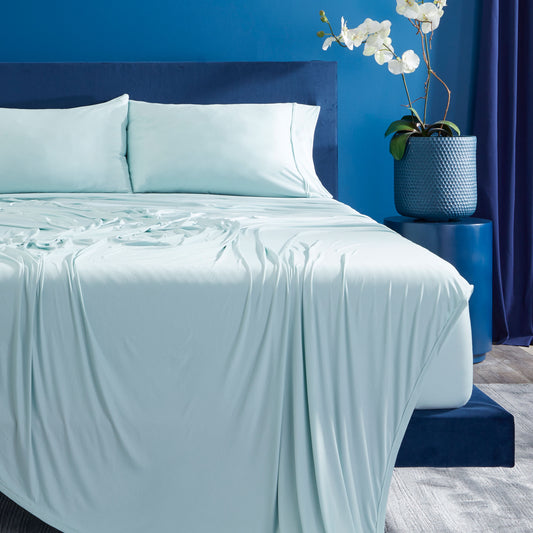
Ver-Tex® Performance Sheets
Inspired by the same performance materials worn on the court, P.J.'s Ver-Tex® Performance Sheets are built to move heat and moisture away from the body on contact. His nights start cool and stay that way; that is the whole point. The breathable, silky-smooth construction keeps his body comfortable so it can focus on the overnight work.
- Instant-cooling fabric
- Lightweight and breathable
- Silky-smooth feel
- Powerband® secure fit
Performance® Comforter
P.J. finishes the setup with our Performance® Comforter, filled with Climacore® Intelligent Insulation. It balances warmth and airflow through the night; enough comfort to sleep well, enough breathability to stay cool. It comes in Light, Medium, and Ultra weights so you can match it to your sleep climate.
- Climacore® Intelligent Insulation
- Ultra-soft and breathable
- Available in three weights
One Size Does Not Fit All™
P.J.'s sleep system is built around his specific needs. Yours can be too. We personalize every layer of your setup to fit your body, your sleep position, and how you run temperature at night.
Your Pillow Is More Important Than You Think
Your pillow plays a direct role in spinal alignment. If it is too tall or too flat for your position and body type, it puts strain on your neck, shoulders, and back; you feel that the next morning. Our Performance® Pillows come in a range of sizes so your head and spine stay closer to neutral no matter how you sleep. Broader shoulders generally need a taller pillow. A smaller frame usually does better with a lower profile.
Your sleep position matters just as much as your build. Here is the quick breakdown.
Side Sleepers
Usually need a higher loft to fill the gap between shoulder and head, keeping the neck aligned.
Back Sleepers
Typically do best with a medium height that supports the natural curve of the neck without pushing the head forward.
Stomach Sleepers
Generally benefit from a low-loft pillow to stay aligned and reduce strain on the neck.
Combination Sleepers
Mid-height tends to work best; enough support across positions without being too much in any one of them.
Not sure what size you need? Take the PillowID® Quiz to find your fit.
P.J. Washington Sleeps Like His Day Depends on It
You do not have to play 82 games a year to take sleep seriously. Whether you are training for something specific or just trying to feel better through the week, sleep quality shapes how everything else goes: your mood, your output, your recovery from whatever the day asked of you.
That is the whole idea behind what we build. The same breathable, moisture-wicking, cooling construction P.J. relies on to compete at the highest level is available to anyone who wants to wake up ready. A complete Performance® Sleep System, built from the base up, fit to you.
Frequently Asked Questions
More questions about sleep and athletic performance? Here are the ones that come up most.
How Much Sleep Do NBA Players Need?
Why Does Sleep Matter for Athletic Recovery?
What Mattress Does P.J. Washington Use?
What Is Sleep Biohacking?
How Does Temperature Affect Sleep Quality?
P.J. Washington's Approach to Sleep Isn't Just for Pros
P.J. Washington's approach to sleep is the one any serious performer should take: treat it as a non-negotiable part of the plan, not the thing that gets cut when the schedule tightens. The research points the same way. The gear exists to make it easier.
A personalized Performance® Sleep System gives you the same tools that work for elite athletes: cooling technology, proper support, and a setup fit to your body rather than a generic average. Build your own and start waking up ready.
References
- Mah, C. D., Mah, K. E., Kezirian, E. J., & Dement, W. C. (2011). The effects of sleep extension on the athletic performance of collegiate basketball players (opens in a new tab). Sleep, 34(7), 943–950.
- Singh, M., Bird, S., Charest, J., Huyghe, T., & Calleja-Gonzalez, J. (2021). Urgent wake up call for the National Basketball Association (opens in a new tab). Journal of Clinical Sleep Medicine, 17(2), 243–248.
- Sleep Review Staff. (2023, January 13). NBA teams perform better when traveling west vs. east (opens in a new tab). Sleep Review.
- Lichtenstein, S. (2025, March 5). The key role of temperature in sleep quality (opens in a new tab). Psychology Today.