Recovery isn't something that happens to you; it's something your environment either enables or prevents. In fact, even athletes who optimize their training but neglect their sleep environment are leaving the most important part of the cycle unfinished. Eight hours in a bed that traps heat, disrupts alignment, or holds moisture is not eight hours of recovery. It's eight hours of managed fatigue, and good luck performing at your best in a bed that's barley average.
The variables that determine whether an athlete wakes up recovered or depleted come down to four things: temperature, airflow, moisture management, and support. The good news? BEDGEAR Performance® Sleep Systems are built around all four. Here's why each one matters and what it looks like when a sleep environment actually gets it right.
Why Sleep is a Performance Variable
Most athletes understand sleep matters, heck we all do. However, fewer treat it with the same precision they bring to training and nutrition. That gap is costly. A landmark study from Stanford's Sleep Research Laboratory found that basketball players who extended their sleep to 10 hours per night saw sprint times improve from 16.2 to 15.5 seconds; shooting accuracy also climbed roughly 9% on both free throws and three-point attempts. The improvement didn't come from a new training protocol. It came from more and better sleep.
The injury data is equally clear. Research published and validated across multiple subsequent studies found that athletes consistently sleeping fewer than eight hours per night face a 1.7 times greater risk of musculoskeletal injury. Deep sleep is where growth hormone peaks, protein synthesis accelerates, and tissue damaged during training gets repaired. Shorten that window or fragment it with a poor sleep environment and those processes don't complete. The body heads into the next training session with unfinished business, which is why sleep performance is the foundation of recovery.
Temperature is the Starting Point
The body's core temperature needs to drop to initiate and sustain deep sleep. That's not a preference; it's physiology. Research consistently identifies 60–67°F (15–19°C) as the optimal sleep temperature range. Within that window, the body can complete the temperature drop that drives slow-wave sleep, the stage where growth hormone is primarily released and muscle repair is most active. Stray outside it and sleep becomes lighter and more fragmented.
Here's the part most athletes miss: room temperature and sleep surface temperature are two different things. A 65°F room doesn't help much if the mattress and bedding are trapping body heat directly against the skin. Athletes generate more heat than sedentary individuals, both during training and overnight. A sleep surface that can't dissipate that heat will cause micro-awakenings throughout the night; awakenings the sleeper often never consciously registers but absolutely feels the next morning as reduced readiness and slower recovery.
How BEDGEAR Addresses Temperature
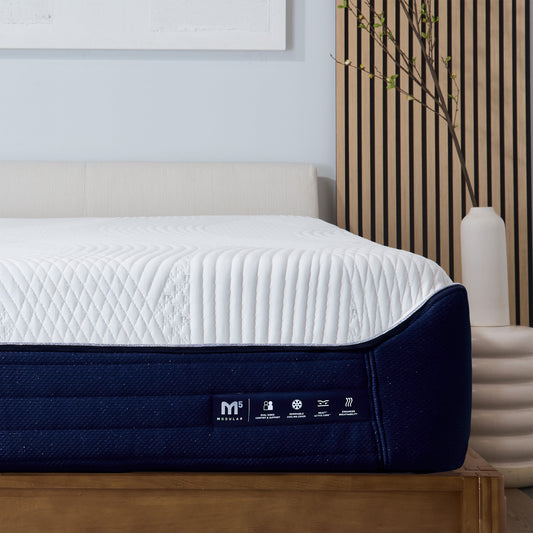
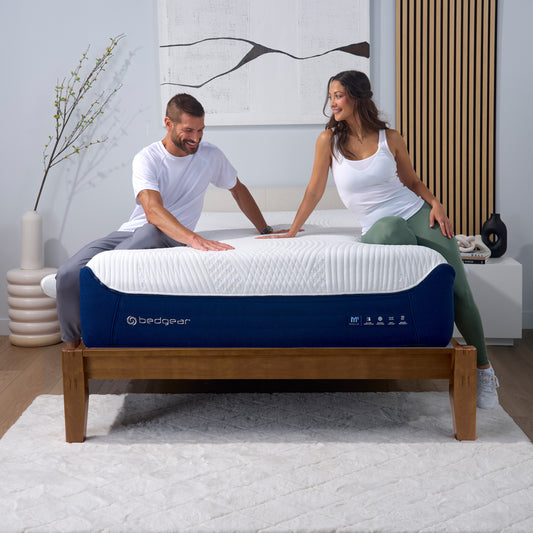
BEDGEAR's Performance® Mattresses are built with airflow engineered through every layer, not just applied at the surface. The M5 Night Ice Performance® Mattress uses 3X cooling technology with a phase-change Ver-Tex cooling cover that draws heat away from the body on contact. The airflow doesn't stop there; ventilated foam layers and a breathable coil system keep temperature stable through the full night, not just for the first hour. For athletes who consistently run hot, this is the most direct intervention available in a sleep surface.
Airflow Protects Every Stage of Recovery
Airflow is what makes temperature management work. Without it, heat and moisture accumulate in the sleep microclimate regardless of what the room thermostat reads. That accumulation disrupts sleep continuity in ways that are disproportionately costly for athletes: deep sleep stages are the first to shorten when the sleep environment becomes uncomfortable, and deep sleep is precisely where the most valuable physiological recovery occurs.
A sleep surface with genuine airflow allows heat to escape rather than building beneath and around the body. That difference shows up as longer time in slow-wave sleep, less overnight movement, and a more complete hormonal recovery cycle. BEDGEAR's hybrid mattress construction uses independently wrapped coil systems that maintain airflow through the support core; the same structure that gives the mattress its responsive feel also prevents the heat buildup that would otherwise fragment sleep.
Moisture is the Variable Most Athletes Overlook
An active body produces more moisture than a sedentary one, including overnight. When that moisture can't evaporate, it creates a damp microclimate that intensifies perceived heat and increases discomfort. The result is more movement, lighter sleep, and shorter time in the deep stages where actual recovery happens. Most conventional bedding materials aren't designed to handle athletic moisture loads; they retain it.
BEDGEAR's Dri-Tec® Performance Sheets and Ver-Tex® cooling covers are engineered with moisture-wicking construction that moves perspiration away from the body rather than holding it. The goal isn't just comfort. It's keeping the sleep microclimate dry and thermally stable so the body can stay in recovery mode rather than constantly adjusting to an environment that's working against it.
Building an Athlete Sleep Environment: BEDGEAR Products by Role
| Product | Role in Recovery | Key Feature |
|---|---|---|
| M5 Night Ice Performance® Mattress | Temperature regulation at the surface level. | 3X cooling technology; phase-change Ver-Tex cover; ventilated foam layers. |
| M3 Performance® Mattress | Personalized support for individual recovery needs. | Swappable comfort layers; individually wrapped coils; Ver-Tex cooling cover. |
| Performance® Pillows 0.0 – 3.0 Sizing System | Spinal alignment; neck and shoulder pressure relief. | Body-type and sleep-position fit; breathable performance fill. |
| Dri-Tec® Performance Sheets Bed Sheets | Moisture management; thermal stability at the skin layer. | Moisture-wicking Dri-Tec® fabric; 4-way stretch; breathable construction. |
| Performance® Mattress Protectors Mattress Protectors | Moisture barrier without heat or noise tradeoff. | Breathable waterproof protection; moisture-wicking surface; silent fit. |
Alignment: The Recovery Variable in Your Pillow
Alignment is usually framed as a mattress issue. For athletes, it starts at the pillow. The neck and shoulders are where sleep position translates to spinal position, and a pillow that's the wrong height or firmness for the sleeper's body type keeps the muscles alongside the cervical spine partially engaged through the night. That's not recovery; that's eight hours of low-grade tension on a system that's supposed to be fully powered down.
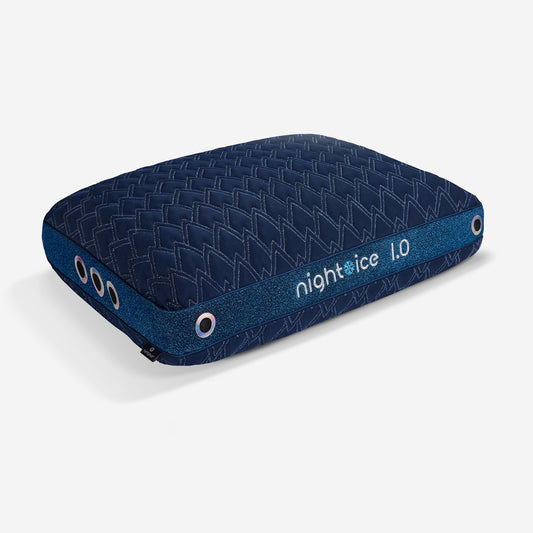
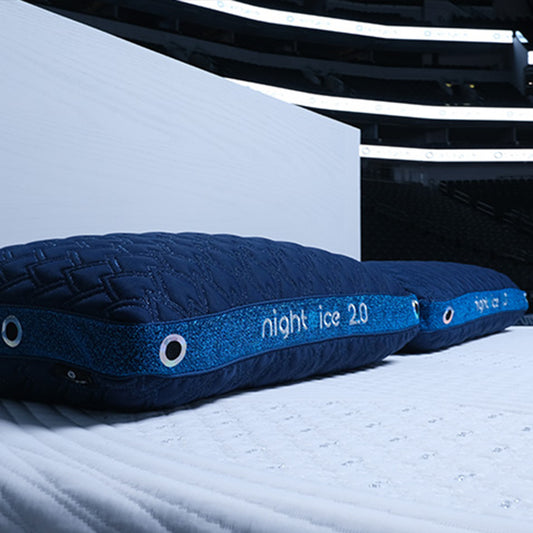
BEDGEAR's Performance® Pillow sizing system runs from 0.0 to 3.0, calibrated to sleep position and body type rather than a single universal shape. A side-sleeping offensive lineman and a back-sleeping distance runner have completely different cervical alignment needs. One pillow doesn't serve both. Athletes who have never used a properly fitted pillow frequently notice the difference immediately; less neck stiffness, less shoulder tension, and less repositioning through the night. But don't just take our word for it, ask the Dallas Mavericks.
What the Sleep Environment Should Actually Feel Like
A well-built athlete sleep environment doesn't feel like anything dramatic. It feels like you didn't move much. You woke up without cataloguing your soreness before you got out of bed. The room was the right temperature and somehow stayed that way. You don't remember shifting positions four times. That's not a luxury sleep experience; that's a surface that did its job so your body could do its job overnight.
The absence of disruption is the point; it's the ultimate goal. Each friction point that gets removed, whether heat buildup, moisture accumulation, alignment breakdown, or partner movement transfer, is another variable that would otherwise be fragmenting sleep and shortening the window where your body is actually recovering. BEDGEAR's motion isolation technology, built into the independently wrapped coil systems across the Performance® mattress lineup, keeps one partner's movement from disrupting the other's recovery. For couples with different sleep schedules or training loads, that isolation is a material difference in sleep quality for both people. In fact, we have an entire guide that focuses on how sleep is a couple's issue.
The Room Itself: What Actually Moves the Needle
Room temperature, light, and noise all contribute to sleep environment quality. The research on this is consistent: a cool room between 60–67°F, minimal light exposure (blackout conditions are ideal), and noise below about 30 decibels supports deeper, more continuous sleep. For athletes, circadian alignment matters especially; going to bed and waking at consistent times keeps hormonal rhythms predictable and maximizes the anabolic window during deep sleep.
That said, room-level optimization has a ceiling. If the sleep surface traps heat, retains moisture, or disrupts alignment, the rest of the room's conditions can't fully compensate. Athletes who have dialed in their room environment but still wake up feeling under-recovered should look at the bed itself before assuming the problem is training load or nutrition. The surface is where the body spends the entire night; it's where the variables that fragment sleep most often originate.
Train hard. Recover harder.
BEDGEAR's Performance® Sleep Systems are built for active bodies. Temperature management, moisture control, personalized fit, and support that doesn't quit — every layer engineered for the recovery your training demands.
Building Consistency into the Environment
Optimization isn't the same as consistency. An athlete who sleeps perfectly two nights a week and poorly the other five isn't building a recovery advantage; they're managing an ongoing deficit, and this is only going to get worse. The gains from a well-designed sleep environment compound over time precisely because they're consistent. The body learns what to expect and completes its recovery cycle more efficiently when the conditions are reliably right night after night.
This is where a properly built sleep system earns its value. Individual sleep hacks (ice baths, specific supplements, napping protocols) can add marginal recovery benefit, sure, but a sleep surface that removes the variables fragmenting sleep every single night creates a structural improvement, not a marginal one. For athletes who compete at any serious level, that distinction matters.
What Makes an Athlete Sleep Environment Work
Temperature
60–67°F room; breathable sleep surface that doesn't trap body heat against the skin.
Airflow
Engineered through every layer of the sleep surface, not just applied at the cover.
Moisture management
Moisture-wicking sheets and mattress components that keep the microclimate dry.
Alignment
A pillow fitted to body type and sleep position; a mattress that supports without creating pressure.
Motion isolation
Independently wrapped coil systems that contain movement to one side of the bed.
Consistency
Same conditions, same schedule, same surface—every night. Recovery compounds when inputs are stable.
Frequently Asked Questions About Sleep Environments for Athletes
More questions about building a sleep environment that actually supports athletic recovery? Here are the ones we hear most often.