Sleep is the most underrated performance variable most people have access to. It is free, it is available every night, and the return on getting it right compounds over time. The problem is that most people sleep on surfaces designed for the average body, which means they are designed for almost nobody in particular. The result is sleep that clears a basic threshold without ever delivering what it is capable of.
Performance sleep is the alternative. It is sleep engineered to match how your specific body sleeps: your position, your temperature, your build. When those variables line up, the processes that drive recovery, focus, and readiness run the way they are supposed to. When they do not, you get through the night without getting the full benefit of it. We have built an entire product philosophy around closing that gap.
What Performance Sleep Actually Means
So, what is performance sleep? The word "performance" gets used loosely in this industry. Here is what it means in practice: sleep that lets the body complete its recovery cycle. That cycle includes muscle repair, hormonal rebalancing, cognitive consolidation, and immune support. Each of those depends on reaching and holding the deeper stages, specifically N3, or slow-wave sleep, where the body does its most intensive repair work.
Getting to those stages and staying there long enough for them to count requires specific conditions. Core body temperature needs to fall by roughly a degree to a degree and a half Celsius for deep sleep to take hold. Research has found that increasing heat loss from the body during sleep raises the proportion of the night spent in slow-wave sleep, the stage tied to tissue recovery, immune reinforcement, and memory consolidation.1 (source 1, opens in a new tab) A sleep environment that blocks that temperature drop does not just feel warmer; it can cut short the most valuable part of the night.
Performance Sleep vs. Regular Sleep
Regular sleep meets the minimum. You close your eyes, you wake up, you function. Performance sleep is what happens when the environment works with your biology instead of against it. The difference tends to show up as more time in deep and REM sleep, less movement overnight, steadier energy the next day, and faster physical recovery over time.
The distinction is not about luxury. It is about whether the sleep you are getting actually finishes the job. Deep sleep is when growth hormone output peaks and the body does the bulk of its tissue repair and protein synthesis. Research has also linked short or disrupted sleep with reduced testosterone in healthy men. Those are not marginal effects; they are measurable changes in the body's ability to recover and adapt. Performance sleep is about creating the conditions that protect them.
Why One Size Does Not Fit All
The bedding industry spent decades selling universal comfort. One firmness, one pillow height, one set of materials for every body type, sleep position, and temperature preference. That model does not hold up against what we know about how sleep works. Your recovery needs are not your partner's. Your alignment needs as a side sleeper are not a back sleeper's. Your thermal output at night is not the same as whoever set the temperature standard for the product you are sleeping on.
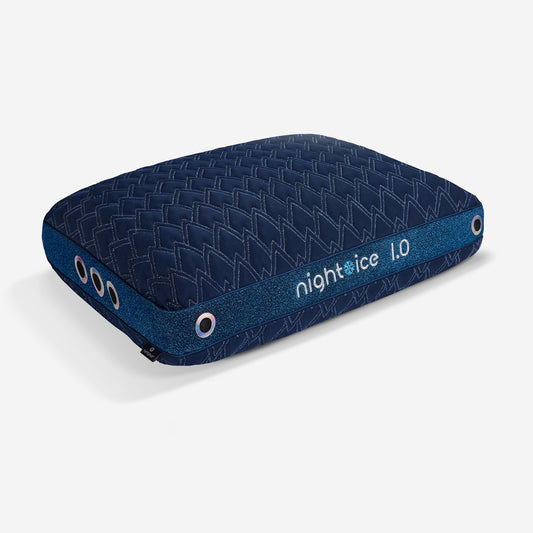
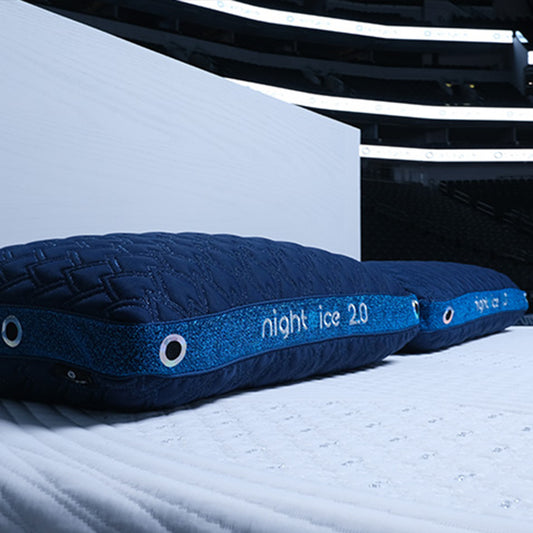
Performance sleep starts by acknowledging that. You will find our entire product architecture is built around individual fit rather than averaged comfort. The Performance® Pillow system runs from 0.0 to 3.0 loft levels, calibrated to body type and sleep position. The Performance® Mattress lineup includes modular options with swappable comfort layers, so firmness can be dialed in for each sleeper. The philosophy is consistent: sleep should adapt to the body, not the other way around. If this is the first you are hearing about pillow loft, our comprehensive pillow loft guide will help.
The Three Pillars of Performance Sleep
All of our products are designed around three non-negotiables. Each one addresses a variable that directly affects whether the body gets into deep sleep and stays there. Here is each in detail.
Pillar 01
Personal Fit
Alignment is the foundation. When the spine sits out of neutral overnight, the muscles alongside it stay partially engaged holding the body in place. That low-grade tension does not feel dramatic; it just quietly stops the body from fully switching off. You toss. You turn. You cycle through the lighter stages without ever properly arriving in the deeper ones.
Personal fit means the right pillow height for your sleep position and body type, and a mattress that supports without creating pressure. For side sleepers, that means enough contouring at the hip and shoulder to keep the spine level. For back sleepers, it means consistent lumbar support without sinkage at the midsection. Our 0.0 to 3.0 pillow sizing system and the modular construction of the M-series mattresses are built around exactly this variability. When fit is right, the body can let go; that is when recovery starts.
Pillar 02
Airflow and Breathability
Airflow is what keeps heat from building up around the body during sleep. Without it, the sleep microclimate gets warmer and more humid as the night goes on, and the nervous system responds by staying more alert. Sleep runs lighter. Cycles get broken up. The deep stages that drive recovery get shortened, often without the sleeper ever waking fully or understanding why they feel under-recovered in the morning.
We engineer airflow through every layer of the Performance® Sleep System. Individually wrapped coil systems in the Performance® Mattresses keep open air channels through the support core. Breathable performance fabrics in the sheets and pillow covers let heat move away from the skin rather than collect against it. Your circadian system starts its cooling process during the evening; airflow in the sleep surface supports that rather than obstructing it.
Pillar 03
Temperature Balance Through the Night
Temperature balance is not just about starting the night cool. It is about holding stable thermal conditions across the full sleep cycle. Core temperature falls as sleep deepens and rises again toward morning. Anything that disrupts that curve, whether a heat-trapping surface, moisture buildup, or a material that creates a warm pocket around the body, breaks up the cycle. The deeper stages get compressed and the repair work does not finish.
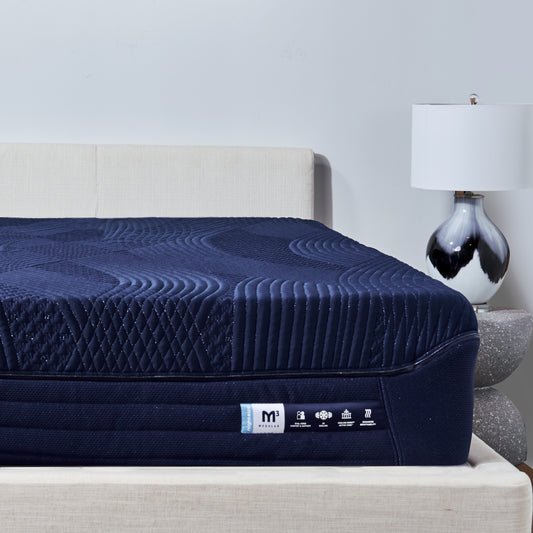
Our M5 Night Ice Performance® Mattress addresses this with a phase-change Ver-Tex® cooling cover engineered to draw heat away on contact and hold a more stable surface temperature through the night. In our sheets, Dri-Tec® fabric works on a different variable; it moves moisture away from the skin so the microclimate stays dry. Sleep onset is tied to that natural drop in core temperature, along with melatonin release. A sleep surface that supports the process, rather than trapping the heat the body is trying to shed, makes a real difference in how deeply and consistently you sleep.
What Happens During Performance Sleep
Sleep is not passive, even though it looks like lying still. While the body is quiet, a set of active processes runs in the background. They do not all happen at once; they are organized across the sleep stages, each contributing something specific to recovery.
Most people know sleep has stages. Fewer know what each one is actually doing, or what gets lost when the environment cuts them short. Here is a quick-reference breakdown, followed by a closer look at each.
| Stage | What It Does | What Disrupts It |
|---|---|---|
| N1, Light SleepTransition stage | Body begins to relax; heart rate slows; muscle tension releases | Noise, light, discomfort, poor alignment |
| N2, Core SleepAround half of total sleep time | Body temperature drops; motor skill consolidation; cardiovascular recovery | Heat buildup, moisture discomfort, partner movement |
| N3, Deep SleepSlow-wave sleep; most restorative | Growth hormone peaks; tissue and muscle repair; immune support; cellular restoration | Elevated core temperature, poor airflow, heat retention in the sleep surface |
| REM SleepMultiple cycles per night | Memory consolidation; emotional regulation; cognitive processing | Alcohol, inconsistent sleep schedule, fragmented earlier stages |
Scroll sideways to see all columns.
N1: Light Sleep
N1 is the entry point. Heart rate slows, muscles release tension, and the body starts shifting away from waking state. It lasts only a few minutes per cycle, but it is the gate every other stage has to pass through. Poor alignment is one of the most common reasons N1 stalls. Research published in Healthcare found that appropriate pillow height reduces stress on the cervical spine and relaxes the muscles of the neck and shoulder.2 (source 2, opens in a new tab)
A pillow that is too high or too low keeps those muscles engaged; enough tension to stop the body from fully switching off. Our 0.0 to 3.0 Performance® Pillow sizing system is built around this, matching loft to body type and sleep position so the cervical spine sits closer to neutral and the surrounding muscles can let go.
N2: Core Sleep
N2 is where the body spends roughly half its total sleep time. Core temperature drops, heart rate keeps slowing, and motor skill consolidation begins, locking in the physical learning from the day. Disruption during N2 usually shows up as fragmentation and brief arousals that the sleeper never consciously registers but absolutely feels the next morning.
Heat buildup is the main trigger. Our Dri-Tec® Performance Sheets move moisture away from the skin rather than holding it, keeping the microclimate drier so N2 can run its course without interruption.
N3: Deep Sleep
N3 is the stage performance sleep is built around. Growth hormone peaks here. Tissue and muscle repair is most active here. Immune function is reinforced here. It is the most restorative stage in the cycle, and the most sensitive to environmental disruption. A study published in Scientific Reports found that increasing conductive heat loss during sleep, essentially cooling the surface the body rests on, produced a statistically significant increase in time spent in N3 along with a lower resting heart rate.1 (source 1, opens in a new tab)
Warm environments compress slow-wave sleep more than any other stage. Our M5 Night Ice Performance® Mattress addresses that directly; the phase-change Ver-Tex® cover is engineered to draw heat away from the body rather than trap it, supporting the temperature conditions N3 depends on.
REM Sleep
REM is where cognitive recovery happens. Memory consolidates, emotional regulation resets, and the brain works through the information load from the day. REM cycles get longer as the night goes on, which means they are disproportionately affected by anything that fragments the second half of the night. A review published in Alcoholism: Clinical and Experimental Research found that alcohol at all doses increases sleep disruption in the second half of the night and suppresses total REM at moderate and high doses.3 (source 3, opens in a new tab) That is one reason a pre-bed drink reliably undercuts cognitive recovery even when it seems to help you fall asleep.
An environment that keeps sleep continuous through the full night, with stable temperature, minimal movement transfer from independently wrapped coils, and proper alignment from the first minute, gives REM the uninterrupted conditions it needs.
Why Performance Sleep Is a System, Not a Single Product
This is where most sleep product marketing falls short. A single cooling pillow will not compensate for sheets that trap heat. A breathable mattress will not fix alignment problems caused by the wrong pillow height. Each layer plays a specific role, and when one fails it drags on the whole system.
We design every product in the Performance® Sleep System to work together. The mattress manages support and airflow through the coil and foam structure. The pillow manages cervical alignment and breathability. The sheets manage moisture and skin-level temperature. The protector adds a breathable waterproof barrier without creating heat or noise. When every layer does its job, the sleep environment stays stable and consistent; exactly the conditions the body needs to cycle deeply.
Sleep is not merely passive rest but a highly active and complex biological process during which the body carries out mechanisms essential for health and performance.Journal of Clinical Medicine, Sleep and Athletic Performance: A Multidimensional Review
Find Your Performance® Sleep System
Personal fit, airflow, temperature balance; every variable addressed across the full lineup. Our sleep experts can match you to the right system for your body, position, and temperature needs.
The Long-Term Impact of Getting Performance Sleep Right
The most important thing about performance sleep is that it compounds. One good night is noticeable. Consistent performance sleep, week after week and month after month, changes how you function at a baseline level. Energy is steadier, recovery is more complete, focus is sharper, and physical adaptation from training or physical work is more efficient. The body stops carrying the low-grade fatigue deficit that builds when sleep is consistently short of what it could be.
That compounding effect is what makes the sleep surface worth getting right. This is not a minor quality-of-life upgrade; it is a structural change to the most foundational recovery process the body runs. Athletic performance, cognitive output, mood stability, and immune function all sit on top of sleep quality.
What Performance Sleep Looks Like in Practice
A performance sleep environment does not announce itself. You do not notice the airflow or register the temperature staying stable. What you notice is the absence of disruption: you did not shift positions all night, you were not too hot at 3 a.m., you woke up without cataloguing your stiffness before getting out of bed. That is what a well-built system feels like when it is working.
The practical setup looks like this: a mattress with the right support level for your sleep position and enough airflow through its construction to stop heat building up; a pillow matched to your body type and how you sleep; sheets built from moisture-wicking performance fabrics that keep the skin-level environment dry; and a mattress protector that protects the investment without adding heat. Each piece is specific rather than generic, and together they create a better sleep microclimate.
The Performance® Sleep System, Layer by Layer
Every layer has a job. When each one does it, the whole system stays out of your way and lets recovery run. Here is what each piece is responsible for.
Performance® Mattress
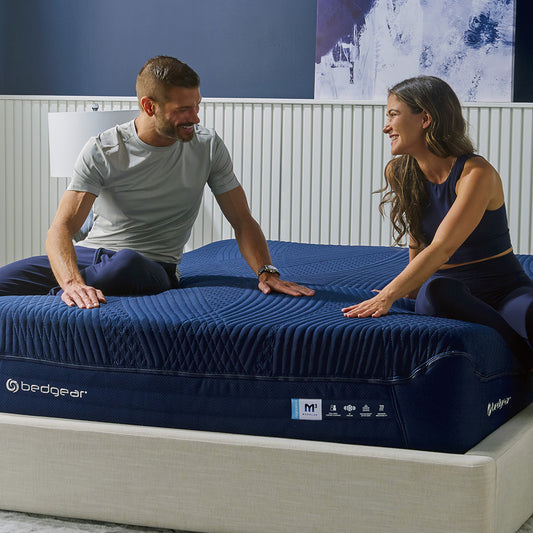
Individually wrapped coils plus foam comfort layers. Airflow through the core; support calibrated to sleep position.
Performance® Pillow
A 0.0 to 3.0 loft sizing system matched to body type and sleep position. Cervical alignment; breathable fill.
Dri-Tec® Performance Sheets
Moisture-wicking fabric with 4-way stretch. Keeps skin-level temperature steady and breathable through the night.
Performance® Mattress Protector
Breathable waterproof barrier. Protects the mattress without adding heat, noise, or texture.
What Is Performance Sleep? The Takeaway
Performance sleep is sleep that finishes what it starts. The hours matter less than whether your body can drop its temperature, hold alignment, and stay in the deep and REM stages long enough to do the repair work those stages exist for.
Three variables decide that: how well your setup fits your body, how freely air moves through it, and how stable it keeps your temperature from the first minute to the last. Get those right and the hours you already sleep start paying out considerably more than they did before.
Frequently Asked Questions
Still have questions about performance sleep and what makes it different? Here are the ones we get most often.
What Is Performance Sleep?
What Is the Difference Between Regular Sleep and Performance Sleep?
Why Does Body Temperature Matter for Sleep Quality?
What Does Airflow Have to Do With Sleep?
What Is a Performance Sleep System?
References
- Grimaldi, D., et al. (2024). Enhanced conductive body heat loss during sleep increases slow-wave sleep and calms the heart (opens in a new tab). Scientific Reports, 14, 4789.
- Ren, Z., et al. (2021). Ergonomic consideration in pillow height determinants (opens in a new tab). Healthcare, 9(5), 533.
- Ebrahim, I., et al. (2013). Alcohol and sleep I: effects on normal sleep (opens in a new tab). Alcoholism: Clinical and Experimental Research, 37(4), 539-549.
- Conversano, F., et al. (2025). Sleep and athletic performance: a multidimensional review of physiological and molecular mechanisms (opens in a new tab). Journal of Clinical Medicine, 14(21), 7606.