There is a number most people have chased their whole lives: eight. Eight hours of sleep. Eight hours as the benchmark. Eight hours as the answer to feeling better, recovering faster, and performing at your best.
The problem is that the number is not the whole point. Recovery is the point, and recovery depends far less on how long you are asleep than on how well you sleep while you are there. That distinction is the foundation of performance sleep, and it changes how you think about everything from your mattress to your pillow.
Sleep Quality vs. Sleep Quantity: What's the Difference?
Sleep quantity is simple. It is the total hours you spend asleep, and it is easy to measure. Sleep quality is more nuanced. It is about how efficiently your body moves through the stages that actually drive recovery, deep sleep and REM, without disruption.
Your body runs repeated cycles each night, each one progressing from lighter sleep into deep sleep and eventually REM. Deep sleep is when physical repair happens: tissue rebuilds, growth hormone releases, and the immune system does its work. REM handles the cognitive side: memory consolidation, emotional regulation, mental recovery.
You can spend eight full hours in bed and still miss those stages. Fragmented sleep, overheating, pressure buildup, and poor alignment all interrupt the cycle before it completes. Extra hours do not compensate for that; they just extend the disruption.
How Alignment Determines Whether Your Body Can Actually Recover
Here is what happens when your spine sits out of neutral alignment during sleep: the muscles surrounding it do not switch off. They stay partially engaged, holding your body in position rather than recovering alongside it. That background tension is enough to shorten deep sleep, increase nighttime movement, and leave you waking up stiff despite a full night in bed.
A 2021 cross-sectional study published in PLOS ONE found that participants reporting waking spinal symptoms also reported lower sleep quality than those without them. They showed more frequent posture changes through the night, which is a measurable sign the body is responding to discomfort rather than resting through it.1 (source 1, opens in a new tab)
The spine has a natural curve that needs to be maintained through the night, not just while you are upright. A mattress that is too soft lets the heaviest parts of the body sink too far, pulling the lumbar spine out of neutral. One that is too firm does not contour enough to relieve pressure at the hips and shoulders, so the spine bows upward to bridge the gap. Either way the surrounding muscles compensate, and that compensation costs you recovery.
What Neutral Alignment Actually Means for Sleep Posture
Neutral spinal alignment during sleep means the spine keeps its natural S-curve regardless of position. For back sleepers, that means even support along the full length of the spine with no sinkage at the midsection. For side sleepers, it means enough give at the shoulder and hip to keep the spine from bowing sideways. For stomach sleepers, the most spinal-stress-prone position, it means enough surface firmness to stop the belly sinking and pulling the lower back into hyperextension.
When that alignment is present, muscles can fully disengage, nerves are not compressed, and blood flow is not restricted. The body can do the repair work sleep is meant to support. When it is not, you spend hours in a compensatory posture and you feel it in the morning.
Your Mattress Is the Foundation of Alignment
The mattress sets the base condition your body sleeps in. Every other variable builds on top of it. If your mattress is not providing the right combination of support and pressure relief for your body and sleep position, the rest of your sleep system is compensating for a problem it cannot fully fix.
Hybrid mattresses address alignment most effectively. Individually wrapped coil systems provide targeted, responsive support that adapts under different body zones; heavier areas get firmer support, lighter areas get appropriate give. Foam comfort layers above them conform to the body's shape and spread weight across the surface, reducing pressure concentration at the hips, shoulders, and lower back. That combination is what lets the spine stay neutral instead of adapting to a single fixed surface.
| Mattress | Best For | Alignment Advantage |
|---|---|---|
| H Performance®Performance® Mattress | Best all-around hybrid | Individually wrapped coils plus conforming foam layers for zoned spinal support. |
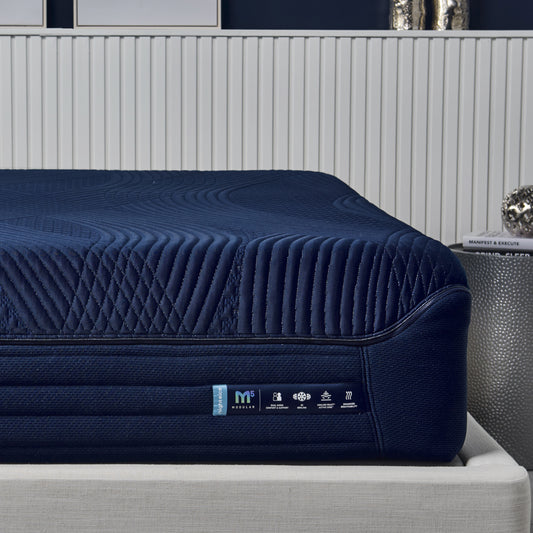
| M5 Night IcePerformance® Mattress | Hot sleepers | Cooling surface plus modular construction; alignment support without heat disruption. |
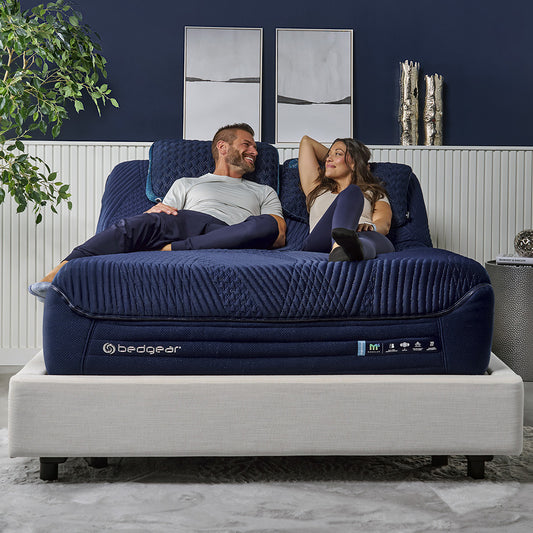
| M3 Performance®Mattress | Couples with different needs | Swappable comfort layers; each side dialed in independently for alignment. |
Scroll sideways to see all columns.
The right mattress does not just feel comfortable. It removes the structural variables that keep your body from fully recovering: pressure concentration, spinal deviation, heat buildup, and motion transfer from a partner. Each one, left unaddressed, costs you sleep quality, which is to say it costs you recovery.
Your Pillow Is the Other Half of the Alignment Equation
Most people put real thought into their mattress and almost none into their pillow. That is backwards. Your pillow determines where your head and neck sit relative to the rest of your spine. Get it wrong and even a well-chosen mattress cannot save your alignment.
A pillow that is too high pushes the neck into forward flexion. One that is too low lets the head drop and loses the cervical curve entirely. In both cases the muscles of the neck and shoulder stay engaged through the night to stabilize the head, the same compensation pattern a misaligned mattress creates at the lumbar spine.
The research here is specific. A systematic review published in Sleep Health found that a pillow height between 7 and 11 centimeters delivered the highest comfort ratings, reduced cervical and cranial pressure, lowered cervical muscle activation, and supported spinal alignment during sleep.2 (source 2, opens in a new tab) A separate study in PLOS ONE found that pillow height directly affects cranio-cervical pressure distribution, and that those pressure differences track with sleep quality outcomes.3 (source 3, opens in a new tab)
Why Pillow Fit Isn't One-Size-Fits-All
The right pillow height is not universal. It depends on your shoulder width, your sleep position, and your body proportions. Side sleepers need more loft to bridge the gap between head and mattress. Back sleepers need less, just enough to support the cervical curve without pushing the chin toward the chest. Stomach sleepers need the flattest profile available, ideally none at all, to keep the neck from rotating too far.
Our Performance® Pillows are sized by sleep position and body type on a 0.0 to 3.0 scale; not a vague soft, medium, or firm label, but a fit system that maps loft to your actual dimensions and how you sleep. That matters because the difference between proper and improper cervical alignment often comes down to a centimeter or two. A pillow that is almost right is still a pillow your muscles work around all night.
| Pillow | Best For | Key Feature |
|---|---|---|
| 0.0 to 3.0 Performance® PillowsAll sleep positions | Sleepers who want a precise fit | Loft scaled to body type and sleep position; removes guesswork from cervical alignment. |
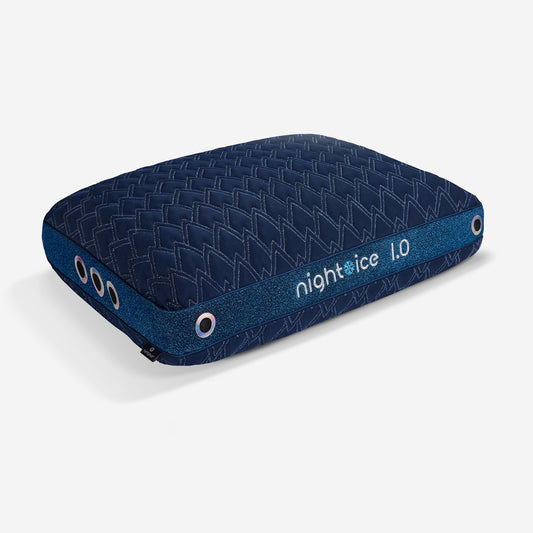
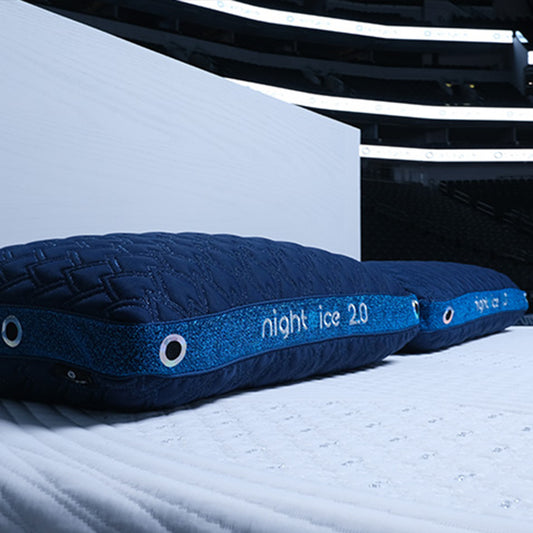
| Night Ice Performance® PillowHot sleepers | Sleepers who run hot overnight | Cooling construction; alignment support without the thermal disruption. |
| Storm Performance® PillowBroad-shouldered sleepers | Side sleepers who need more loft | Extra loft for larger frames; keeps the cervical spine level through the night. |
Scroll sideways to see all columns.
Not Sure What Your Body Needs?
Our sleep experts match you to the right mattress and pillow based on your sleep position and body dimensions, rather than a generic recommendation. The fit is the whole point.
The Other Variables That Undercut Sleep Quality
Alignment is the foundation, but it is not the only thing standing between you and real recovery. Temperature and pressure work alongside alignment to either protect or fragment your sleep cycles.
Temperature and Sleep Cycles
Your body needs to drop its core temperature to initiate and maintain deep sleep. When the sleep surface traps heat, that drop does not happen cleanly. Sleep runs lighter. Brief arousals increase. Deep sleep windows shorten. You may technically sleep through the night without your body ever staying in the recovery stages long enough to benefit.
A mattress or pillow that traps heat is not just uncomfortable; it is shortening the most valuable parts of your night. That is why performance sleep systems are built with airflow at every layer rather than only at the surface.
Pressure Points and Sleep Fragmentation
Pressure points form where the body's heaviest areas meet a surface that does not distribute load evenly. The result is discomfort that pulls you out of deep sleep without fully waking you. You do not remember it in the morning; you feel it as stiffness, soreness, or fatigue that should not be there after a full night.
For side sleepers especially, pressure at the shoulder and hip is one of the most common causes of fragmented sleep. The hip needs to sink slightly into the surface for the spine to stay level. When it cannot, the body braces, the muscles engage, and sleep quality drops regardless of how many hours pass.
What High-Quality Sleep Actually Feels Like
When alignment, temperature, and pressure are dialed in, sleep changes noticeably, and usually quickly. Many people report feeling the difference within a few nights of moving to a surface that supports their body the way it actually sleeps.
The signs are straightforward: waking up alert instead of groggy, less morning stiffness, steadier energy through the day, better focus, faster recovery from exercise and stress. Those are not outcomes of sleeping longer. They are outcomes of sleeping better, which means sleeping with the right conditions in place from the first moment of the night.
Sleep Quality vs. Sleep Quantity: Where to Put Your Attention
Sleep quality matters more than sleep quantity because hours only count if the conditions let your body use them. A spine held out of neutral, a surface holding heat, or pressure the mattress cannot spread will all cut into the same deep and REM stages that recovery depends on, no matter how long you stay in bed.
So the useful question is not how many hours you got. It is whether your setup let those hours do anything. Performance sleep is about protecting that every night so the results compound. The mattress and pillow are where it starts; everything else builds on top of them.
Frequently Asked Questions
Still have questions about sleep quality, alignment, and what to do about it? Here are the ones that come up most.
Why Does Sleep Quality Matter More Than Sleep Quantity?
How Does Spinal Alignment Affect Sleep Quality?
How Does a Pillow Affect Sleep Alignment?
What Kind of Mattress Is Best for Sleep Quality?
Can Poor Sleep Quality Cause Morning Stiffness?
Sources
- Cary, D., Jacques, A., & Briffa, K. (2021). Examining relationships between sleep posture, waking spinal symptoms and quality of sleep: a cross sectional study. PLOS ONE. Read on PubMed Central (opens in a new tab)
- Radwan, A., et al. (2020). Effect of different pillow designs on promoting sleep comfort, quality, and spinal alignment: a systematic review. Sleep Health. Read on ScienceDirect (opens in a new tab)
- Ren, L., et al. (2016). Effect of pillow height on the biomechanics of the head-neck complex: investigation of the cranio-cervical pressure and cervical spine alignment. PLOS ONE. Read on PubMed Central (opens in a new tab)