You slept fine. You went to bed at a reasonable hour. And you still woke up looking like you went three rounds with your pillow and lost... miserably. At the end of the night, morning puffiness has a way of ignoring how responsible you were the night before.
Here's the thing though: it didn't come out of nowhere. Puffy eyes in the morning are almost always the result of what happened overnight; fluid, position, and a few sneaky triggers you served yourself at dinner. That means they're fixable, both in the ten minutes before you leave the house and at the source.
Let's cover both: why it happens, how to reduce puffy eyes fast when you're already staring at them, and the sleep setup changes that stop the cycle. Read on and learn how to wake up beautiful every single day.
Why Do You Wake Up With Puffy Eyes?
The skin around your eyes is the thinnest on your body, and there's very little structure underneath it to push back against swelling. When fluid shows up, it shows, and it shows up big time.
During the day, gravity and constant blinking help fluid drain away from your face. At night, you lie flat for hours and both of those drains slow down; fluid settles into that delicate under-eye tissue and stays there until you get vertical again.
That's the baseline mechanism, and a handful of triggers make it worse:
- A salty dinner: Extra sodium tells your body to retain water, and some of it parks around your eyes.
- Alcohol before bed: Dehydration causes tissue to cling to whatever fluid it has; late drinks show up on your face by morning.
- Allergens in your bedding: Dust mites and pet dander live where your face spends the night, and irritated eyes swell.
- Short or broken sleep: Poor sleep is linked to duller, puffier-looking skin; your face keeps the receipts.
- Sleeping face-down: Pressing your eyes into the pillow adds direct pressure and creasing to the fluid problem.
- Rubbing your eyes: Irritation invites swelling; overnight rubbing does it while you're not paying attention.
Notice how many of these triggers live in your bedroom.
Keep that in mind; we're coming back to it.
How to Reduce Puffy Eyes Fast
It's 7am, the mirror has opinions, and you need results before your first meeting, especially if it's a hot one.
Fluid responds quickly to two things: cold and movement. Taking that into consideration, here's your fast protocol.
Start With the Cold
Cold helps constrict vessels and calm swelling, which is why every classic remedy is basically a delivery system for it. A clean washcloth soaked in cold water, a chilled spoon, refrigerated cucumber slices, or a gel eye mask from the fridge all work; hold whatever you choose gently against your closed eyes for five to ten minutes.
If you're a fan of chilled eye creams or rollers, the fridge is doing half the work there too. And hey, who doesn't love an excuse to mask up one more time.
Add Gentle Massage
Your lymphatic system moves fluid out of your face, and you can politely hurry it along. Using your ring finger, tap or sweep lightly from the inner corner of your eye outward toward your temple for a minute or so per side. Keep it feather-light; this is a nudge, not a workout.
Pulling or scrubbing at that thin skin does more harm than good there.
Get Upright and Hydrate
Gravity is the original de-puffer. The sooner you're vertical, the sooner fluid starts draining on its own; most morning puffiness fades noticeably within an hour of getting up.
Drink a glass of water when you wake, since hydration signals your body to stop hoarding fluid and spread the good stuff around. A cool splash of water on your face rounds out the routine.
How to Reduce Under Eye Puffiness Naturally, Starting Tonight

Quick fixes treat the symptom. If you're waking up puffy most mornings, the smarter play is cutting off the fluid buildup before it happens; and every lever here is a natural one you control tonight.
Luckily, there's a lot you can do while you're sleeping and before you turn in for the night to improve those puffy red eyes.
Time Your Salt and Alcohol Intake
Neither one has to disappear from your life; they just shouldn't be the last thing your body processes before bed. A salty dinner at 9pm gives your system all night to retain water, and a nightcap dehydrates you right as you lie down flat. Both bills come due around your eyes at 6am.
Shift them earlier instead, and you'll notice some big wins. Enjoy the salty meal or the drink with a few hours of buffer before sleep, and balance either one with water.
Your body gets time to process and drain while you're still upright, which is exactly when it's best at the job.
Hydrate Through the Day, Not at Midnight
It sounds backwards, but a well-hydrated body retains less fluid, not more. When you run dry all day, your system responds by clinging to every drop it has; some of that hoarded fluid ends up in the tissue under your eyes overnight.
The fix is steady intake across the day rather than a heroic chug at 11pm. Late-night water doesn't rehydrate you in time to matter; it mostly just books you a 3am wake-up call, and broken sleep is its own puffiness trigger.
Front-load your water and let the evening taper.
Wash Your Bedding Regularly
Your eyes spend eight hours a night in close contact with your pillowcase, and everything living on that fabric gets a front-row seat. Dust mites, pet dander, oils, and product residue all accumulate between washes; for allergy-prone sleepers, that's a nightly irritation session that shows up as morning puffiness.
Hot-wash pillowcases every three to four days and sheets weekly. It's the least glamorous item in any beauty routine and one of the most effective; clean fabric simply gives your eyes less to react to while you sleep.
Add a Washable Pillow Protector
The pillowcase gets washed; the pillow underneath usually doesn't. Over time it collects the same allergens and buildup, and every night your face rests a few millimeters away from all of it. That's the gap a pillow protector closes.
A washable protector adds a barrier layer you can clean as often as your pillowcase, which may help allergy-prone sleepers cut down on overnight exposure. It also extends the life of the pillow itself; a rare two-for-one in bedding.
Protect Your Sleep Quality Itself
Short or broken sleep is one of the most reliable ways to look puffier, duller, and more tired than you feel; your face keeps score even when you don't. Consistent, deep sleep is the foundation every other tip here builds on.
That means a regular schedule, a cool and dark room, and a sleep setup that doesn't fight you. It's the whole premise of waking up beautiful; the beauty routine that matters most is the one that happens with your eyes closed.
One more lever deserves its own section, because it's the one almost nobody uses: the position you sleep in.
The Sleep Setup That Fights Morning Puffiness

Remember the core mechanism: lying flat lets fluid settle around your eyes. So the two biggest overnight moves are getting your head slightly above your heart and getting your face off the pillow.
Elevate Your Head, Comfortably
Sleeping with your head slightly elevated may help fluid drain downward instead of pooling around your eyes. The key word is slightly; propping yourself on a mountain of flat pillows kinks your neck and trades one morning problem for another.
What you want is a supportive pillow at the right height for your sleep position, so the elevation comes from proper loft rather than a pillow pile. Therefore, you need to get your pillow loft right.
Train Toward Back Sleeping
Back sleeping keeps your face off the fabric entirely; no pressure, no creasing, no marinating in whatever's on the pillowcase. If you're a committed side sleeper, you don't have to convert overnight.
Even reducing face-down time helps, and a pillow that cradles your head comfortably on your back makes the habit easier to build.
Upgrade What Touches Your Face
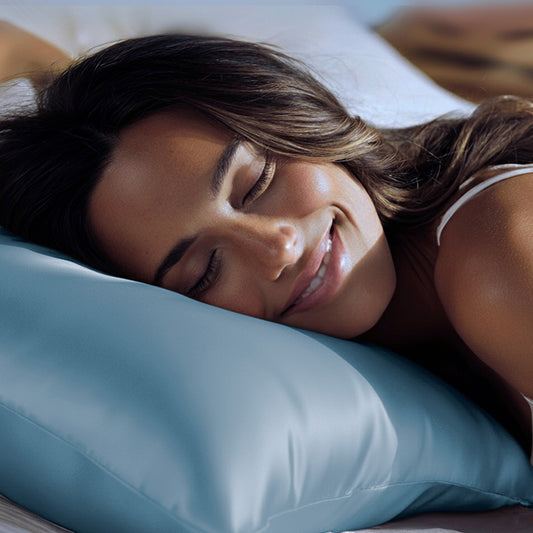
A clean, smooth pillowcase is gentler on the skin around your eyes, and washing it every few days keeps oils, product residue, and allergens from building up where your face lands.
A soft sleep mask can also help you fall asleep faster in a bright room; deeper sleep pays out on your face. Our beauty sleep buying guide walks through the full setup piece by piece.
Built for Beauty Sleep: The Beauty Performance Pillow
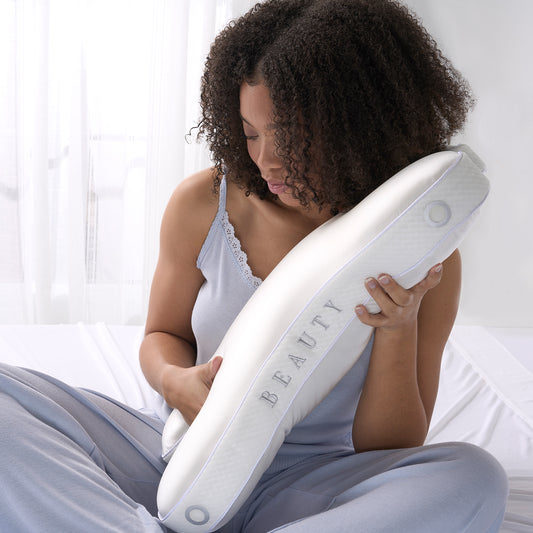
The Beauty Performance Pillow is designed around exactly this routine: comfortable support that helps you settle in on your back, with the breathable, skin-friendly surface BEDGEAR builds into every Performance® fabric. Pair it with the Hyper-Silk Sleep Mask to block out light without pressing on the eye area.
Puffy Eyes vs Eye Bags: Know Which One You're Fighting
Quick vocabulary check, because the fixes are different. Puffiness is fluid; it comes and goes, looks worst in the morning, and responds to everything in this article.
Eye bags are structural; they develop gradually as the skin and tissue under the eyes change with age, and they stick around all day regardless of how you slept.
Dark circles are their own third thing, driven by pigmentation, thin skin, and shadows cast by puffiness or bags. Better sleep and the habits above may help all three look less pronounced; but if your concern is persistent bags or dark circles rather than morning fluid, a dermatologist can walk you through options that actually address the structure.
When Morning Puffiness Deserves a Doctor
Everyday puffiness that fades by mid-morning is common and rarely a concern. A few patterns are worth taking seriously: swelling that's persistent or painful, puffiness in one eye only, swelling that comes with redness or vision changes, or facial puffiness alongside swelling elsewhere in your body.
Those can signal conditions that need a proper evaluation, so skip the home remedies and check in with a healthcare professional ASAP.
How to Reduce Puffy Eyes in the Morning: Wake Up Beautiful Every Morning
Learning how to reduce puffy eyes in the morning really comes down to fighting on both fronts, and winning. For right-now relief: cold, gentle outward massage, water, and getting vertical.
On the other hand, for prevention, watch evening salt and alcohol, keep bedding clean, and set up your sleep so fluid never gets comfortable, with a slight head elevation, more back sleeping, and a surface that treats your face well.
That last part is where your bedroom does the heavy lifting. The BEDGEAR Beauty Collection was built to make the beauty sleep setup automatic; the goal is a face that looks as rested as you actually are. Wake Ready® starts around the eyes.
Frequently Asked Questions about Morning Puffy Eyes
The questions people ask most about morning puffiness, answered straight and to the point.
Why Are My Eyes Puffy in the Morning?
How Do You Get Rid of Puffy Eyes Fast?
Does Sleep Position Affect Puffy Eyes?
Can Salt and Alcohol Cause Puffy Eyes in the Morning?
Do Allergies Cause Puffy Eyes in the Morning?
When Should I See a Doctor About Puffy Eyes?