Most people treat the bed frame as an afterthought, so something that gets picked after the mattress, after the sheets, after everything else that feels more important. Well, let us be the first to tell you that this is the wrong order.
In fact, your bed frame determines how your mattress performs, how your bedroom functions, and in the case of an adjustable base, what your entire sleep system is actually capable of. Get it wrong and you feel it. Get it right and you never think about it again.
The good news is that guide covers everything you need to make the right call. We cover bed frame sizes, types, what to look for, and how BEDGEAR's adjustable bases turn a good mattress into a complete sleep system. Whether you're building from scratch or replacing something that isn't working, start here. Read on to learn more.
What Is a Bed Frame?
A bed frame is the foundation that supports your mattress and raises it off the floor. At its most basic, it's a structural platform; a base that keeps your mattress in position, promotes airflow underneath, and gives the bed a defined presence in the room.
However, at its most sophisticated, a bed frame is an adjustable sleep system with independent head and foot elevation, massage functions, and USB charging built into the rails. Ultimately, the frame you choose shapes everything that sits on top of it.
Still, most people underestimate how much the frame contributes to sleep quality. A frame that flexes, squeaks, or lacks adequate center support creates an unstable sleep surface — one that shifts under movement and degrades the support properties of even a high-quality mattress.
On the other hand, a well-built frame holds everything in place, stays quiet, and allows the mattress to perform the way it was designed to.
What to Look for in a Bed Frame
When looking for a bed frame, the basics apply to every frame regardless of type: sturdy construction that doesn't flex under load, adequate center support for queen sizes and larger, legs or slats that distribute weight evenly across the mattress, and a profile that works with your room height and aesthetic.
Beyond that, though, the decision comes down to what you need the frame to do. A standard platform frame is simple, low-profile, and works with most mattresses. A slatted frame adds airflow. An adjustable base adds a dimension of control that no static frame can match.
Clearance matters too, and this applies both above and below the mattress. Frame height affects how easy the bed is to get in and out of, which matters more as people age or manage joint pain. Under-bed clearance, on the flip side, affects storage and airflow. Still, neither is a universal right answer, but both are worth thinking through before you buy.
How to Choose a Bed Frame
Choosing a bed frame comes down to four things: the size of your mattress, the layout of your room, how you sleep, and what you want the frame to do beyond just holding the mattress. Get those four variables right and the decision makes itself. Learn more about how to choose a bed frame below.
Match the Frame to Your Mattress Size
First and foremost, bed frame size is huge. In fact, this one is non-negotiable. A frame that's too small leaves the mattress overhanging the edges and creates an unstable surface, whereas a frame that's too large leaves gaps between the mattress and the frame that you'll feel every time you roll toward the edge.
Every standard frame size corresponds directly to a standard mattress size; a queen frame for a queen mattress, king frame for a king mattress. The only exception is the split king, where two twin XL mattresses sit side by side on a shared or split frame.
If you're considering a split king configuration, make sure the frame is built for it. Some frames are designed to accommodate two independent bases side by side — each adjustable on its own — while others are single-unit platforms that can't be split. Know what configuration you're building before you buy the frame.
Think About Your Room Layout
A king frame in a 10 by 10 room doesn't leave enough clearance to move comfortably around the bed. The standard recommendation is at least two feet of clearance on the sides you access and three feet at the foot.
If your room is tight, measure before you shop and work backward from the clearance numbers. The frame size that fits your mattress may not be the frame size that fits your room — and knowing that before you buy saves a difficult return.
A common mistake is measuring the room and the mattress but forgetting the frame. Most frames add two to four inches on each side beyond the mattress dimensions. A queen mattress at 60 inches wide sits in a frame that runs 64 inches or wider. That difference adds up fast in a smaller bedroom.
Consider How You Sleep
If you share the bed with a partner who has different sleep needs, an adjustable base is the most powerful frame decision you can make. Independent head and foot elevation means two completely different sleep positions on the same bed without either person compromising.
Now, if you manage lower back pain, acid reflux, or snoring, an adjustable base addresses those problems directly at the foundation level rather than through pillows and wedges. If you sleep alone on a static mattress, a well-built platform frame is all you need.
The adjustable base conversation is worth having even if you've never considered it. Most people don't realize how much of their nighttime discomfort, you know, the extra pillow under the knees, the stack of pillows behind the head, and the constant position adjusting, is a workaround for a static sleep surface.
What's more, an adjustable base bed frame eliminates the workaround and lets the system do the work instead.
Decide What You Need the Frame or Adjustable Base to Do
Storage beds add drawer space underneath. Upholstered frames add visual warmth. Platform frames eliminate the need for a box spring. Adjustable bases add programmable positioning. None of these is better than the others — they each solve a specific problem, and the right frame is the one that solves yours. Start with the problem, not the aesthetic, and the shortlist gets short quickly.
One thing worth noting: the frame you choose affects every accessory decision that follows. An adjustable base requires sheets with deep pockets and secure elastic — BEDGEAR's Powerband® system is built specifically for this.
A storage bed limits under-bed airflow. A high-profile frame changes the visual proportions of the whole room. Think one step ahead before you commit.
Bed Frame and Adjustable Base Sizes
Bed frame sizes follow mattress sizes directly, so the name on the frame should match the name on the mattress.
Where it gets more nuanced is in the details: how much the frame extends beyond the mattress, what clearance you need around it, and which sizes open up configuration options like split king that others don't.
Here's every standard size and what to know about each.
Standard Bed Frame Sizes at a Glance
| Size | Fits Mattress | Min. Room Size | Best For |
|---|---|---|---|
| Twin38" × 75" | 38" × 75" | 7 × 10 ft | Kids, bunk beds, guest rooms |
| Twin XL38" × 80"Split king ready | 38" × 80" | 8 × 10 ft | Dorms, tall solo sleepers, split king |
| Full54" × 75" | 54" × 75" | 10 × 10 ft | Solo sleepers, smaller bedrooms |
| Queen60" × 80"Most popular | 60" × 80" | 10 × 10 ft | Couples, most bedrooms |
| King76" × 80" | 76" × 80" | 12 × 12 ft | Couples who want max space |
| Cal King72" × 84"Longest size | 72" × 84" | 12 × 12 ft | Tall sleepers over 6'2" |
Each size comes with its own clearance requirements, configuration options, and tradeoffs. Here's the full breakdown of what to know about each one before you buy, and we recommend reading our mattress size guide before choosing a mattress and bed frame.
Queen Bed Frame
A queen bed frame is built for a 60 by 80 inch mattress; this is the most widely owned mattress size in the country, which makes the queen frame the most widely available frame size across every style and price point.
For couples in a standard bedroom, it hits the right balance between sleep surface and spatial footprint, so you'll find that it fits comfortably in most bedrooms without requiring the spatial planning a king demands.
What's ,more, the queen frame is also the most forgiving size when it comes to room clearance — a 10 by 10 foot room can technically accommodate a queen with adequate clearance on all sides, though 10 by 12 gives more breathing room.
If you're building a sleep system from scratch in a standard bedroom, queen is the right default frame size for the same reason it's the right default mattress size: it works for the widest range of situations without compromise. You can learn more about queen mattresses in our guide.
King Bed Frame
A king bed frame is built for a 76 by 80 inch mattress, or a king size mattress, so the widest standard frame size available. For couples who want genuine independence on the sleep surface, a king frame delivers 38 inches per person, which is enough space for two completely different sleep systems to coexist without either one affecting the other.
It's also the natural fit for anyone who shares the bed with a pet that has opinions about personal space.
That said, the room requirement is real. A king frame needs at least a 12 by 12 foot bedroom to allow adequate clearance, and 13 by 13 is more comfortable. If your room is tight, a king frame will make it feel like the bed moved in and you're the guest.
BEDGEAR's adjustable bases are available in king, which means the full split configuration (two independent twin XL bases under a shared sleep surface) is an option for couples with different elevation preferences.
California King Bed Frame
A California king bed frame is built for a 72 by 84 inch mattress, so around four inches narrower and four inches longer than a standard king. Like the California king mattress itself, the California king frame exists for one reason: length. For sleepers over 6'2" who have spent years with their feet hanging off the end of the bed, it's the right call. For everyone else, the standard king's extra width is the more useful trade.
California king frames are their own category, so it's important to note that standard king frames won't fit, and the bedding is not interchangeable.
If you're buying a California king frame, verify that sheets, protectors, and any adjustable base components are specifically sized for California king dimensions before you finalize the setup. It's a simple check that catches a surprisingly common mistake.
Twin Bed Frame
A twin bed frame is built for a 38 by 75 inch mattress, so the smallest standard frame size. It's the right choice for kids' rooms, bunk beds, and guest rooms that see light traffic.
Overall, the footprint is small enough to fit in almost any room without spatial planning, and twin frames are the most affordable entry point in the category across every style and construction type.
For adults, on the other hand, a twin frame is a short-term solution at best. The 38-inch width leaves no room for movement, and the 75-inch length rules it out for anyone over 5'11". Where it earns its place is in spaces with a single, clear purpose?
This clear purpose? A dedicated kids' room, a small guest space, or a temporary setup that needs to work without taking over the room.
You can learn more about twin size mattresses in our guide on the subject.
Twin XL Bed Frame
A twin XL bed frame is built for a 38 by 80 inch mattress — the same length as a queen and king, in a significantly narrower width. For solo sleepers who need the length but not the width, it's a practical size that works in smaller rooms without the length compromise of a standard twin. On the other hand, for most dorm setups, it's the gold standard.
Where the twin XL frame earns its most important role is in the split king configuration. Two twin XL frames or bases side by side — each independently adjustable — create a split king that gives couples complete individual control over elevation, firmness, and positioning without sharing a sleep surface.
BEDGEAR's adjustable bases are available in twin XL specifically to support this configuration, which is one of the most underutilized solutions for couples with different sleep needs. Of course, we also have a twin XL mattress size guide if you want to learn more about this bed.
Adjustable Bed Frame
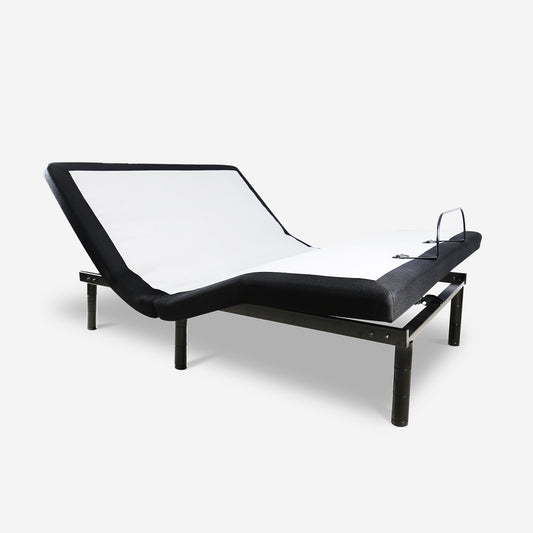
An adjustable bed frame — more accurately called an adjustable base — is in a different category from a standard frame. Where a platform or slatted frame holds the mattress in a fixed position, an adjustable base raises and lowers the head and foot independently, allowing the sleep surface to take on different angles throughout the night.
You'll find that elevated head positions reduce snoring and acid reflux. Elevated foot positions relieve lower back pressure. Zero-gravity positioning — head and feet slightly elevated simultaneously — distributes body weight evenly and is widely used for recovery and pain management; studies have found that this can reduce the impact of snoring in just four weeks!
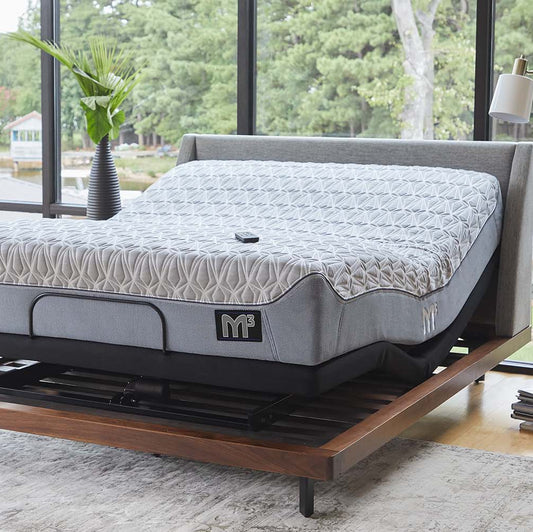
BEDGEAR's adjustable bases are engineered to work seamlessly with their Performance® Mattress lineup, and the Powerband® Secure Fit system on all BEDGEAR sheets and protectors keeps everything in place regardless of position changes.
If you've been compensating for a flat sleep surface with extra pillows or wedges, an adjustable base is the upgrade that makes those workarounds unnecessary. It's the frame decision with the highest impact on how the entire sleep system actually performs. You can also explore our zero gravity collection.
Full Bed Frame
A full bed frame is built for a 54 by 75 inch mattress, or full mattress, so it's wider than a twin but shorter and narrower than a queen. For solo sleepers in smaller bedrooms or studio apartments, a full frame gives more surface area than a twin without the footprint of a queen.
It fits comfortably in rooms where a queen would dominate, and full frames are available across most styles and price points without significant limitations.
For two people, a full frame is a compromise, and you'll feel it. 27 inches each is just too tight for any sleep style. If you're sharing the bed with any regularity, step it up to a queen. The full frame earns its place as a solo sleep solution in a space-conscious setup, and for that specific use case it does the job cleanly without requiring a room that can accommodate something larger.
The Right Bed Frame Makes the Whole System Work
The bed frame is the last thing most people think about and the first thing that determines how everything else performs. A mattress that's structurally sound but sitting on a frame that flexes, squeaks, or lacks center support is being held back by its foundation.
A high-quality mattress on the right adjustable base is a completely different sleep experience than the same mattress on a static platform — same product, different ceiling. And whether you want an anti-snore system or something more zero G, you can always count on BEDGEAR.
Get the size right first. Match it to the mattress, then to the room, then to how you actually sleep. If you've been managing discomfort with extra pillows, wedges, or position adjustments, the frame is where the fix lives — not in another accessory layered on top of a system that isn't set up correctly.