You've probably heard the term before. Maybe at a mattress store, maybe in an ad. "Zero gravity" gets thrown around a lot in the sleep industry — sometimes loosely, sometimes in ways that are more marketing than substance.
But the concept is real, the benefits are well-documented, and for a lot of people it makes a genuine difference in how they feel when they wake up. This guide breaks down what a zero gravity bed actually is, what it does for your body, and who stands to benefit the most — so you can decide whether it belongs in your sleep setup. Read on to learn more about zero gravity adjustable bases below.
What Is a Zero Gravity Bed?
So, what is a zero gravity bed? Let's start with that, and if you haven't given our adjustable base guide a read yet, well, you may want to stop there as well.
First and foremost, the concept didn't originate with a mattress brand. In fact, NASA researchers studying astronauts aboard Skylab observed that when the body is fully relaxed in a weightless environment, it naturally settles into a semi-reclined posture — what they called the Neutral Body Posture (NBP). No external forces.
No effort to hold a position. Just the shape the body takes when nothing is pulling on it. That research later influenced ergonomic and hardware design in spaceflight, and the same postural principles have since been applied to adjustable base design in the consumer sleep industry.
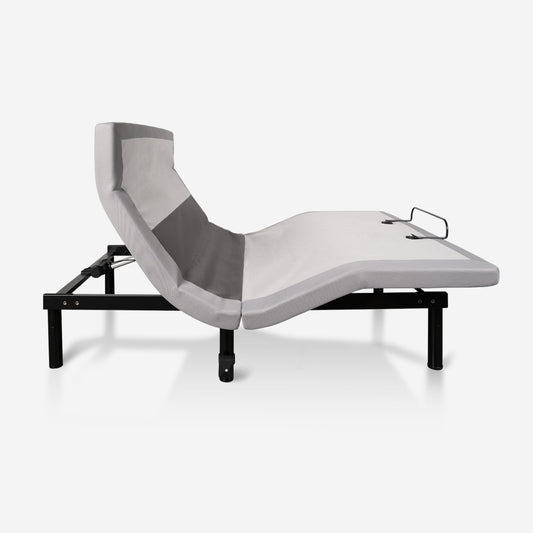
In practical terms, the zero gravity position means your head and torso are slightly elevated, your hips sit at roughly a 120-degree angle relative to your torso, and your knees are raised just above heart level.
The result is a reclined position (not fully flat, not fully upright) where body weight is distributed across a larger surface area. No single point of contact bears the full load, a that's exactly what sets it apart from a flat sleeping position, where the lumbar spine and hips absorb a disproportionate share of your body weight all night.
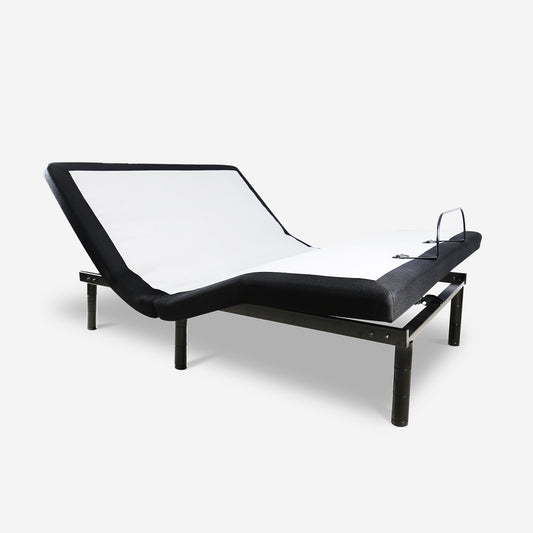
A zero gravity bed, then, is simply an adjustable base set to that position. It's not a special mattress type or a separate product category. Instead, it's actually a feature of a more comprehensive sleep system; one that the best adjustable bases make accessible with a single button press.
Every BEDGEAR Flex base includes a built-in zero gravity preset. Here's how the lineup breaks down by features and best-fit use case.
| Product | Zero Gravity Role | Best For |
|---|---|---|
| Flex L | Zero Gravity and Anti-Snore presets; head and foot adjustment | Entry-level zero gravity option |
| Flex LS | Zero Gravity, Anti-Snore, and TV presets; memory positions; app control; massage | Best balance of features and value |
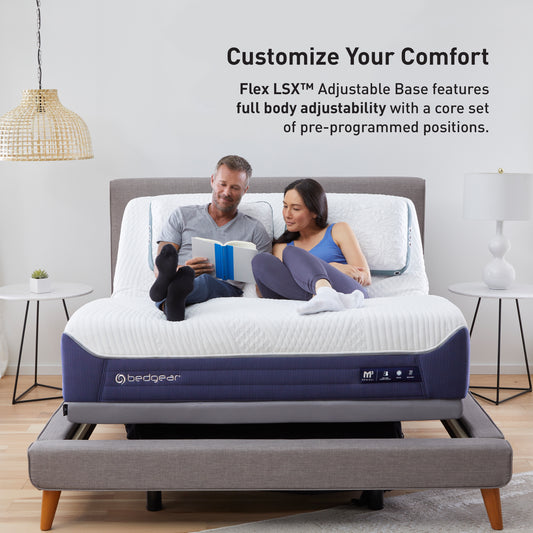
| Flex LSX | Zero Gravity, Anti-Snore, and TV presets; app control; four motors for head, neck, lumbar, and foot | Most customizable zero gravity setup |
| Flex SH Split Head | Zero Gravity and Anti-Snore positioning with independent head and lumbar adjustment per side | Couples who want independent upper-body positioning |
| Adjustable Base Bed Frame | Zero Gravity, Anti-Snore, and TV presets; memory positions | Additional standard adjustable base option |
Not sure which base fits your setup? Our sleep experts can help you choose — find a store near you.
The Real Benefits of a Zero Gravity Bed
The case for sleeping in zero gravity isn't built on one thing. It stacks. When you change the angle of your body during sleep, you change how pressure is distributed, how blood moves, how your airway sits, and how hard your heart works to keep everything running through the night. The benefits below are related to each other; fixing one tends to improve the others.
- Lumbar Decompression: Weight may be redistributed away from the lower spine, which can reduce pressure for some sleepers
- Reduced Snoring: Head elevation may help open the airway and limit soft tissue collapse at the back of the throat
- Better Circulation: Legs elevated above heart level may help fluid drain from the lower extremities overnight
- Less Cardiac Workload: A slight upper-body incline may make it easier for the heart to circulate blood more efficiently through the night
- Deeper Muscle Relaxation: When pressure is more evenly distributed, the body's muscles may be able to relax more fully than on a flat surface
Each of these benefits is worth unpacking individually. Here's how the position actually produces them, though, and why they tend to compound on each other over time.
Lumbar Support and Spinal Decompression
When you sleep flat on your back, gravity pulls your lower body down while your upper body stays supported by the mattress. The lumbar spine, you know, the curved section of your lower back, sits in the middle, and it can end up absorbing tension from both directions. For people with lumbar pain, herniated discs, or chronic stiffness that tends to be worse in the morning, that nightly compression may be a contributing factor.
The zero gravity position may help reduce that load. By raising the head and knees slightly, the angle can make the position feel more comfortable for some sleepers — particularly those whose discomfort tends to build overnight in a flat position.
Of course, the results depend on sleep position, mattress support, and the cause of the discomfort; this is not a substitute for medical evaluation. That said, it's one of the more straightforward positional adjustments available, and for many people the morning difference is noticeable.
Better Circulation and Reduced Swelling
Elevating the legs above the heart is one of the oldest recovery techniques in physical therapy. When your legs are raised, fluid that pools in the lower extremities throughout the day may be able to drain back toward the core more efficiently. If you spend most of your day on your feet, you already know that tight, heavy feeling in your legs by evening. Zero gravity may help give your body a night-long assist in moving that fluid where it needs to go.
For athletes, people with physically demanding jobs, or anyone managing a circulation-related condition, sleeping with the legs slightly elevated is one of the simpler positional adjustments available. As always, results depend on the individual, and an adjustable base is not a substitute for medical evaluation if swelling or circulation issues are a concern.
Less Pressure on Your Heart
Your heart doesn't clock out when you sleep. It works all night to circulate blood throughout your body; the angle your body sits at may affect how hard it has to work. In a fully flat position, the heart pumps against a relatively uniform gravitational field. With the upper body slightly inclined and the legs raised, some research suggests circulation may become a little more efficient overnight. Still, it's important to note that results vary by individual and overall health.
What's more, for people with cardiovascular concerns, this is not a substitute for medical evaluation or treatment. But for healthy sleepers looking to support recovery, a slight incline may make the position feel more comfortable and restorative than sleeping completely flat.
Can a Zero Gravity Bed Help With Snoring?
Okay, so let's take a minute to talk about snoring, which is a real problem for many people. For many people, zero gravity may help. Snoring is often caused by soft tissue in the throat partially collapsing and vibrating as air passes through a narrowed airway. Gravity plays a role; when you're flat on your back, the tongue, soft palate, and surrounding muscles relax and can fall back toward the throat. The airway narrows. The snoring starts.
Elevating the head changes the geometry. When the upper body is at an incline, soft tissue may have less opportunity to fall back and restrict the airway. A 2022 study published in the Journal of Clinical Medicine found that a 30-degree head-of-bed elevation showed meaningful improvement in upper airway obstruction among patients with positional obstructive sleep apnea. Results will vary depending on the underlying cause of snoring, and a zero gravity position is not a substitute for medical evaluation — but the positional principle is supported by research.
BEDGEAR's Flex LS, Flex LSX, and Flex L adjustable bases all include an anti-snore preset alongside their zero gravity preset. They're distinct positions — anti-snore tilts the head at a slightly different angle than zero gravity — but both address the same underlying airway mechanics. For partners who have been dealing with a snoring problem, having both presets available gives you two angles to try without any manual adjustment guesswork.
Zero Gravity Bed Position: What the Angles Actually Mean
The zero gravity position looks more specific than it actually is in practice. The general target is a torso-to-thigh angle of around 120 degrees, with the head elevated roughly 30 degrees and the knees bent slightly upward. Those angles are loosely derived from NASA's Neutral Body Posture research — the natural resting position the body assumes in a weightless environment — and have been adapted into adjustable base design as a reference point for a low-pressure, relaxed sleep position.
In real life, small adjustments to that angle can make a meaningful difference in comfort depending on your body type, sleep position preference, and what you're trying to address.
At the end of the night, the most important thing isn't hitting an exact degree measurement; it's finding the position where the lumbar area feels less loaded, your legs aren't straining to stay elevated, and your breathing feels easy.

The BEDGEAR Flex adjustable base in a reclined position — zero gravity is one button press away.
Our Flex LS and Flex LSX adjustable bases include a dedicated zero gravity preset on the wireless remote. Hit it once and the base moves to the position automatically. Both bases also include two programmable memory positions, so if you've dialed in a slightly different angle that works better for your body, you can save it and return to it without thinking.
The Flex LSX goes further, with four independent motors for head, neck, lumbar, and foot adjustment — which means you're not just adjusting two points of elevation; you have fine-tuned control over every zone of your body simultaneously.
The Flex L is the entry point into the lineup, and it still includes the zero gravity and anti-snore presets alongside head and foot adjustability. If you're new to adjustable bases and want to experience the position before committing to more features, it's a straightforward starting point.
One Button. That's All It Takes.
Every BEDGEAR Flex adjustable base includes a zero gravity preset on the wireless remote — or in the app if you'd rather not reach for the remote at all. No manual adjustment. No guesswork. Just press and recover.
Who Benefits Most from a Zero Gravity Bed?
The honest answer is: most people. But a few groups see the most immediate, noticeable improvement from making the switch. If you fall into any of these categories, a zero gravity adjustable base isn't a luxury — it's a recovery tool you've been sleeping without. Learn more about why you might need a zero gravity bed below.
People With Chronic Back Pain or Lumbar Issues
This is the most commonly cited use case. Sleeping flat puts sustained load on the lumbar spine through the entire night. For someone already dealing with lower back pain, a herniated disc, or general lumbar stiffness, that's eight hours in a position that may be making things worse.
Zero gravity may reduce that pressure for some sleepers — though results depend on sleep position, mattress support, and the underlying cause of the discomfort. It's not a substitute for medical evaluation, but it's a reasonable positional adjustment to try.
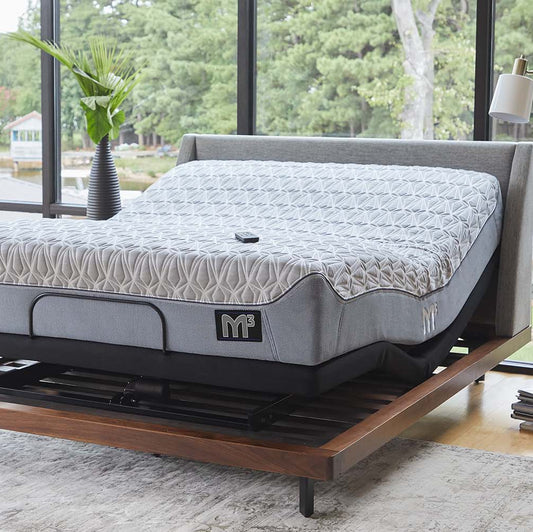
Pairing the position with the right mattress matters here. Our Performance® hybrid mattresses — built on individually wrapped coil systems — are designed to maintain support within the elevated position rather than letting the midsection sink in ways that can counteract the angle.
The base sets the position; the mattress supports the body within it. Getting both right matters most when back pain is the primary driver.
Snorers and Their Partners
If snoring is affecting sleep quality (yours or the person next to you) the zero gravity position is one of the most practical, non-invasive interventions available short of a medical device. Head elevation reduces the airway obstruction that causes most positional snoring, and the BEDGEAR Flex lineup includes a dedicated anti-snore preset specifically calibrated for that purpose.
For couples with different sleep needs, our Flex SH Split Head Adjustable Base takes this further. It's a split-head design that gives each sleeper independent head and lumbar adjustability — so one partner can sleep in zero gravity while the other stays flat, with no compromise. Each side of the bed operates independently; neither adjustment affects the other. If you're in a situation where two people need two completely different positions, this is the base designed for exactly that.
Active People and Those in Physical Recovery
Sleep is when your body repairs itself. Muscles rebuild, tissue heals, and the recovery work from the previous day's physical output actually happens. For athletes, people with physically demanding jobs, or anyone managing a current injury or post-surgery recovery, how your body is positioned during that window may matter.
Zero gravity may help reduce pressure on joints and soft tissue and can make the position feel more comfortable for people who struggle to fully relax on a flat surface. BEDGEAR builds its performance sleep philosophy around exactly this idea: the position you sleep in is part of the recovery equation, not just the number of hours you log.
For active people who already put real thought into nutrition, training, and recovery protocols, sleep position is often the piece that's been left unconsidered. Sleep Fuels Everything® — and the right position is where that starts.
Zero Gravity Beds vs. Regular Adjustable Beds: Is There a Difference?
This comes up a lot, and the answer is simpler than it might seem. A zero gravity bed is an adjustable bed. Zero gravity is a position — not a separate product category. The distinction is whether the adjustable base you're buying includes zero gravity as a built-in preset or requires you to manually dial it in every time you want to use it.
On the BEDGEAR Flex lineup, zero gravity is a preset on every base at every price point. Press the button on the wireless remote and the base moves to the position automatically. On some competing bases — particularly lower-cost options — there's no preset; you'd have to manually adjust the head and foot elevation every night and try to approximate the angle by feel. That's fine if you're motivated; it's also the kind of friction that means you stop bothering after a few weeks.
The other factor worth considering is the number of adjustment zones. A two-motor base adjusts the head and foot as a pair of linked sections. A four-motor base like the Flex LSX adjusts the head, neck, lumbar, and foot independently, which means you can fine-tune the zero gravity angle with much more precision. For most people, the preset on a two-motor base is more than adequate.
On the other hand, for people with specific lumbar needs or who want to really dial in the position, the additional control on the Flex LSX is worth it.
How to Get the Zero Gravity Position on an Adjustable Base
On a BEDGEAR Flex base, it's one button. The wireless remote that comes with every Flex model includes a dedicated zero gravity preset; press it and the base moves to position. No setup required. If you prefer to control it from your phone, the BEDGEAR app connects to the Flex LS and Flex LSX bases via Bluetooth and gives you the same preset controls from your phone or tablet.
If you want to fine-tune the position beyond the preset, both the Flex LS and Flex LSX include two programmable memory positions. Find the angle that works best for your body, save it to one of the memory slots, and return to it with a single press any night you want it. That's a meaningful feature for people who've figured out their ideal position but don't want to manually chase it every night.
One thing worth knowing: not every mattress works equally well on an adjustable base. A very stiff, non-flexible mattress won't follow the base through its range of motion properly, which means you lose most of the benefit.
When evaluating mattress compatibility, look for:
- Flexible Construction: Foam and individually wrapped coil systems articulate with the base; rigid interconnected coils don't
- No Rigid Border Rods: Some older innerspring designs use border rods that prevent the mattress from bending naturally
- Adjustable-Base Compatibility Labeling: Reputable manufacturers will specify this clearly; when in doubt, ask before you buy
- Correct Size Pairing: Split king and split California king mattresses are required for split-head and split-king adjustable bases so each side can move independently
BEDGEAR's Performance® mattresses are designed to flex with an adjustable base; the coil systems and foam layers are built to articulate with the base rather than resist it. If you're pairing a new base with an existing mattress, it's worth checking compatibility before you commit.
Is a Zero Gravity Bed Worth It? Here's the Bottom Line
At the end of the night, a zero gravity bed is worth trying, at least for most people. The zero gravity position may help address several common sleep complaints at once — lumbar pressure, snoring, circulation, and general overnight discomfort. Results depend on sleep position, mattress support, and the underlying cause of whatever's disrupting your sleep; it's not a substitute for medical evaluation when real health concerns are involved. But as a positional adjustment, it's one of the more practical ones available.
The barrier to entry is lower than most people expect. Every BEDGEAR Flex adjustable base includes a zero gravity preset; you don't need the top-of-the-line model to access the position. The Flex L starts the lineup, the Flex LS adds underbed lighting, USB ports, and programmable memory positions, and the Flex LSX brings four-motor control across head, neck, lumbar, and foot for the most dialed-in setup. Whichever you choose, the zero gravity position is already built in.
Sleep is the variable most people underestimate in their recovery and performance equation. A zero gravity bed doesn't change how many hours you get; it changes what those hours feel like for your body. Wake Ready®.
Zero Gravity Bed: Frequently Asked Questions
Still have questions about zero gravity beds? Here are the ones we hear most often.