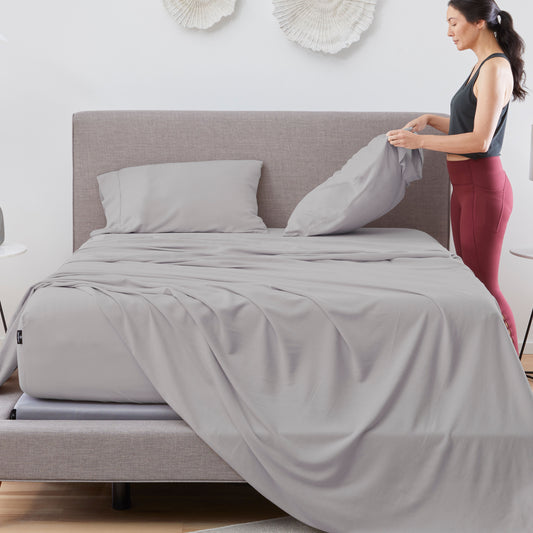
If you kick off the covers every night, your sheets might be part of the problem. Some fabrics hold heat and moisture right against your skin. Linen does the opposite. It's been a go-to warm-weather fabric for centuries, and it still earns that reputation today.
Below, we'll cover why linen feels cool, how it compares to cotton and bamboo, and how it handles winter. We'll also be honest about where linen falls short. By the end, you'll know whether linen sheets belong on your bed.
Are Linen Sheets Good for Hot Sleepers?
Yes, of course they are. In fact, linen is one of the most breathable fabrics you can put on a bed to date. It's made from flax, which is a plant fiber that's thicker and even stiffer than cotton. Those fibers are usually woven loosely, which leaves more room for air to pass through.
Linen also handles moisture well. You'll find that linen absorbs sweat and lets it evaporate quickly, so the fabric doesn't stay damp against your skin all night long. Now, that special mix of airflow and fast-drying quality is what hot sleepers need most at the end of the night.
So, if you wake up warm and sticky, linen is a smart fabric to take for a test nap.
Why Linen Sheets Feel Cool to the Touch
Once you slip into linen sheets on a warm night you'll notice it right away; linen feels cool. Flax fibers carry heat away from your skin faster than many other fabrics, which makes linen bed sheets some of the best for hot sleepers. That gives linen its refreshing first touch, and it even keeps you cool all night long. Below we cover what's happening inside the fabric.
The Flax Fiber
Flax fibers are long, strong, and a little bit irregular, which is what gives linen its charm. It does not pack together as tightly as cotton fibers, which leaves tiny gaps throughout the fabric. Those gaps give warm air an easy way out. The fibers are also smooth, so they don't cling to damp skin; this is why linen is a solid moisture-wicking sheet choice.
The Weave
Next, it's important to focus on linen's weave. Linen bed sheets are woven with fewer, thicker threads than most cotton sheets out there. This is why linen is sold by weight rather than thread count. What's more, a looser weave means more airflow and less trapped heat overall.
Moisture Handling
When it comes to moisture-wicking prowess, linen can absorb a good amount of moisture before it even starts to feel wet. Even better, it lets that moisture go quickly, so it's not hanging around with you all night. Cotton also tends to hold sweat longer, which can leave you feeling clammy. Also, linen dries fast, so your bed feels fresher through the night.
Are Linen Sheets Cooler Than Cotton?
This is the million-dollar bed sheet questions. For most hot sleepers, linen is cooler than cotton. The type of cotton matters, though. Crisp percale breathes well, while silky sateen tends to hold more warmth. In the chart below we cover the most common sheet fabrics and how they compare on feel, breathability, and moisture.
| Fabric | Feel | Breathability | Moisture | Best For |
|---|---|---|---|---|
| Linen | Textured; crisp at first, softens with washing | Excellent | Absorbs and dries quickly | Hot sleepers who like a relaxed, lived-in look |
| Cotton Percale | Crisp, matte, light | Very good | Absorbs well; dries slower | Hot sleepers who want a classic hotel feel |
| Cotton Sateen | Silky, smooth, heavier | Moderate | Holds moisture longer | Sleepers who run neutral or cool |
| Bamboo | Soft, smooth, drapey | Very good | Wicks moisture well | Hot sleepers who want softness |
| Performance Fabric | Smooth, lightweight | Excellent | Engineered to wick moisture | Hot sleepers who sweat at night |
As you can see from the chart, linen and percale are the most breathable natural choices for hot sleepers. However, bamboo sheets are often smoother and softer, which some hot sleepers prefer. Performance fabrics are engineered to move moisture away from your skin, so they're worth a look if sweat is your main issue.
Linen Bed Sheets for Summer: How to Get the Most Out of Them
Linen does a lot of the work on its own in summer, and it's one of the most common times for shoppers to pop them onto their bed. That said, a few small habits help linen work even better during a hot and humid day. The tips below keep your bed light, breathable, and fresh when the nights heat up.
Keep Layers Light
Swap a heavy duvet for a top sheet or a light blanket.
Wash Before First Use
A first wash softens the fibers and relaxes the weave.
Skip Fabric Softener
Softener coats the fibers and makes them less absorbent.
Match Your Layers
Pair linen with a breathable pillowcase and protector.
All that being said. your sheets are just one layer of your sleep setup. For example, if your mattress or protector traps heat, even the best linen sheets will struggle to keep up. Our guide on how to prevent night sweats covers more ways to keep your whole bed comfortable.
Are Linen Sheets Good in Winter?
Here's the part that surprises people the most; linen works in winter, too, and really well, actually. Linen breathes, so it doesn't trap the extra heat that builds up under a thick comforter, so you can enjoy that snuggled in feeling, especially if there's more than one of you under the sheets. Overall, this makes linen a great fit if you run hot, even in January. Plus, you get breathability next to your skin and warmth from the layers on top.
Now, it's important to note that layering is the key for linen bed sheets. Make sure you pair linen sheets with a warmer blanket or duvet and adjust as the temperature drops. If you sleep cold, though, flannel may feel cozier during the coldest stretch of the year. Many people just keep linen on their bed year-round and change the blanket instead.
Where Linen Falls Short
Linen isn't the right fit for every single sleeper; otherwise, nothing would be personally fit to you. What's more, it's worth knowing the trade-offs before you buy. Most of them come down to feel and upkeep rather than performance. We cover where linen bed sheets fall short in detail below.
- Wrinkles: Linen wrinkles easily. Some people love the relaxed look; others don't.
- Texture: New linen can feel crisp or slightly rough. It softens with every wash.
- Price: Linen takes more work to produce, so it usually costs more than cotton.
- Weight: Heavier linen can feel stiff at first. Lighter weights tend to drape better.
If those trade-offs give you pause, a linen blend is a great middle ground. Blends keep linen's relaxed look and breathability while adding softness from other fibers. That's exactly the approach we took with our own sheets.
Linen Performance® and Hyper-Linen: Our Take on Breathable Linen
We offer two sheet sets built around linen, and each one takes a different approach. Neither is 100% linen. Instead, we blend linen with other breathable fibers for a softer feel from night one. To avoid any confusion, we cover the differences between BEDGEAR's new linen lineup and the classic options below.

Linen Performance® Sheets
Linen Performance® is made with 91% cotton, 6% linen, and 3% kapok; a great blend. Cotton gives it a soft, familiar feel, while linen adds texture and that relaxed look that feels comfy and cozy. Kapok is a light, naturally hollow plant fiber that adds a touch of loft. It's an easygoing, breathable sheet for anyone who wants linen style without the stiffness.
Hyper-Linen Performance® Sheets
The Hyper-Linen Performance® Sheet Set blends 93% rayon made from bamboo with 7% linen. The bamboo-based rayon gives it a smooth, cool-to-the-touch feel. The, linen adds a subtle texture so the sheets look relaxed rather than slick. Therefore, if you love bamboo but want a hint of linen character, this is the linen sheet set to try.
Building a Cooler Bed Beyond Your Sheets
Sheets are a great start to any bedtime story, but they're not the whole story. Your pillow, mattress protector, and mattress all affect how much heat builds up overnight, and mismatched parts of your bed lead to sweaty sleep.
The good news is that if you're building a full hot-sleeper setup, start with our roundup of must-have BEDGEAR products for hot sleepers.
The Bottom Line on Linen Sheets for Hot Sleepers
At the end of the night, linen sheets for hot sleepers make a lot of sense, and this applies to all seasons. Flax fibers breathe well, feel cool to the touch, and even dry quickly, so heat and sweat don't linger. Linen also layers easily in the winter, which makes it a true year-round fabric if you love to pile on the bedding.
That said, linen sheets are not perfect, and this is important in the personalized sheet game. Still, the trade-offs are mostly about feel and upkeep.
Frequently Asked Questions About Linen Sheets for Hot Sleepers
Still deciding whether linen is right for you? Or if linen is good for hot sleepers at all? Below we answer some of the most common questions.