There is a version of your living room that exists only in photographs. You know the one: The throw sits in a perfect diagonal cascade across the sofa arm. Nobody has touched it, and nobody will.
Then, well, there is the version you actually live in, where the throw ends up bunched on the floor because someone watched a movie under it and just left it there. The good news? These two versions are not in conflict. A throw that is folded correctly and placed on the right anchor point holds its shape through real use, which is the entire point of a performance fabric.
This guide covers how to style a throw blanket on a couch, a sectional, a bed, and a chair; plus, what to do with the ones you are not using. Every method here takes under a minute, so don't worry, it's nothing too fancy.
And the best part? None of them require you to buy new furniture. Read on to learn more below.
What Makes a Performance Throw Different from a Decorative One
Most throws sold as decor are built to be looked at; that makes sense, right? The weave is loose, the fibers are chosen for how they photograph, and the whole thing pills after four trips through the wash. That is fine if the throw lives on a guest room bench and gets touched twice a year.
A performance throw, on the other hand, is built around a different assumption: that someone is going to use it.
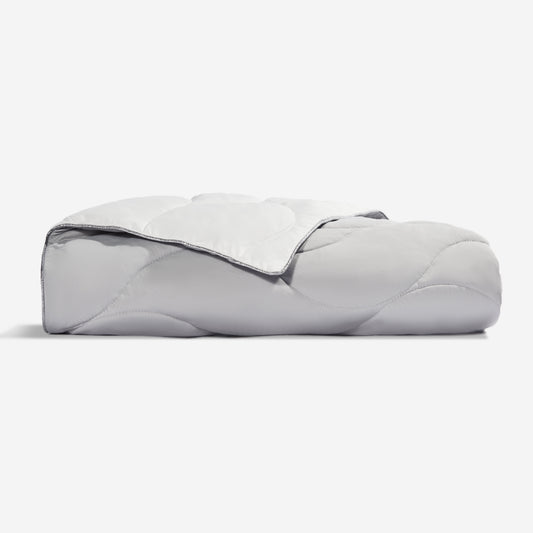
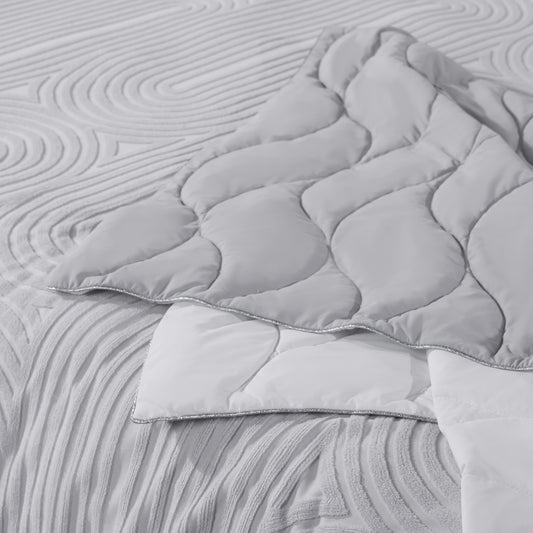
The fabric is engineered to move air and moisture rather than trap it against the body, which is why our Cooling Performance Throw stays cool to the touch instead of turning into a heat pocket twenty minutes into a movie. That difference matters for styling more than you would think.
Why Fabric Determines the Fold
Every fold in this guide depends on one thing: whether the fabric holds a crease. A tightly woven performance fabric folds into a clean edge and stays there, while a loose chenille or a chunky knit collapses into a soft heap the moment you let go, which means the sharp architectural folds are off the table.
This is not a knock on plush throws; it just means you style them differently. Structured fabrics get folds and edges. Plush fabrics get drapes and gathers.
Our Performance Sherpa Throw sits in the middle, with enough loft to look inviting and enough weight to stay put on a sofa arm instead of sliding to the floor.
Weight, Drape, and Why Throws Slide
A throw slides off furniture for two reasons: the fabric is too light for the surface, or there is nothing anchoring it. Leather and performance upholstery are both low-friction surfaces, so a lightweight throw laid flat on top of them has nothing to grip.
Heavier throws solve this through sheer mass. Lighter throws solve it through anchoring, which usually means tucking a few inches into a seam or looping the fabric over a defined edge like a sofa arm or a chair back.
At the end of the night, once you know which problem you have, the fix takes about five seconds.
How to Style a Throw Blanket on a Couch
The couch is where most throws live and where most of them look wrong. That said, the single biggest mistake is centering the throw, which makes the sofa look like it is wearing a giant, goofy bib. Everything below moves the throw off center and gives it a defined anchor.

The Arm Fold
Fold the throw in thirds lengthwise so you have a long, narrow band. Lay it over one arm of the sofa with roughly two thirds of the length hanging down the outside and one third falling onto the seat.
The arm gives the fabric a hard edge to fold against, which is what keeps the shape clean.
This is the most forgiving method because the arm does the structural work for you. It also happens to be the most practical; a throw on the arm is the easiest one to grab without disturbing anything else.
If the sofa has rolled arms rather than square ones, add a light hand press along the top of the fold to set it.
The Corner Cascade
Take the throw by two adjacent corners and let it hang. Drape it over the back cushion at one end of the sofa so the fabric falls diagonally onto the seat below, then adjust until the lowest point sits just above the seat cushion.
The cascade works best with fabrics that have some weight to them, since the drape depends on gravity pulling the folds into shape. Do not smooth it flat; the soft irregular folds are the entire visual effect.
Two or three adjustments with your fingertips is all it needs from that point.
The Casual Drape
Want to keep things looking casual? Fold the throw in half, then hold it at the midpoint and let both ends fall. Toss it over the back of the sofa at one end so it hangs down both the front and the back, then pull one side slightly longer than the other.
The uneven ends are what sell it. Perfectly matched lengths look staged; a two or three inch difference looks like somebody set it down on their way out of the room.
This one is best on sofas where you can see the back, since half the fabric is doing work on the reverse side.
The Full Back Layer
If you want to style your throw blanket as upholstery, this method is perfect for your home. Open the throw fully and lay it across the entire back of the sofa, letting the fabric spill a few inches onto the seat. This is the one method where centering is fine, because you are treating the throw as an upholstery layer rather than an accent.
Use this when you want to soften a leather sofa or hide upholstery that has seen better days. It works with larger throws only; a standard 50 by 60 will look stretched thin across anything wider than a loveseat.
Pair it with a second, smaller throw folded on the arm for depth.
The Seat Cushion Band
Fold the throw into a wide band, lay it across one seat cushion, and tuck three or four inches into the seam where the seat meets the back cushion. The tuck is the anchor, and it is what keeps the throw from sliding off leather or slick performance upholstery.
This method is the most durable of the five because the throw is physically held in place. It also creates a designated spot on the sofa, which sounds like a small thing until you realize it is the seat everyone fights over.
Leave the loose end draped over the front edge of the cushion.
Styling a Throw Blanket on a Sectional Without the Clutter
Sectionals eat throws for breakfast. The surface area is so large that a single 50 by 60 throw laid anywhere in the middle just looks like a napkin someone dropped.
The fix? Stop treating the sectional as one piece of furniture and start treating it as two or three zones.
Place the throw at the chaise end or on the corner seat, since those are the spots people actually gravitate toward. Anchoring the throw at a natural use point means it reads as functional rather than decorative, and it keeps the longest run of upholstery clean so the sectional still shows its scale.
The Two Throw Approach
On a large sectional, two throws beat one every single time. Put a structured cooling throw at the chaise end and a plush sherpa throw at the opposite corner.
The eye reads the two anchor points as bookends, which visually shortens a piece of furniture that can otherwise feel like a runway.
The rule is to vary texture and hold the color family steady. Two throws in the same fabric look like a set nobody thought about, while two throws in different textures within the same tonal range look as somebody made a decision.
Keep them at opposite ends rather than side by side for the best results.
How to Style a Throw Blanket on a Bed
Bed styling has a different goal than sofa styling. On a sofa, the throw is an accent against a large upholstered surface, whereas on a bed, the throw is doing layering work; it adds a horizontal band of color and texture that breaks up what is otherwise a large rectangle of the same fabric.
All three methods below assume the bed is already made with a performance comforter or duvet underneath. The throw is the final layer, not the primary one, which is why it should never cover more than the bottom third of the bed.
The Foot of Bed Fold
Fold the throw in half lengthwise and lay it across the bottom third of the mattress, parallel to the footboard. Then, let both ends hang eight to twelve inches past the sides of the bed so the fabric has visible fall rather than stopping flush at the edge.
This is the hotel method, and it is popular because it is nearly impossible to get wrong. Straighten the top edge so it runs parallel to the headboard; that single line of alignment is what makes the whole bed look pulled together.
If the throw is too long, fold it in thirds instead of halves.
The Diagonal Drape
Start at one bottom corner of the bed and drape the throw diagonally toward the opposite side, letting it cross the mattress at roughly a forty five degree angle. Push the fabric into loose folds with your hands instead of smoothing it flat.
The diagonal is deliberately casual, which makes it a better fit for a bedroom you actually sleep in than for a staged guest room. It also does a nice job of showing off the texture of a throw, since the fabric bunches instead of stretching.
Let one corner fall closer to the floor than the other.
The Layered Double Throw
For a king or California king, one throw across the foot can look undersized. Layer two: put the first across the bottom third in a standard fold, then add a second on top, offset by four to six inches so a stripe of the bottom throw stays visible.
Choose two textures that contrast. A smooth cooling fabric under a lofted sherpa creates a visible depth change that a single throw cannot produce. Keep the offset consistent along the full width; an uneven reveal reads as sloppy rather than layered.
Now, if you want more on building a full bed, our blanket buying guide walks through the layers underneath.
How to Style a Throw Blanket on a Chair
Chairs are the easiest surface to style and the one people most often skip. In fact, a single throw over an accent chair turns a piece of furniture into a place someone wants to sit, which is a lot of return for about fifteen seconds of effort.

The default move is the shoulder drape. Lay the throw over one corner of the chair back so it falls diagonally across the seat, with the lower corner reaching toward the floor on the opposite side. That asymmetry is doing all the work; a throw centered on a chair back looks like a slipcover that gave up halfway.
On an armchair with defined arms, fold the throw in thirds and lay it over one arm instead. The arm gives the fabric an edge to hold against, the same way it does on a sofa.
On a dining chair or a desk chair, keep the throw small and let it hang short of the floor so it does not get stepped on.
The Basket Method and Other Places to Put a Throw
Not every throw needs to be on furniture. If you own three or four, the ones you are not actively styling still have to go somewhere and stuffing them in a closet means you will never use them. So, what if there was a better way?
The Rolled Basket
Fold in thirds, roll from one short end, stand upright. Two or three per basket.
The Ladder
A leaning blanket ladder holds three throws with the texture fully visible.
The Ottoman Fold
One throw folded in quarters on a storage ottoman, with the rest inside it.
The Bench Stack
Two folded throws stacked at the foot of the bed, largest on the bottom.
Of these, the rolled basket is the one worth committing to. Rolling preserves the texture of the fabric better than folding, it lets you pull one throw without collapsing the stack, and a low wide basket beside the sofa puts the throws exactly where people reach for them.
Throw Blanket Color and Texture Pairing That Holds Up
Color is where throw styling usually goes sideways. The instinct is to buy a throw in an accent color that pops against the sofa, and then that single loud object sits in the room doing nothing but announcing itself.
A better approach is to pick a throw one or two steps away from your sofa in the same tonal family, then let texture create the contrast instead of color.
On the other side of the spectrum, a charcoal sherpa against a slate sofa reads as rich, whereas a bright coral against a slate sofa reads as an afterthought that arrived in a gift bag.
Building a Neutral Base
Neutrals give you the most flexibility because they survive furniture changes, seasonal swaps, and moving to a new apartment. Ivory, oatmeal, charcoal, and deep navy all work across a wide range of upholstery without demanding that the rest of the room adjust to them.
If you want a throw with more personality, put it on the chair rather than the sofa. The chair is a smaller surface, so a stronger color reads as an accent instead of a statement.
That keeps the sofa, which anchors the room, in the calmer register where it belongs.
Mixing Texture Without Mixing Signals
Texture contrast is what separates a styled room from a matched set. The pairing that works most reliably is smooth against lofted; a flat woven performance fabric next to a sherpa or a chunky knit gives the eye two different surfaces to read at once.
Where this goes wrong is quantity. Three distinct textures in one seating area is the ceiling, and that count includes your pillows and rug. Beyond three, the room stops reading as layered and starts reading as busy.
When in doubt, repeat a texture you already have somewhere else in the space.
Styling Throw Blankets for Year-Round Use and Not Just Winter
The reason most throws live in a closet from April to October is that they were built for one season and one season only. A heavy fleece or a wool knit is genuinely unpleasant to sit under in July, so it gets packed away and the room loses a layer for half the year.
Performance fabrics, well, they change that math. A breathable throw that is cool to the touch works as a summer layer on the sofa; it gives you the weight of a blanket without the heat buildup that makes you kick it off.
That means the styling you set up in October still works in June.
The Seasonal Swap Without the Full Reset
If you do want a seasonal change, swap texture rather than the entire arrangement. Keep the same folds and the same anchor points, and change the throw from a lofted sherpa in January to a lighter cooling fabric in May. The room reads as different without you rearranging furniture.
This is also the cheaper approach, since two throws in the right fabrics cover the entire year. Our guide to cooling blankets covers what makes a fabric breathable and why that matters more in a living room than most people assume.
Which BEDGEAR Throw Belongs in Which Room
The right throw depends on how the room gets used, not just how it looks. Here is a quick comparison of the three options and where each one earns its place.
| Product | Best For | Styling Note |
|---|---|---|
| Cooling Performance Throw Breathable, cool to the touch | Sofas and year round use | Holds a crease, so it takes structured folds well |
| Performance Sherpa Throw Lofted, plush hand feel | Accent chairs and cooler months | Enough weight to stay put on an arm or chair back |
| Cooling Blanket Full bed sizing | Beds and oversized sectionals | Large enough for the full back layer or a double bed fold |
If you are only buying one, the Cooling Performance Throw is the safer pick because it works in every season and takes the widest range of folds.
Add the sherpa second, once you know which chair or corner needs the extra loft.
Build the Whole Layer, Not Just the Top One
Throws are the finishing move. The comforters, blankets, and bedding underneath are what make the styling hold up night after night. Explore the full performance lineup.
Getting Performance Throw Styling Right in Your Living Space
Every method in this guide comes back to the same idea: give the throw an anchor and give the fabric a job. The arm, the seam tuck, the chair shoulder, and the foot of the bed are all anchor points that hold a fold without you re-styling the room every morning.
Performance throw styling works because the fabric cooperates. A throw that holds its shape through use, washes without pilling, and stays cool to the touch in July is one you leave out year round instead of packing away. That is the difference between a room that looks styled in a photograph and one that looks styled on a random Wednesday.
Start with one throw, one anchor point, and one-fold. Once that looks right, add the second throw somewhere across the room and let texture do the rest.
Now that you know how to style throw blankets, what are you waiting for? Get after it.
Frequently Asked Questions
Still working out where to put things? Here are the questions that come up most often.