Sleep is one of the most intimate things couples do together, yet it remains one of the most neglected topics in our conversations about relationships. From the earliest days of dating to decades into commitment, we spend roughly one-third of our lives asleep — often beside the same person. What other health behavior do you share with your partner that occupies nearly eight hours a night, every night?
We may share meals, workouts, vacations, and conversations. But proportionally speaking, sleep occupies an enormous part of our coupled existence. And yet, how often do we truly talk about sleep compatibility?
The Questions We Never Think to Ask
Think about early dating. We ask about hobbies, politics, family values, even love languages. But almost no one asks the simplest sleep questions: Are you a night owl or an early bird? Do you need total darkness or the glow of a television? Do you like the room cool and bundled under layers, or warm with just a sheet? Do you snore?
Dating apps rarely include sleep habits or circadian preferences — even though these patterns shape nightly life together and influence our mood, productivity, patience, and sexual desire.
These preferences are biological, not personality flaws. Naming them early gives couples a foundation for problem-solving rather than resentment.
Sleep and Relationship Quality: The Science
Sleep isn't just something two people do side by side. It's a shared biological and emotional experience that can either strengthen a relationship or strain it. When we are well-rested, we are more patient, more empathic, and better communicators. When we are sleep-deprived, we are more reactive, less generous, and more prone to conflict. Chronic sleep loss can turn minor irritations into major relationship dramas.
A well-rested partner is a better partner. Couples who sleep better together tend to communicate more effectively, show more empathy, and experience greater relationship satisfaction. — Dr. Wendy M. Troxel, PhD, Sharing the Covers
Sleep deprivation doesn't just make you tired — it changes how you respond to your partner. The same argument that's manageable when rested can become a significant conflict when sleep debt accumulates.
Sleep Needs Change Across a Relationship
Sleep needs do not remain static across a relationship. In the early stages of romance, couples may stay up late talking and feel energized by novelty. During the parenting years, fragmented sleep and midnight caregiving can leave both partners exhausted. Research shows that the birth of a first child is often accompanied by dramatic increases in sleep deprivation in both parents and significant dips in relationship satisfaction. Later in life, aging bodies and shifting circadian rhythms bring new challenges. For many women, menopause introduces night sweats and temperature fluctuations that disrupt not only their own rest but their partner's as well.
These are not individual problems. They are couples' issues.
Mismatched bedtimes, staying up late, and undiscussed preferences. Sleep habits feel exciting and flexible — incompatibilities often go unnoticed until they become routine.
Temperature differences, light and sound preferences, snoring, and schedule mismatches surface for the first time. Communication — not avoidance — determines how these get resolved.
Both partners experience sleep deprivation simultaneously, often alongside the lowest point in relationship satisfaction. Fragmented nights and caregiving demands compound quickly. Sharing the load — and the sleep plan — matters enormously.
Career demands, stress, and changing circadian patterns emerge. For women, perimenopause and menopause introduce night sweats and temperature fluctuations that affect both partners' sleep — making temperature-regulating bedding increasingly important.
Aging bodies, lighter sleep, earlier bedtimes, and potential health disruptions (pain, medications, sleep apnea) require ongoing adaptability. Couples who have built communication habits around sleep navigate these changes more gracefully.
This is why, if you asked many long-term couples whether they would prefer regular nights of great sex or regular nights of great sleep, a surprising number might choose sleep. Not because intimacy no longer matters, but because consistently getting seven to nine hours of restorative sleep is transformative — and increasingly elusive. Sleep supports mood stability, emotional regulation, libido, cardiovascular health, and cognitive clarity. Without it, everything feels harder.
Practical Strategies for Sleeping Better Together
In Sharing the Covers: Every Couple's Guide to Better Sleep, I outline a principle drawn from decades of research and clinical experience: better sleep together rarely happens by accident. Like most successful aspects of a relationship, it requires communication, compromise, and creativity.
Start with the Sleep Environment
Too often, couples try to force two different biological systems into a single, rigid setup. Instead, think in terms of personalization within partnership. These environmental adjustments send a powerful message: both partners' comfort matters.
Temperature Mismatch
Dual-zone heating or cooling, separate blankets, or temperature-regulating breathable bedding suited to each body. Not indulgent — strategic.
Firmness Preferences
A mattress with split-firmness zones or individual comfort layers lets both partners sleep at their preferred feel without compromise.
Movement & Snoring
Mattresses with strong motion isolation reduce disturbance from a restless or snoring partner. Ear plugs or white noise machines can also help.
Light & Sound
Sleep masks, blackout curtains, and bedside white noise devices allow different preferences to coexist in the same room without friction.
Pillow Personalization
Pillow firmness and loft affect spinal alignment and comfort. Each partner should have a pillow matched to their sleep position and body type.
Sleeping Apart — Temporarily
During high-disruption periods, temporarily sleeping in separate spaces can protect both sleep and the relationship — especially when the decision is made together, not reactively.
Personalized Sleep — Built for Two
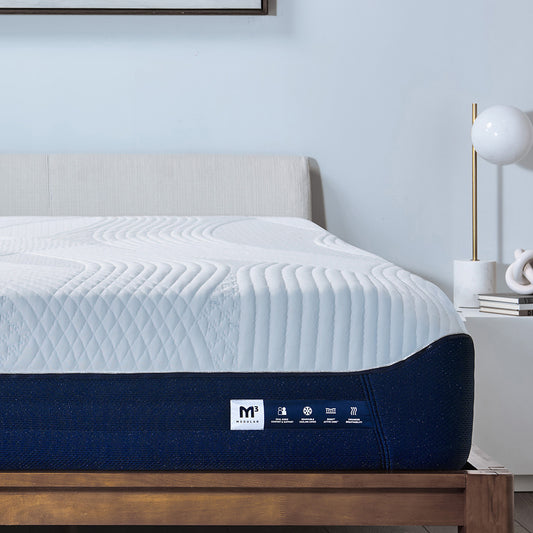
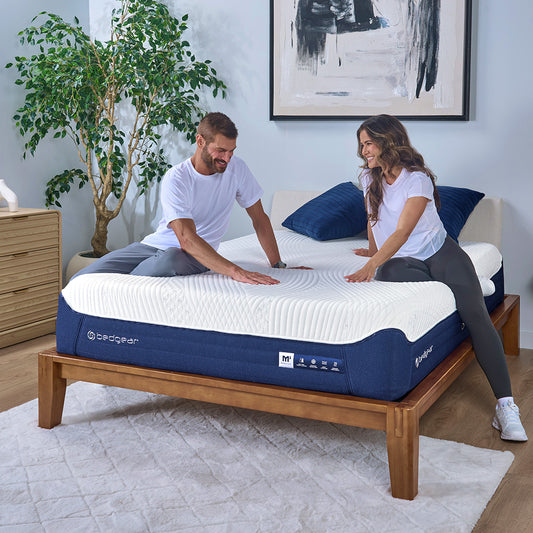
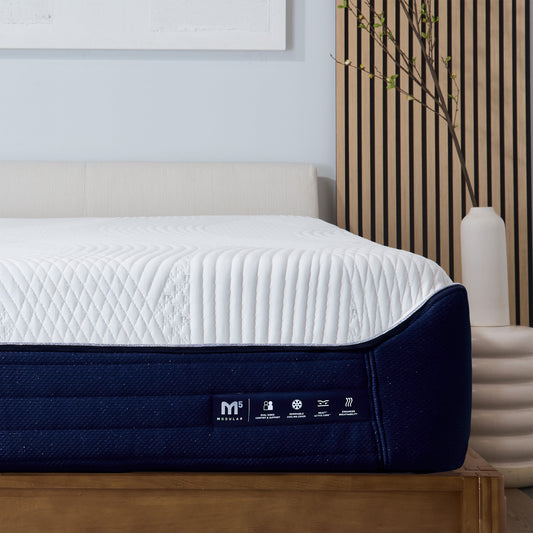
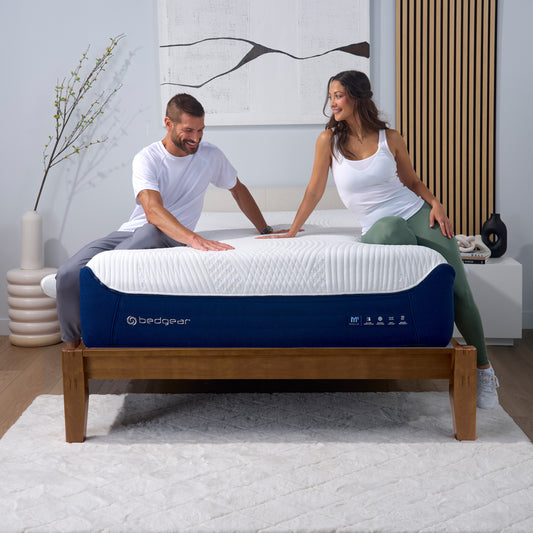
BEDGEAR's modular mattress system and personalized pillow fitting tool are designed with exactly this in mind: two people sharing a sleep space can each have their own ideal support, temperature regulation, and comfort — without compromise. Because a well-rested partner really is a better partner.
Create a Consistent, Connective Wind-Down Ritual
Bedtime should not be the moment we collapse into exhaustion or scroll in silence until we drift off. It is a powerful transition point between the demands of the day and restorative rest. One simple practice I often recommend is the High. Low. Compliment exercise.
The High
Each partner shares one genuine high point from their day — something that went well, a small win, or a moment that felt good. This shifts focus from stress to gratitude before sleep.
The Low
Each partner shares one low point — a challenge, frustration, or something that felt hard. Emotional disclosure before sleep reduces rumination and prevents small tensions from festering overnight.
The Compliment
Each partner shares one genuine compliment or expression of appreciation for the other. Gratitude is a proven driver of relationship satisfaction — and ending the day feeling valued supports both connection and restful sleep.
Total time: under 10 minutes. Outcome: both partners feel seen, heard, and appreciated — even when sleep itself is imperfect. Recommended by Dr. Wendy Troxel, PhD, in Sharing the Covers.
Prioritizing Sleep Is an Act of Relationship Care
Ultimately, prioritizing sleep as a shared responsibility reframes it as a form of relationship care. It is not selfish to protect your sleep. It is generous. When we are rested, we bring our best selves into the relationship — more patient, more resilient, more affectionate, and more present.
One of the most important mindset shifts is letting go of the idea that there is only one "right" way to sleep as a couple. Sleeping together does not have to mean identical bedtimes, identical preferences, or even identical sleep spaces every night. It means prioritizing rest for both partners while protecting emotional and physical connection.
Equally important is recognizing that sleeping arrangements may need to shift across the life course. During particularly disruptive periods — caring for young children, managing illness, coping with intense stress, or navigating menopause — temporary flexibility can protect both sleep and the relationship. When couples approach these decisions collaboratively, rather than reactively, they preserve both rest and intimacy.
At the end of the day, there is nothing happier, healthier — or yes, even sexier — than a well-slept partner. — Dr. Wendy M. Troxel, PhD
Sleep will change as relationships change. Bodies age. Hormones fluctuate. Careers intensify. Children grow. Life throws curveballs. But couples who approach sleep with curiosity, compassion, and adaptability are better equipped to navigate those shifts together.