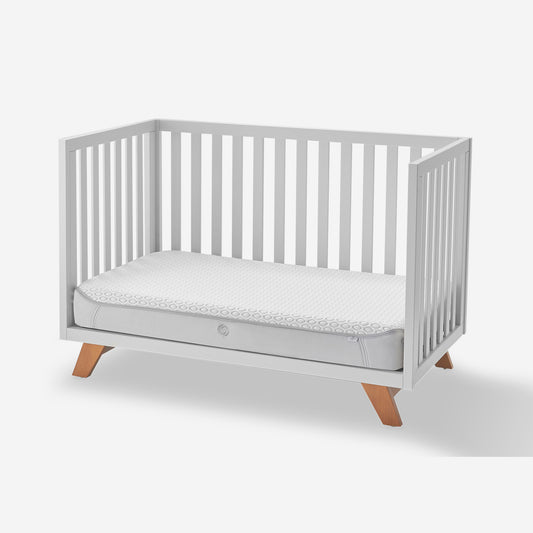
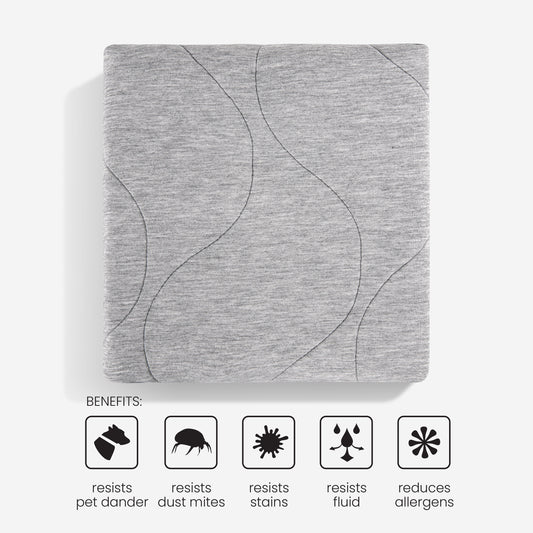
Wet nights are a phase, and your child's mattress shouldn't have to pay for it. A waterproof layer that breathes keeps the bed clean without making your kid sleep hot.

Fully waterproof with a noiseless barrier, moisture-wicking Dri-Tec® fabric and a Powerband® that stays put. Machine washable. Twin and Full, for mattresses up to 15" deep.
With the mattress covered, here's what to expect and when.
When Do Kids Stop Peeing the Bed?
So, when do kids tend to stop peeing the bed? Well, most kids stop peeing the bed between the ages of five and seven. Five to seven is a good range for kids to stop peeing the bed because the bladder grows and the brain learns to wake up to a full-bladder signal. Even then, the American Academy of Pediatrics (opens in a new tab) estimates that about 15% of five- and seven-year-olds still wet the bed; whether it's a few nights a week or nightly.
It's also important to note that Mayo Clinic (opens in a new tab) notes that bedwetting before age seven generally isn't a cause for concern, and most kids outgrow it all on their own. So, you don't need to stuff a diaper back on your toddler. Plus, we can just help you protect your mattress instead.
The medical term is nocturnal enuresis, but for most families it's simply a stage of just growing up.

At the end of the night, every child's timeline is a bit different, but the numbers show a clear pattern. And with a little bit of knowledge and patience, you can easily handle a wet bed.
Bedwetting by Age: What's Normal and What's Not
In the chart below, we cover how common wet nights are at each stage. Furthermore, we cover what each stage usually means.
| Age | How Common Wet Nights Are | What It Usually Means |
|---|---|---|
| Under 5 | Very common | Normal. Most kids are still learning bladder control. |
| Ages 5 to 7 | About 15% | Still common and generally not a concern |
| After 7 | A smaller group of kids | Worth a check-in with your pediatrician |
| Age 15 | Under 1% | Rare. Talk to your pediatrician. |
Sources: American Academy of Pediatrics (HealthyChildren.org) and Mayo Clinic.
Dry nights often come well after dry days, so a child who's fully potty trained during the day can still need time at night.
That being said, if you're still in the toddler-bed years, our guide on when to transition from a crib to a toddler bed covers that move, and a waterproof layer belongs on that bed; you might need it even more right out of the gate.
Why Kids Wet the Bed at Night
There's rarely one single reason kids wet the bed at night; they probably don't want to, either. Mayo Clinic points to a few common ones.
They Sleep Deeply
The nerves that control the bladder can mature slowly, so a full bladder may not wake a child up yet. Heavy sleepers are especially likely to sleep right through the signal. So, a good snooze might also result in wetting the bed.
Their Bladder Is Still Growing
Think about how small your kiddo is, and then think of an even smaller bladder. Some kids' bladders aren't big enough yet to hold all the urine they make overnight, and they'll need to hit the bathroom.
They Make More Urine at Night
In children, both boys and girls, the body normally makes a hormone that slows urine production overnight. Some kids don't make enough of it. The result? A wet bed.
It Runs in Families
This is an odd one that we need to call out, especially because it shocked our team. But did you know that kids are more likely to wet the bed if one or both parents did as children? In fact, boys are also about twice as likely as girls to wet the bed.
Constipation Can Play a Part
Is your child constipated? Long-term constipation can affect the muscles that control urination, which can lead to wet nights.
Stress Can Trigger It
Big changes like a new sibling, a new school or sleeping away from home can bring on wet nights. Sadly, this can even happen in kids who were already dry.
When to Talk to Your Pediatrician
Check in if your child still wets the bed after age seven, or starts again after six months or more of dry nights. Also, be sure to call even sooner if wet nights come with pain or burning when peeing.
Make sure you also keep an eye on unusual thirst, pink or red urine, hard stools, snoring or daytime accidents. It's also worth a call if your child is worried about it; this can be physical and mental.
Whatever the motivation behind them, wet nights aren't anyone's fault. The goal is to keep them calm and quick.
How to Make Bedwetting Nights Easier
A few simple habits can make wet nights less stressful for your child and a lot faster for you. About as fast as wrapping up your kiddo's favorite bedtime story. Learn more about how to make bedwetting nights easier below.
Double-Make the Bed
Layer a waterproof mattress protector, a fitted sheet, a second protector and a second sheet. When an accident happens at 2 a.m., pull off the top sheet and protector, and the dry set is already waiting.
Two Dri-Tec Kids Performance® Mattress Protectors make this easy, since each one is noiseless, breathable and grips the mattress with a Powerband®.
Protector, sheet, protector, sheet. Now the 2 a.m. change takes two minutes.
Protect the Pillow Too
Accidents don't always stay at the bottom of the bed (sadly). The good news? Our iProtect® Pillow Protector adds a waterproof, breathable layer to keep your kids pillow dry. Plus, it goes in the wash with the sheets to make cleaning up hassle free.
Time Drinks Earlier
Give kids plenty to drink earlier in the day, then ease off in the hour or two before bed; this will work wonders if they're peeing at like three in the morning. While most kids are not drinking coffee, keep an eye on green tea and anything else with a little bit of caffeination.
Bathroom, Then Bed
Now, this should be a given, but make one last bathroom trip part of the bedtime routine for the little ones. Then, light the path with a nightlight to make it easy. What's more, our guide to how much sleep your child needs each night can help you set a bedtime that sticks.
Keep a Night Kit by the Bed
Let's make this even easier. Keep spare pajamas, a towel and a clean sheet within reach of the bed. So, nobody has to dig through closets in the dark. A washable protector does the heavy lifting, and our guide on whether a mattress protector is necessary explains why every bed in the house should have one.
When Do Kids Stop Peeing the Bed? Final Thoughts
At the end of the night, most kids stop peeing the bed between ages 5 and 7, and the rest usually outgrow it with time, so there's rarely any need to panic. Instead, if your child is peeing the bed, be patient, call your pediatrician if wet nights continue past age seven, and come back after months of dry nights.
All that being said, make sure you keep a waterproof protector on the mattress in the meantime. This will save you a lot of hassle and help you wake up ready for the day.
Frequently Asked Questions About Bedwetting
Here are quick answers to the questions parents ask most about bedwetting.