Euro top or pillowtop mattress, that is the question, and on the showroom floor they can look like twins. Sure, both promise extra plushness, both sit taller than a standard mattress, and both get described as "luxury" on the price tag, but once you know what to look for, telling them apart takes all of about two seconds.
In this guide, we break down euro top vs pillowtop mattresses. You'll learn how each one is built, how each one feels, and which one suits the way you sleep. Learn more about how these unique mattresses differ in more detail below.
What Is a Euro Top Mattress?
First things first, it helps to know what a euro mattress is. A euro top mattress has an extra layer of cushioning sewn directly onto the mattress, flush with its edges. Instead of sitting on top like a pad, the layer lines up with the sides. That gives the bed a clean, squared-off shape with no gap around the perimeter. You'll sometimes see it called a box top for exactly that reason.
That flush construction shapes the whole feel of the mattress. This is because the padding runs all the way to the edge, and it tends to be denser and more even across the surface.
So, when you lie down you get plushness without a lot of sinking. For this reason, many sleepers describe it as a firmer take on a luxury mattress.
So, what does euro top mean for you in practice? Mostly, it means a cushioned surface that feels consistent from edge to edge. It also means sturdier edges, which helps when you sit on the side of the bed to put on your shoes. If you want soft without squishy, a euro top is worth a look, for sure.
One quick note, though before you pull out your wallet: a euro top mattress has nothing to do with European bed sizes. The term describes how the top is built, not the dimensions.
Euro tops come in the same twin, queen, and king sizes as any other mattress, so you don't need anything fancy to accommodate them; even if the salesman suggests otherwise.
What Is a Pillowtop Mattress?
A traditional pillowtop adds a separate padded layer stitched onto the top of the mattress, and this was a solid solution to the comfort problem back in the day. It usually sits slightly inset, so you can see a seam and a small gap running around the edge.
That said, the padding tends to be lofty and soft, whereas the goal is a cozy, sink-in feeling the moment you lie down.
Newer designs, thankfully, build the pillowtop directly into the mattress instead of just sewing it on, and this changes how it holds up. If you're curious, we cover the history, types, and tradeoffs in our complete guide to pillowtop mattresses.
For this comparison, though just remember the core difference: a pillowtop sits on the mattress, while a euro top is part of its edges. It's usually as simple as that.
Euro Top vs Pillowtop Mattresses: How They Compare Side-by-Side
Here's the head-to-head on pillowtop vs euro top mattresses. The table below lines up the differences you'll actually notice once you're sleeping on the bed.
| Feature | Euro Top | Pillowtop |
|---|---|---|
| Construction | Cushion layer sewn flush with the edges | Separate padded layer stitched on top |
| Look | Squared-off, boxy profile | Visible seam and gap around the top |
| Feel | Plush but even and structured | Softer, sink-in first impression |
| Edge feel | Sturdier when you sit on the side | Softer edges that can roll off |
| Shifting | Less room for fill to move around | Loose fill can shift or bunch |
| Heat | Denser padding can hold warmth | Extra loft can hold warmth |
| Height | Tall profile, often needs deep pockets | Tall profile, often needs deep pockets |
| Often best for | Back, combo, and side sleepers who want less sink | Side sleepers and plush-feel fans |
As you can see, the pattern is pretty clear. Euro tops trade a little softness for structure and stability, while pillowtops lean fully into the plush side of the spectrum. Still, neither one is better across the whole board. Instead, the right pick is based on preference and sleep position.
Euro Pillowtop, Box Top, and Faux Euro Top: Decoding the Labels
This one trips up a lot of shoppers, and it makes walking into a showroom a nightmare. So, let us clear all of this mattress mumbo-jumbo up for you.
First and foremost, a euro pillowtop is simply another name for a euro top. Retailers mix the terms freely, and some even use "pillowtop" as a catchall for any mattress with an extra layer. We get it, and it's confusing, but you don't need to decode the label.
Just look at the edges. If the cushion layer is flush with the sides and the corners look squared off, it's a euro top. If there's a visible seam and a gap between the top layer and the mattress, it's a traditional pillowtop mattress.
You may also run into two more terms, so let's make sure we cover all the bases here. A euro box top is the same idea as a euro top, with the cushion layer sewn flush to create a boxy profile. A faux euro top is usually a tight top with a quilted border that mimics the euro top look, so a little different. It has the style, but not the extra cushion layer underneath.
Plush, Medium, and Firm Euro Tops: What the Labels Mean
Here's a detail that confuses plenty of shoppers, so let's put this to bed too. "Euro top" describes how the mattress is built, while "plush," "medium," and "firm" describe how the mattress actually feels. That's why you'll see a plush euro top mattress sitting right next to a firm one in the showroom. Ultimately, they share the same construction but use different materials inside.
A plush euro top uses softer foams for more give and a cozier feel. A medium euro top balances cushion and support, which suits the widest range of sleepers. A firm euro top keeps the flush, finished look but feels much more supportive. So, when you compare euro top vs plush mattress options, you're really comparing construction to comfort level.
The same logic applies to what sits underneath the top of the mattress. Most euro tops today are built on a hybrid core, pairing foam comfort layers with coils. Some use memory foam in the top layer, while others use latex or fiber. A good rule of thumb to follow is that the euro top is the lid; the core decides how the whole bed supports your body.
How Pillowtop and Euro Mattresses Feel by Sleep Position
When you're shopping for a pillowtop mattress or a euro top mattress, your sleep position is the fastest way to narrow things down. You'll find that each position puts pressure in different places, so each one wants something a little different from the top layer.
Here's how euro tops and pillowtops usually stack up.
Side Sleepers
Side sleepers need room for the shoulder and hip to sink into the bed a little bit. A pillowtop gives the most of that, which may help relieve pressure at those points. A euro top offers cushioning with a bit less give. If you want a deeper cradle, lean pillowtop; if you want cushion with more lift, lean euro top.
Back Sleepers
Back sleepers want the hips to stay roughly level with the shoulders. A euro top is a natural fit here, since its even surface keeps the midsection from dipping. However, a medium-firm pillowtop can work too. Just skip the softest options if you notice your lower back sinking.
Stomach Sleepers
Stomach sleepers generally do best on a flatter, firmer surface. Between these two, a euro top is usually the safer choice, so that's what we tend to recommend. Too much plush at the midsection can pull the lower back out of line. If neither feels firm enough, a tight top may be your best match.
Combination Sleepers
If you tend to toss and turn all night, you want a top that doesn't fight with you as you're rolling around. Euro tops tend to feel easier to move on because the surface stays even, whereas pillowtop mattresses with responsive foam can work well too. At the end of the night, avoid slow-sinking fill that holds your shape after you roll over.
Heat: Do Pillowtop or Euro Mattresses Sleep Cooler?
Any extra layer adds material between you and the air, so both styles can hold some warmth and make your night a little toasty. Pillowtop mattresses tend to use lofty fill that traps pockets of body heat close to the surface. On the other hand, euro tops often use denser padding, which can hold heat in a different way.
All that being said, if you sleep warm, look past the top style and check what it's made of. A breathable cover, foams designed to let air move, and a suspension coil core with open space all help reduce heat buildup. On top of this, mesh or vented side panels help too, since they give warm air a way out.
Euro Top Mattress Pros and Cons
Still weighing your options? Below is a quick scorecard for both styles.
| Style | Pros | Cons |
|---|---|---|
| Euro Top | Even, structured plushness; sturdier edges; fill stays in place better | Less sink-in softness; can feel firm to some; usually one-sided; taller sheets needed |
| Pillowtop | Soft, cozy first feel; extra cushion at shoulders and hips; classic hotel-bed comfort | Sewn-on tops can shift or sag; softer edges; one-sided; taller sheets needed |
Notice where most pillowtop cons come from: a separate layer that's only stitched on. Euro tops avoid some of that by sewing the layer into the edges. Integrated pillowtops go a step further, which we'll get to in a minute.
Where Do Tight Tops Fit In?
There's a third style worth knowing before you shop. A tight top has no extra cushion layer at all; its comfort layers sit under one snug, smooth cover. It feels flatter and more direct than either a euro top or a pillowtop. Here's how all three line up.
| Style | Extra Layer? | How It Feels |
|---|---|---|
| Tight Top | No; cover sewn snug over the comfort layers | Flat, steady, and direct |
| Euro Top | Yes; sewn flush with the edges | Plush, even, and structured |
| Pillowtop | Yes; sits on top as a separate layer | Softest, with the most sink |
If you're leaning toward a firmer, simpler surface, our pillowtop vs tight top mattress comparison walks through that matchup in detail. It's a great next read if a euro top still sounds too plush for you. Plenty of shoppers start out wanting plush and end up happier on something simpler.
Durability and Care: Keeping Your Top Layer in Shape
Euro tops often hold their shape a little better than traditional pillowtops mattresses. Since the padding is sewn into the edges, there's less room for fill to drift or bunch up all over the place. Sewn-on pillowtop mattresses are also more prone to shifting and body impressions over time. Either way, materials and build quality matter more than the style name.
Most euro tops and pillowtop mattresses are one-sided, so flipping usually isn't an option either. So, rotate the mattress head to foot every few months to keep wear even. A breathable mattress protector keeps spills and sweat out of the comfort layers. And since both run tall, deep pocket sheets will save you from fitted corners that keep popping off.
What to Look for When You Shop for Pillowtop and Euro Top Mattresses
Labels only tell part of this bedtime story, so give the mattress a quick once-over before you make a commitment. First, start with the edges: flush and squared means euro top, while an inset seam means pillowtop.
From there, press down near the middle and near the edge of the mattress. You'll feel right away whether the layer is even or noticeably softer in spots.
Next, ask what the top layer is made of and how it's attached to the rest of the mattress. Foam blends usually hold their shape longer than loose fiberfill, so make a note of that. Don't forget to check the total height too, since both styles often need deeper fitted sheets.
Finally, look for a real trial period and a solid warranty, because comfort layers show their true colors over weeks, not minutes. If a store can't answer these questions, keep shopping. A good mattress should come with clear answers and great support after the fact.
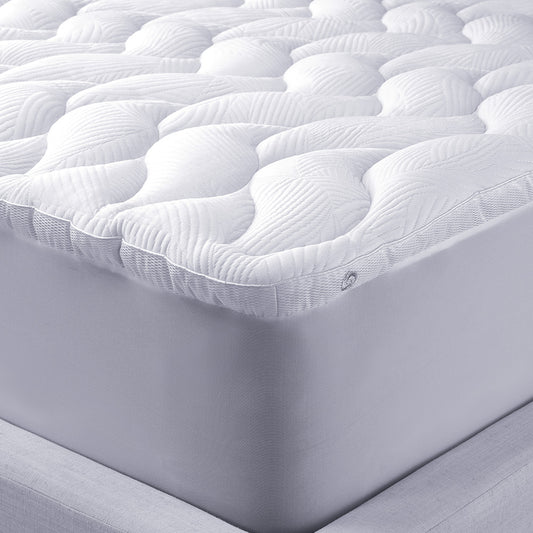
Not ready for a whole new bed? A quality topper can add a plush layer to your current mattress for a similar feel. Our mattress topper guide walks through the options and helps you achieve that affordable pillowtop mattress feeling.
A Third Option: BEDGEAR's Built-In Pillowtop
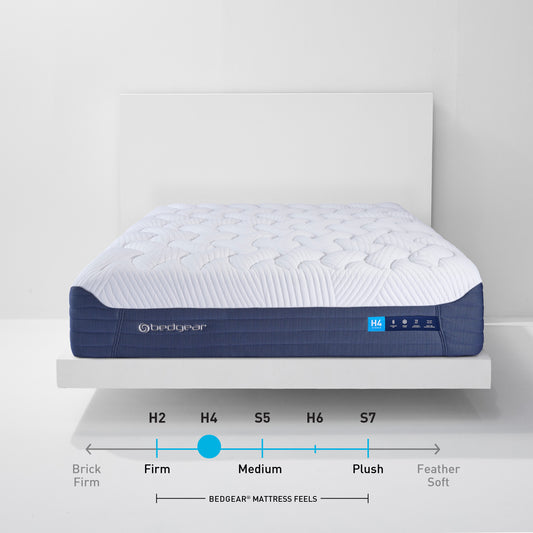
We love a plush pillowtop feel, but we wanted it to stay put the way people like about euro tops. For this reason, our H Performance® Pillowtop Mattress uses an integrated React™ Blend Pillowtop. It's built into the mattress rather than stitched on top. That keeps the cushioning connected to the support underneath night after night.

The pillowtop conforms to your body for plush comfort that may help relieve pressure at the shoulders and hips. Below it, individually wrapped coils deliver responsive support.
The Ver-Tex™ cover is cool to the touch, and Air-X® mesh side panels and air vents keep air moving to help reduce heat buildup. You can choose medium-firm (H4) or medium-plush (H6), depending on how much sink you want, so you have some options.
That said, you may be wondering, where does it land between a euro top and a traditional pillowtop? Well, it delivers the soft, sink-in comfort people buy pillowtop mattresses for, but because the layer is built in, it avoids the loose, shifting compartment that gives sewn-on designs a bad name.
Euro Top vs Pillowtop Mattresses: Which Option Should You Choose?
The euro top vs pillowtop decision comes down to how much sink you want, and how much of that sink is good for your sleep position. Consider a euro top if you like plushness with structure, sleep on your back, or want sturdier edges. However, you should go with a pillowtop if you sleep on your side, love a cozy first impression, or want extra cushion at your pressure points. At the end of the night, pillowtop mattresses and euro tops can be excellent beds.
Frequently Asked Questions
If you have any more questions euro top mattresses or pillowtop mattresses, no need to worry. We answer some of the most common ones below.
What Does Euro Top Mean on a Mattress?
Is a Euro Top Firmer Than a Pillowtop?
What Is a Euro Pillowtop Mattress?
Are Euro Top Mattresses Good for Side Sleepers?
Can You Flip a Euro Top Mattress?
Do Euro Top Mattresses Sag?
How Long Does a Euro Top Mattress Last?
Still deciding? Check the edges, think about how you sleep, and pick the top that matches. Your mornings will feel the difference.