

The Mattress Topper Guide: More Than Just a Little Extra Cushion
A mattress topper sits between you and your mattress and changes how the whole thing feels The catch: a mattress topper isn't a fix for everything. A mattress that's structurally failing needs to be replaced, not patched.
A topper only works with a mattress that's fundamentally sound but not quite right for your sleep needs.
This guide will tell you which category you're in — and if you need a topper, it'll help you find the right one.

Our Topper Pick
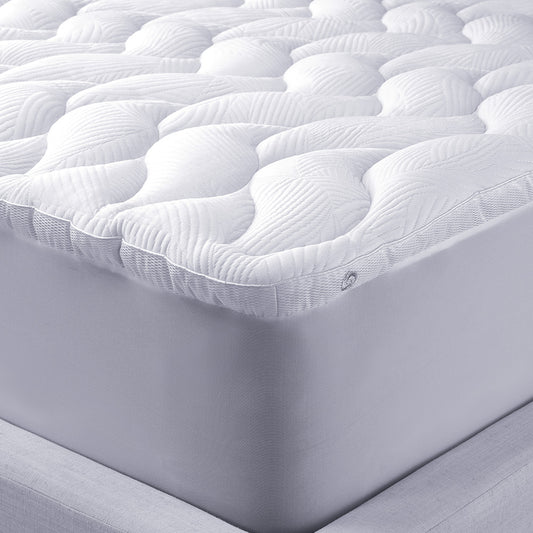
React Pro Performance® Mattress Topper
A plush layer of cool, breathable comfort. Conforming support may help relieve pressure at the shoulders and hips; the breathable build helps keep heat from settling at the surface.
Shop the React Pro TopperWhat Is a Mattress Topper?
A mattress topper is a removable layer of cushioning material (typically two to four inches thick) that sits directly on top of your mattress and changes how it feels to sleep on. Unlike a mattress pad, which sits on the surface and focuses on protection, a topper goes to work on comfort and support.
Memory foam, latex, down alternative, wool, and cooling gel are the most common materials, each solving a slightly different sleep problem. The right one depends entirely on what your current mattress is missing.
Overall. You'll find that you'll need one if your mattress is fundamentally sound, but not quite right. So, it's a good time for a mattress topper if yours feels too firm, it's not cooling enough, it's creating pressure points, or it's simply starting to feel less responsive than it used to.
You don't need one if your mattress is sagging, losing structural support, or past the point where a surface fix makes a meaningful difference. A topper works with a good mattress to make it better, and to learn more about what makes a mattress great, read our mattress guide.
That said, it can't rescue a bad one, and that's the best rule to follow when it comes to mattress toppers. If you're waking up with pain that wasn't there a year ago and your mattress is more than seven years old, the topper conversation comes after the mattress conversation.
Mattress Topper vs. Mattress Pad: Know the Difference
A mattress pad protects, whereas a mattress topper transforms. Ultimately, that's the whole distinction, and it's worth understanding before you spend money on the wrong one.
A mattress pad is thin (usually an inch or less) and sits on top of your mattress primarily to guard against spills, allergens, and everyday wear. It adds a modest amount of cushioning but won't meaningfully change how your mattress feels.
Think of it as a maintenance layer for your bed. A mattress topper, on the other hand, is thicker (typically two to four inches), and is designed specifically to change your sleep surface. So, with a mattress topper you're getting more softness, more firmness, more pressure relief, more cooling. It's a performance upgrade, not a protective one.
That said, the confusion happens because some products blur the line. For example, a padded mattress protector offers light cushioning alongside waterproof protection, but the intent is different. If your mattress feels wrong, you need a topper.
If your mattress feels right but needs protecting, you need a pad. If you need both, layer them, and make sure the topper is first and that the pad or protector is on top.
The Benefits of a Mattress Topper
A good mattress topper solves specific sleep problems that a mattress alone can't always address, like a lack of cushioning, height, and more.
Whether you're dealing with temperature, pressure, support, or simply a mattress that's lost some of its original feel, the right topper makes a measurable difference. Here's what it actually delivers.
Mattress Toppers Change How Your Mattress Feels Without Replacing It
A mattress that's too firm for your sleep position or body type creates pressure and disrupts recovery. However, replacing it entirely isn't always the right move, especially if the mattress is structurally sound.
Enter the mattress topper, which lets you dial in the feel without starting over. For example, if you add two to three inches of memory foam, a firm mattress becomes genuinely comfortable for a side sleeper who needs pressure relief at the shoulder and hip.
On the other hand, add a latex layer, and a mattress that feels flat and unresponsive gets its bounce back. As you can see, the change is real, and it costs a fraction of a new mattress.
Mattress Toppers Add Cooling Layers Where You Need It Most
Heat builds at the surface, which is exactly where a topper sits. For sleepers who run hot, a cooling topper with gel-infused foam, breathable latex, or airflow channels addresses the problem at the source rather than hoping the mattress underneath handles it.
BEDGEAR's Performance® cooling materials are built around this principle; breathable construction that promotes airflow and helps your body maintain the temperature drop it needs to stay in deep, restorative sleep.
A cooling topper paired with a breathable mattress protector is one of the most effective combinations a hot sleeper can build. In fact, the React Pro Performance® Mattress Topper is the perfect cooling mattress topper for any hot sleeper out there.
Mattress Toppers Relieve Pressure Points That Disrupt Your Sleep
Pressure points form where your body's heaviest parts (shoulders, hips, lower back) meet a surface that doesn't contour around them. The result is discomfort that pulls you out of deep sleep, often without even fully waking you. You just feel it the next morning as stiffness or soreness that shouldn't be there.
A memory foam or latex topper conforms to your body's shape, distributing weight more evenly and reducing the concentrated pressure that causes those disruptions. In fact, for side sleepers especially, this is one of the highest-impact changes you can make without touching the mattress itself.
Mattress Toppers Extend the Life of Your Mattress
Every night of sleep puts wear on your mattress; body weight, heat, moisture, and movement all degrade materials over time. A solid mattress topper absorbs a significant portion of that daily impact, acting as a buffer between your body and the mattress beneath. Less wear on the mattress means it holds its support and feels longer.
Paired with a quality mattress protector, a topper is part of a layered system that keeps your mattress performing closer to its original condition for longer, and this matters a lot when you've invested in a Performance® mattress worth protecting.
Mattress Topper Sizes Explained
Mattress topper sizing is straightforward: your topper should match your mattress size exactly. A topper that's too small leaves an exposed mattress surface at the edges and shifts during the night. One that's too large bunches under the sheets and creates an uneven sleep surface.
Match the size, secure it with a fitted sheet or topper strap, and it stays put. Here's every standard size and what to know about each.
| Size | Dimensions | Best For | Notes |
|---|---|---|---|
| Twin38" × 75" | 38" × 75" | Kids, bunk beds, guest rooms | Keep to 1–2" medium-firm for kids |
| Twin XL38" × 80"Split king ready | 38" × 80" | Dorms, tall solo sleepers, split king | Each side of a split king gets its own topper |
| Full54" × 75" | 54" × 75" | Solo sleepers | Lower price point, same material quality available |
| Queen60" × 80"Most popular | 60" × 80" | Couples, most bedrooms | Most widely available size across all materials |
| King76" × 80" | 76" × 80" | Couples who want max space | High-density construction matters most at this size |
| Cal King72" × 84"Longest size | 72" × 84" | Tall sleepers over 6'2" | Not interchangeable with standard king — verify before buying |
Each size comes with its own considerations — material density, split configurations, and length limitations that matter more at some sizes than others. Here's the full breakdown.
King Size Mattress Topper
A king size mattress topper measures 76 inches wide by 80 inches long — matching the king mattress exactly. At this size, material quality matters more than it does on smaller sizes. In fact, a low-density foam topper on a king will compress unevenly over time, creating soft spots that defeat the purpose. Look for high-density memory foam or latex construction that holds its shape across the full surface, not just in the center where most of the body weight lands.
For couples on a king, a topper with zoned support — firmer under the hips and lower back, softer at the shoulders — delivers the most consistent feel across both sides of the bed.
California King Mattress Topper
The mattress topper that people have the most questions about: the California King. A California king mattress topper measures 72 inches wide by 84 inches long. The four extra inches of length is the whole point, and it's also where most people get caught out — a standard king topper won't cover a California king.
The width is narrower, the length is longer, and the two are not interchangeable. If you already own a California king mattress, double check the topper dimensions before you buy. It's a simple mistake that's surprisingly common and completely avoidable.
Queen Size Mattress Topper
A queen size mattress topper measures 60 inches wide by 80 inches long and is the most widely available size across every material and price point. For couples on a queen, a topper adds a meaningful comfort upgrade without the cost of stepping up to a king mattress.

The trade-off is that a single topper serves two sleepers who may have different needs — one running hot, one needing more pressure relief. If those needs diverge significantly, separate twin XL toppers on a split king setup gives each sleeper independent control without compromise.
Full Size Mattress Topper
A full size mattress topper measures 54 inches wide by 75 inches long. So, for solo sleepers on a full, a topper is one of the most cost-effective upgrades available! Plus, the smaller surface area means lower price points across the board without sacrificing material quality.
Worth noting: at 75 inches long, a full topper follows the same length limitation as the mattress beneath it. Therefore, if height is already a factor on your full mattress, a topper doesn't solve that problem. It just makes the surface more comfortable up to the edge.
Twin XL Mattress Topper
Another mattress topper that a lot of people have questions about. A twin XL mattress topper measures 38 inches wide by 80 inches long — the same length as a queen and king, in a significantly narrower width. For solo sleepers on a twin XL, the topper options are strong across all materials.
Where the twin XL topper earns its most important role is in the split king configuration — two twin XL toppers, each independently chosen for the sleeper on that side. One partner gets a cooling gel topper, the other gets a softer memory foam layer. Same bed, two completely different sleep surfaces. No negotiation required.
Twin Mattress Topper
A twin mattress topper measures 38 inches wide by 75 inches long — the smallest standard size. For kids' beds, guest rooms, and bunk setups, a twin topper adds comfort and extends mattress life without a significant investment.
For a child's bed specifically, firmness still matters — a topper that's too soft undermines the support a growing spine needs. Keep it to one to two inches of medium-firm material rather than a thick, plush layer that feels comfortable to an adult but doesn't serve a younger sleeper the same way.
The Right Mattress Topper Makes Everything Else Work Better
A mattress topper isn't a luxury add-on, no. For the right sleeper who's in the right situation, it's the difference between a sleep system that performs and one that just exists. It changes the feel of a mattress that's almost right, extends the life of one that's worth protecting, and solves specific problems (heat, pressure, support) that no amount of adjusting your pillow or sleep position will fix on their own.
All that being said, the key is matching the topper to the actual problem. Hot sleeper? Cooling construction and breathable materials. Pressure points keeping you out of deep sleep? Memory foam or latex that conforms to your body.
Mattress that's lost some of its original feel? A high-density topper that restores the response without replacing the whole thing. The solution is specific because the problem is specific — and that's exactly how BEDGEAR approaches every component of the sleep system.
If you're not sure where to start, start with the problem. What is your current sleep surface doing wrong? Everything else follows from that answer. BEDGEAR's sleep experts are trained to work through exactly that conversation — matching the right materials, the right thickness, and the right construction to your body, your mattress, and how you actually sleep. The topper is one piece of the system. When it's the right piece, the whole thing clicks.
Find the Topper Built for Your Sleep System
Cooling construction, pressure relief, or restored support — BEDGEAR's Performance® Mattress Toppers are engineered around the specific problem you're trying to solve.
Frequently Asked Questions About Mattress Toppers
Have more questions about mattress toppers and how they can help your bed? We've answered the most common ones below.
How To Clean a Mattress Topper
Most mattress toppers can't go in a washing machine — the material is too thick and dense to wash and dry properly without breaking down. For foam toppers, spot clean stains with a mild detergent and cold water, then allow the topper to air dry completely before putting it back on the bed. Never wring or compress a foam topper while wet — it damages the cell structure. For the outer cover if your topper has one, check the care label — most are removable and machine washable.
What Is the Best Mattress Topper
The best mattress topper is the one that solves your specific sleep problem. For hot sleepers, a cooling gel or breathable latex topper addresses heat at the surface. For pressure point relief, a memory foam topper that conforms to your body is the stronger choice. For sleepers who want responsiveness without sinkage, latex is the most durable and reactive option. BEDGEAR's React Pro Performance® Mattress Topper is built for sleepers who want conforming support and active airflow in the same construction — engineered around recovery, not just comfort.
How To Keep a Mattress Topper From Sliding
A topper slides when there's nothing anchoring it to the mattress surface. The simplest fix is a deep-pocket fitted sheet pulled tightly over both the topper and the mattress together — the tension holds everything in place. Non-slip mattress topper grips or rug gripper pads placed between the topper and the mattress add an extra layer of friction for toppers that shift despite a tight sheet. Some toppers also come with corner straps built in for exactly this reason — worth prioritizing if sliding is a consistent issue.
How To Clean a Foam Mattress Topper
Foam mattress toppers require hand care. Start by taking the topper outside or to a well-ventilated space and gently vacuuming both sides to remove dust and debris. For stains, mix a small amount of mild dish soap with cold water and apply it to the affected area with a soft cloth — work gently in a circular motion rather than scrubbing. Rinse with a clean damp cloth, then press (don't wring) as much moisture out as possible. Allow the topper to air dry flat and completely before use. A partially damp foam topper will develop mold if put back on the bed too soon.
Where To Buy a Mattress Topper
BEDGEAR's Performance® Mattress Toppers are available at bedgear.com and through authorized retail partners. For sleepers who want a hands-on experience before buying — testing materials, comparing thickness, and talking through the options with a sleep expert — BEDGEAR's in-store experience is the better starting point. You can find your nearest BEDGEAR retailer using the store locator at bedgear.com.
How To Wash a Mattress Topper
Washing instructions depend on the material. Memory foam and latex toppers are not machine washable — washing them destroys the foam structure. Spot clean only, and air dry completely. Fiberfill or down alternative toppers may be machine washable on a gentle cycle with cold water, but always check the care label first. The outer cover of any topper that has one is almost always removable and washable separately. Washing the cover regularly — every two to four weeks — keeps the sleep surface clean without putting the topper itself through unnecessary stress.
You May Also Like
-

 Regular price $349.99Sale price $349.99 Regular priceUnit price per
$279.99

