Every mattress you have ever owned was almost certainly a sealed unit. Foam glued to springs, springs sewn into a cover, the whole thing stitched shut at the factory. It arrives at one firmness, and that firmness is the one you live with until the day you throw it out.
A modular mattress throws that assumption right out the window. The parts stay separate and removable, which means the mattress can change after you buy it. What's more, this improves the lifespan of the mattress.
Now, while that may sound like a small engineering distinction; in practice it changes how you shop, how you share a bed, and how long the thing lasts.
Want to learn more about the best modular mattresses in the game? Stick around and learn more in our guide.
What Is a Modular Mattress?
A modular mattress is a mattress built from separate, removable components rather than one sealed slab of foam and springs. A chassis holds the outer structure, a spring pack sits inside it, a comfort layer sits on top of that, and a performance cover zips over the whole assembly. Every piece lifts out on its own, which gives you a crazy amount of flexibility.
Because nothing is glued or permanently sewn together, you can change the feel of the bed without replacing it. Whether you want to swap the coils for a different firmness or swap the comfort layer for a different surface, we have your back. Moreover, you can pull one worn component and leave the rest alone.
And the best part? BEDGEAR's version is a modular hybrid, which pairs that removable architecture with an individually wrapped coil system. You get the responsiveness and airflow of coils plus the ability to reconfigure the whole thing on a Saturday afternoon.

The Patented Design Behind the Modular Mattress System
The modular architecture is not a marketing label applied to a standard build, so let's clear the air on that right out of the gate. In fact, it's a granted US patent. US Patent 12,318,011 B2, titled "Customizable Mattress," is assigned to Bedgear with our founder Eugene Alletto Jr. named as inventor.
The patent describes a chassis that defines a cavity, a spring pack removably positioned within that cavity, and a top pad that removably covers the spring pack. It also describes an outer covering around the chassis and a retention fabric over the top pad. Read those claims closely and you are essentially reading a description of the M Series.
What makes the patent language interesting is the reason it gives for the design. It describes variable components that let a sleeper build a mattress suited to their body type and sleep preferences, and then replace those components later if they wear out or if the sleeper's body and preferences change over time. The design anticipates that you will not be the same sleeper forever.
A second granted patent, US Patent 12,137,812 B2 for a mattress assembly and method, covers additional structural work in the same family.
Both are active and both name Bedgear as assignee. For these reasons, you can shop in confidence that we have your back with innovative and unique sleep products.

The Three Modular Mattress Parts You Can Swap
Modular sounds abstract until you know what actually comes out, right? At the end of the night, there are three components you can change, and each one does a different job.
The Comfort Layer
The comfort layer is the top pad. A comfort layer sits directly under the cover and does most of the work you actually feel. This is the piece that determines whether the surface reads as plush and enveloping or firm and supportive.
Because it lifts out, the comfort layer is also the fastest way to change the character of the bed. A replacement comfort layer shifts the feel without touching the support system underneath.

The Independent Suspension Units
Underneath the comfort layer sit the Independent Suspension units, which is where we take this whole system to the next level. These are the coils, packaged into modules that lift out as a unit rather than one connected grid stitched across the whole bed.
They come in four firmness levels: firm, medium firm, medium plush, and plush. Each Independent Suspension set covers one side of the mattress, which is exactly why the two sides can be configured separately.
The Performance Cover
The cover zips right off. Now, a zip-off mattress cover matters for two reasons: It's what makes the other components accessible in the first place, and it is a wear item; covers take the most direct contact of any part of the bed.
The zip-off mattress cover also carries the surface feel. Our Ver-Tex cover is cool to the touch on contact, and the Air-X mesh sides and air vents keep air moving through the chassis rather than trapping it inside.
How Interchangeable Coils Change the Feel
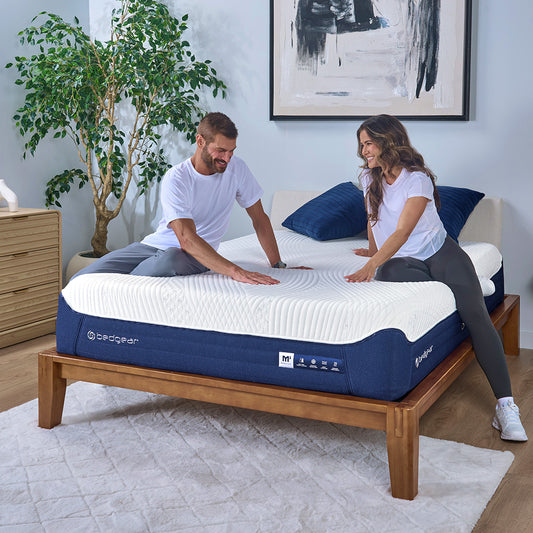
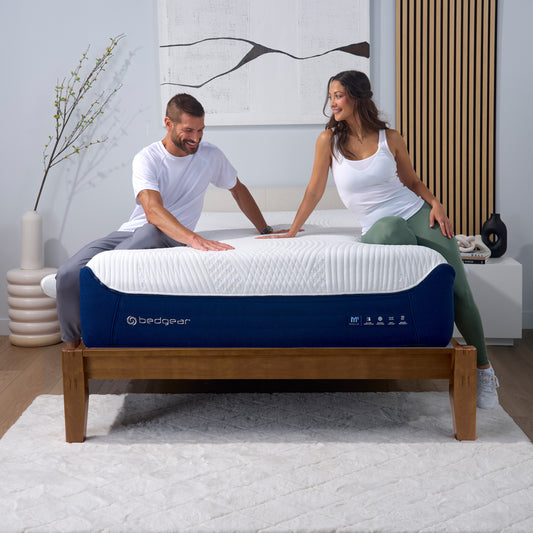
Here is the part that has no equivalent on a conventional mattress. Because each side of the bed takes its own set of suspension units, two people can sleep on genuinely different mattresses that happen to share a cover.
That solves a problem couples have been quietly losing to for decades, so you can finally put an end to any sleep divorces you may be going through. Normally one person wants plush, the other wants firm, and the purchase lands on medium; both people then sleep on a compromise neither of them chose. Configure each side independently and nobody compromises.
The same logic applies over time, and even to a single sleeper. You know, bodies change, weight shifts, injuries happen, sleep positions drift, and the mattress that felt perfect at 32 can feel wrong at 40. This is where you can really experience the beauty of swapping out coils. Plus, changing the coils takes an afternoon, and it does not take a new mattress.
The individually wrapped coil design is also why the sides stay independent rather than bleeding motion across the bed. If you want the deeper mechanics of why wrapped coils behave differently than connected ones, our guide to connected coils versus pocket coils breaks everything down for you without throwing a ton of industry jargon your way.

Modular Mattress vs. Other Mattress Types
Every mattress category makes a different trade, and their are even some great unique designs out there that we don't carry at BEDGEAR.
Innerspring beds are affordable and breathable but crude at pressure relief. You also have all-foam beds contour beautifully and sleep warmer. What's more, latex lasts a long time and costs accordingly.
The table below lines up modular hybrid construction against the categories most shoppers are choosing between.
| Feature | Modular Hybrid (M Series) | Standard Hybrid | Innerspring | All-Foam | Latex |
|---|---|---|---|---|---|
| Layer access | Cover unzips; every layer lifts out | Sealed construction | Sealed construction | Sealed construction | Some models have removable layers |
| Change firmness after purchase | Yes, four levels per side | Topper only | Topper only | Topper only | Varies by model |
| Each side set separately | Yes, by design | Rarely | No | No | Some split builds |
| Replace a single component | Yes, individually | No | No | No | Limited |
| Airflow | Coils, mesh sides, and chassis vents | Coil layer aids airflow | Open coil structure | Depends on foam and cover | Naturally open cell structure |
| Motion isolation | Strong; wrapped coils work independently | Good | Weakest; coils connected | Strong | Good |
| Delivery and setup | Separate boxes, assembled in the room | One large unit | One large unit | Compressed in a box | Heavy single unit |
| When one part wears out | Swap that part | Replace the mattress | Replace the mattress | Replace the mattress | Replace the mattress |
Category descriptions above are general to each mattress type and will vary by manufacturer and model, so keep that in mind.
The pattern in that table is worth naming. Most categories differ in how they feel; modular construction differs in what happens next.
If you would like a closer look at how coil-and-foam builds compare with older constructions generally, our breakdown of hybrid mattresses versus traditional mattresses covers all that ground.
Modular Mattress Cooling Options
Modular construction helps with heat before any cooling material gets involved. Air moves through a chassis with coils, mesh sides, and vents in a way it cannot move through a solid block of foam. That is airflow doing the work; heat and moisture get carried away from the sleeper instead of collecting under them.
So, you have cooling right out of the gate, sure, but if you thought that was enough for the team at BEDGEAR, you thought wrong. We take cooling to the next level, and that's something we're passionate about.
The Night Ice models add a second, different mechanism on top of that. Phase-change materials at the surface buffer heat on contact, which is what makes a cover feel cool the moment you touch it. It is a short-term surface effect, and it works alongside airflow rather than replacing it.
Both mechanisms are worth having because they solve different halves of the problem. Airflow manages heat over the course of the night; phase-change handles the first few minutes when you get into bed. Two options carry the Night Ice build:
- M3 Night Ice Performance® Mattress, which brings the cooling package to the standard M3 profile.
- M5 Night Ice Performance® Mattress, which pairs it with the taller build and the conforming comfort layer.
Both keep the full modular architecture; choosing Night Ice does not cost you the ability to swap layers.
You can browse the wider Night Ice collection if you want to match the mattress with cooling pillows and sheets. In fact, we even have a few travel pillows with cooling capabilities, so you can sleep cool on the go.
M3 vs. M5: Which Modular Mattress Fits You?
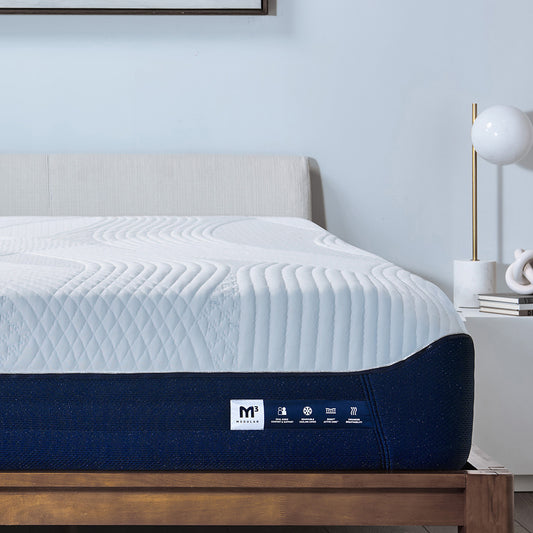
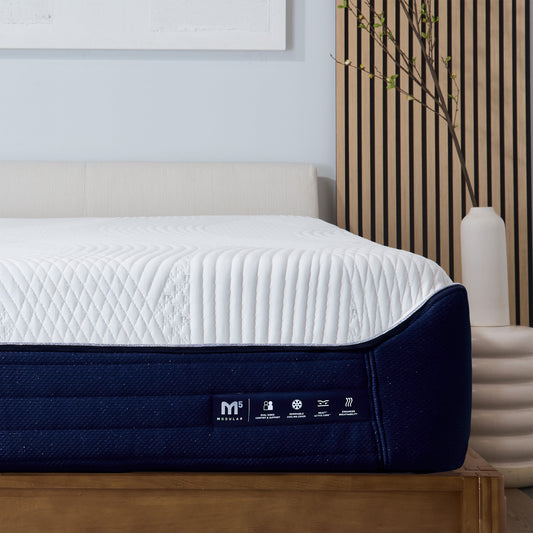
The M3 and M5 mattresses are the big ones in our modular mattress collection. Both models share the same modular bones and the same four firmness options per side.
The difference comes down to profile height and the character of the comfort layer, which is what the table sorts out.
| M3 Performance® | M5 Performance® | |
|---|---|---|
| Profile | Standard modular profile | Taller 14 inch profile |
| Comfort layer | Coil-less comfort layer | Enhanced conforming comfort layer |
| Firmness options per side | Four | Four |
| Best for | Anyone who wants full personalization at the core price point | Sleepers who want more cushion and slower conforming feel |
| Night Ice version | Yes | Yes |
If you are unsure, start with how you feel about surface cushion. The M3 Performance® Mattress reads more balanced and responsive; the M5 Performance® Mattress gives you more to sink into.
Either way you can adjust firmness later, which takes most of the pressure off the decision! After all, we really strive to make sleep products that are personally fit to you.
See the Full Modular Lineup
Every model in the collection is built on the same patented modular architecture, so the mattress can change as your needs do.
Modular Mattress Setup and Care
Assembly gets treated like a downside of modular design, but it really does not have to be. Moreover, it is closer to the opposite. A conventional queen arrives as one awkward, heavy unit that has to make it through your doorway and up your stairs in a single piece.
A modular mattress arrives in separate boxes and gets assembled in the bedroom. Nobody wrestles a slab around a stair landing. Our M mattress assembly page walks through the sequence, and the setup and care guide covers rotation and cover washing.
One more note for anyone sleeping on an adjustable base. You'll find that because the spring pack is made of individual units rather than one rigid grid, the mattress flexes with the base instead of resisting it. Therefore, if a base is in your plans, look at adjustable bases built for these mattresses rather than a general frame.

Why a Modular Mattress Matters
At the end of the night, a modular mattress matters because it stops treating your comfort as a single decision made once, at a store, on a day you happened to be shopping. Conventional construction locks that decision in permanently; if you guess wrong, or if you simply change, your only option is starting over.
The patented design behind our M Series was built around that reality rather than around it. Swap the coils when your body changes. Swap the comfort layer when your preference shifts. Set your side firm and let your partner set theirs plush. Replace one worn component instead of hauling an entire mattress to the curb.
That last point is where the modular mattress case gets strongest. A bed made of separate parts does not have to fail all at once; you fix what needs fixing.
It is a better answer for your sleep, and a better answer for what happens to mattresses when people are done with them.
Frequently Asked Questions About Modular Mattresses
Still working through whether a modular mattress is right for you? Here are the questions we hear the most about BEDGEAR modular mattresses and modular mattresses in general.
What Is a Modular Mattress?
Can You Change the Firmness of a Modular Mattress After Buying It?
Is a Modular Mattress Patented?
Do Modular Mattresses Work on Adjustable Bases?
Is a Modular Mattress Worth It?
Find Your Modular Fit
Set your side. Let your partner set theirs. Change either one whenever you need to.