

Your Go-To Bed Protector Guide
A mattress or pillow protector is the least glamorous part of a sleep system, but it's one of the most important. Pillow protectors and mattress protectors are the layer between your mattress and everything your body puts on it every night; sweat, oils, allergens, and moisture that accumulate quietly and degrade the materials underneath faster than most people realize.
Luckily, the right protector extends the life of your mattress, keeps your sleep surface genuinely clean, and in BEDGEAR's case, adds breathability and performance rather than taking it away.
Now, if you're looking for a good night's sleep without the gunk, this guide covers everything. We take you through details about mattress protectors, pillow protectors, sofa bed protectors, types, and the difference between a protector and a mattress pad.
Bed Protectors Explained
A bedding protector is exactly what it sounds like. You're getting your hands on a removable, washable layer that sits between your sleep surface and everything your body puts on it every night. This prevents sweat, oils, allergens, dust mites, and moisture don't just affect your hygiene.
What's more, they degrade the materials inside your mattress and pillows over time, compressing foam, breaking down fill, and shortening the lifespan of products that were built to last. Overall, a great bed protector intercepts all of that before it reaches the surface underneath.
That said, the best protectors do this without you noticing them at all. Therefore, no crinkle, no heat trap, and no change in how the mattress or pillow feels. It's for this reason that BEDGEAR's protector lineup is built on the same performance fabric principles as every other layer in the sleep system.
So, you can expect Dri-Tec moisture-wicking construction that pulls sweat away from the surface, breathable design that doesn't block airflow, and washable covers that maintain their performance over regular laundering. Overall, a protector that works against your sleep environment isn't doing its job, so we strive to make sure that does not happen.
Mattress Protector vs. Mattress Pad — What's the Difference?
These two products live in the same aisle, look similar on the shelf, and serve completely different purposes. Mattress protectors offer a barrier — engineered to keep moisture, allergens, dust mites, and everyday wear from reaching the mattress beneath it.
In fact, a quality protector doesn't change how the mattress feels. Instead, it maintains how the mattress performs by keeping the materials clean, dry, and intact over time. For these reasons, the distinction matters: a mattress pad improves the feel, a protector preserves the investment.
A mattress pad, on the other hand, adds a layer of cushioning to the sleep surface and changes how it feels. Mattress pads are softer, plusher, or more supportive depending on the fill. You'll find that it's not a substitute for a proper mattress protector, and it won't defend your mattress against the moisture and allergen buildup that degrades materials over time.
The good news? If you need both comfort adjustment and protection, layer them correctly. So, the pad first, then the protector on top. The protector always goes last because it needs to be the layer that's washed most frequently.
After all, a pad on top of a protector defeats the protector's purpose entirely. Now, we know this can be a lot to take in, but don't panic, because have a guide that goes into more detail in the mattress protector vs mattress pad debate.
Pillow Protector vs. Pillowcase — What's the Difference?
A pillowcase is the fabric cover that goes directly over your pillow and sits against your skin through the night. It's what you wash weekly and what you feel when you sleep. A pillow protector is a separate layer that goes between the pillow and the pillowcase — its job is to guard the pillow insert from the moisture, oils, and allergens that pass through the pillowcase over time. Together they form a two-layer system: the protector keeps the pillow clean, the pillowcase keeps the protector clean.
Most people skip the pillow protector and wonder why their pillows degrade faster than they should. A pillow absorbs significantly more than most people realize over weeks and months of nightly use — and once that buildup reaches the fill, there's no washing it out. This is where BEDGEAR comes in to save the day.
BEDGEAR's pillow protectors are built with the same Dri-Tec performance fabric as the mattress protector lineup, so the protection layer doesn't work against the breathability of the pillow underneath it.
The Benefits of Using a Bed Protector
A bedding protector isn't an optional add-on. No, it's the layer that makes everything else in your sleep system last longer, perform better, and stay cleaner than it otherwise would. Learn more about what quality bed protectors can deliver below.
Extends the Life of Your Mattress
Starting with some value and sustainability, because we love that. A mattress is one of the highest-cost items in a sleep system, and moisture is one of its primary enemies. Even low-level nightly sweat that never feels dramatic adds up over time, and the salt from it will seep into your bedding and break down foam cells, compressing fill, and creating the conditions for mold and allergen buildup that shortens a mattress's useful life significantly.
A high-quality mattress protector that costs a fraction of the mattress absorbs that impact before it reaches the materials underneath.
Most mattress warranties require a protector as a condition of coverage. Staining from moisture — even body sweat — can void a warranty entirely. A protector isn't just good hygiene. It's the documentation that you maintained the product the way it was meant to be maintained.
Keeps Your Sleep Surface Genuinely Clean
Sheets wash weekly. The mattress beneath them doesn't. Without a protector, everything that passes through the sheets — sweat, skin cells, oils, allergens — accumulates directly in the mattress materials over months and years.
Dust mites thrive in that environment. Allergen levels build. The sleep surface that felt clean when you bought it isn't the same surface you're sleeping on a year later, and studies have found that this has a profound impact on children who have allergies and asthma.
A protector resets that equation, but without making things uncomfortable. A good mattress or pillow protector becomes the layer that takes the impact, gets washed regularly, and keeps the materials behind it in the condition they were in when they were new.
Clean sheets on top of a protected mattress is a genuinely clean sleep environment. Clean sheets on top of an unprotected one is not.
Protects Your Pillow Investment Too
A pillow absorbs significantly more than most people realize over weeks and months of nightly use. Your head is one of the highest-output heat and moisture points on your body, and without a protector between the pillowcase and the fill, that output goes directly into the pillow.
Memory foam compresses. Down and alternative fills clump. The loft that made the pillow worth buying starts to disappear — not because the pillow failed, but because it wasn't protected.
BEDGEAR's pillow protectors are built with the same Dri-Tec performance fabric as the mattress protector lineup — moisture-wicking, breathable, and washable. The protection layer doesn't work against the pillow underneath it. It works with it, keeping the fill clean and the loft consistent so the pillow performs the way it was designed to for longer than it otherwise would.
Reduces Allergen Exposure While You Sleep
Dust mites are one of the most common indoor allergens, and the mattress is their primary habitat. Think about it: your mattress offers a warm, humid, and full of the dead skin cell surface for them to feed on. A quality mattress protector creates a physical barrier between you and that environment, reducing direct exposure through the night.
For allergy sufferers, this isn't a minor improvement. It's actually one of the most impactful changes you can make to your sleep environment without replacing the mattress. In fact, dust mites do bite, so understanding how to manage them has never been more important.
The same principle applies to the pillow. A pillow protector seals the fill from allergen accumulation and makes the surface washable at the frequency that actually keeps allergen levels in check.
Combined, a protected mattress and protected pillows create a sleep environment that's meaningfully cleaner than one that relies on sheets alone as the only washable layer. In fact, studies have found that this is more important to understand than ever before.
Why? Because your pillow can end up with as much bacteria as a toilet seat after only seven days.
Types of Mattress Protectors
Not all mattress protectors are built the same way. The material and construction determine how well it breathes, what it protects against, and whether it adds to or works against your sleep environment.
Here's every type worth knowing.
-
01
Cooling
Moisture-wicking and breathable; protection without the heat trap of standard vinyl-backed protectors.
-
02
Organic
Certified organic materials; no synthetic pesticides or chemical treatments, best for sensitive sleepers
-
03
Cotton
Breathable baseline; soft, easy to wash, works well without waterproofing for most adult setups
-
04
Hypoallergenic
Blocks dust mites, pet dander, and mold spores; essential for allergy sufferers
-
05
Waterproof
Full liquid barrier; non-negotiable for kids, pets, and anyone managing incontinence
-
06
Children's
Built for heavier use and frequent washing — waterproof, breathable, and chemical-free certified
Each type of mattress topper solves a different problem. Here's the full breakdown of what each one does, who it's built for, and when it makes sense.
Cooling Mattress Protectors
A cooling mattress protector is engineered to protect without trapping heat; the problem that makes most people avoid protectors in the first place.
Standard waterproof protectors use plastic or vinyl backing that blocks moisture effectively but also blocks airflow, creating a warm, crinkly surface that undermines the breathability of whatever mattress is underneath it. A cooling protector solves that problem with breathable materials that allow air to move through the surface while still providing protection.
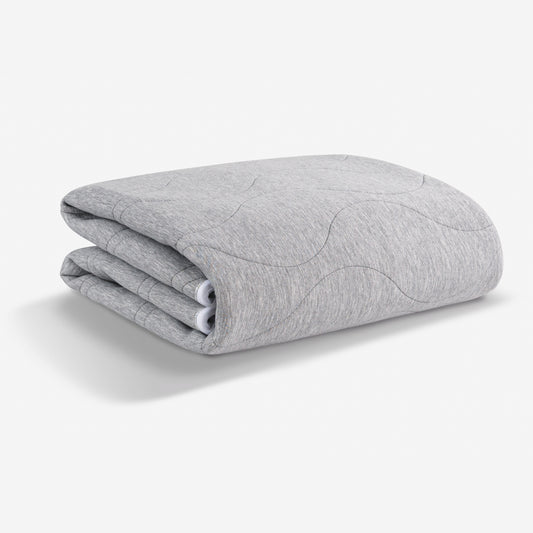
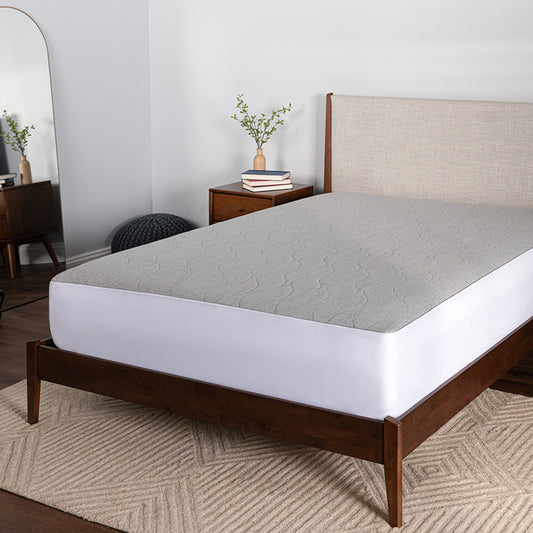
BEDGEAR's Dri-Tec Mattress Protector is built around this principle; moisture-wicking fabric that pulls sweat away from the surface rather than letting it pool, breathable construction that doesn't trap heat, and a waterproof barrier that works without the thermal penalty of traditional vinyl-backed protectors.
Overall, for hot sleepers especially, the right cooling protector is the difference between protection that helps and protection that hurts.
Organic Mattress Protectors
An organic mattress protector is made from certified organic materials — typically organic cotton — that are grown and processed without synthetic pesticides, herbicides, or chemical treatments. For sleepers with chemical sensitivities, skin conditions, or a preference for natural materials throughout their sleep environment, an organic protector removes one more potential irritant from the equation.
The organic certification matters more than the label. Look for GOTS (Global Organic Textile Standard) certification, which covers both the material and the manufacturing process. A protector labeled "natural" or "eco-friendly" without a recognized certification may not meet the same standard.
Organic protectors typically breathe well and feel softer than synthetic alternatives, though they may not offer the same level of waterproofing as a performance-fabric protector.
Cotton Mattress Protectors
A cotton mattress protector is the reliable baseline. They're breathable, soft against the skin, easy to wash, and widely available. Plus, cotton naturally wicks some moisture and allows airflow, making it more comfortable than vinyl or plastic-backed alternatives for most sleepers.
It's the right choice for anyone who wants solid protection without a performance-engineered fabric and without the premium that organic certification adds.
Unfortunately, the limitation is waterproofing. A standard cotton protector without a backing layer won't fully block liquid from reaching the mattress. So, if waterproofing is a priority, like a protector for children's beds, pet-friendly setups, or anyone managing incontinence, look for a cotton protector with a thin waterproof backing rather than an unlined cotton cover.
Hypoallergenic Mattress Protectors
A hypoallergenic mattress protector is designed specifically to reduce allergen exposure during sleep. It blocks dust mites, pet dander, mold spores, and other common triggers from accumulating in the mattress materials underneath. So, for the roughly 20 million Americans who are allergic to dust mites, a protector isn't a comfort upgrade. It's a health decision.
The key is the barrier quality. A loosely woven protector allows dust mite allergens to pass through even if it technically covers the mattress. Look for tightly woven or encasement-style protectors with pore sizes small enough to block allergen particles.
BEDGEAR's protectors combine allergen barrier function with moisture-wicking performance; protection that keeps the sleep surface clean without making it uncomfortable.
Waterproof Mattress Protectors
A waterproof mattress protector provides the most direct defense against liquid damage. You know the kind, the type that voids warranties, breeds mold, and permanently degrades mattress materials. For households with young children, pets, or anyone managing incontinence, waterproofing isn't optional. It's the baseline requirement, and everything else is secondary.
The challenge historically has been that waterproofing and breathability conflict. Vinyl and plastic backings block liquid effectively but also block air, creating a hot, crinkly sleep surface.
Modern waterproof protectors — including BEDGEAR's Dri-Tec lineup — use membrane technology that allows vapor to escape while blocking liquid from penetrating. The result is genuine waterproofing without the thermal penalty that used to come with it.
Children's Mattress Protectors
A children's mattress protector is built for the specific demands of a kid's sleep environment. And, unfortunately, it's not uncommon for the little fellas to wet the bed or cause some other cleanliness issues.
So, these mattress protectors offer heavier moisture exposure, more frequent washing, and a sleep surface that needs to stay clean through years of use rather than months. Waterproofing is non-negotiable at this stage. A child's mattress without a waterproof protector is a mattress on borrowed time.
Beyond waterproofing, breathability and material safety matter more for children than for adults. Kids sleep warmer than adults, which means a protector that traps heat creates more discomfort than it would for a grown sleeper.
Look for a protector that's certified free of harmful chemicals — OEKO-TEX Standard 100 certification is a reliable benchmark — and that's built to handle the wash frequency a child's bed actually requires.
Types of Pillow Protectors
A pillow protector does for your pillow what a mattress protector does for your mattress. It keeps the fill clean, extends the lifespan, and maintains the performance you paid for.
The right type depends on what you need the protector to do: breathability, stretch, allergen protection, or waterproofing. Here's every type worth knowing.
-
01
Stretchwick
Four-way stretch construction — moves with the pillow, wicks moisture, feels like it isn't there.
-
02
iProtect
Waterproof barrier with breathable construction — full liquid protection without the crinkle.
-
03
Standard
Basic zippered encasement — adds a washable barrier at a lower price point.
-
04
Allergen-Blocking
Tightly woven encasement — clinically recommended for allergy and asthma sufferers.
Each type of pillow protector serves a different purpose. Here's the full breakdown of what each one does and who it's built for.
Stretchwick Pillow Protector
BEDGEAR's Stretchwick Pillow Protector is built around a four-way stretch construction that moves with the pillow rather than constraining it. Most pillow protectors create a rigid envelope around the fill; one that limits the pillow's ability to conform and respond to your head and neck through the night. Stretchwick eliminates that problem.
The stretch fabric maintains the pillow's full range of motion while the moisture-wicking construction pulls sweat away from the surface before it reaches the fill.
The result is a protector that feels like it isn't there, which is exactly what a protector should feel like. If you've avoided pillow protectors in the past because they made the pillow feel stiff or different, the Stretchwick is the version worth trying. It protects without changing the sleep experience that made the pillow worth protecting in the first place.
iProtect Pillow Protector
BEDGEAR's iProtect Pillow Protector adds a waterproof barrier to the performance fabric construction. This makes it the right call for households where liquid protection at the pillow level is a priority. We're talking children's pillows, guest room setups, and anyone managing allergies or sensitivities that require a more complete barrier will find the iProtect delivers that without the crinkle or heat trap of a standard waterproof cover.
The waterproofing is built into the fabric rather than laminated onto a separate backing layer, which means it breathes better than traditional waterproof pillow covers while still providing genuine liquid protection.
Paired with the Dri-Tec pillowcase on top, the iProtect creates a two-layer system that keeps the pillow clean, dry, and performing at its original loft through consistent nightly use.
Standard Pillow Protectors
A standard pillow protector is a zippered or fitted encasement that covers the pillow insert and sits under the pillowcase. At the most basic level, it adds a washable barrier between the fill and the environment without any specialty construction.
For sleepers who simply want to extend the life of their pillow without a performance fabric upgrade, a standard protector does the job at a lower price point.
The tradeoff is breathability and feel. Standard protectors — particularly those with woven or tightly knit construction — can reduce airflow and create a stiffer surface than the pillow itself. If you're using a performance pillow built for cooling or airflow, a standard protector can undermine that investment at the contact point. Match the protector type to the pillow technology for the best result.
Allergen-Blocking Pillow Protectors
An allergen-blocking pillow protector is tightly woven or encasement-style, designed to prevent dust mites and their allergens from passing through the fabric and reaching the fill — or from migrating out of an older pillow that may already have accumulated allergen load. For allergy and asthma sufferers, pillow encasements are one of the most clinically recommended interventions for reducing nighttime allergen exposure.
The pore size of the weave is the key spec. An effective allergen barrier needs pores small enough to block dust mite allergens — typically under 10 microns. Labels that say "hypoallergenic" without specifying the pore size or weave density may not provide the barrier level that actually reduces exposure.
Therefore, make sure look for tested and certified allergen protection rather than marketing language.
Sofa Bed and Futon Protectors
A sofa bed or futon mattress takes on more than a standard mattress ever does, at least, if you use them a lot. Futons fold, unfold, get sat on, slept on, and used by guests who didn't bring their own bedding with them.
Without a protector, that surface accumulates everything a regular mattress does, plus the mechanical stress of repeated folding that works moisture and debris deeper into the materials over time. A protector built specifically for this format keeps the mattress clean and extends its life in a way a standard fitted protector can't, because standard protectors aren't designed to fold.
BEDGEAR makes two sofa bed protectors built specifically for this use case — each bringing the same performance fabric principles as the full protector lineup into a format that's engineered to fold and unfold without bunching, shifting, or losing its position on the mattress.
iProtect Sofa Bed Mattress Protector
The iProtect Sofa Bed Mattress Protector adds a waterproof barrier to a performance fabric construction — making it the right call for households where liquid protection at the sofa bed level is a priority.
Guest rooms, family rooms, and any setup where the sofa bed sees irregular use from different people benefit most from waterproofing at this layer. You don't know what a guest will bring to the surface. The iProtect makes sure none of it reaches the mattress.
The construction is designed to flex with the sofa bed mechanism rather than fighting it. A standard mattress protector bunches at the fold point and shifts out of position, leaving gaps in coverage exactly where stress is highest. The iProtect stays in place through the fold cycle, maintaining full coverage without requiring readjustment every time the sofa bed is opened or closed.
Dri-Tec Sofa Bed Mattress Protector
The Dri-Tec Sofa Bed Mattress Protector brings BEDGEAR's moisture-wicking, breathable performance fabric to the sofa bed format. Where the iProtect prioritizes waterproofing, the Dri-Tec prioritizes thermal comfort and moisture management — pulling sweat away from the surface and allowing airflow rather than trapping heat against the sleeper. For households where the sofa bed sees regular overnight use, the breathability difference shows up in sleep quality.
Like the iProtect, the Dri-Tec is built to work with the sofa bed mechanism rather than against it — staying in position through repeated use without the bunching or shifting that makes standard protectors impractical on a folding mattress. Pair it with a fitted sheet and the sleep surface on a sofa bed becomes genuinely comfortable rather than an afterthought.
The Right Protector Is the One That Works While You Sleep
A protector doesn't make your sleep better. It keeps it from getting worse. It's the layer that stands between the investment you've made in your mattress, your pillows, and your sleep environment, and everything that quietly degrades those investments night after night. Get it right and you never think about it again. Skip it and you'll feel it eventually, usually when it's too late to matter.
BEDGEAR builds every protector around the same principle that guides every other layer in the sleep system: it should work with your body, not against it. Dri-Tec moisture-wicking, breathable construction, and washable performance fabric that maintains its properties over regular use.
Protection that performs rather than just sits there. If you've invested in a sleep system worth protecting, the protector is where that investment starts paying for itself.
Performance® Protectors — Built to Work With Your Sleep System
Dri-Tec moisture-wicking. Breathable construction. Washable performance fabric. Protection for your mattress, your pillows, and your sofa bed — engineered to work with every layer underneath it.
Frequently Asked Questions
Have more questions about protectors? We've answered the most common ones below.
How To Wash a Mattress Protector
Most mattress protectors are machine washable on a gentle or normal cycle with warm water and mild detergent. Avoid bleach and fabric softener — both degrade the waterproofing and moisture-wicking properties over time. Tumble dry on low heat or air dry flat. High heat can damage the waterproof membrane. Wash your protector every two months at minimum, more frequently if you run hot or sweat heavily.
Can You Wash a Mattress Protector?
Yes — and you should, regularly. A mattress protector that never gets washed accumulates everything it was designed to intercept: sweat, oils, allergens, and moisture. Most are machine washable on a gentle cycle with warm water. Always check the care label for the specific instructions for your protector's material and construction, particularly if it has a waterproof backing.
Do I Need a Mattress Protector?
Yes. If you own a mattress worth sleeping on, you need a protector on it. Mattresses accumulate moisture, allergens, and biological material that no amount of sheet washing removes. A mattress protector is the only layer that actually keeps that buildup off the mattress surface — and most mattress warranties require one as a condition of coverage. The cost of a protector is a fraction of the cost of replacing a mattress prematurely.
How Often To Wash a Mattress Protector
Every one to two months for most sleepers. If you run hot, sweat heavily, have allergies, or share the bed with pets, bump that to monthly. The protector is doing its job every night — which means it's accumulating what it's protecting against. Regular washing keeps it performing rather than becoming part of the problem. Always dry it completely before putting it back on the mattress.
Where To Buy a Mattress Protector
BEDGEAR's Performance® Mattress Protectors are available at bedgear.com and through authorized retail partners. The Dri-Tec and iProtect lines cover most sleeper needs — from moisture management and breathability to full waterproof protection. Use the store locator at bedgear.com to find your nearest BEDGEAR retailer.
Are Pillow Protectors Necessary?
Yes — for the same reason mattress protectors are necessary. Your pillow absorbs sweat, oils, and skin cells every night, and a pillowcase alone doesn't stop that buildup from reaching the fill. A pillow protector sits between the pillowcase and the fill, keeping the material clean and the loft intact over time. Without one, even a high-quality performance pillow degrades faster than it should.
How To Choose a Mattress Protector for Sofa Beds
The key is finding a protector built specifically for the sofa bed format — one designed to fold and unfold with the mechanism without bunching, shifting, or leaving gaps at the fold point. A standard fitted mattress protector won't stay in position through repeated folding. BEDGEAR makes two sofa bed-specific options: the iProtect for waterproof protection and the Dri-Tec for breathability and moisture management.
Protect Everything You've Invested In
Mattress protectors, pillow protectors, and sofa bed protectors; performance fabric engineered to work with your sleep system, not against it.
You May Also Like
-
 Maximum BreathabilityRegular price $169.99Sale price $169.99 Regular priceUnit price per
