

Mattress Protector vs. Mattress Pad: What's the Difference?
Shopping for bedding gets confusing fast, and that's something that even us bedding companies understand. You have the mattress protector, mattress pad, mattress topper; they all slide onto the same spot on your bed and the names get used almost interchangeably. So, we get it, it's fair to wonder what actually separates them.
Here is the short version, though: in the mattress protector vs mattress pad debate, a protector defends your mattress and a pad adds a bit of comfort.
They are not competing products so much as two tools for two jobs. Below we break down what each one does, where a topper fits in, and how to figure out which layer you actually need. Read on to learn more below.
What Is a Mattress Protector?
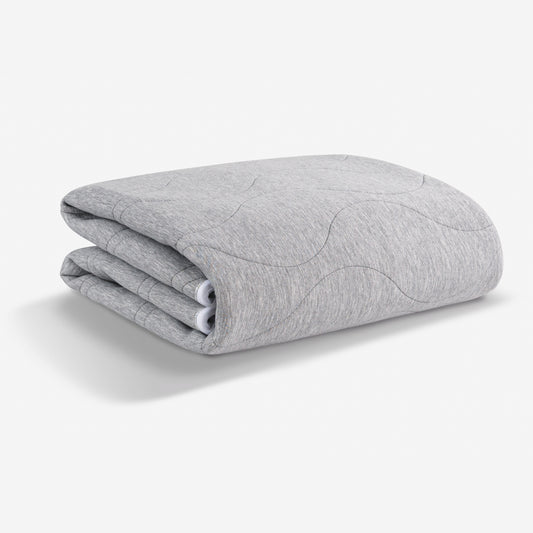
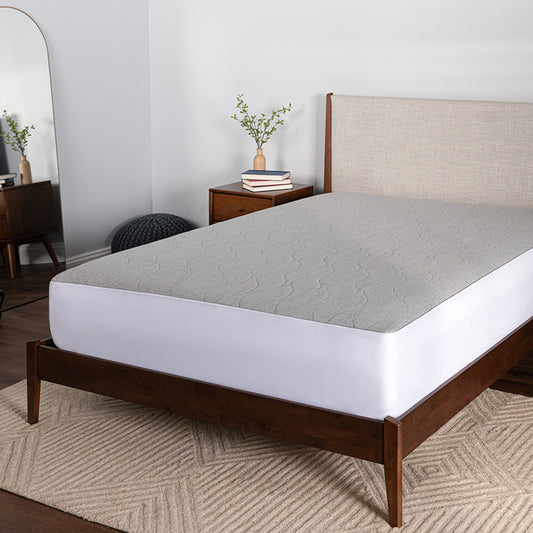
A mattress protector is a thin cover that fits over your mattress like a fitted sheet and sits underneath your regular sheets; easy, right? Its whole purpose is defense. It creates a barrier between you and the mattress so that spills, sweat, body oils, allergens, and dust mites never soak into the layers you are sleeping on.
The payoff is a mattress that stays cleaner and lasts longer. A stain can void a mattress warranty, so a good protector quietly protects your investment every single night. Many protectors are waterproof too, which matters for kids, pets, late-night drinks, and anyone who runs warm and sweats in their sleep.
The best protectors do all of this without you ever noticing them. A quality performance protector shields the mattress while still letting air move through, so it does not trap heat against your body.
BEDGEAR is serious enough about airflow that we built a patented device to measure it; the CFM airflow measuring system (opens in a new tab) reads how much air passes through the bedding, so breathability is something the brand can measure rather than just print on a label.
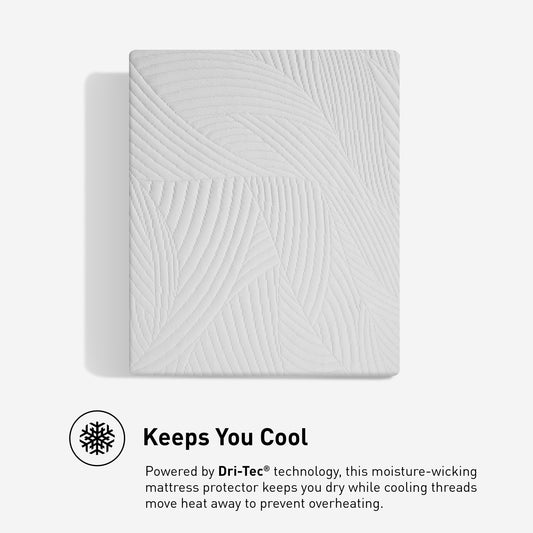
That said, fabrics do the heavy lifting here. Ver-Tex feels cool to the touch the moment you lie down, Air-X is built around airflow, and Dri-Tec wicks moisture away so it never pools against your skin. If you want the full rundown on features and fit, our bed protector buying guide walks through it, and our post on whether a mattress protector is necessary makes the case for why this is the one layer most people should not skip.
What Is a Mattress Pad?
A mattress pad is a thin, quilted layer that sits on top of your mattress and adds a touch of softness. It also fits like a fitted sheet and tucks under your regular sheets, which is exactly why it gets mixed up with a protector. The difference is the job it is built to do, and once you know this, you're ready to get shopping.
Therefore, a pad is mostly about comfort, with protection as a minor side benefit. It smooths out a surface that feels a little too firm and adds a light cushion, but it is usually not a serious moisture barrier on its own. For these reasons, you can think of it as a small tweak rather than a full upgrade; it nudges the feel of your bed instead of transforming it.
One honest note from our side: BEDGEAR does not make a traditional mattress pad. We focus on protectors that defend the mattress and toppers that change how it feels, because that pad category tends to sit in a fuzzy middle ground where it does two jobs at half strength. More on that split in a second.
Mattress Protector vs Mattress Pad: The Key Differences Explained
When you line them up side by side, the mattress pad vs. protector question mostly comes down to one thing: is the layer there to defend the mattress or to change how it feels?
The table below breaks down where they overlap and where they split.
| Feature | Mattress Protector | Mattress Pad |
|---|---|---|
| Primary job | Shields the mattress | Adds light comfort |
| Waterproofing | Often waterproof | Rarely fully waterproof |
| Thickness and feel | Thin; barely changes the feel | Adds a small amount of cushion |
| Where it sits | Over the mattress, under the sheet | Over the mattress, under the sheet |
| Protection level | High; spills, sweat, allergens, dust mites | Low to moderate |
| Best for | Protecting the mattress and the warranty | A slight comfort tweak with minor protection |
This is also where a lot of people get tripped up by waterproofing, especially when every single product claims to do this.
A waterproof mattress pad tries to add comfort and block moisture at the same time, and it usually gives up a little of both. On the other hand, a waterproof protector is purpose-built as a barrier; it is thinner, it stops liquid from reaching the mattress, and it does not muddy the feel of your bed.
If moisture protection is the goal, a dedicated protector like Dri-Tec handles it more cleanly than a pad ever will.
Where Does a Mattress Topper Fit In to This Bedding Equation?
Once you understand protectors and pads, the mattress topper is easy to place. If a protector guards the bed and a pad tweaks it, a topper transforms it. Toppers are the thickest of the three, often a few inches deep, and they genuinely change how firm or soft your mattress feels.
So the mattress pad vs topper vs protector lineup breaks down cleanly. The protector defends, the pad nudges, and the topper overhauls. If your mattress is too firm or has lost some of its cushion, a topper does far more than a thin pad could.
Our React Pro Performance Mattress Topper adds real conforming comfort while keeping airflow moving, and the mattress topper guide covers when a topper is the right call. It's a very good idea to read up on that topic before you click add to cart.
Can You Use a Mattress Protector and a Mattress Pad Together?
Yes, and plenty of people do; it's not a trick question. The two layers do not fight each other; one protects while the other adds comfort, so using both is a perfectly sensible setup. The only thing that matters is the order you stack them in.
Put the protector directly on the mattress first, since guarding your biggest investment is its whole reason for existing. Then place the pad on top of the protector. Finally, pull your fitted sheet over both. That order keeps the mattress fully protected while still letting you feel the comfort the pad adds.
If you want to protect the pad or a topper as well, you can add a second thin protector over that comfort layer. It is not required, but it is an easy way to keep everything cleaner if you have kids or pets in the mix.
Protector or Pad: Which One Do You Actually Need?
Start with the protector; for almost everyone, it is the layer worth prioritizing. It keeps your mattress clean, helps it last, and can protect your warranty, all without changing how the bed feels. If you add nothing else, add this.
So is a mattress pad necessary? Honestly, no. A pad is optional, and if your mattress already feels good, you can skip it without missing anything.
Now, if you do want to change how the bed feels, a topper delivers a much bigger difference than a thin pad. And if your goal is a cooler, cleaner night's sleep, a breathable protector gets you most of the way there.
Our full breakdown of whether a protector is necessary digs into that decision, and if you tend to wake up drenched in sweat, the right moisture-wicking protector can be a genuine fix.
Here is a simple way to decide what belongs on your bed:
- Want to keep your mattress clean and protected? Get a protector.
- Happy with the feel but want a tiny bit more softness? A pad is an option.
- Mattress feels too firm or worn out? A topper will do more for you.
- Sleep hot or sweat at night? Reach for a breathable, moisture-wicking protector.
Simple, right? Even better, for most sleepers the smart move is simple: a quality protector as the foundation, then a topper only if you want to change the feel.
That combination covers protection and comfort without the half-measures of a basic pad.
Mattress Protector vs Mattress Pad: The Verdict
The mattress protector vs mattress pad question really comes down to defense versus comfort, and sometimes maybe a little bit of both.
A protector shields your mattress from spills, sweat, and allergens and helps it last for years. A pad adds a small amount of cushion but only light protection, which is why it often ends up doing two jobs at half strength.
If you take one thing from all of this, let it be this: the protector is the layer almost everyone should have. Pair it with a topper when you want to change the feel of your bed, and you have covered both protection and comfort the right way.
Choose a breathable, performance-driven protector and you get the added bonus of a cooler, cleaner night's sleep.
Mattress Protector vs. Mattress Pad: FAQs
Still weighing a mattress pad vs protector for your setup? Here are the questions we hear most often, and here are the answers you need.
What's the difference between a waterproof mattress pad and a protector?
A waterproof mattress pad tries to do two jobs at once; it adds a little cushion while also blocking moisture, and it usually compromises on both. A waterproof mattress protector is purpose-built as a barrier. It is thinner, it stops spills and sweat from reaching the mattress, and it does that without changing how the bed feels. If moisture protection is your goal, a dedicated protector does it better than a pad.
What's the difference between a mattress pad, protector, and topper?
A mattress protector shields the mattress from spills, sweat, allergens, and dust mites without changing the feel. A mattress pad adds a thin layer of comfort along with light protection. A mattress topper is the thickest of the three; it sits several inches deep and actually changes how firm or soft the bed feels. Think of it this way: the protector guards the bed, the pad tweaks it slightly, and the topper transforms it.
Can you use a mattress protector and a mattress pad at the same time?
Yes, and it is a common setup. Put the protector directly on the mattress so it guards your biggest investment, then place the pad on top of the protector, then your fitted sheet over both. That order keeps the mattress protected while still letting you feel the comfort the pad adds. If you want to protect the pad too, a second thin protector can go over it.
Is a mattress pad necessary?
Not really. A mattress pad is optional; a mattress protector is the layer worth prioritizing. If your mattress already feels good, you can skip the pad entirely. If you want to change how the bed feels, a topper does far more than a thin pad. The one layer almost everyone benefits from is a protector, since it keeps the mattress clean and can help preserve your warranty.
You May Also Like
-
 Maximum BreathabilityRegular price $169.99Sale price $169.99 Regular priceUnit price per
 -

 Regular price $149.00Sale price $149.00 Regular priceUnit price perSold out

