Global Running Day started in 2009 as a simple idea: National Running Day. It began in the United States, and it's one day a year where runners everywhere — beginners, marathoners, weekend joggers — celebrate the sport together. It lands the first Wednesday of every June, and participation has grown to include millions of people across more than 170 countries. In fact, it grew so much that it became global running day back in 2016. Typically, schools run laps, running clubs organize group workouts, and athletes of every level make a pledge to get outside and move.
It's a great day. But if you really want to honor running as a sport, the conversation has to go past the miles. The best runners in the world don't just train hard; they recover harder. And the foundation of every solid recovery protocol is the same: sleep.
How Much Sleep Do Runners Need?
The short answer is more than the average person. Most healthy adults need between 7 and 9 hours of sleep per night. Runners — especially those training with any real volume or intensity — need closer to 8 to 10. The gap exists because running creates a specific kind of physiological stress. Muscles are broken down, connective tissue absorbs impact, and the cardiovascular system works hard to sustain effort. All of that damage has to be repaired, and sleep is when most of that repair actually happens.
Therefore, the more you run, the more sleep you need. A casual 3-mile-a-week runner and someone deep in marathon training don't have the same recovery requirements. If you're increasing your mileage, adding speed work, or running back-to-back days, your body's demand for sleep goes up with it. Most runners underestimate that relationship, and then wonder why they feel flat on runs they should be crushing.
Why the Standard 7–9 Hours Isn't Enough for Runners
Seven hours might be fine for someone with a desk job and a moderate activity level. But running changes the equation. The muscle repair that happens during slow-wave sleep requires time; you can't rush it by spending more time in REM and less in deep sleep. Glycogen — the fuel your muscles run on — is replenished during sleep. Cut the night short, and you're heading into your next run with a less-than-full tank.
There's also a hormonal component that's easy to overlook. Growth hormone, which drives muscle protein synthesis and tissue repair, is released in pulses during deep sleep. The majority of your daily output happens in those first few hours after you fall asleep. So, if you're sleeping 6 hours instead of 9, you're not just missing recovery time; you're losing the hormonal signal that tells your body to actually rebuild.
What Happens to Your Running When You Don't Sleep Enough
The effects show up fast. Within a few nights of restricted sleep, reaction time slows, perceived effort increases at the same paces, and mood takes a hit that makes hard training feel harder than it actually is. For competitive runners, that's not just uncomfortable; it's a real performance drag.
Injury risk goes up too. In fact, a study of young athletes found that those sleeping fewer than 8 hours per night were 1.7 times more likely to sustain an injury than those getting 8 or more. The mechanism isn't complicated: sleep-deprived muscles don't absorb impact as well, proprioception (your body's ability to sense its own position) degrades, and decision-making during training gets sloppier. The injuries that sideline runners aren't always the result of one bad step; sometimes they're the accumulated result of weeks of under-recovery.
"Sleep is the most underrated performance tool available to athletes. It costs nothing, requires no equipment, and produces measurable gains in speed, recovery, and focus. Most athletes are leaving significant performance on the table by not prioritizing it." Dr. Glen Rowell — Sleep Science & Athletic Performance
The Sleep Stages That Matter Most for Running Recovery
Not all sleep is equal. A full night of sleep cycles through multiple stages, and different stages drive different parts of recovery. Understanding which stages do what helps explain why sleep quality matters just as much as sleep duration.
Deep Sleep: Where Physical Repair Happens
Slow-wave sleep (SWS) — what most people refer to as deep sleep — is the stage where physical recovery is most concentrated. Growth hormone secretion peaks here. Muscle protein synthesis accelerates. The micro-tears in your quad and calf fibers from yesterday's long run are being repaired right now, in this stage, while you're completely unaware of it.
That said, deep sleep is also when the body regulates inflammation. Running creates it; sleep resolves it. Consistently shortchanging your deep sleep stages means that inflammation doesn't fully clear between sessions. That's what turns normal training soreness into the kind of persistent tightness that starts to affect your gait and, eventually, your injury risk.
REM Sleep: Where Motor Learning Happens
REM sleep is where the brain processes and consolidates what it learned during the day. For runners, that includes motor patterns — stride mechanics, foot strike, cadence adjustments you've been working on. The neuromuscular improvements from a focused track session don't lock in during the run itself; they lock in during the REM sleep that follows it.
This is why experienced coaches will tell you that sleep after a technical workout is not optional. Miss the REM sleep that follows a session focused on form, and a significant chunk of the adaptation potential from that session doesn't stick. The miles are in the bank; the improvements are not, so please make sure you're getting plenty of sleep.
| Runner Type | Weekly Mileage | Recommended Sleep |
|---|---|---|
| Casual / Recreational | Under 20 miles | 7–8 hours |
| Moderate Training | 20–40 miles | 8–9 hours |
| High-Volume / Race Training | 40–70 miles | 9–10 hours |
| Elite / Professional | 70+ miles | 10+ hours; naps encouraged |
How to Actually Get Better Sleep as a Runner
Knowing you need more sleep and actually getting it are two different problems. Runners often train early in the morning or late at night, work full-time jobs, and deal with the same stressors everyone else does. The sleep requirement doesn't change; the challenge is meeting it. Here are the variables that move the needle most.
Keep a Consistent Sleep Schedule
Your circadian rhythm runs on schedule. Going to bed and waking up at the same time every day (including rest days and weekends) keeps that rhythm dialed in. Inconsistency disrupts sleep architecture, which means even when you're technically in bed for 9 hours, you're not getting the quality of deep sleep and REM that those hours should be delivering.
Runners who train in the morning have an advantage here; the early alarm forces a consistent wake time, and the workout itself reinforces cortisol patterns that support better sleep that night. Late-night runners need to be more intentional: high-intensity training less than 2 hours before bed can delay sleep onset and reduce sleep quality for the following 2 to 3 hours, so do your best to maybe switch things up to the early evening or even earlier.
Control Your Sleep Environment
Temperature is the variable most runners underestimate. Your body needs to drop its core temperature by 1 to 2 degrees Fahrenheit to initiate and maintain sleep. A bedroom that's too warm fights that process directly. The recommended sleep environment temperature is 65 to 68 degrees Fahrenheit; cooler than most people run their thermostats, but meaningfully better for sleep quality.
Beyond temperature, light and sound both matter. Blackout curtains or a sleep mask eliminate light disruption. Consistent white noise or earplugs address sound. These aren't nice-to-haves for runners in heavy training; they're easy wins that don't require any extra time in bed. You're already committing to the hours; you might as well protect the quality.
Manage the Post-Run Transition
A run elevates your heart rate, raises core body temperature, and floods your system with cortisol and adrenaline. All of that is great for the run. None of it is great for sleep onset if you're heading to bed within an hour or two of finishing. Give your body a genuine wind-down window. A cool shower, a light meal, and 30 to 60 minutes of low-stimulation activity go a long way toward signaling that the effort is done and recovery can begin.
Hydration matters here too. This is due to the fact that running creates significant fluid loss, and going to bed dehydrated impairs sleep quality. Rehydrate after evening runs — but taper your fluid intake in the last 60 minutes before bed to avoid middle-of-the-night bathroom interruptions that fragment your sleep cycles.
Your Sleep Environment Is Part of Your Training Plan
BEDGEAR builds Performance® sleep systems specifically for high-output bodies. Breathable mattresses, temperature-regulating sheets, and position-fit pillows that support recovery from the moment you get in bed.
How BEDGEAR Supports Runner Recovery
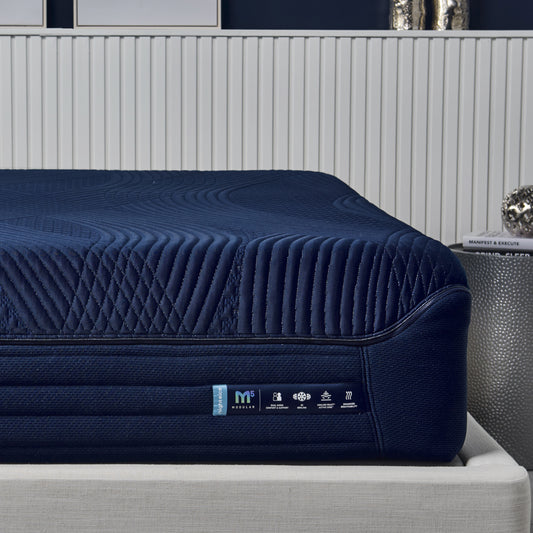
You can commit to 9 hours in bed and still short-change your recovery if the sleep surface is working against you. Heat buildup, pressure points, and unsupportive materials all reduce sleep quality independent of duration. BEDGEAR designs everything around what a performance-focused body actually needs overnight.
Temperature Regulation
Runners run hot; that's just physiology. A body that's been pushing hard has elevated core temperature and elevated metabolic rate. The sleep surface needs to work with the body's natural cooling process, not trap the heat that's being shed. BEDGEAR's Ver-Tex® and Dri-Tec® sheet technologies actively manage moisture and promote airflow; the difference between a surface that stalls your recovery and one that supports it.
Our Performance® Mattresses are ventilated throughout. Individually wrapped coil systems in our hybrid construction allow air to circulate through the mattress rather than building up under your body. For runners who've been waking up mid-night feeling hot, that's the structural fix — not a cooling fan pointed at the bed.
Pressure Relief for High-Impact Muscles
After a hard run, your hips, quads, IT bands, and calves are carrying real load. Side sleepers — the most recovery-friendly position for runners — need a surface that contours enough at the hip and shoulder to keep the spine level without creating new pressure points in already-worked muscles. A mattress that's too firm just trades one problem for another, and you end up with a plethora of other issues.
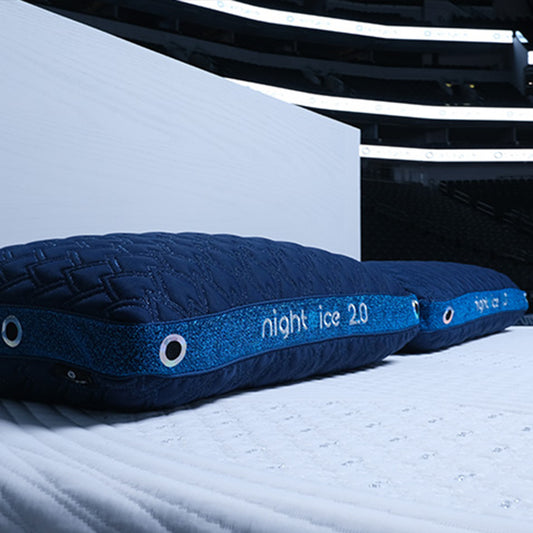
BEDGEAR's conforming foam comfort layers distribute body weight across a wider surface area; that reduces the concentrated pressure that disrupts deep sleep and slows tissue repair. The right pillow matters here too. Our Performance® Pillow system is fit-based: loft and feel matched to your sleep position, shoulder width, and body type. For runners, that means the neck and shoulders are supported in the same position you spend most of your night in, not just the one you fall asleep in.
The Right Pillow for Your Sleep Position
Most runners are side sleepers by habit or by necessity; the hip and lower back relief that side sleeping provides makes it the natural go-to after heavy training days. But side sleeping with the wrong pillow puts the cervical spine in lateral flexion all night. That's neck tightness, shoulder stiffness, and compensatory tension through the upper back — none of which you want heading into tomorrow's run.
BEDGEAR's Performance® Pillow system assigns loft by sleep position and body size. Side sleepers generally need a higher loft to fill the gap between the head and mattress. Back sleepers need less. The fit makes the difference between a pillow that supports neutral alignment and one that quietly undermines it for 9 hours straight.
| Product | What It Solves | Why It Matters for Runners |
|---|---|---|
| Performance® Mattress | Heat buildup; pressure point accumulation | Deep sleep quality; tissue repair environment |
| Performance® Pillow | Cervical misalignment; shoulder tension | Neck and upper back recovery during sleep |
| Ver-Tex® / Dri-Tec® Sheets | Night sweats; moisture retention | Temperature regulation; uninterrupted sleep cycles |
| Performance® Protector | Allergens; moisture damage | Clean sleep environment; mattress longevity |
This Global Running Day, Go the Full Distance
Every runner who laces up today is doing something worth celebrating. But the commitment to the sport doesn't end at the finish line of your run. The miles you log on Global Running Day only become stronger legs, faster paces, and better race days if the recovery that follows them is taken just as seriously. So, let's not forget about Global Runners Night, okay?
At the end of the day, sleep is where the work pays off. Eight to ten hours, in an environment built for it, on a surface that supports the kind of deep recovery that a performance body actually needs. That's the other half of training that most runners are still leaving on the table. BEDGEAR exists to fix that, and we have a whole lot more to offer in terms of sleep microclimate.
Frequently Asked Questions
Questions about sleep for runners? We've covered the most common ones below.
How Much Sleep Do Runners Need?
Does Sleep Affect Running Performance?
What Is the Best Sleep Position for Runners?
How Does Sleep Help Muscle Recovery After Running?
Can Better Sleep Improve My Race Times?