Most bedding decisions come down to feel and price. Softness gets prioritized; breathability gets ignored until someone wakes up drenched at 3 a.m. wondering what went wrong. The answer is usually the materials. The fabric your body sleeps against every night plays a bigger role in sleep quality than most people realize. It shapes your sleep microclimate, meaning the temperature and humidity right at the skin surface. Get it wrong and your body spends the night fighting for comfort instead of recovering.
Not all breathable fabrics work the same way either. Some move heat, others wick moisture, and the best ones do both. Here is how the main categories compare and what that means for how you actually sleep.
Why Bedding Breathability Affects Sleep Quality
Sleep is not just rest. It is a set of physiological processes that need specific conditions to run properly. Core body temperature has to fall by roughly one to two degrees Fahrenheit for deep sleep stages to take hold, and research on sleep and thermoregulation consistently finds that supporting that cooling process increases time spent in slow-wave sleep.
That temperature also needs to stay low through the night for those stages to sustain. Anything that interferes shortens the time you spend in deep, restorative sleep; even if you never fully wake, your sleep architecture takes the hit.
Bedding is one of the most direct levers you have on that process. A breathable sleep surface supports your body's natural temperature regulation. A non-breathable one works against it. The mattress gets most of the credit, or the blame, for sleep quality, but the fabrics between your body and the mattress have just as much influence on what your night actually feels like.
What Happens When Your Bedding Traps Heat
When bedding restricts airflow, heat builds at the skin surface rather than dissipating. Your body responds by sweating, and that moisture has nowhere to go if the fabric cannot wick it away. The result is a damp, warm microenvironment that keeps triggering brief arousals through the night. You may not remember waking up. You will notice it in the morning as fatigue, grogginess, and stiffness that should not be there after eight hours.
It compounds, too. The longer heat builds, the harder the body works to cool itself. The harder it works, the lighter the sleep. Lighter sleep means less recovery, and less recovery means the next day starts behind.
Breathable bedding does not eliminate all of that, but it removes one of the most controllable variables from the equation.
The Sleep Microclimate and Why It Shifts
Your sleep microclimate is the small pocket of air between your body and your bedding. Research published in Building and Environment identifies the optimal bedding microclimate as roughly 31 to 35 degrees Celsius, or 88 to 95 degrees Fahrenheit, with controlled humidity; that is the range where most people sleep deeply and comfortably.1 (source 1, opens in a new tab)
The problem is that this zone is dynamic. It responds to your body heat, your movement, the ambient room temperature, and, critically, the materials surrounding it. Fabrics that trap heat and moisture push the microclimate out of that range faster, while fabrics that promote airflow and move moisture help it stay there longer. This is why two people in the same room, on the same thermostat setting, can have completely different nights depending on what their bedding is made of. The microclimate is the actual sleeping environment; the fabric is what controls it.
The Most Breathable Bedding Materials
Not all breathable fabrics achieve breathability the same way. Some rely on natural fiber structure, others on weave construction, and some on engineered performance characteristics. The table below compares the main categories across the variables that matter most for sleep.
| Material | Airflow | Moisture Wicking | Best For |
|---|---|---|---|
| Dri-Tec® Performance Fabric | Excellent | Excellent | Night sweats; moisture-heavy sleepers |
| Ver-Tex® Performance Fabric | Excellent | Good | Hot sleepers who want cool-to-the-touch contact |
| Linen | Excellent | Good | Hot climates; warm-season sleepers |
| Percale Cotton | Good | Good | All-season use; most sleep positions |
| Bamboo-Derived Fabrics | Moderate | Moderate | Sensitive skin; moderate warmth sleepers |
| Sateen Cotton | Poor | Poor | Cold sleepers who prioritize softness |
| Microfiber and Polyester | Poor | Poor | Not a strong choice for sleep comfort |
Scroll sideways to see all columns.
Each material earns its ranking for specific reasons. Here is the full breakdown.
Performance Fabrics: Dri-Tec® and Ver-Tex®
Performance fabrics sit at the top of the breathability hierarchy for one reason: they are engineered for it. Natural fibers work with whatever properties their plant or animal source happened to have. Performance fabrics are built from the ground up around airflow, moisture transport, and thermal regulation.
Dri-Tec® and Ver-Tex® solve different halves of the problem, and they are not interchangeable. Dri-Tec® is built around moisture and airflow; it pulls moisture away from the skin, moves it through the fabric, and dries faster than cotton. Ver-Tex® is a phase-change fabric engineered for cool-to-the-touch contact that holds its thermal response as you lie on it. If your issue is dampness, start with Dri-Tec®. If your issue is the surface feeling warm the moment you get in, Ver-Tex® is the one.
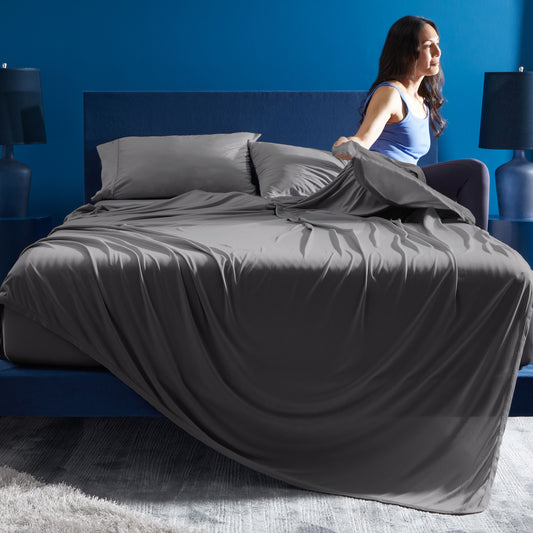
For hot sleepers, people who deal with night sweats, or anyone focused on recovery, performance fabrics close the gap between a good mattress and a sleep system that actually works. Our Performance® Sheets lineup is built on these technologies, with options across weight and feel.
One care note worth flagging: fabric softener leaves a residue that degrades wicking performance over time. Skip it entirely with performance bedding and wash with a mild detergent instead.
Linen Bedding
Linen is the most breathable natural fiber in bedding. It is made from flax, which has a naturally open weave structure that lets air move through the fabric easily. Linen also absorbs moisture well and releases it quickly; it does not hold dampness the way cotton does. That combination makes it one of the better warm-weather options among natural materials.
The trade-off is texture. Linen is coarser than cotton or bamboo, especially when new. It softens with washing, but for sleepers who want a smooth feel from night one, the texture is an adjustment. Linen also wrinkles easily and needs more care than synthetics. It is genuinely breathable; just not the most comfortable entry point for everyone.
Percale Cotton Bedding
Among cotton weaves, percale is the clear winner on breathability. The one-over-one-under weave structure creates a crisp, lightweight fabric with good airflow. It does not have the silky finish of sateen, but that tighter sateen weave is exactly what restricts airflow. Percale gives you natural fiber softness without giving up breathability to get it.
Thread count matters here too, though not in the direction most people assume. Higher thread counts do not mean better sheets; they often mean worse breathability. A percale sheet in the 200 to 400 range typically outperforms a 600-thread-count sateen on airflow. The weave structure does more for breathability than fiber quantity does.
Bamboo-Derived Fabrics
Bamboo-derived fabrics, usually labeled bamboo rayon or bamboo viscose, have become popular for their softness. They are genuinely smooth against the skin. On breathability they land mid-pack: better than polyester or sateen cotton, not as strong as linen or percale. They have some natural moisture-wicking capability, but the chemical processing that turns bamboo into usable fiber alters some of those properties.
For sleepers who run warm but prioritize a soft feel over maximum airflow, bamboo-derived sheets are a reasonable choice. They are not the strongest option for true hot sleepers or anyone dealing with night sweats; in that case a performance fabric will do more on every thermal variable.
Sateen Cotton and Microfiber Bedding: What to Avoid
Sateen's silky feel comes from a weave where more threads sit on the surface. That creates a denser, smoother fabric, and a warmer one. Sateen holds heat more than percale and does not wick moisture as effectively. For cold sleepers who want a cozy sheet, it is fine. For anyone who sleeps warm, it is the wrong call.
Microfiber and polyester are a different problem. The synthetic fibers create a surface that feels soft at first but does not breathe. Heat and moisture build at the skin with nowhere to go. Over time, microfiber sheets also tend to pill and hold odors in ways natural and performance fabrics do not. They are priced low for a reason.
How to Build a Breathable Sleep System
Individual materials matter, but breathability is a system-level outcome. A breathable sheet over a non-breathable protector still produces a warm sleep surface. A breathable mattress under non-breathable sheets gives the same result. Every layer contributes, and every non-breathable layer sets a ceiling on how well the others can perform.
Start With Your Sheets
Sheets are the most important breathability decision because they are the layer in direct contact with your skin. This is where heat and moisture meet your body first. If the sheet cannot move them away, nothing else in the stack can compensate. A performance fabric or good percale sheet is not just a preference upgrade; it is the foundation of a sleep environment that regulates temperature through the night.
Our Dri-Tec® Performance® Sheets are built around exactly this. The moisture-wicking construction pulls sweat away from the skin and moves it through the fabric, helping your body stay in a comfortable thermal range. For a side-by-side look at how performance fabrics compare with traditional cotton, the bed sheets buying guide breaks down the differences across the lineup.
Layer In a Breathable Mattress Protector
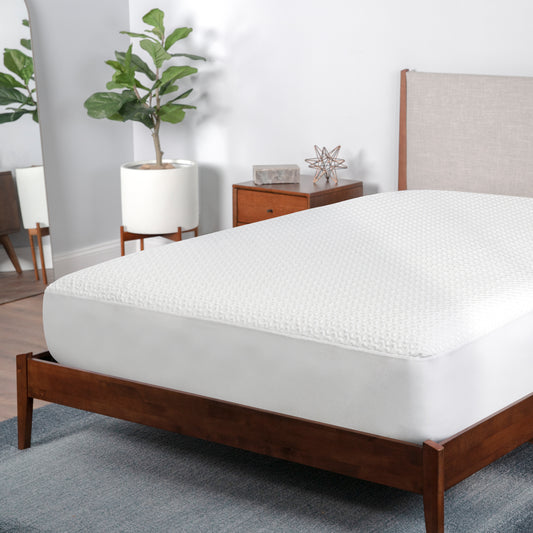
A mattress protector sits between your sheets and your mattress. It is the layer most people never consider from a breathability standpoint; they pick the cheapest waterproof option and call it done. That is a mistake. A non-breathable protector blocks airflow that should be moving from your sheets into the mattress below, turning a ventilated sleep system into a sealed one.
Our iProtect® Performance® Mattress Protectors are designed to protect without blocking airflow, combining waterproof coverage with breathable construction. If your sheets breathe well but your protector does not, you still have a problem; that is the gap iProtect® is built to close.
Don't Overlook Your Pillow and Pillowcase
Your face, neck, and scalp generate real heat during sleep. The pillow and pillowcase are doing thermal work for a large surface area all night. A non-breathable pillow traps heat against the side of your face, and a non-breathable pillowcase seals it in. That localized buildup is enough to disrupt sleep quality on its own, even when the rest of your bedding is well chosen.
Our Performance® Pillows are built with breathable materials and airflow channels that move heat away from the head and neck. Pair one with a Dri-Tec® pillowcase for moisture management, or a Ver-Tex® pillowcase if the surface feeling cool on contact matters more to you, and the pillow zone becomes part of your temperature management instead of a heat source. For more on how pillow construction affects sleep temperature, the pillow buying guide covers the variables in detail.
Build Your Breathable Sleep System
Performance® Sheets, breathable protectors, and cooling pillows. Every layer working together to keep your sleep microclimate where it belongs.
What Bedding Materials Breathe Best? The Final Word
The material question matters, but it does not exist in isolation. The most breathable sheet in the world still loses if it is paired with a heat-trapping protector and a foam pillow that does not vent. Breathability is a system characteristic, and every layer either contributes to it or works against it.
Performance fabrics are the strongest single-layer choice for hot sleepers and anyone serious about sleep quality. Linen and percale cotton are solid natural-fiber options. Bamboo sits in the middle. Sateen and microfiber trade sleep performance for feel or price. Work out what your current setup is doing wrong, start with the layer closest to your body, and build from there.
Frequently Asked Questions About Breathable Bedding
More questions about breathable bedding materials? Here are the ones that come up most.
What Is Breathable Bedding?
What Is the Most Breathable Fabric for Bedding?
Is Bamboo Bedding More Breathable Than Cotton?
Is Microfiber Bedding Breathable?
Is Polyester Bedding Breathable?
Are Silk Bed Sheets Breathable?
Does Fabric Softener Reduce the Breathability of Bed Sheets?
How Do You Layer Bedding for Breathability?
Sources
- Research on bedding microclimate temperature and humidity ranges. Building and Environment (opens in a new tab).