The term "sleep microclimate" sounds clinical, but the idea is simple. It is the environment your body creates and experiences while you sleep. Your body generates heat. It produces moisture. It cycles through sleep stages, each with its own demands. The materials around you either support those processes or get in the way.
Most sleep advice focuses on habits: consistent bedtime, no screens, dark room. Those things matter. But they do not address the environment your body actually sleeps in. Two people can follow identical routines and get completely different sleep; often the difference comes down to what they are sleeping on and under. That is the microclimate, and it is far more controllable than most people realize.
Sleep Microclimate Explained
Sleep microclimate is the technical term for the immediate thermal and moisture environment between your body and your bedding. Researchers use it to describe what develops in that narrow space through the night: temperature, humidity, airflow, and how those variables interact with your skin and your sleep stages.
We call it your bed environment, because that framing is more useful. "Microclimate" sounds like something happening to you. Your bed environment is something you can change. It is shaped by every layer of your sleep system; mattress, protector, sheets, and pillow each either help regulate those conditions or make them worse. The goal is a bed environment that stays comfortable from the moment you lie down through every cycle of the night.
Your Bed Environment Is Active, Not Static
Sleep is not passive, even if it feels that way. Your body does not shut down; it shifts into a different mode of work. Muscles relax and begin repairing tissue, which is a big part of proper muscle recovery. Your nervous system cycles through light sleep, deep sleep, and REM. Core temperature drops, and skin releases heat and moisture as part of normal temperature regulation.
All of that activity interacts directly with the bedding around you. Your sheets, pillow, mattress, and protector do not just sit there; they either absorb, redirect, and manage what your body produces, or they trap it. A system that manages heat and moisture well keeps your body in the conditions it needs. One that traps them forces your body to keep adjusting, pulling it out of deeper stages more often than it should. Our sleep position guide is a useful companion read here.
The Two Main Disruptors of Sleep Microclimate: Heat and Moisture
Most microclimate problems come down to two variables. They are related, and they compound each other when both go wrong at once. Understanding them separately makes it easier to see what your sleep system needs to do.
Heat Buildup
Your body temperature drops naturally as you fall asleep. That drop is a biological signal; it tells your brain it is time to move into deeper sleep. When your bedding traps the heat your body is releasing, that cooling process slows. Sleep onset takes longer. Sleep runs lighter and more fragmented. You wake up warmer than you should and less rested than the hours in bed would suggest.
Even small increases in skin temperature can trigger micro-awakenings, brief disruptions that pull you out of deeper sleep without fully waking you. You may not remember them in the morning, but you will feel them as fatigue, grogginess, or that frustrating sense that you slept a full night and still feel off. A bed environment that lets heat escape supports the body's natural cooling instead of fighting it.
Moisture Buildup
Heat and moisture travel together. As your body releases heat overnight, it also produces sweat and humidity as part of normal temperature regulation. When that moisture cannot evaporate, it collects at the sleep surface. Sheets feel heavy and damp. The surface turns warm and sticky. Your body responds by moving more often, which breaks up sleep continuity.
A healthy bed environment manages moisture by letting it wick away from the skin and evaporate rather than build up. That is one of the main reasons our Sleep Performance® materials prioritize moisture-wicking fabrics at every layer; the goal is a surface that stays dry and breathable through the full night, not just the first hour.
Why Airflow Is the Variable Most Bedding Gets Wrong
Airflow is what keeps your bed environment from going stagnant. Without it, heat builds, moisture lingers, and comfort degrades as the night goes on. With it, warm air can escape, moisture can evaporate, and the temperature at the sleep surface stays more consistent from the first cycle to the last.
It is worth being precise about what airflow does. It does not make your bed feel cold. That misconception steers people toward the wrong products. The goal is not a cold surface; it is a surface that stays in a comfortable range by managing what your body produces. Airflow reduces the heat buildup that causes overheating in the first place. That distinction matters when you are judging whether a product is actually engineered for sleep performance or just marketed as "cooling."
A cool-to-the-touch feel at the moment of contact is a good start. What matters more is whether that performance holds up after two hours, after four hours, and through the deeper stages when your body's temperature regulation is working hardest.BEDGEAR Sleep Performance

See How We Engineer for Sleep Microclimate
Heat, moisture, and airflow are easier to understand when you can see the technology doing the work. Our sleep microclimate page breaks down the airflow, moisture-wicking, and cool-to-the-touch engineering behind each layer; it is also where you can shop the products built around it.
Why One Sleep Microclimate Doesn't Fit Everyone
Here is where standard sleep advice falls short. Your bed environment is not universal. It is shaped by your body type, your sleep position, your natural running temperature, your activity level, and the specific materials touching your skin. Two people can share the same mattress under the same sheets in the same room and experience completely different microclimates, which is a big part of why sleep becomes a couples issue.
This is why one-size-fits-all bedding fails so many sleepers. A sheet set that suits a cold sleeper creates an overheating problem for someone who runs hot. A pillow that feels great for a back sleeper collapses under a side sleeper's shoulder and concentrates heat around the head and neck. Performance sleep starts when your bed environment is fit to your body, not averaged across a population with very different needs.
Heat
Your body releases heat as it cools for sleep. Bedding that traps it slows that process and fragments sleep cycles.
Moisture
Overnight sweat and humidity need somewhere to go. Surfaces that cannot wick or breathe create a warm, damp environment.
Airflow
Moving air lets heat and moisture escape. Without it, both build up regardless of how breathable the individual layers claim to be.
Personal Fit
Body type, sleep position, and temperature preference shape the microclimate your body creates. A system built for someone else will not manage it as well.
Heat: Your Body Is Trying to Cool Down
Your core body temperature dips slightly as part of falling asleep. That dip is not a side effect; it is part of the trigger. Your brain uses the temperature signal to start the shift into deeper sleep. When bedding absorbs and holds the heat your body is releasing, the signal gets muffled and the drop slows. Sleep onset takes longer, and the sleep you do get runs lighter than it should.
The problem compounds as the night goes on. A mattress or sheet set that starts warm gets warmer. By the early morning hours, when sleep is naturally lighter anyway, a heat-trapping surface can push you out of sleep entirely. Managing heat is not about sleeping cold; it is about giving your body the thermal runway it needs.
Moisture: The Variable That Sneaks Up on You
Most people do not think of themselves as heavy sweaters. But even at a comfortable room temperature, your body releases a meaningful amount of moisture overnight through normal perspiration and respiration. That moisture has to go somewhere. In a breathable sleep system it wicks away from the skin and evaporates; in a sealed or poorly ventilated one, it collects at the surface.
The result is subtle at first: sheets that feel slightly heavier by morning, a vague dampness you write off as normal. Over time, moisture buildup creates a surface that is consistently warmer and less comfortable than it needs to be. It also wears bedding materials out faster. Moisture-wicking fabric is not a luxury feature; for most sleepers it is one of the highest-impact upgrades available.
Airflow and Personal Fit: The Two That Work Together
Airflow is the mechanism that makes heat and moisture management possible. Without air moving through and around your layers, even moisture-wicking materials hit a ceiling; there is nowhere for the moisture to go once it leaves your skin. Ventilated foam, breathable weaves, and open-structure pillow fills all serve the same purpose: keeping the pathways open so the system can do its job.
Personal fit determines how much work that system has to do. A side sleeper generates more heat at the shoulder and hip contact points than a back sleeper. Someone who runs hot produces more moisture than someone who sleeps cool. A larger body puts out more heat than a smaller one. A sleep system calibrated to your body type, position, and temperature profile handles those variables more efficiently, which is exactly why our sizing and fit approach exists. The right system for you is not the right system for everyone.
How Each Layer of Your Sleep System Contributes to Sleep Microclimate
Your microclimate is not controlled by one product. It is the result of every layer working together, or failing to. A well-engineered mattress paired with heat-trapping sheets still produces a poor microclimate. A breathable pillow under a sealed protector creates the same problem from a different direction. Here is what each layer is responsible for.
Your Mattress: The Foundation of Airflow
The mattress is the largest contributor to your bed environment, and the most commonly overlooked from a thermal standpoint. Dense foam without ventilation acts as a heat reservoir; it absorbs body heat and radiates it back upward through the night. The result is a progressively warmer surface. The longer you are in bed, the warmer it gets.
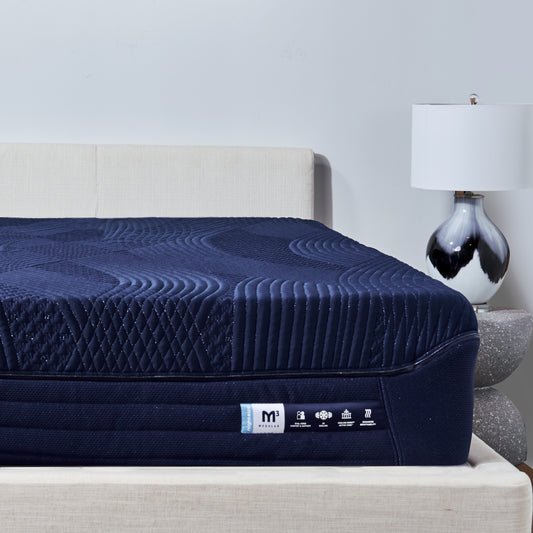
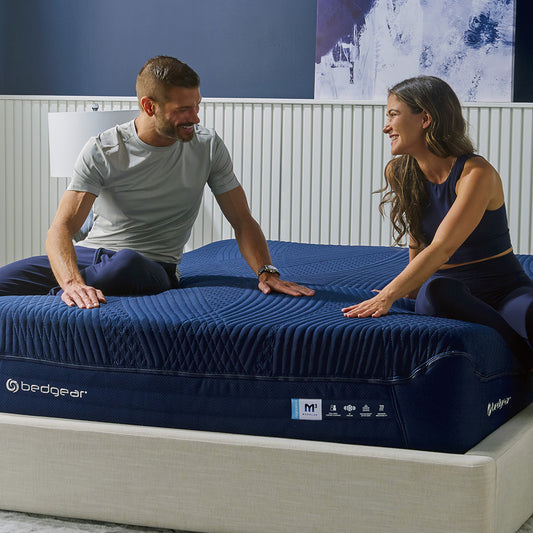
Our Performance® Mattresses are engineered with ventilated foam layers and breathable mesh borders that keep air moving through the core rather than trapping it. The M5 Night Ice builds on that with cooling technology worked into the surface layer itself, designed for sleepers whose microclimate problems start at the mattress.
Your Pillow: More Impactful Than Most People Expect
Your head and neck release a notable amount of heat during sleep. A pillow that traps it can disrupt your microclimate even when everything else is dialed in. Beyond temperature, a pillow that compresses under the weight of your head closes off the airflow channels that keep the surface breathable.
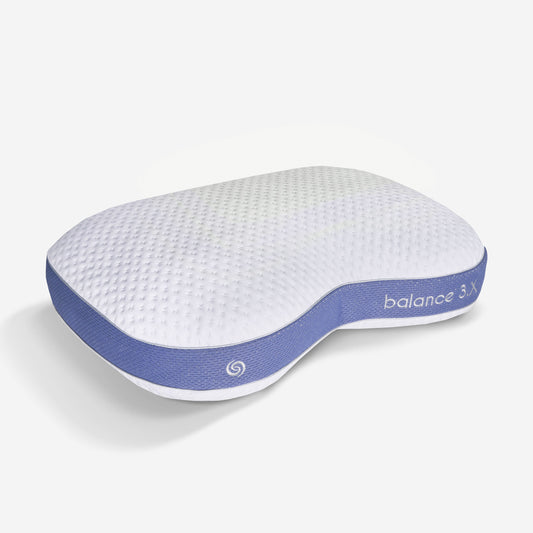
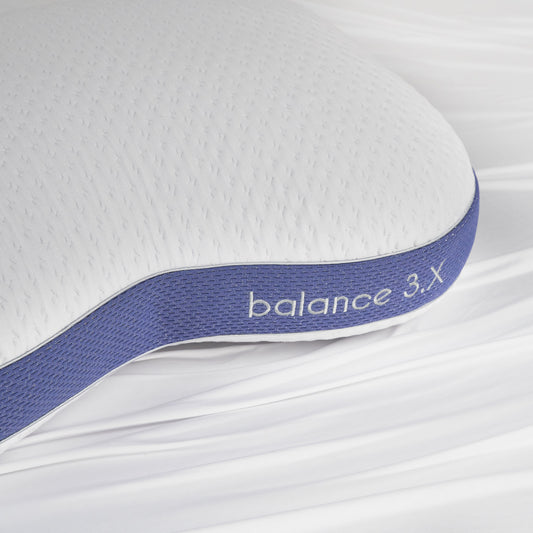
It also affects spinal alignment, which changes how much you move overnight; more movement means more disruption, which feeds straight back into microclimate instability. Our Performance® Pillows are sized by sleep position and body type, not as a marketing angle, but because loft and support level determine whether a pillow holds its shape and moves air or collapses and concentrates heat.
Your Sheets: Thread Count Tells You Nothing Useful
High thread count is one of the most persistently misleading claims in bedding. Densely woven fabrics restrict airflow and slow moisture evaporation; in plenty of cases, a higher thread count means a warmer, less breathable sheet. The variables that actually matter are weave structure, fiber type, and moisture-wicking capability.
Performance sheets prioritize breathable weaves and lightweight construction that moves moisture away from the skin rather than absorbing it. Our Performance® Sheets are built around those properties specifically; fabrics that assist your body's natural temperature balance rather than fight it.
Your Mattress Protector: Protection Shouldn't Come at a Thermal Cost
Traditional mattress protectors are a common source of microclimate problems that sleepers never trace back to the protector. Waterproof barriers that seal the mattress surface also seal in heat. The protector sits between your sheets and your mattress; if it blocks airflow at that layer, the breathable construction underneath becomes largely irrelevant.
A performance protector lets air move freely while still delivering the waterproofing and allergen protection the category is supposed to provide. Our Performance® Mattress Protectors are engineered to protect without suffocating, so the breathable mattress beneath actually carries through to the surface you sleep on.
Sleep Microclimate and Physical Recovery
This is not purely about comfort. A disrupted microclimate has knock-on effects for physical recovery. Deep sleep is when the body does its most significant repair work; tissue rebuilds and muscle recovery progresses. That process depends on sleep staying uninterrupted through the deeper stages, and those stages are the most sensitive to thermal disruption.
When your bed environment causes frequent micro-awakenings, you spend more time in lighter stages and less in deep ones. Many people find that shows up the next day as slower recovery, lower energy, and duller focus. For athletes and active people, this is where sleep microclimate crosses from a comfort issue into a performance one. Sleep quality matters alongside quantity, and microclimate is one of the variables that shapes it.
Build a Sleep System That Works for Your Body
Every layer of a BEDGEAR sleep system is engineered to support your microclimate: breathable mattresses, performance pillows sized by position, moisture-wicking sheets, and protectors that do not seal in heat. It all works together.
Long-Term Benefits of an Optimized Sleep Microclimate
When the four variables are working together consistently, the benefits compound. Sleepers who improve their bed environment often fall asleep faster, wake less, and spend more time in deep restorative stages. Over weeks and months, many people find that adds up to better physical recovery, steadier energy, and more reliable focus. Results depend on the person.
Sleep debt is real, and so is sleep quality debt. Months or years in a poorly managed microclimate does not just feel bad night to night; it accumulates. The encouraging part is that the reverse is also true. A better-engineered sleep system tends to produce noticeable improvements quickly, and those improvements build on each other.
Faster Sleep Onset and Fewer Wakeups
The most immediate benefit of a well-managed microclimate is how quickly you fall asleep and how rarely you wake up. When your body's natural cooling is not being slowed by a heat-trapping surface, sleep onset speeds up. When moisture is not collecting and triggering discomfort, your body has fewer reasons to shift positions. The result is a night that feels complete rather than fragmented.
For people who have spent years assuming they are just light sleepers, a properly ventilated sleep system can make a real difference. Plenty of what feels like a sleep problem is really an environment problem, and environment problems have engineering solutions. That happens to be what we do.
Better Physical Recovery Overnight
Deep sleep is the body's primary repair window. Muscles rebuild. The body does its housekeeping. None of that happens efficiently if your microclimate keeps pulling you out of deep sleep before those processes finish. A better bed environment protects the stages where recovery actually happens.
This matters most for athletes and physically active people, but it applies to everyone. The demands of daily life, even a sedentary workday, create recovery needs that only deep sleep addresses. A microclimate that protects deep sleep is a recovery tool as much as a comfort upgrade.
Sharper Focus and Steadier Mood
REM sleep is where a lot of cognitive consolidation happens: memory formation, emotional processing, and the mental filing that makes the next day workable. REM is also concentrated in the later hours of the night, which is exactly when a warming, worsening microclimate does the most damage. Sleepers whose environment degrades toward morning can lose a disproportionate share of REM even when the total hours look fine.
The downstream effects are worth taking seriously. Mood, decision-making, focus, and stress resilience all lean on sleep quality. A bed environment that stays stable through the full night protects those final cycles.
Frequently Asked Questions About Sleep Microclimate
More questions about sleep microclimate and how to improve your bed environment? Here are the ones that come up most.
What Is Sleep Microclimate?
Why Does Sleep Microclimate Matter?
How Do I Improve My Sleep Microclimate?
What Temperature Is Best for Sleep?
Does My Pillow Affect My Sleep Microclimate?
Sleep Microclimate Is the Variable Most Sleepers Haven't Addressed Yet
Most people have tried the obvious fixes. Earlier bedtime, less caffeine, darker room, phone across the room, a drawer full of sleep gadgets. Those things help. But if you have done all of them and still wake up less rested than your hours in bed should produce, your sleep microclimate is the likely explanation. It sits underneath everything else.
The good news is that it is solvable. Your sleep microclimate is not a biological constant; it is the product of your sleep system. Change the system and you change the environment. That means breathable materials at every layer, a pillow sized to your position, a mattress that moves heat and air rather than trapping them, and a protector that does not undo all of it at the surface.
We build every product around those principles because they are not add-ons; they are the foundation. When your bed environment works with your body instead of against it, sleep stops being a problem you manage and starts being a tool you use.