Airflow does not get the same attention as sleep schedules, screen time, or your sleep score. It probably should. Heat and moisture build up around your body as you sleep, and when that buildup has nowhere to go, your sleep gets disrupted without you fully waking up.
You feel it the next morning as something being off; tired, stiff, like the night did not do its job. The good news is that once you understand what airflow is actually doing overnight, fixing it is fairly straightforward.
What Airflow Actually Means During Sleep
Airflow in sleep is not about pointing a fan at your face. It refers to how well air moves through your bedding as a coordinated system: sheets, pillow, protector, and mattress together. Good airflow means heat can escape instead of building up, and moisture can evaporate instead of pooling.
When airflow is restricted, your body works harder to hold a comfortable temperature. That extra effort keeps your nervous system slightly elevated; not fully awake, but not fully at rest either. The result is lighter, more fragmented sleep that struggles to reach the deep stages where recovery happens.
Why Your Body Needs to Cool Down to Sleep
This surprises people: falling asleep is not only about feeling tired. It requires your body to actively cool down. Core body temperature drops roughly 1 to 2°F in the hours before and during sleep, as part of the process that signals your brain to shift into deeper rest.
Research published in Scientific Reports found that enhanced body cooling during sleep was associated with increases in slow-wave sleep and a calmer heart rate. A separate trial on temperature-controlled mattress covers reported improvements in sleep and cardiovascular recovery over a week of use. Neither study tested our products, and the effect sizes in sleep-temperature research vary a fair amount between studies; the consistent finding is directional, not a fixed number. When the body can shed heat, sleep tends to deepen. When it cannot, sleep tends to fragment.
Heat and Moisture: The Two Silent Sleep Disruptors
Most of the sleep problems people describe (tossing and turning, waking for no clear reason, feeling like they barely slept) have a plausible thermal explanation. Either heat is building at the sleep surface, moisture is accumulating, or both at once.
How Heat Buildup Fragments Sleep
When your mattress, sheets, or pillow trap heat, your skin temperature stays elevated. That works against the core temperature drop your body needs to move into slow-wave sleep. The result is more time in light sleep, more micro-awakenings, and less time in the stages that repair tissue and consolidate memory.
Micro-awakenings are worth understanding. They are moments where your body partially surfaces from sleep without fully waking you. You do not remember them, but they accumulate, and by morning they have eaten into the sleep quality you were counting on.
Moisture Is the Other Half of the Problem
Your body releases meaningful moisture overnight as part of normal temperature regulation. When that moisture cannot escape through your bedding, it creates a damp environment that feels heavier as the night goes on. That humidity also slows cooling, because evaporation is one of the main ways the body sheds heat.
The cycle is self-reinforcing. Heat builds, moisture pools, the body sweats more to compensate, and more moisture means more retained heat. Research in Current Opinion in Physiology describes the sleep microclimate as needing to be warm enough to support sleep onset without being warm enough to suppress it. Plenty of conventional bedding tips that balance toward sealing humidity in.
Airflow and Sleep Stages: The Direct Connection
Sleep is not a single state. It is a series of cycles, each containing light sleep, deep sleep, and REM, and it needs to move through them without interruption to feel restorative.
When the sleep environment runs warm, the body tends to spend more time in light sleep and transition more often into brief wake states. Deep sleep, which handles physical recovery and immune function, gets compressed. REM, which supports memory and emotional processing, tends to suffer too. That is the real measure of a night: not hours logged, but how much of that time was spent in the stages that matter.
Why Traditional Bedding Struggles With Airflow
Most conventional bedding was not designed with airflow as a priority. High thread count fabrics feel soft, but the dense weave restricts ventilation. Dense memory foam contours well, but seals heat against the body. Down and synthetic fills compress under body weight, collapsing the air pockets that would let moisture move.
The result is a layered system working against itself. Even if your sheets breathe, a sealed protector or a heat-trapping mattress underneath blocks airflow through the rest of the stack. One bad layer compromises everything above and below it, as the breakdown below shows.
Common Airflow Blockers by Layer
High Thread Count Sheets
Denser weaves restrict ventilation. More fibers means more material holding heat against the skin.
Solid-Fill Pillows
Compressed fills do not let air circulate through the pillow core, so heat from the head has nowhere to go.
Non-Breathable Protectors
Traditional waterproof protectors use plastic barriers that block moisture vapor and airflow along with liquid.
Dense Foam Mattresses
Closed-cell foam does not let heat move laterally or downward; it absorbs body heat and holds it near the surface.
Each of those deserves a closer look, because the fix is different in every case.
High Thread Count Sheets Trap More Than You Think
Thread count has been the bedding industry's quality metric for decades; the higher the number, the better the sheet. The reality is that more threads per square inch means a denser weave, and a denser weave means less room for air to move through the fabric.
High thread count sheets feel luxurious against the skin, but overnight they behave more like insulation. Moisture from normal perspiration gets held against the body instead of evaporating, and for someone who already sleeps warm, that compounds through the night rather than resolving. Our thread count myth guide covers the rest of that story.
Solid-Fill Pillows Have No Path for Heat to Escape
Your head and neck generate a lot of heat during sleep. A pillow filled with a compressed solid material (traditional memory foam, dense synthetic fill, packed down) absorbs that heat and holds onto it, because there is no structure inside the fill for air to move through.
The surface warms up, stays warm, and by the middle of the night it is contributing to the same buildup happening at every other layer. Flipping the pillow to the cool side is the tell; it is a workaround for a problem the pillow's construction created.
Non-Breathable Protectors Seal In Everything
A waterproof protector seems like a simple product: protect the mattress, do not complicate anything else. But most conventional protectors use a plastic or vinyl barrier, and that barrier does not distinguish between liquid and vapor. It blocks spills from reaching the mattress, and it blocks moisture vapor from escaping upward.
The result turns the space between you and your mattress into a closed environment: warm, increasingly humid, and working against the body's cooling process. It is one of the most overlooked contributors to a hot bed.
Dense Foam Mattresses Hold Heat at the Surface
Closed-cell foam is a good insulator, which is exactly the problem. It conforms well and reduces pressure points effectively, but it also absorbs body heat and retains it. Traditional memory foam has a reputation for sleeping warm, not because of one design flaw, but because the material has no channels for heat to move laterally or downward.
Open-cell foam and ventilated hybrid constructions address this to varying degrees. In a conventional dense foam mattress, though, the heat your body generates has nowhere to go except back into the sleep surface.
How We Engineer Airflow Into Every Layer
Airflow is not a feature we add at the end; it is the design starting point. Every product in the Performance® sleep system is built to move heat and moisture away from the body, consistently, from the pillow down to the mattress. Here is how that works across three fabrics that each do a different job.
Dri-Tec: Moisture Wicking From the First Contact Point
Dri-Tec is our performance fabric, drawing on the moisture-wicking approach used in modern athletic wear. It pulls sweat away from the skin and disperses it across a wider surface area so it can evaporate quickly, which keeps the sleep surface dry instead of letting moisture pool.
Dri-Tec runs across our sheets and mattress protectors. The protector version adds a breathable waterproof barrier that shields the mattress without sealing heat against the body; a meaningful difference from conventional protectors that treat breathability as an afterthought.
Ver-Tex: Cool-to-the-Touch Surface Technology
Ver-Tex is our thermal-regulating fabric, a cool-to-the-touch surface that conducts heat away from the body on contact. It buffers heat at the surface rather than absorbing and holding it.
Ver-Tex is used in our sheet sets and as the cover fabric on several Performance® pillows and mattresses. Worth being clear on the difference: Dri-Tec handles moisture and airflow, Ver-Tex handles thermal buffering at the touch point. They are complementary, not interchangeable, and many sleep systems use both at different layers.
Air-X: 3D Airflow Architecture
Air-X is our most advanced airflow fabric, a 3D structure with spring-like yarns that create a cushion of air. That structure lets heat move away from the body continuously rather than only at the surface. It is used in our pillow collection and in the Air-X Performance® Mattress Protector.
Air-X technology allows for continuous airflow, moving hot stale air away from the sleeper. Eugene Alletto, CEO and Founder
The Flow pillow extends this with an air vent design: a soft circular vent with a mesh center that directs heat from the head, neck, and shoulders away from the sleep surface. Air-X mesh gussets on the sides allow cross-ventilation through the pillow core.
Build a Sleep System That Actually Breathes
Airflow works when it is consistent across every layer. Our Performance® sleep systems are engineered from the pillow down to the mattress to keep heat and moisture moving instead of trapped.
Airflow for Active Sleepers and Athletes
The stakes are higher for active people. Exercise raises core body temperature, and for hours afterward the body is still working to shed that thermal load. For athletes, the sleep environment needs to support cooling more than it would for a sedentary sleeper.
Deep sleep is where most physical recovery happens: muscle repair, growth hormone release, tissue regeneration. If poor airflow is keeping the body out of those stages, the recovery window gets compressed every night. For active people, consistent airflow is less a comfort upgrade than a training variable.
Tossing and Turning: What It's Actually Telling You
Frequent repositioning is easy to chalk up to stress or a busy mind. Often it has a simpler explanation: your body is looking for a cooler surface, moving to escape heat or moisture that built up on the side you were lying on.
To be fair, that is not the only cause of restlessness, and airflow will not fix everything. But when airflow improves, the sleep surface stays more consistently comfortable and the body has less reason to reposition. Less movement is one of the clearer signals that a sleep system is doing its job.
The Full-System View: Airflow Layer by Layer
The most important thing to understand is that airflow cannot be fixed in isolation. A breathable pillow on heat-trapping sheets still fails. Cooling sheets over a sealed protector still fail. Here is how the pieces line up when the whole stack is designed to breathe.
Airflow Through the Sleep System
| Layer | Technology | What It Does |
|---|---|---|
| Pillow | Air-X® with air vents | Directs heat from the head and neck away from the sleep surface through cross-ventilation |
| Sheets | Dri-Tec® or Ver-Tex® | Wicks moisture from the skin and buffers heat at the surface rather than absorbing it |
| Protector | Air-X® or Dri-Tec® | Breathable waterproof barrier that protects the mattress without sealing heat underneath |
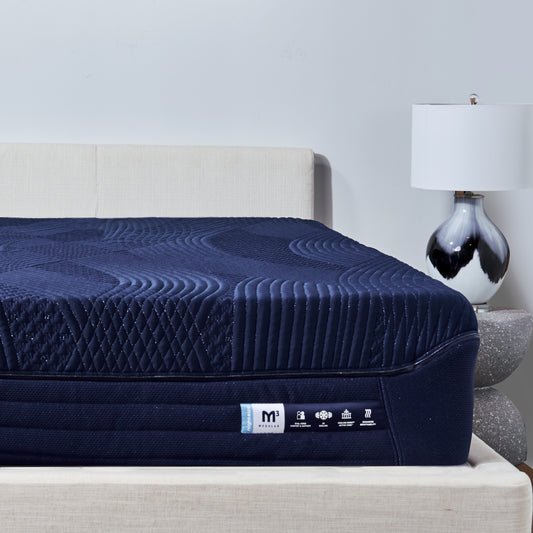
| Mattress | Performance® ventilated construction | Air channels and breathable foam layers move heat downward and away from the sleep surface |
How Airflow Affects Sleep Quality: What Changes When You Fix It
The improvements from better airflow are real, but they show up gradually rather than in a single night. Most people notice they fall asleep faster once the sleep environment stops fighting their body's cooling process. Fewer wake-ups tend to follow.
Within a few weeks on a well-engineered system, the morning-after difference is usually the clearest signal: more energy, less grogginess, and recovery that matches what should have happened overnight. Individual results vary, and airflow is one variable among several. It is just one of the few you can actually change tonight.
Frequently Asked Questions
Have more questions about airflow and sleep quality? Here are the most common ones.
How Does Airflow Affect Sleep Quality?
Why Does Heat Disrupt Sleep?
What Is the Best Bedding Material for Airflow?
Does Tossing and Turning Mean My Bedding Isn't Breathable?
What Is Air-X Technology?
What Is the Difference Between Dri-Tec and Ver-Tex?
Sources
- Daubner, J. et al. (2024). Enhanced conductive body heat loss during sleep increases slow-wave sleep and calms the heart. Scientific Reports. nature.com (opens in a new tab)
- MDPI Bioengineering (2024). Sleeping for One Week on a Temperature-Controlled Mattress Cover Improves Sleep and Cardiovascular Recovery. mdpi.com (opens in a new tab)
- Psychology Today (2025). The Key Role of Temperature in Sleep Quality. psychologytoday.com (opens in a new tab)
- Preprints.org (2025). Mechanisms and Clinical Applications of Cooling Interventions for Sleep. Preprint, not yet peer reviewed. preprints.org (opens in a new tab)
- BEDGEAR. Dri-Tec® Performance® Sheet Set. bedgear.com
- BEDGEAR. Air-X® Technology. bedgear.com