Here is what actually causes sleep wrinkles, what genuinely reduces them, and what is marketing. Read on to learn more about how to prevent sleep wrinkles in our guide.
What Sleep Wrinkles Actually Are
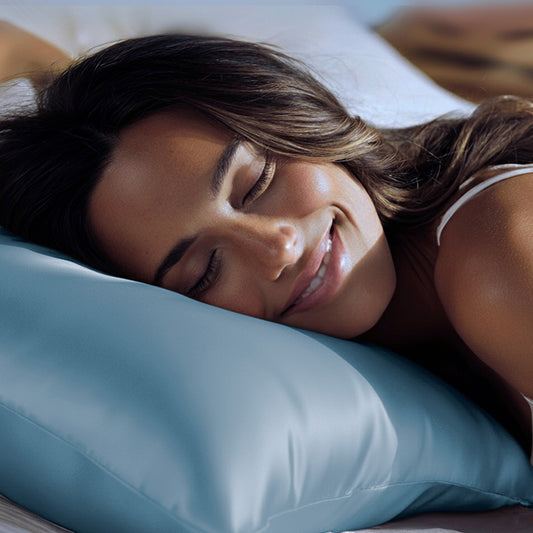
A sleep wrinkle is a crease created by compression rather than by muscle movement or age, so they're not your average skin line. When your face rests against a pillow, the skin gets pushed, folded, and held in that position for as long as you stay put. In the morning, the fold is still visible because skin needs time to rebound.
Younger skin rebounds quickly because it has more elasticity and holds moisture well. As that elasticity declines, the same nightly fold takes longer to release. Eventually, a crease that used to vanish by breakfast starts lingering into the afternoon, and then it stops fully releasing at all, and you have sleep wrinkles for life.

Sleep Lines vs. Permanent Wrinkles: What's the Difference?
Not every line on your face has the same origin, and the fixes are completely different depending on which one you are looking at.
Here is how the three types break down, and how you can start to tell the difference.
| Type | What Causes It | Where It Shows | How Long It Lasts |
|---|---|---|---|
| Sleep Lines | Pressure and folding against a surface | Cheeks, forehead, around the eyes, chest, arms | Minutes to hours; longer as skin loses elasticity |
| Dynamic Wrinkles | Repeated muscle movement, such as smiling or squinting | Crow's feet, forehead lines, frown lines | Visible during movement, then at rest over time |
| Static Wrinkles | Collagen and elastin loss, sun exposure, aging | Anywhere, deepening gradually | Permanent without intervention |
The reason this distinction matters: a retinol will not do much about a crease caused by your pillowcase, and a smoother pillowcase will not do much about sun damage.
Matching the fix to the cause is most of the work.
Why They Appear Where They Do
Sleep lines follow contact points. If you sleep on your right side, you will see them on the right cheek, running vertically or diagonally depending on how your face settles into the surface. Forehead lines show up when you sleep with your head turned into the pillow at an angle. Same pattern follows other sleep positions.
They also concentrate where skin is thinner and has less underlying support. The area around the eyes creases easily because the skin there is delicate and sits over very little fat or muscle.
The same is true of the neck and the chest, which is why those areas often show lines before the cheeks do.
Does Sleeping on Your Side Cause Wrinkles?
Yes, side sleeping contributes to facial wrinkles over time. It presses one side of your face into the pillow for hours, creating the same folds night after night, and repeated compression in a single direction gradually reduces skin's ability to spring back.
That said, the framing matters. In fact, side sleeping does not cause wrinkles the way sun exposure does... not even close. It accelerates creasing in specific spots based on where your face makes contact, and the effect builds slowly over years rather than showing up in a season.
It is also worth keeping perspective. Side sleeping has real benefits for breathing, snoring, and spinal alignment, and it is the most common sleep position for good reason. The goal is not to abandon it out of fear; it is to reduce the pressure and friction involved so the same position costs your skin less.
How to Get Rid of Sleep Lines in the Morning
If you already have a crease and you need it gone before a meeting, a few things genuinely help. None of them are dramatic, but they speed up a process that is going to happen anyway. We list some common tips for dealing with sleep wrinkles fast below.
- Splash cool water on your face: Cool water helps reduce morning puffiness, and less swelling means the surrounding skin sits flatter.
- Rehydrate the skin: A hydrating serum or moisturizer helps plump the area, which makes a shallow crease less visible.
- Gently massage the area: Light upward pressure encourages circulation and helps the fold release.
- Give it time upright: Gravity and normal facial movement do most of the work within the first hour.
Those steps handle a temporary line. What they will not do is erase a crease that has been forming for years, and that is the honest dividing line.
If a sleep line is still clearly visible by the afternoon, it has moved from temporary to setting in, and prevention becomes far more useful than any morning routine.
Sleep Position: The Highest-Impact Change
Everything else in this guide reduces the severity of facial compression. That being said, sleep position is the only variable that can remove it altogether, which makes it the single highest-leverage change available.
Why Back Sleeping Helps with Sleep Wrinkles
Back sleeping keeps your face off the pillow entirely, so it's no surprise that it's helpful. There is no contact, so there is no fold, and no crease to recover from in the morning. It is the only position that eliminates the problem rather than reducing it.
It helps the neck and chest too, though, so it really covers the whole head. Sleeping on your back keeps your chin from tucking toward your chest and stops one side of the chest from folding against the other.
If you are seeing lines in either of those areas, position change addresses them more directly than any product will.
If Switching Isn't Realistic
Plenty of people cannot sleep on their back. It aggravates snoring for some, feels impossible for others, and forcing it usually means worse sleep overall. Poor sleep is its own problem for skin, so trading rest for position is a bad deal.
If you are staying on your side, focus on reducing contact pressure and friction instead. That means a pillow that supports your head without pushing your face deeper into the surface, and a surface smooth enough that skin slides rather than catching.
Our guide to pillows for side sleepers covers the support side of that equation, so make sure you check that out before you buy.
Training Yourself Over Time
Position is a habit, and habits can shift with the right setup. Pillows placed on either side of your body make rolling less automatic. A small pillow under the knees makes back sleeping more comfortable for people whose lower back usually protests.
Expect it to take weeks rather than nights, and expect to wake up on your side sometimes. Partial progress still counts here; fewer hours of facial compression is a real reduction even if you never fully convert. Our guide on choosing pillows for your sleep position is a good starting point if you are making the switch.
Your Pillow and Pillowcase
If position is the biggest lever, the surface your face touches is the second. Two separate things are happening every night: pressure, which is about the pillow, and friction, which is about the pillowcase. They are worth treating separately because the fixes are different.
Why Friction Matters
Friction is what happens when skin catches on fabric instead of sliding across it. Every time you shift during the night, a high-friction surface tugs the skin and holds it in a folded position rather than letting it settle back flat. Plus, it's a lot hotter than no friction, so pair night sweats with bad skin and you have one terrible combination.
Cotton is the usual culprit. It is absorbent, which sounds good but means it pulls moisture out of skin and hair overnight, and its weave grips rather than glides. A smoother surface lets your face move against the pillow instead of being held by it, which reduces both creasing and the frizz and breakage that show up in hair for the same reason.

Pillow Shape and Contact Pressure
Friction is only half the story, though. A standard pillow lets your face sink in, which increases the surface area pressing against your skin and deepens the folds that form. Shape changes how much of your face is in contact and how hard it is being pressed.
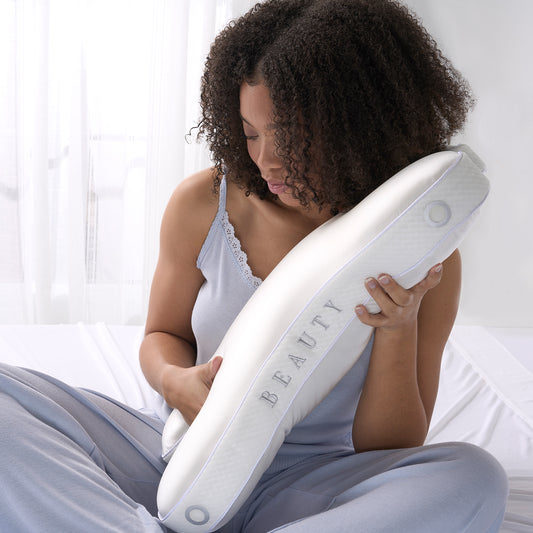
That is the problem our Beauty Pillow was built around. Its ergonomic shape gently cradles your face to help prevent sleep lines and morning puffiness, while patented Air-X® ventilation and air vents keep air moving so heat and moisture do not build up where your skin makes contact.
Inside, an adaptive React crown and plush fill balance support with breathability.

Why We Don't Sell Silk Pillows
Silk gets recommended constantly for sleep lines, and the reasoning is sound as far as it goes. Silk is smooth, so skin glides instead of catching. That is a genuine benefit and it is why the advice persists. Easy-peasy, right?
Well, the problem is everything else silk brings with it. It traps heat, which is the opposite of what you want against your face all night, and heat contributes to the puffiness people are often trying to avoid in the first place.
It is also delicate, expensive, and comes from an animal. So we went after the benefit and left the rest behind. Hyper-Silk® is a vegan performance fabric, luxuriously smooth and completely animal-free, engineered with more airflow than traditional silk. It helps reduce sleep lines, hair breakage, and frizz caused by traditional cotton and polyester, and its high-stretch knit keeps gentle contact as you shift positions. We broke the full comparison down in our guide to satin vs. silk pillowcases.
Here is how the four common pillowcase surfaces compare on the factors that actually affect skin overnight.
| Factor | Cotton | Satin | Mulberry Silk | Hyper-Silk® |
|---|---|---|---|---|
| Surface friction | High | Low | Low | Friction-free |
| Airflow | Moderate | Low | Low | More airflow than traditional silk |
| Moisture handling | Absorbs from skin | Poor | Moderate | Breathable knit construction |
| Stretch | Minimal | Minimal | Minimal | High stretch, moves with you |
| Animal-free | Yes | Yes | No | Yes |
One practical note that gets overlooked: a pillowcase that slips off the pillow during the night stops working.
Our Performance® pillowcases use a patented Powerband® to hold a no-slip fit, so the smooth surface stays where your face is rather than bunching into a ridge by 3am.
Build the Surface Around Your Skin
A friction-free cover, a shape that reduces contact pressure, and airflow that keeps heat from building up where your face rests.
Sleep Lines on Your Neck, Chest, and Arms
Facial sleep lines get all the attention, sure, but they are not the only place compression shows up. Skin creases anywhere it gets folded and held, and several of those areas are thinner and less resilient than the face.
Don't worry, we take you through some other common areas to keep an eye on below.
Neck Wrinkles
Neck lines form when the chin tucks toward the chest and the skin at the front of the neck folds. The most common cause is a pillow that is too tall, which pushes the head forward and holds that fold in place for the entire night.
Getting loft right is the fix, and it is the same adjustment that helps neck pain. A pillow that keeps your head level with your spine reduces how much the front of the neck compresses.
Our guide to pillow loft walks through how to find the right height for your build and sleep position. Before you buy any pillow or sleep product, make sure you know which pillow loft you need.
Chest Wrinkles From Side Sleeping
Vertical lines between the breasts are extremely common among side sleepers, and the mechanism is simple. When you lie on your side, one breast falls toward the other and the skin between them folds inward for hours.
The skin on the chest is thinner than facial skin and sits over less structural support, so those creases can linger well into the day. Luckily, back sleeping resolves it completely.
If that is not happening, a pillow placed between the breasts keeps the skin from folding, and the same friction and hydration principles apply here as they do on the face.
Sleep Lines on Arms
Waking up with deep creases on a forearm or upper arm is normal and usually harmless, and you've probably had it happen several times. They come from the arm resting against a mattress, a pillow, or your own body, with the fabric wrinkle pressed into the skin over several hours.
These tend to fade faster than facial lines because the skin is thicker, though they can look alarming right after waking. If they are lingering longer than they used to, the underlying reason is the same as everywhere else: skin that is drier and less elastic recovers more slowly.
The Eye Area
Skin around the eyes is the thinnest on the body, which makes it the first place sleep lines appear and the slowest to release, hence those puffy eyes in the morning. It is also where puffiness compounds the problem, since swelling stretches skin that then creases as it settles.
A sleep mask helps on both counts, provided it is not adding pressure of its own. Our Hyper-Silk® Sleep Mask uses the same friction-free fabric with double-padded eye cups that shield lashes and extensions, so it delivers blackout without pressing into the skin it is meant to protect.

Skincare That Supports Skin Overnight
No product prevents a crease from forming when your face is pressed into a surface; it's simply not possible (yet).
What skincare can do, however, is improve how well skin holds its shape and how quickly it recovers, which changes how much a nightly fold actually costs you.
Hydration and Barrier Support
Hydrated skin is more elastic, and more elastic skin releases a fold faster. That makes moisture the single most relevant factor for sleep lines specifically, ahead of anything targeting wrinkles in general.
Humectants like hyaluronic acid and glycerin draw water into the skin, while occlusives and barrier-supporting ingredients help keep it there overnight.
If your room runs dry, a humidifier may help by reducing how much moisture the air pulls out of your skin while you sleep.
Actives, and When to Use Them
Retinoids and vitamin C are well established for supporting collagen over time, which may help skin stay resilient enough to recover from nightly compression. They work on the underlying structure rather than on the crease itself, so results depend on consistent use over months.
They also need to be introduced carefully, since irritated skin is less resilient rather than more. If you are unsure what belongs in your routine, a dermatologist is a better guide than a blog post.
Results depend on the individual, and nothing here is a substitute for professional advice.
What Doesn't Help Sleep Lines and Wrinkles
Products marketed to erase sleep lines overnight are overpromising. A crease is a physical fold in tissue, and no topical reverses that in the time it takes to shower.
Facial taping and similar hacks circulating online carry their own risks, including irritation and pulling on delicate skin. The unglamorous truth is that reducing pressure and friction while supporting hydration does more than any product claiming to undo the damage after the fact.
A Routine That Helps Prevent Sleep Wrinkles
Learning how to prevent sleep wrinkles comes down to three things stacked in order of impact. Sleep on your back if you reasonably can, because it is the only change that removes facial pressure instead of reducing it.
Then, reduce friction and contact pressure where your face does touch the surface, through a smoother pillowcase and a pillow shaped to cradle rather than let you sink. From there, focus on supporting your skin's ability to recover with consistent hydration.
None of it is dramatic, and that is rather the point. Sleep lines build slowly through repetition, so they respond to small changes repeated just as consistently. Start with whichever of the three is easiest for you to actually sustain; a change you keep beats a perfect routine you abandon in a week.
If you want to go deeper on the overnight side of skin health, our beauty sleep guide and the beauty buying guide pick up where this leaves off. This way, you can do a deeper dive into the beauty sleep space.
Frequently Asked Questions
The most common questions about sleep lines, what causes them, and how much you can actually change.