Back pain is one of the most common reasons people start looking at adjustable bases. The zero gravity position comes up constantly in that conversation and sometimes with claims that are more optimistic than accurate, sometimes with skepticism that undersells what the position actually does. The truth sits between those two extremes, and it's worth getting it right before you spend money on a base or write the idea off entirely.
This post focuses specifically on back pain: what zero gravity may do to help, what it realistically cannot do, and who's most likely to notice a meaningful difference. Read on to learn more below.
What Is a Zero Gravity Adjustable Base?
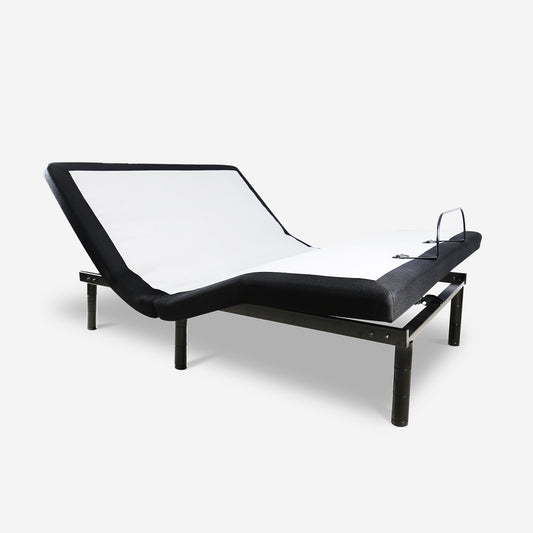
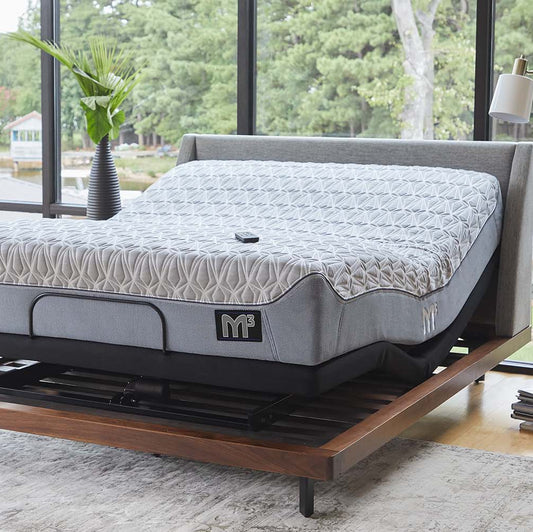
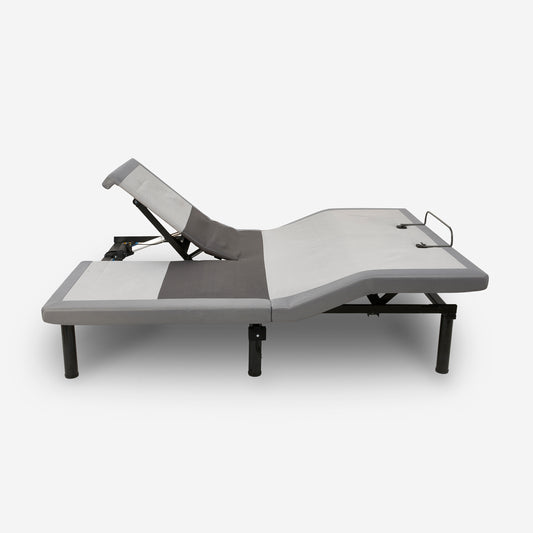
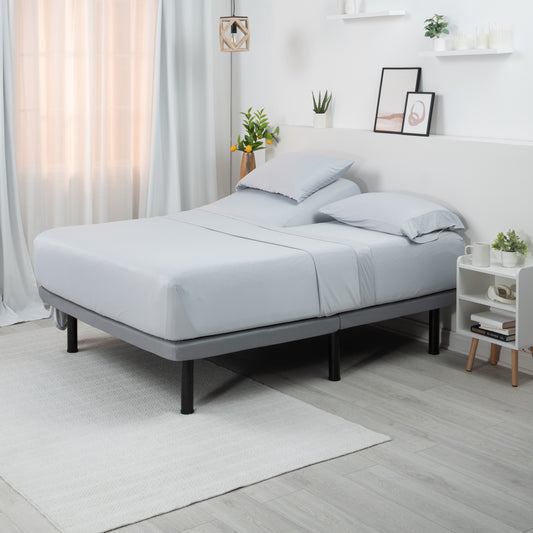
A zero gravity adjustable base is a motorized bed frame that allows the head and foot sections to elevate independently, enabling a range of sleeping positions that a flat surface can't achieve. Zero gravity is one of those positions — and on BEDGEAR's Flex lineup, it's a built-in preset accessible with a single button press on the wireless remote or through the app.

The position itself places the body in a reclined posture loosely based on NASA's Neutral Body Posture research: observations from the Skylab program of the natural resting position the body assumes when gravitational forces are removed. In that state, the hips sit at roughly a 120-degree angle relative to the torso, the head is elevated about 30 degrees, and the knees are raised slightly above heart level.
The result is a position where no single zone of the body bears a disproportionate share of body weight, which is the core mechanical reason it tends to feel different from sleeping flat. For a full explanation of the position and the lineup that delivers it, the zero gravity guide (opens in a new tab) covers it in detail.
How Back Pain and Sleep Are Connected
Back pain and poor sleep have a feedback loop that most people recognize intuitively but don't always address at the source. Pain makes it harder to fall asleep and stay asleep; poor sleep lowers pain tolerance and slows the body's ability to recover. The next day is harder; the next night is worse. Left unaddressed, the cycle tends to compound rather than resolve on its own. This cycle is horrific, so breaking it is very important.

What's more, sleep is the body's primary repair window. Muscles rebuild, inflammation responses regulate, and tissue healing happens during the hours of restorative sleep — particularly during deep slow-wave sleep. When back pain is disrupting that window, the body isn't just resting through discomfort; it's missing the recovery time it needs to manage the pain during waking hours.
The sleep surface and sleep position are direct variables in that equation. Therefore, getting them right doesn't solve the underlying cause, but it stops the environment from making it worse.
- Overnight lumbar pressure for some sleepers
- Morning stiffness from sustained flat sleeping
- Muscle tension alongside the spine
- Recovery window for active people
- General positional discomfort in back sleepers
- Treat herniated discs or spinal stenosis
- Replace medical evaluation or physical therapy
- Work equally well for all sleep positions
- Compensate for an incompatible mattress
- Resolve back pain caused by non-positional factors
The position is a tool, not a treatment. Understanding the distinction is how you use it well.
Advantages of Zero Gravity Beds for Back Pain
The mechanical case for zero gravity and back pain is fairly straightforward once you understand what flat sleeping actually does to the lumbar spine. These are the three areas where the position may offer a genuine, tangible benefit.
Of course, there are appropriate caveats throughout, because results vary and this is not a substitute for professional care. Learn more about the advantages of zero gravity beds for back pain below.
Zero Gravity May Reduce Lumbar Pressure Overnight
When you sleep flat on your back, the full weight of your legs and lower body pulls downward while your upper body is supported by the mattress. The lumbar spine sits in between, absorbing load from both directions through the entire night. For people already dealing with lower back pain, eight hours in that position can mean waking up stiffer and more uncomfortable than when they went to bed.
Zero gravity addresses this by raising the knees simultaneously with the head. When the knees are elevated, the weight of the lower body is no longer pulling the lumbar spine into extension. The load distributes across the full sleep surface instead of concentrating at the lower back.
For some sleepers, this may reduce the compressive pressure on the lumbar region and allow the spine to settle into a more neutral position overnight. Results depend on the individual, mattress support, and the underlying cause of the discomfort — but the mechanical principle is sound and well-supported by the postural research behind the position.
Zero Gravity Allows the Muscles Along the Spine to Relax
Back pain doesn't just come from the spine itself. The muscles alongside it — the erector spinae, multifidus, and the broader network of lumbar stabilizers — are often the source of the soreness, tension, and stiffness that people feel most acutely in the morning. When the body is in a position that requires those muscles to compensate for uneven loading, they don't fully switch off during sleep. They stay partially engaged, holding the body in place on a surface that isn't distributing weight evenly.
Zero gravity may change that for you. When the body's weight is spread more evenly across the sleep surface, and the lumbar spine is under less load, the muscles alongside it have less to compensate for. They can relax more fully.
Now, that's not a guaranteed outcome for every back pain sufferer, but it's one of the more practical reasons people with chronic lumbar tension report that zero gravity feels noticeably different from sleeping flat — even in the first few nights.
Zero Gravity May Support Recovery for Active People
For athletes, people with physically demanding jobs, or anyone managing back discomfort that tends to build through the day rather than presenting as a fixed condition, the recovery window during sleep matters significantly. Tissue repair, inflammation regulation, and muscle recovery happen during deep sleep — and the position the body is in during those hours affects how effectively that repair can occur.
Zero gravity may support that process in a couple of ways. Reducing pressure on the lumbar region means the structures in the lower back aren't under sustained load during the hours when they should be recovering.
The slight elevation of the legs may also support circulation, which can help with fluid drainage and general recovery in the lower body. BEDGEAR's performance sleep philosophy is built around exactly this: Sleep Fuels Everything®, and the position you sleep in is part of the recovery equation, not just the number of hours you log. For people who already invest in nutrition, training, and recovery protocols, sleep position is often the variable that hasn't been addressed yet.
That said, if back pain is severe, limiting daily activity, or accompanied by other symptoms, the right first step is a medical evaluation — not an adjustable base.
Overall, zero gravity is a useful tool for people managing positional discomfort; it's not a substitute for diagnosis and treatment when something more serious is at play.
Disadvantages of Zero Gravity Beds for Back Pain
The limitations of zero gravity for back pain are just as important as the potential benefits. Being honest about what the position can't do is the only way to set realistic expectations — and to make sure someone dealing with a real back issue gets the care they actually need alongside any positional adjustments they try.
Learn more about the disadvantages of zero gravity beds for back pain below.
Zero Gravity Does Not Treat the Underlying Cause
This is the most important limitation to understand. Zero gravity is a positional adjustment. It may change how the body loads during sleep; it does not address what's causing the pain in the first place. Herniated discs, spinal stenosis, scoliosis, degenerative disc disease, and sciatica are medical conditions. They require evaluation, diagnosis, and in many cases treatment from a qualified healthcare provider. A zero gravity adjustable base is not a substitute for any of that.
For people with diagnosed spinal conditions, zero gravity may make the sleep position feel more comfortable — and that's a meaningful quality-of-life improvement. But comfortable sleeping is not the same as treating the condition. Anyone dealing with significant, persistent, or worsening back pain should consult a physician or physical therapist before relying on positional adjustments as a primary strategy.
The two approaches are not mutually exclusive; medical treatment and better sleep positioning can work alongside each other. What they can't do is substitute for each other.
Zero Gravity May Not Work for Every Sleep Position
Zero gravity is most naturally suited to back sleepers. The position — head slightly elevated, hips at roughly a 120-degree angle, knees raised — is essentially an optimized version of what back sleeping already looks like on a flat surface. For back sleepers with lumbar pain, the transition tends to feel intuitive and the benefits tend to be more immediately noticeable.
Side sleepers are a different story, though. The elevation at the head and foot can feel awkward when you're lying on your side, and the angle may not address the shoulder and hip pressure relief that side sleeping requires. It's not impossible to use zero gravity as a side sleeper — some people find it more comfortable than flat — but the position works best in combination with a mattress that provides genuine pressure relief at the shoulder and hip.
Stomach sleepers, on the other hand, face the most challenges; the head elevation in zero gravity can increase neck strain in that position, which tends to make things worse rather than better. Stomach sleeping and zero gravity generally don't mix well, and stomach sleeping on its own is one of the harder positions for back pain regardless of the base underneath.
The Wrong Mattress Can Undermine the Zero Gravity Position
An adjustable base sets the angle; the mattress determines whether your body is actually supported within it. These two things work together, and a mismatch between them can neutralize most of the benefit zero gravity offers.
A mattress that's too stiff won't articulate properly with the base — the body ends up bridging across a mattress that isn't following the angle, which creates pressure points at the lower back and behind the knees rather than relieving them. A mattress that's too soft may allow the midsection to sink when the base is elevated, pulling the lumbar spine out of the neutral position the angle is trying to achieve.
BEDGEAR's Performance® mattresses are built to flex with an adjustable base. The individually wrapped coil systems move with the base through its full range of motion rather than resisting it; the foam comfort layers maintain zoned support at the angle rather than collapsing into it.
If you're pairing a new Flex base with an existing mattress, it's worth checking that the mattress is adjustable-base compatible before assuming the position is doing what it's supposed to. The base and the mattress are a system; both halves need to be right for the position to deliver its full benefit.
The mattress compatibility question also applies to couples using a split-head setup. Our Flex SH Split Head Adjustable Base, (opens in a new tab) for example, requires two twin XL mattresses rather than a single king; each side moves independently, so each side needs its own compatible surface.
Who Is Most Likely to Benefit from a Zero Gravity Bed?
Not everyone with back pain will notice the same improvement from zero gravity. The sleepers most likely to see a meaningful difference share a few common characteristics: the pain is positional, it tends to worsen overnight or be worst in the morning, and the primary issue is in the lumbar region rather than the upper back, neck, or a specific structural condition that requires medical management.
Back sleepers with lower back pain or lumbar stiffness are the most natural fit. The position addresses exactly the load distribution issue that flat back sleeping creates, and the transition feels intuitive rather than forced. People whose back pain builds through physically demanding days and worsens during long stretches of flat sleeping may also notice meaningful improvement — the recovery angle supports the repair window rather than adding to the overnight load.
People less likely to see dramatic benefit include stomach sleepers, whose position is fundamentally difficult to optimize on any adjustable base; people whose back pain stems from conditions that require medical treatment rather than positional adjustment; and side sleepers who don't pair the base with a mattress that provides adequate shoulder and hip pressure relief.
At the end of the night, zero gravity is a genuinely useful tool for a significant portion of back pain sufferers, but it's a targeted tool, not a universal one. If you're unsure whether it's right for your specific situation, that's a conversation worth having with your healthcare provider before making the investment.
How to Get the Most Out of a Zero Gravity Bed for Back Pain
If you've decided zero gravity is worth trying for back pain, a few practical adjustments can make the difference between a position that helps and one that just feels different. The preset is a starting point — not necessarily the final answer for your specific body and situation.
Start With the Preset, Then Fine-Tune
The built-in zero gravity angle works well for most people, but small adjustments can make a real difference. Bodies vary; the angle that fully decompresses one person's lumbar may feel slightly off for another. Don't assume the preset is the final word.
The Flex LS and Flex LSX both include two programmable memory positions alongside the built-in presets. If you find a slightly different angle that works better for your lumbar — a little more or less knee elevation, for instance — save it to one of those memory slots and return to it with a single press any night you want it.
That's a meaningful feature for back pain sufferers who've dialed in their ideal angle but don't want to chase it manually each night.
Give It at Least a Week
Any sleep position change takes adjustment time. The first few nights in zero gravity may feel unfamiliar even if it's ultimately the right position for you. That unfamiliarity isn't a sign the position isn't working; it's a sign your body is adapting to something new after years of sleeping flat.
Most people settle into the position within five to seven nights. Don't judge zero gravity by the first night — or even the first two or three. Give yourself a full week of consistent use before drawing any conclusions about whether it's helping.
Check Your Pillow Loft
This one catches people off guard. When the head is already elevated by the base, the amount of pillow loft you need changes significantly. Too much loft at an elevated angle pushes the neck forward and into flexion; too little may leave the head without adequate support. Either way, the neck ends up in a position that undermines what the base is trying to do for the lumbar.
A lower-loft pillow tends to work better in zero gravity than whatever you were using flat. The exact right loft depends on your head size, neck length, and shoulder width, so all the same variables that determine pillow fit in any position, just at a different starting angle.
Our pillow loft guide (opens in a new tab) covers how to find the right fit for your body and sleep position; it's worth a read before you assume the pillow you've been using is still the right one at the new angle.
Verify Your Mattress Is Compatible with Zero Gravity
If your existing mattress has a rigid border rod or an interconnected coil system, it may not follow the base through its full range of motion. The base articulates; the mattress bridges. The body ends up supported at the head and foot but unsupported in the middle — which creates its own pressure points rather than eliminating the ones you're trying to address.
BEDGEAR's Performance® mattresses are built to move with an adjustable base. If you're pairing a new Flex base with a mattress you've had for a while, check that it's adjustable-base compatible before assuming the position is delivering its full benefit. The base and mattress are a system; a mismatch between them limits what either one can do.
Use It Consistently
Positional benefits tend to accumulate over time rather than showing up fully on night one. Using zero gravity two or three nights a week while sleeping flat on the others makes it genuinely difficult to assess whether the position is helping — your body doesn't have enough consistent time in the angle to adapt and respond.
For couples navigating different back pain needs — or one partner who needs zero gravity while the other prefers flat — the zero gravity vs. anti-snore comparison (opens in a new tab) covers how to manage different preset needs on the same base, and when a split-head setup makes the most sense for independent positioning on each side.
Built for the Position. And the Person in It.
Every BEDGEAR Flex adjustable base includes a zero gravity preset. Pair it with a compatible Performance® mattress and you have a system where the base sets the angle and the mattress supports the body within it — both halves working together.
Zero Gravity Bed for Back Pain: What It Can and Cannot Do
The honest summary is this: a zero gravity bed may help reduce overnight lumbar pressure for some sleepers, allow the muscles alongside the spine to relax more fully, and support the body's recovery window in ways that flat sleeping doesn't. Those are real benefits, and for the right person — typically a back sleeper with positional lumbar pain or overnight stiffness — they can be genuinely meaningful.
What a zero gravity bed for back pain cannot do is treat the underlying condition, work equally well across every sleep position, or compensate for a mattress that isn't compatible with the base. Results depend on sleep position, mattress support, and the cause of the discomfort. If back pain is significant, persistent, or worsening, a medical evaluation is the right first step — not a new base.
For people whose back pain is positional, overnight, and in the lumbar region, zero gravity is one of the more practical adjustments available. It's a one-button change that costs nothing to try once you have the base. If you're shopping for a base or trying to get the most out of one you already own, the full zero gravity guide and the Flex lineup are the right places to start.
Zero Gravity Bed for Back Pain: Frequently Asked Questions
The questions we hear most from people considering a zero gravity adjustable base for back pain.