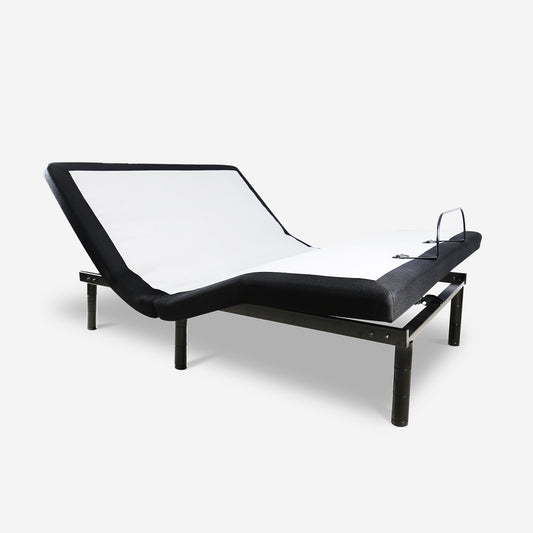
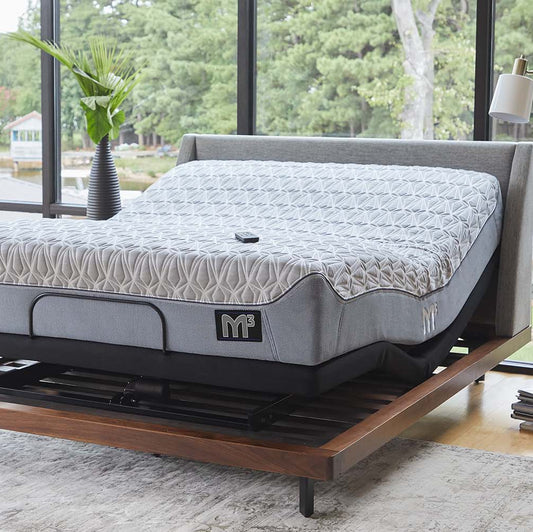
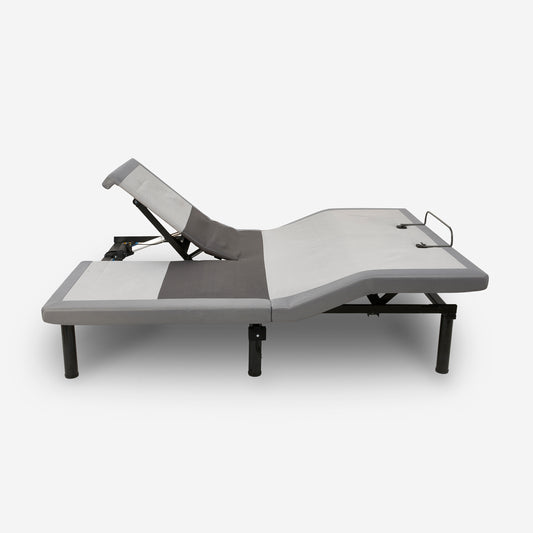
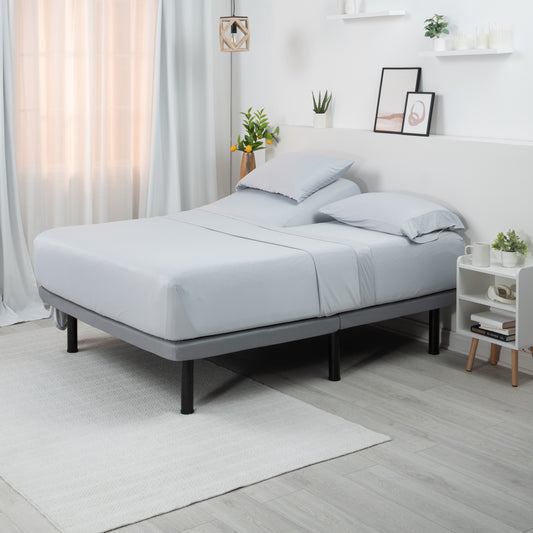
If you own a BEDGEAR Flex adjustable base, or even if you're shopping for one, you've probably noticed that zero gravity and anti-snore are listed as separate presets. Odd, right? Well, that's not a coincidence.
In fact, they do different things. The confusion comes from the fact that both involve elevating the head, so from the outside they can look similar. The angles are different, the body coverage is different, and the problems they're designed to address are different. The good news? If you want to learn more about zero gravity vs. anti-snore. you've come to the right place.
This post breaks down exactly how each position works, when to use one over the other, and what to do if you're dealing with more than one issue at a time.
What's the Difference Between Zero Gravity and Anti-Snore?
The simplest way to put it: zero gravity is a whole-body position; anti-snore is an upper-body position. Zero gravity elevates both the head and the knees, creating a reclined posture where the body is distributed across the sleep surface with no single zone bearing disproportionate load. Anti-snore only elevates the head and upper torso, targeting the airway specifically while the lower body stays relatively flat.
That distinction matters more than it might seem. Raising the head without raising the knees can actually increase tension in the lower back, which is the opposite of what zero gravity is trying to do. So, if you've been using anti-snore as a general comfort position, it may not be working the way you're expecting.
Each preset is calibrated for a specific outcome; using the right one means you're getting the full benefit rather than a partial version of it.
How the Zero Gravity Position Works
Zero gravity puts the body into a reclined posture loosely based on NASA's Neutral Body Posture research; the natural resting position the body assumes in a weightless environment, first observed during Skylab missions.
The target angle is roughly 120 degrees between the torso and thighs, with the head elevated around 30 degrees and the knees slightly raised. The result is a position where weight is spread across the full sleep surface rather than concentrated at the lumbar region and hips.
The practical benefits of this for everyday sleepers are a reduction in lumbar pressure for some people, support for circulation in the legs, and a general sense of weightlessness that makes it easier for muscles to fully relax overnight. Of course, make sure you connect with a medical professional before you make any adjustable base choices.
It's worth pairing the position with the right mattress; our Performance® hybrid mattresses are built to articulate with an adjustable base so the support follows the angle rather than fighting it. For the full breakdown of what zero gravity does and who benefits most, see our zero gravity guide.
How the Anti-Snore Position Works
Anti-snore is designed around one specific problem: positional airway obstruction. Snoring is most often caused by soft tissue at the back of the throat (the tongue, soft palate, and surrounding muscles) relaxing during sleep and partially collapsing the airway.
Sadly, and despite how comfy it may seem, gravity makes this worse when you're flat on your back; the tissue falls back toward the throat with nothing working against it.
That being said, elevating the head changes the geometry. When the upper body is inclined, that soft tissue has less opportunity to fall back and narrow the airway. The anti-snore preset on BEDGEAR Flex bases is calibrated specifically for this: the head and upper torso are raised to an angle designed to keep the airway more open, without the full-body recline of zero gravity.
A 2022 study published in the Journal of Clinical Medicine found that 30-degree head-of-bed elevation showed meaningful improvement in upper airway obstruction among patients with positional obstructive sleep apnea. Results vary depending on the cause and severity of the snoring, and the anti-snore position is not a substitute for medical evaluation — but for positional snoring, the research supports the approach.
We also have some additional tips that can help you reduce snoring with pillows, sheets, and other sleep solutions.
Zero Gravity vs. Anti-Snore: A Side-by-Side Comparison
Here's a direct look at how the two positions differ across the criteria that matter most when you're deciding which one to use.
| category | Zero Gravity | Anti-Snore |
|---|---|---|
| Body coverage | Full body — head and knees elevated | Upper body only — head and torso |
| Target angle | ~120° torso-to-thigh; head ~30° | ~30° head elevation; lower body flat |
| Primary benefit | Weight distribution; lumbar pressure reduction; circulation | Airway management; snoring reduction |
| Best for | Back pain, circulation, general recovery | Positional snoring, acid reflux |
| Effect on lumbar | May reduce pressure for some sleepers | May increase tension if lower body stays flat |
| Available on | All 5 BEDGEAR Flex bases | All 5 BEDGEAR Flex bases |
Both presets are accessible with a single button press on any BEDGEAR Flex adjustable base. No manual adjustment needed.
The key takeaway from the table: anti-snore is not a lighter version of zero gravity. It's a different tool. Using anti-snore when you actually need lumbar support, or zero gravity when airway management is the priority, means you're only getting partial results from a base capable of doing both.
So, make sure you take some time to learn more about your needs prior to making a decision. And the worst case scenario? You give both positions a shot for a while to see which one works the best for you.
Which Position Should You Use for Back Pain?
Zero gravity is the better choice here, and the reason comes down to what the lower body is doing. When you elevate the head without raising the knees, the lumbar spine is still taking load from the legs pulling downward.
Zero gravity addresses this by raising the knees simultaneously, which flattens the lumbar curve and distributes weight more evenly across the sleep surface. The lower back may decompress rather than stay under tension through the night.
Anti-snore, by contrast, only lifts the upper body. If you're using it primarily because snoring is the issue, that's the right call. But if back discomfort is also a factor, head elevation without knee elevation can make lumbar tension worse rather than better.
Still, results depend a lot on sleep position, mattress support, and the underlying cause of the discomfort; neither preset is a substitute for medical evaluation when back pain is significant. For a deeper breakdown of what zero gravity does for the lumbar spine specifically, the zero gravity guide covers it in detail.
Which Position Should You Use for Snoring?
Anti-snore is the preset designed for this. The angle is calibrated specifically to address the airway mechanics that cause positional snoring: head and upper-body elevation that reduces soft tissue collapse at the back of the throat. Zero gravity also elevates the head and may help for some snorers — particularly those who find the zero gravity position more comfortable overall — but anti-snore targets the airway angle more precisely.
A few things worth knowing: snoring caused by positional factors tends to respond better to head elevation than snoring caused by anatomical or other non-positional factors. If snoring is severe, persistent, or accompanied by gasping or breathing interruptions during sleep, a medical evaluation is the right first step. The anti-snore preset is a useful positional adjustment; it is not a treatment for sleep apnea.
That said, for partners lying next to a positional snorer, having both zero gravity and anti-snore available as one-button presets means two angles to try without any manual adjustment, which is a practical advantage on its own.
Can You Use Zero Gravity and Anti-Snore Positions on the Same Base?
Yes, of course you can, and they don't have to be used at the same time. The zero gravity and anti-snore presets are independent of each other; you can switch between them on any given night depending on what you need.
If you find that zero gravity addresses your back discomfort but you still want a more targeted airway angle, for example, you can hit anti-snore instead. If neither preset is exactly right, the Flex LS and Flex LSX also include programmable memory positions so you can save a custom angle and return to it with a single press.
For couples, the Flex SH Split Head Adjustable Base takes this a step further. Each side of the bed has independent head and lumbar adjustment, which means one partner can use anti-snore while the other stays in zero gravity — with no compromise and no interference between the two sides. If different sleep needs have been a recurring issue, that's the setup designed to resolve it.
Two Presets. One Button Each.
Every BEDGEAR Flex base includes zero gravity and anti-snore as built-in presets — no manual dialing, no guesswork. Switch between them any night depending on what you need.
Which BEDGEAR Adjustable Bases Include Both Presets?
Both zero gravity and anti-snore come standard on every base in the Flex lineup. Here's how they stack up across the five models, so you can match the right base to your sleep needs and budget. If you're still in the early stages of figuring out what kind of base makes sense, the Bed Frame Buying Guide is a good place to start.
- Flex L — Zero gravity and anti-snore presets; head and foot adjustment; the entry point into the lineup
- Flex LS — Zero gravity, anti-snore, and TV presets; two programmable memory positions; massage; app control; underbed lighting
- Flex LSX — All Flex LS features plus four-motor control across head, neck, lumbar, and foot for the most dialed-in position adjustment
- Flex SH Split Head — Zero gravity and anti-snore with independent head and lumbar adjustment per side; built for couples with different sleep needs
- Adjustable Base Bed Frame — Zero gravity, anti-snore, and TV presets; memory positions; integrated bed frame design
Every model on this list gives you both presets out of the box. The decision between them comes down to how much adjustment control you want, whether you're sleeping solo or with a partner, and which additional features, like massage, app control, memory positions, independent lumbar, and Bluetooth, matter most for your setup.
Zero Gravity vs. Anti-Snore: Which Adjustable Bed Position Is Right for You?
If back pain, lumbar pressure, or general overnight discomfort is the primary issue, zero gravity is the better starting point. It distributes body weight across the full sleep surface and may reduce pressure for some sleepers in ways that anti-snore — with the lower body still flat — can't replicate. Results depend on sleep position, mattress support, and the underlying cause of the discomfort; neither position is a substitute for medical evaluation when back pain is significant.
If snoring is the main problem (yours or your partner's) the anti-snore preset is specifically calibrated for the airway mechanics behind positional snoring. It targets a tighter angle than zero gravity and is the more precise tool for that specific issue. And if you're dealing with both, you're not forced to choose; every BEDGEAR Flex base gives you access to both presets, and the Flex SH Split Head lets couples run different positions on each side simultaneously.
The broader point is this: it's not always about zero gravity vs. anti-snore; adjustable bed positions are tools, not settings to set once and forget. Knowing what each preset is actually doing (and why) means you're using the base for what it's built for.
At the end of the night, Sleep Fuels Everything®, and it all starts with the right position.
Zero Gravity vs. Anti-Snore: Frequently Asked Questions
Here are the questions we hear most about these two adjustable bed positions.