

Full Size Bed Sheet Dimensions: Measurements for Full and Double Beds
Quick Summary
A full fitted sheet measures 54" x 75". If the package in your hand says double instead, put it in the cart; it's the same bed with an older name.
The complete full set runs a 54" x 75" fitted sheet, an 86" x 96" flat sheet, and queen or standard pillowcases at 20" x 30". Those numbers come from the full mattress footprint, so they don't change from brand to brand.
The measurement that does change is your mattress height, and it's the one nobody prints on the front of the package. That number decides whether the fitted sheet is still on the bed in the morning.

Recommended for Full Beds
Dri-Tec Performance® Sheet Set
Moisture-wicking fabric and a secure Powerband help the fitted sheet stay comfortable and in place across different mattress depths.
Shop Dri-Tec SheetsWhat Size Is a Full Bed Sheet?
A full bed sheet is built for a full mattress, which measures 54 inches wide by 75 inches long. Sounds pretty simple, right?
And sure, the fitted sheet matches that footprint exactly, but the flat sheet and pillowcases carry different numbers because they're doing different jobs on the same bed.
Most full sets ship those three pieces together to save you the trouble, and we're all about making sleep personal and easy at BEDGEAR. Here's how the measurements line up across the set.
Full Sheet Set Dimensions
| Piece | Inches | What it covers |
|---|---|---|
| Fitted sheet | 54" x 75" | The mattress surface, wrapping the sides |
| Flat sheet | 86" x 96" | You, plus the drape and the tuck |
| Pillowcase (queen/standard) | 20" x 30" | Standard and queen pillows |
Full Fitted Sheet Measurements Explained
The full fitted sheet is cut to 54 inches by 75 inches across the top panel. That panel is the surface you sleep on and the part that has to sit flat. Everything past those edges exists to wrap the sides and hold tension.
Here's what the number leaves out. It describes the top of your mattress and tells you nothing about the sides, which is where fitted sheets actually succeed or fail.
Two sheets can both read 54" x 75" and behave nothing alike once they're on a bed, so make sure you keep this in mind as you're shopping.
What Are the Measurements of a Full Size Bed Sheet?
The measurements of a full size bed sheet are 54" x 75" for the fitted sheet, 86" x 96" for the flat sheet, and 20" x 30" for the pillowcases. Some sets include one pillowcase and some include two, so check the listing rather than assuming.
The flat sheet number tends to catch people off guard, since it's dramatically larger than the mattress in both directions. That's by design and it's covered further down, so hold you're horses if you're worried about that because we have your back.
When it comes to flat sheets, you'll find that flat sheets have to cover a person, hang over both sides, and still have fabric left to tuck.
Full vs. Double Bed Sheet Sizes: What's the Difference?
Full and double are the same bed. Easy, right? The same 54 inches of width, same 75 inches of length, same sheets.
If you've been standing in an aisle wondering whether you need to buy something different, though, you don't.
This trips up more people than it should, and the reason is history rather than measurement.
Why a Double Bed Is a Full Bed
The double name came first, actually, back when a 54 inch wide mattress was genuinely considered a bed for two people. Compared to the single beds it replaced, it was double. The name described who slept in it rather than how big it was.
Full took over as the common term in the United States, while double stayed in use across the United Kingdom, Australia, and parts of Canada. Retailers selling into multiple markets often print both on the same package.
Nothing about the mattress changed; only the vocabulary did, so no need to worry if you accidentally bought yourself some double bed sheets.
What Size Sheets Fit a Double Bed?
A double bed takes full sheets: 54" x 75" fitted, 86" x 96" flat, and 20" x 30" pillowcases. If you find a package labeled double and one labeled full sitting next to each other on the same shelf, they're interchangeable. Buy whichever one you like.
The one thing worth a second look is where the sheets came from. A double sheet made for the UK market can be cut to a slightly different footprint than a US full, since mattress standards aren't identical across borders.
For sheets sold in the United States, full and double are the same measurements every time, so make sure you keep this in mind as you're shopping.
Why Two Full Sheets Can Fit Differently
Two full fitted sheets can carry the same 54" x 75" label and perform completely differently on your bed. The variable is depth, and it's the one measurement the package leaves out.
Mattresses have gotten taller... a lot taller. Add a topper, a mattress protector, or a pillow top, and the profile grows again. Plenty of sheets are still cut for a mattress height that fewer and fewer people actually own.
How Mattress Depth Changes Bed Sheet Fitment
A fitted sheet has one structural job: reach the underside of the mattress and stay there for the entire night. When the mattress is deeper than the sheet was built for, the fabric runs out before it clears the bottom edge. What's left is holding on by the last inch of corner.
That's the corner that lets go at 3am. It isn't a defect and it isn't your fault; it's a mismatch between your mattress height and a sheet cut for a shallower bed.
It's also why the same sheet can behave perfectly in one room and fail every night in another.
Why BEDGEAR's Powerband is Unique in the Bedding Industry

The standard approach is a strip of elastic gathered into the four corners. It holds at first, sure, but then it starts to fail. The fabric between the corners has nothing supporting it, so the sheet drifts loose across months of use and washing. In fact, this may even happen if you simply flip around at night, and it's made worse if you have more than one person in your bed.
The sleep solution? Our sheets use a Powerband instead. It's a stretch band engineered to hold tension around the perimeter rather than concentrating the work at four points, so the sheet grips evenly and accommodates a range of mattress depths rather than one fixed profile.
Overall, that's the difference between a sheet in the right size and a sheet that actually fits.
Four Corners Can't Hold a Whole Sheet
Corner elastic asks four small points to do the work of an entire perimeter. A Powerband spreads that tension around the full edge of the sheet, which is why our fitted sheets hold on deeper profiles, pillow tops, and beds running a topper.
It also takes pocket depth guesswork off your plate. Explore our sheet collection to see how the band works across every size.
Full vs. Twin and Queen Bed Sheet Dimensions
Full sits between twin and queen, which means it gets confused with both. The twin mix-up happens in the linen closet; the queen mix-up happens at checkout.
Here's how the three fitted sheets actually compare.
Twin vs. Full vs. Queen Fitted Sheets
Look at the twin row for a second. A twin and a full are both 75 inches long, and the only thing separating them is 15 inches of width. That shared length is exactly why folded sheets get mixed up in houses that have both a kids' room and a guest room; the fold looks close enough until you're standing at the bed with the wrong one.
Will Full Sheets Fit a Queen Bed?
No. A full fitted sheet is 54" x 75" and a queen mattress is 60" x 80", so you're short an entire six inches of width and five inches of length. There's no amount of stretch that closes that gap; the sheet either won't go on or it snaps off the first time you move.
It's the most asked question in this entire size category, and it deserves more than a paragraph. We took apart the full comparison, the near-misses people attempt, and what actually works in our guide to whether full sheets fit a queen bed.
How to Choose Full Size Bed Sheets
Full beds tend to live in guest rooms, kids' rooms, and first apartments, which means the buying decision looks different than it does for a primary bed.
These four things matter more than anything printed in big type on the package, and we take you through what you need to know about them below.
Confirm the Bed Before You Trust the Label
Full, double, and the occasional mislabeled listing all point at the same 54" x 75" mattress, but that only helps if the bed you're buying for is actually a full.
Older frames and hand-me-down mattresses are the usual culprits. Take thirty seconds and measure the width of your bed please; 54 inches means full, 39 means twin, 60 means queen.
This matters most in houses with mixed bed sizes. If you're outfitting a guest room you rarely sleep in, the odds of guessing wrong go up considerably. Measure once and you never have to think about it again.
The good news? Our full size mattress dimensions guide has the complete footprint if you want to double-check, so don't leave any of this up to a quick guess.
Match the Material to Who's Sleeping There
A full in a kid's room and a full in a guest room are two different assignments. Kids run warm and sleep hard, so airflow and recovery from the wash matter more than anything luxurious. Dri-Tec sheets promote airflow and move moisture rather than trapping it, which is the right answer for a bed that gets slept in every night by someone who radiates heat.
Guest rooms are a different problem, because you're guessing at a stranger's preferences. Something breathable and neutral covers the widest range; Hyper-Cotton handles that reliably.
If the room runs hot or the guest list skews toward hot sleepers, Ver-Tex® is cool to the touch on contact and takes the question off the table.
Measure Your Mattress Depth Before You Buy Bed Sheets
Put a tape measure against the side of the mattress and write down the total height. At BEDGEAR, we see this happen way too often, and if you miss this measurement you're in a lot of trouble.
Also, make sure you include the topper and the mattress protector. The fitted sheet has to travel around all of it, not just the mattress itself, and every layer you add pushes the number up.
That one measurement prevents the most common sheet mistake there is. It's also the reason a Powerband earns its place: a band that holds tension across a range of depths means you aren't trying to match a fixed pocket number to a bed that changed the day you added a topper.
Plan for the Wash Cycle
Full beds are all-around workhorses. Kids' beds especially go through wash cycles at a rate a primary bed never will, and that's where cheap sheets reveal themselves. Elastic fatigues, fabric thins, and a set that felt fine in month one is sagging by month six.
Buying a second set is the practical move for any bed that gets stripped often, since it means the bed gets made again immediately instead of waiting on a dryer.
If you're not sure how often that should be happening, we covered it in our guide on how often to change your sheets.
Built to Survive the Laundry Room
A sheet that loses its grip after a dozen washes isn't a sheet problem; it's an elastic problem. The Powerband is engineered to keep holding tension over the long run, which matters most on the beds that get stripped and remade constantly.
Every size we make uses it, from twin through split California king. See the full size chart if you're outfitting more than one bed.
Frequently Asked Questions
Still sorting out full sheet sizing? Here are the questions that come up most.
Will Queen Sheets Fit a Full Size Bed?
Why Do Some Full Sheets Say Double on the Package?
What Size Is a Full Flat Sheet?
What Is the Difference Between Twin and Full Sheets?
Do Deep Pocket Sheets Come in a Full Size?
Where Can I Find a Full Bed Sheet Size Chart?
Finding Your Full Size Bed Sheet Dimensions the BEDGEAR Way
Full size bed sheet dimensions come down to three numbers: 54" x 75" fitted, 86" x 96" flat, and 20" x 30" pillowcases. They're tied to the mattress rather than the brand, so they hold no matter whose sheets you're buying. And if the package says double, it's the same bed, so always keep that in the back of your mind.
The number worth measuring yourself is depth. Add up the mattress, the topper, and the protector, then pick a sheet built to stretch across that range instead of one cut to a single fixed profile.
Size gets you close; fit is what keeps the bed made.
Sheets That Stay Where You Put Them
Powerband fit, performance fabrics, and every size from twin to split cal king. Built for how you actually sleep.
You May Also Like
-

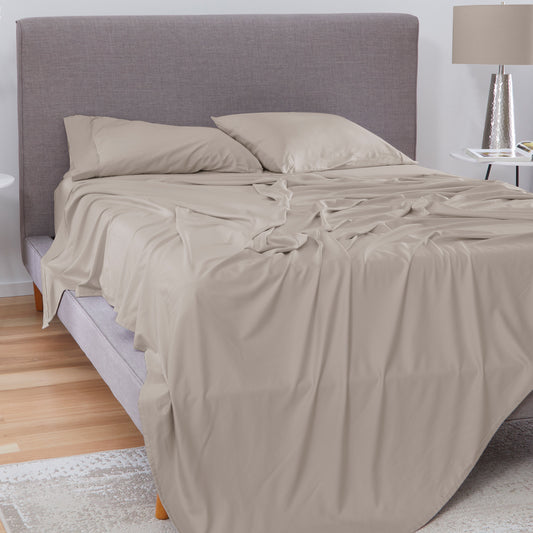 ClassicRegular price $59.99Sale price $59.99 Regular priceUnit price per
 -

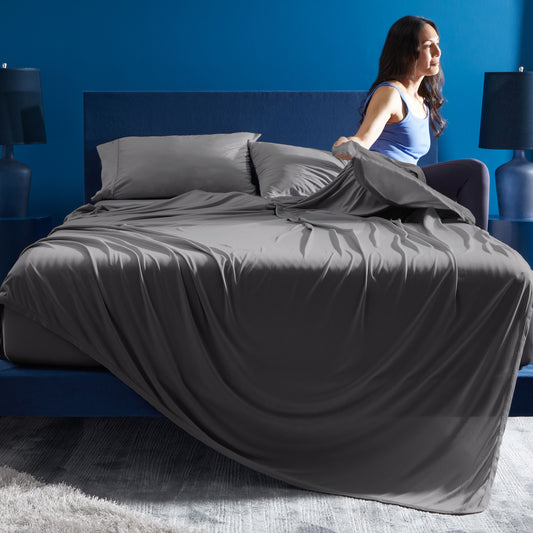 Moisture-WickingRegular price $199.99Sale price $199.99 Regular priceUnit price per


