Read on to discover the best breathable blankets, and to learn more about what makes that possible.
What Actually Makes a Blanket Breathable?
Three things determine whether a blanket breathes: the fiber it is made from, how that fiber is woven or knit, and how much of it there is. Makes sense, right?
Well, most shopping guides only talk about the first one, which is why so many people buy a bamboo blanket and still sleep like they're a furnace. In fact, a dense weave in a breathable fiber can perform worse than an open knit in a synthetic.
Think of it like a window screen versus a pane of glass. Both can be made well; only one lets air through. Fabric works the same way, and the difference shows up in how you feel at 3 a.m. Learn more about what makes a blanket breathable below.
Fiber: What the Blanket Is Made Of
Natural fibers like cotton and linen breathe well because they are structurally porous and handle moisture without holding it against your skin. Bamboo-derived viscose and eucalyptus-derived lyocell behave similarly, with a smoother hand feel that many people prefer. These are the fibers you will see recommended most often for warm sleepers, and for good reason.
Synthetics are more complicated. Standard polyester fleece traps heat and moisture, but engineered performance knits are built specifically to move both. The fiber category tells you less than the construction does, which is why "natural equals breathable" is a rule that breaks constantly in practice.
We cover this in more depth in our guide to what bedding materials breathe best. Therefore, you should give that a read before you buy anything.
Weave and Weight: The Parts People Skip
Weave structure controls how much air can physically pass through the fabric. And if you want breathable blankets, that's a huge part of it. Open weaves, waffle textures, and loose knits create channels for airflow. Tight sateen weaves, brushed fleece, and heavily quilted constructions close those channels off, which is fine in January and miserable in July.
Weight is the variable that quietly ruins the most purchases, though. Loft means trapped air, and trapped air means insulation. A thick, plush blanket can be made from the most breathable fiber on the market and still sleep warm, simply because there is too much material between you and the room.
Here is how the most common blanket materials compare on the variables that matter. Use it as a starting filter rather than a final answer, since construction can shift any of these results.
| Material | Breathability | Moisture Handling | Best For |
|---|---|---|---|
| Cotton | High | Absorbs well, dries slowly | Year-round, easy care |
| Linen | Very high | Excellent, dries fast | Hot, humid climates |
| Bamboo Viscose | High | Good, smooth hand feel | Warm sleepers wanting softness |
| Eucalyptus Lyocell | High | Very good, cool to the touch | Night sweats, humid rooms |
| Performance Knit | High, construction dependent | Engineered to wick and move air | Hot sleepers, active recovery |
| Down Alternative | Moderate | Varies widely by fill and shell | Cool rooms, allergy concerns |
| Standard Fleece | Low | Traps heat and humidity | Couch use, cold rooms |
The Best Breathable Blanket for Hot Sleepers
If you run hot, the blanket is often the last thing you fix and the thing making the biggest difference. People replace the mattress, upgrade the pillow, turn the thermostat down, and then keep sleeping under the same heavy comforter that started the problem. The layer directly against your body has an outsized effect on how warm you feel.
For hot sleepers, the target is a low-loft blanket with an open structure and a face fabric that feels cool to the touch. You want the material to move heat and moisture away from your skin rather than hold it in place.
Our Cooling Performance Throw is built around this exact use case, and the Cooling Blanket applies the same approach at full bed size.

Three habits help as much as the product choice itself.
First, layer thin instead of thick, so you can shed one layer at 2 a.m. instead of all of it. Second, keep the room on the cooler side, since a breathable blanket cannot fix a hot bedroom. Third, look at the whole sleep system rather than one piece.
If overheating is a persistent issue rather than a summer one, it is worth reading our guide on how to prevent night sweats and browsing the full for hot sleepers collection.
Cooling Benefits: What "Cool to the Touch" Really Means
Literally every single brand that offers cooling bedding will say "Cool to the touch" or something along those lines. But what does that even mean?
Well, cooling in bedding is not refrigeration, and any brand promising a specific temperature drop is overselling. What a well-built cooling blanket actually does is manage heat transfer at the surface and keep air moving through the fabric. The result is a surface that feels cool when you touch it and reduces heat buildup as you sleep.
Two separate mechanisms do the work, and they are frequently confused. Airflow moves heat and moisture away from the body continuously. Surface cooling affects how the fabric feels on contact. They complement each other, but they are not interchangeable, and a blanket that only does one will disappoint you in different ways.

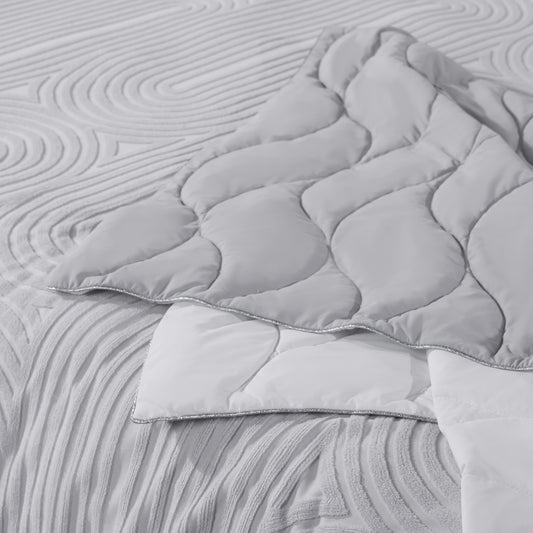
The photo above shows what breathability looks like structurally. Those channels are not decorative texture; they are the path that warm, humid air takes to get away from your body. When a fabric is sealed or heavily brushed, that path disappears and the heat stays put. The result? night sweats.
Best Breathable Summer Blankets
Summer is when the loft problem becomes obvious. A blanket that felt reasonable in April becomes unusable in July, and most people respond by sleeping under nothing at all. That works until the air conditioning kicks on and you wake up cold at 4 a.m. Let's break the cycle, shall we?
The better answer is a single breathable layer that gives you coverage without insulation. Most sleepers want something over them for comfort reasons that have nothing to do with warmth, and a lightweight throw satisfies that without the thermal penalty.
A few summer-specific adjustments that consistently work:
- Retire the duvet entirely from June through September and sleep under one breathable layer
- Choose linen, cotton, or a performance knit over anything brushed, quilted, or fleece-backed
- Keep a lightweight throw at the foot of the bed for early morning temperature swings
- Wash and fully dry bedding more often, since accumulated body oils reduce how well fabric wicks
That last point gets ignored constantly.
Fabric performance degrades as residue builds up in the fibers, so a blanket that breathed beautifully in month one can feel noticeably warmer by month six. Regular washing restores most of that performance.
Breathable Blankets for Winter: Warm Without the Overheating
Winter shopping usually goes wrong in the same way. People assume warmth requires sealing heat in, so they buy the densest, heaviest option available and then sweat under it.
Sure, it feels comfy, but warmth and breathability are not opposites; the goal is to trap enough air to insulate while still letting moisture escape.
The move is loft with a breathable face fabric, rather than a sealed shell. A sherpa or plush-backed throw creates warm air pockets that keep you comfortable in a cold room, while the surface fabric still allows humidity to pass through.
That combination is why you can stay warm without waking up damp.

Our Performance Sherpa Throw is designed for exactly this balance, giving you real cold-weather warmth in a construction that still moves moisture.
If you're looking for a broader look at how to match blanket weight to your room and season, our blanket buying guide walks through the full decision.
Are Weighted Blankets Breathable?
Sometimes, and the difference is significant. A weighted blanket increases both mass and surface contact against your body, which gives heat and moisture more opportunity to get trapped. That is why so many people love the feeling of a weighted blanket in theory and abandon it by the second week.
Breathability in a weighted blanket comes down to three things: the cover fabric, the fill distribution, and the total weight. A breathable cotton or performance knit cover makes an enormous difference.
At the end of the night, evenly quilted pockets prevent fill from clumping and creating dense hot spots.
Choosing a Weighted Blanket That Still Breathes
The common guidance is roughly ten percent of body weight, and going heavier than that is where breathability usually breaks down. A twenty-five pound blanket presses more fabric against more skin, and airflow suffers accordingly. If you are between two sizes, the lighter one will almost always sleep cooler, which is a good rule of thumb to follow.
For summer specifically, many people switch to a lighter weighted option or set it aside entirely for a few months. There is no rule that says you have to use the same blanket year-round, and rotating seasonally solves the problem more reliably than searching for one blanket that does everything.
The Glass Bead Question
Fill material comes up often, usually framed as glass beads versus plastic pellets. Glass beads are denser, so less volume is needed to reach a given weight, which generally means a thinner and more breathable blanket. Plastic pellets require more bulk for the same weight, which adds loft.
If you are avoiding glass beads for durability or washing reasons, look for a quilted construction with small, evenly spaced pockets and a genuinely breathable cover.
The cover fabric and pocket design will affect your comfort more than the fill type does in most cases.
Breathable Blankets for Babies and Toddlers: Safe Sleep Comes First
This section deserves a direct answer rather than a product pitch. Safe sleep guidance from the American Academy of Pediatrics is to keep blankets, pillows, bumpers, and other loose bedding out of the sleep space until at least twelve months of age. That guidance exists for good reason, and no fabric technology changes it.
So when parents search for a breathable baby blanket, the honest answer has two parts. Before twelve months, blankets belong to supervised and awake moments. After twelve months, a lightweight breathable blanket in a toddler bed is generally appropriate.

Where a Blanket Fits Before Twelve Months
Plenty of legitimate uses exist outside the crib. Stroller naps with an adult present, tummy time on the floor, contact naps where a caregiver is awake and monitoring, and general lounging all work fine with a lightweight blanket. The distinction is supervision, not the blanket itself.
For the actual sleep space, wearable blankets and sleep sacks are the standard alternative. They provide warmth without loose fabric, which is why pediatricians recommend them.
Look for breathable fabrics there too, since infants regulate temperature less efficiently than adults and overheating is a real concern.
Fabric Choices for Babies and Toddlers
Natural, hypoallergenic fibers are the safest starting point for young skin. Cotton is the default for good reason: it breathes well, washes easily, and holds up to the frequency of washing that comes with a baby. Bamboo viscose and lyocell are also good options if you want something softer against sensitive skin.
Skip heavy fleece and anything with a sealed or coated backing, which traps both heat and humidity. Trapped humidity against the skin is a common contributor to heat rash, and infants are more prone to it than older children. Lighter and more breathable is the right instinct at every age here.
For toddlers past twelve months, the practical complaint is usually that the blanket ends up on the floor by midnight. A slightly heavier, lightly textured blanket tends to stay in place better than a slick, lightweight one, and a smaller size is easier for a small person to manage.
You can browse age-appropriate options in our baby and kids bedding collection.
Keep the crib clear of blankets, pillows, and soft bedding until at least twelve months of age. Use a wearable blanket or sleep sack instead, place infants on their back to sleep, and keep the room comfortably cool. If you have questions about your child specifically, your pediatrician is the right person to ask.
How to Choose by Sleeper Type
Most of this comes down to a short set of questions about how you actually sleep, not how you shop. Run through these before you buy anything, since the answer changes meaningfully depending on where you land.
You Sleep Hot
Low loft, open knit, cool-to-the-touch surface. Skip anything quilted or brushed.
You Sleep Cold
Loft with a breathable face fabric. Warmth without a sealed shell.
You Share a Bed
Two separate throws beat one compromise blanket. Each person controls their own layer.
You Want Weight
Roughly ten percent of body weight, breathable cover, evenly quilted pockets.
Humid Climate
Prioritize moisture movement over softness. Linen and lyocell handle humidity best.
Kids Over 12 Months
Lightweight, breathable, and small enough for them to manage themselves.
If you land in more than one category, that is normal, so don't panic, and it is usually a sign you want two blankets rather than one perfect one.
A breathable throw for warm months and a lofted breathable option for cold months costs less than most people expect and solves the problem completely.
Build a Sleep System That Breathes
A breathable blanket works best when the layers underneath it are doing the same job. Start with the blanket, then check the sheets, pillow, and mattress protector.
Choosing the Best Breathable Blanket for How You Sleep
The best breathable blanket is the one that matches your body, your room, and your season; there is no universal winner. Start with weight, since that single variable decides more than fiber does. Then choose a construction that lets air move rather than one that seals it in.
For hot sleepers, that means low loft and an open structure. On the other hand, for cold sleepers, it means loft paired with a breathable face fabric instead of a sealed shell. For babies under twelve months, it means keeping the crib clear and saving the blanket for supervised, awake moments.
Get those three decisions right and you stop waking up at 2 a.m. kicking things onto the floor. At the end of the night, that is the entire goal, and it is a lot more achievable than the bedding aisle makes it look.