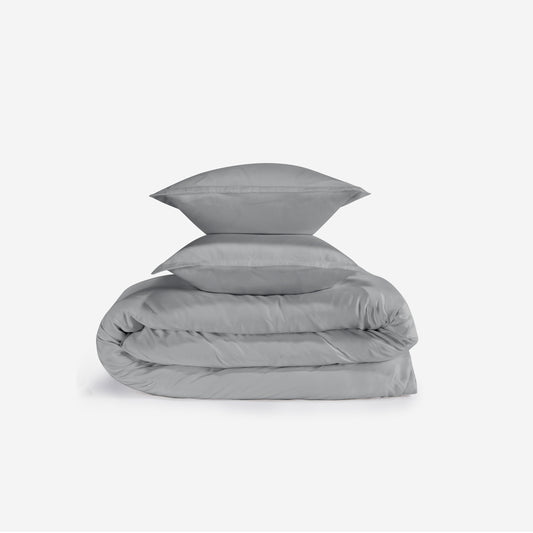
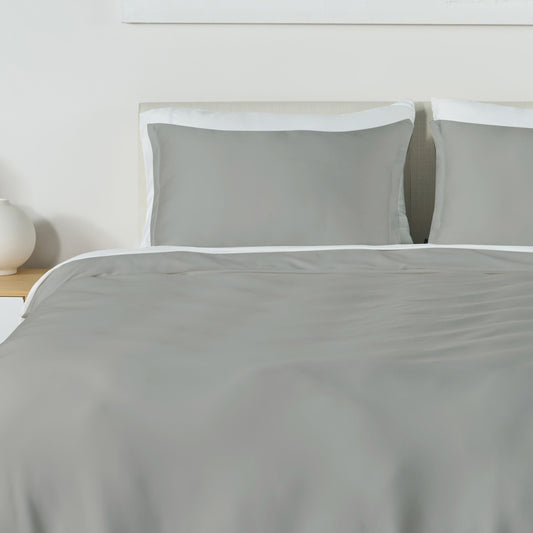
Duvets vs. Comforters Explained
A comforter is a thick, quilted blanket filled with insulation and stitched closed, so it's ready to use as is. A duvet is a soft, filled insert that goes inside a removable cover. In fact, you can think of it a bit like a pillowcase for your blanket. The duvet cover is the real difference here: it protects the insert, changes the look of the bed and comes off for the wash.
You'll also see the term "duvet comforter" being used. A duvet comforter usually means a comforter used as a duvet insert, which is how a lot of people set up their beds these days. In other words, it maximizes comfort.
The biggest difference between a duvet and a comforter isn't warmth. It's laundry day.
Duvet vs. Comforter: Side-by-Side Comparison
Let's breakdown the differences between a duvet and comforter in about 60 seconds. Warmth comes down to the fill, not the format, so the day-to-day differences are what really matter. In the chart below, we cover what really counts.
| Detail | Comforter | Duvet (Insert + Cover) |
|---|---|---|
| Pieces | One finished piece | An insert plus a removable cover |
| Making the Bed | Spread it out and you're done | Put the insert in the cover, then spread it out |
| Washing | The whole thing goes in the wash, and bulky ones may need a large washer or dry cleaning | Strip the cover and wash it with your sheets; the insert needs washing far less often |
| Changing the Look | Buy a new comforter | Swap the cover |
| Warmth | Set by the fill and weight | Set by the insert's fill and weight |
| Cost | One purchase | Two purchases, but the cover takes most of the wear |
| Best For | Simple beds and guest rooms | Easy cleaning, style changes, kids and pets |
If you wash your bedding often, the duvet setup wins on convenience. If you want one piece and no assembly, though, a comforter is the easier pick. The good news is that we give you some options over here at BEDGEAR; after all, that's what bedding that's personally fit to you is all about.
How BEDGEAR's Comforter Is Different
Most comforters make you choose a lane. BEDGEAR's doesn't. The Performance® Comforter is finished to use on its own, with a white Lyocell/Nylon shell and silver piping, and it has loops at each corner to anchor it inside a compatible duvet cover. Simple and easy.
Inside, Climacore® Intelligent Insulation keeps you warm with less weight and lets air move through the fill. When it's time to clean it, it goes right in your machine. Wash it cold on a gentle cycle, then tumble dry low.
Duvet Cover vs. Comforter
A duvet cover isn't bedding on its own, so let's start with that right out of the gate. It's an empty case that closes around a comforter or duvet insert, so comparing a duvet cover vs. a comforter is really more akin to comparing a case with what goes inside it.
That being said, the cover is what makes a duvet setup easier to live with. Duvet covers strip off like a sheet, so it changes the look of the bed, and it takes the sweat and body oils that would otherwise reach the comforter.

Since the cover is the layer you'll wash most often, the real test is what wash day looks like.
Wash Day With BEDGEAR's Duvet Cover
The whole washing routine takes about as long as changing your sheets does when you work with a BEDGEAR comforter, duvet, or any sleep product that we offer. We cover the process step-by-step below.
- Unsnap and slide. Undo the eight PowerSnaps™ and pull the comforter out.
- Wash cold. Use a gentle cycle, skip the fabric softener, and use non-chlorine bleach only when you need it.
- Tumble dry low. No ironing and no dry cleaning.
- Snap it back. Put the comforter back in, close the snaps, and it stays put without bunching in the corners.
That's the easy-clean part. What makes the cover worth washing that often is the fabric: our Solid covers are Lyocell/Nylon, and the Arrowhead and Racetrack patterns pair a patterned face with a Lyocell/Nylon back, so the side against you wicks sweat and breathes.
Every set comes with matching shams, too. For a weekly rhythm that covers the whole bed, our guide to how often you should change your sheets applies to the cover as well.
Duvet Insert vs. Comforter
These two are close cousins. Both are filled, quilted blankets. A duvet insert is usually plain white and made to live inside a cover, so it often has loops or tabs at the corners.
A comforter is finished to be seen, with a nicer shell and stitching. Most comforters can be used as an insert, as long as the size works with your cover.
So do you need to buy both?
Skip the Separate Insert.
Our Performance® Comforter is finished well enough to use on its own and has loops at each corner to work as an insert. One purchase does both jobs, and it's machine washable either way.
Washability matters a lot more for an insert than people expect. Even under a cover, an insert picks up sweat and dust over time, so plan to wash it a few times a year or after a spill. With BEDGEAR's, that's a home washer on cold, not a trip to the dry cleaner.
Down or Down Alternative Comforter vs. Duvet
Okay, so let us be the first to tell you that this search mixes up two separate choices and leaves everyone feeling a bit overwhelmed. The breakdown is clear, though: Comforter vs. duvet is about format, and down vs. down alternative is about the fill of the bedding. Either fill can come as a comforter or as a duvet insert, so it's easiest to make the two decisions one at a time.
Decision 1: One Piece or Two?
That's the comforter vs. duvet question covered above, but that does not always clear up what you need to buy. So, if easy washing is the priority, go with two pieces; a comforter or insert inside a removable cover.
Decision 2: Which Fill?
Each fill trades warmth against care. We bring you through the key differences of both options below.
- Down is lofty, light and very warm. It usually needs more careful washing and drying, and it can trap heat for people who run warm.
- Down alternative is a synthetic fill. It's usually easier to wash, and many versions are hypoallergenic.
Our comforter uses Climacore® Intelligent Insulation, which is made to keep you warm with less weight and allow constant airflow through your bedding at all times. It's hypoallergenic (as much as bedding can be) and Airflow Certified. Plus, our comforter goes right in a home washer.
Then Pick Your Weight
With BEDGEAR's comforters and duvets, the last choice is how much warmth you actually want. In the chart below, we give you a quick breakdown.
| Weight | Best For |
|---|---|
| Light | Hot sleepers and warm bedrooms |
| Medium | Most people, most of the year, and couples who sleep differently |
| Ultra | Cold sleepers and chilly bedrooms in winter |
Not sure about the best option for you? If that's the case, we have your back. Medium is the safest place to start, and our comprehensive guide to the best breathable blankets goes even deeper on how fill and airflow affect warmth.
Duvet vs. Comforter vs. Quilt (and Blankets)
If you're comparing a duvet vs. a comforter vs. a quilt, it helps to add blankets and coverlets to the list, too, and yes, there's a lot out there. Below, we cover exactly what each one is, and how easy it usually is to keep clean:
Thick, filled and all one piece.
Washing: the whole thing goes in, so size and care label matter.
A filled insert inside a removable cover.
Washing: the cover often, the insert a few times a year.
Thinner, stitched layers for warm rooms or layering.
Washing: usually easy, since it's thin.
Lightweight and mostly decorative. A bedspread usually reaches the floor.
Washing: varies, and big bedspreads can be bulky.
A single layer for extra warmth on the bed or the couch.
Washing: usually the easiest of the bunch.
Many beds use two of these at once, such as a duvet with a throw at the foot of the bed for colder nights. We don't make quilts, but our Cooling Blanket and Performance® throws are built for exactly that kind of layering.
Meet BEDGEAR Comforter and Duvet Sets
Why worry about choosing one or the other when you can use both? Use them together for the easiest bed to keep clean, or start with one and then move on to the others. Here are the two pieces that BEDGEAR offers for you.

Climacore® Intelligent Insulation in Light, Medium or Ultra Weight. A white Lyocell/Nylon shell with silver piping, corner loops for duvet covers, and it's hypoallergenic and machine washable. Full/Queen and King/Cal King.
Shop the ComforterThe comforter is the warm part of the bed; it keeps you comfy and cozy, hence the name. However, the duvet set is the part you'll wash every week or two, so keep that in mind.

Moisture-wicking, breathable fabric, eight PowerSnaps™ to hold your comforter in place, and matching shams. Machine washable. Queen and King in Solid, Arrowhead and Racetrack.
Shop Duvet SetsWant to finish the whole look for your bed? Our pillow shams and the rest of the BEDGEAR Home collection pair with both, so the whole bed matches - this way, you don't need to worry about a bed that does not match.
Our Final Thoughts on the Great Duvet vs. Comforter Debate
So, duvet vs. comforter: which one should you get? And why? Well, be sure to choose a comforter if you want one simple piece. On the other hand, choose a duvet if you want to wash the outer layer more often and change the look whenever you like.
Now, if you really hate laundry day, do both! Put a machine-washable comforter inside a cover you can strip with your sheets, and the hardest part of keeping your bed clean is done. At the end of the night, you always have options.
Still deciding on weight or fill or material/fabric? There's no need to worry because our blanket buying guide walks through every option we make.
Frequently Asked Questions About Duvets and Comforters
Still have questions for this little duvet vs comforter debate? Here are quick answers to the ones we get the most at BEDGEAR.