

Mattress Firmness Explained: Finding Your Ideal Feel
Your ideal mattress firmness comes down to three variables: how you sleep, how much you weigh, and who shares the bed with you.
What Mattress Firmness Actually Means
Firmness describes how a mattress feels when you first lie down on it. That's literally it. Firmness for mattresses is just the immediate sensation at the surface; how much push-back you feel, how quickly you sink, whether the bed greets you like a cloud or a handshake. It's also entirely subjective, which is the first thing most shoppers get wrong about it.
The same mattress can feel plush to one person and firm to another. Body weight, sleep position, body temperature, and even what you slept on for the last decade all shape how a surface registers for your body. That's why firmness is best understood as a relationship between you and the mattress; the number on the tag is only half the equation.
Mattress Firmness vs. Support: They're Not the Same Thing
This is the single most important distinction in mattress shopping, and most brands never explain it. And even if they do, they rarely do this topic justice. Thankfully, it's actually simple. Firmness is how the surface feels and support is what the mattress does for your spine.
A plush mattress can be wonderfully supportive if its core keeps your spine in neutral alignment; a firm mattress can fail your back completely if its construction bridges your lumbar curve instead of filling it.
When shoppers say they want a "firm mattress for support," what they usually want is good support with a firmer feel. Those are two separate decisions. Our Performance® Mattresses are engineered so the support system does its job at every comfort level; the firmness you choose is about feel and pressure relief, not about whether your spine gets held in line.
For a deeper look at how construction drives support, our hybrid vs. traditional mattress guide breaks down what's happening under the surface.
The Mattress Firmness Scale Explained
Most of the industry describes firmness on a 1 to 10 scale, with 1 as the softest surface made and 10 as the hardest. Here's the catch: the scale isn't standardized. One brand's 6 is another brand's 7.5, because there's no governing body calibrating anyone's foam.
Treat the numbers as a rough map, not a measurement, and always confirm with your own body. The chart below shows where the common labels land and who tends to sleep best at each level.
| Rating | Feel | Typically Best For |
|---|---|---|
| 1 to 3 | Plush / Ultra Soft | Lighter-weight side sleepers who want deep contouring |
| 4 to 6 | Medium Soft to Medium Firm | Most side and combination sleepers; couples splitting the difference |
| 7 to 8 | Firm | Back and stomach sleepers; heavier body types needing surface stability |
| 9 to 10 | Extra Firm | A small minority of stomach sleepers and specific medical recommendations |
BEDGEAR's Mattress Firmness Scale, Explained
Our firmness scale keeps things simple; it runs 0 to 3, where 0 is the firmest surface we make and 3 is the plushest. Four clear steps, no guessing between half-points. And because each side of the bed sets its own number, one partner can sleep on a 0 while the other sleeps on a 3, in the same mattress.
Use the chart below to find where your ideal feel lands, then match it to the sleep position and body-weight guidance from earlier in this guide.
| Rating | Feel | Typically Best For |
|---|---|---|
| 0 | Firm | Stomach sleepers and heavier body types needing surface stability |
| 1 | Medium Firm | Back sleepers who want lumbar support with a touch of give |
| 2 | Medium Plush | Combination and side sleepers who want contouring without deep sink |
| 3 | Plush | Side sleepers and lighter body types who want deep pressure relief |
The Three Variables That Determine Your Ideal Mattress Firmness
Forget the showroom poke test for a moment. Your ideal firmness is a function of three things you already know about yourself. Work through them in order and the right range narrows fast. Then, start flopping around on mattresses in the showroom.
1. Sleep Position Comes First
Side sleepers concentrate their body weight on two points: the shoulder and the hip. The surface needs enough give to let those points settle in while the waist stays lifted; that's how the spine stays level. Too firm, and pressure builds where bone meets bed. That's the numb arm at 3 a.m. Most side sleepers land happiest between 4 and 6 on the scale.
Back and stomach sleepers need the opposite. Their weight spreads across a wider area, so the priority shifts from pressure relief to keeping the hips from sinking below the rest of the body. A firmer surface, usually 6 to 8, holds the midsection level and protects the lower back. Stomach sleepers in particular should be wary of anything plush; a sinking pelvis arches the spine all night long.
2. Body Weight Changes How Firm a Mattress Feels
Firmness ratings assume an average body. Bodies are not average. A sleeper at 130 pounds rests near the surface of a mattress and experiences mostly its top comfort layers; a medium can feel firm to them. A sleeper at 230 pounds, on the other hand, presses deeper into the build and engages the transition and support layers; the same medium can feel soft, sometimes too soft to hold alignment.
The practical rule: lighter sleepers should shop about one level softer than the chart suggests for their position, and heavier sleepers about one level firmer.
Heavier body types also benefit from construction designed to handle deeper compression, which is where a coil-based hybrid earns its keep over an all-foam build.
3. Sharing a Bed Complicates Everything
Here's the scenario nobody's firmness chart accounts for: a 5'4" side sleeper who runs cold sharing a queen with a 6'2" stomach sleeper who runs hot. Her ideal surface is a 4. His is a 7. A traditional mattress forces them to meet at a 5.5 that's wrong for both of them, every night, for the next ten years.
The compromise mattress is one of the most common and least discussed reasons couples sleep badly. One partner gets pressure points; the other gets a sagging midsection; both wake up blaming themselves instead of the bed. This problem has a real solution, and it's a big part of why we build mattresses the way we do. More on that below.
The Firmness Myths That Lead People to the Wrong Mattress
Two beliefs send more shoppers home with the wrong mattress than any salesperson ever could. Both sound like common sense. Both are wrong. These firmness myths are that firmness is better for your back and that firmness in mattresses is fixed for life.
Myth: Firmer Mattresses Are Always Better for Your Back
This one has been passed down for generations, and the research doesn't back it up. A 2021 systematic review of 39 studies found that medium-firm mattresses promoted comfort, sleep quality, and spinal alignment better than firm or soft extremes. The spine isn't straight; it curves. A surface that's too hard bridges those curves instead of filling them, leaving the lumbar region hanging unsupported like a hammock in reverse.
If you're shopping firm because your back hurts, the better question is whether your current mattress is failing at alignment, pressure relief, or both. Our guide to the best mattresses for back pain walks through that diagnosis in detail; the short version is that support quality matters far more than surface hardness.
Myth: Mattress Firmness Is Fixed for Life
The mattress you buy at 30 meets a different body at 38. Weight changes. Injuries happen. Some examples include a side sleeper who becomes a back sleeper after shoulder surgery or even another partner diving onto the bed.
Furthermore, pregnancy reshapes sleep for a year or more. Your ideal firmness is a moving target, and the industry's answer has always been the same: buy a whole new mattress. That answer is why so many people sleep for years on a surface that stopped fitting them.
That being said, you'll find that replacing a mattress is expensive and disruptive, so the wrong firmness just becomes the new normal. It doesn't have to work that way, and this is exactly where our engineering philosophy splits from the rest of the industry.
Why BEDGEAR Treats Mattress Firmness Differently
Most brands treat firmness as a fork in the road: pick a feel at checkout and live with it. We treat firmness as a fit, and fits should be adjustable. Three design decisions make that real. We cover the BEDGEAR mattress way below.
Firmness You Can Change Without Buying a New Mattress
The M3 Performance® Mattress is built modular. Its comfort layers are swappable, which means the firmness of the mattress itself can be changed after you own it. Sleep on it for a month, decide you want softer, and you adjust the layers; no truck, no haggling, no five-figure do-over. The firmness decision stops being a gamble you place once and becomes a setting you tune.
That matters most for the situations the showroom can't predict: the injury, the new sleep position, the body change. When your needs shift, the mattress shifts with you. No fixed-construction mattress, however well chosen, can make that promise. Pretty cool, right?
Two Sleepers, Two Firmness Levels, One Bed
The modular construction also solves the couple's compromise. Each side of an M-series mattress can be configured independently, so the side-sleeping partner gets her 4 and the stomach-sleeping partner gets his 7, in the same bed, with no visible seam down the middle of their marriage. Nobody settles for a 5.5 that serves neither of them.
Independent sides also mean independent adjustments over time. One partner's needs can change without touching the other's setup. For couples weighing a split configuration instead, our split king guide covers when two separate mattresses make more sense than one configurable one.
Feel Without the Heat
There's a hidden tax on plush mattresses that almost nobody mentions at purchase: heat. Softer feels usually come from thick foam comfort layers, and dense foam traps body heat exactly where you sink into it. Plenty of sleepers who think they "hate soft mattresses" actually hate sleeping hot.
Our Performance® construction breaks that tradeoff. Ver-Tex® cool-to-the-touch covers, ventilated foams, and air-channeled builds keep the surface breathable at every firmness level, so choosing a plusher feel doesn't mean signing up for night sweats.
You pick the feel your pressure points need; the temperature stays handled either way.
How to Test Mattress Firmness the Right Way
The average showroom test lasts under two minutes and happens flat on the back, fully clothed, with a salesperson hovering. That test tells you almost nothing. Here's the version that does: spend a minimum of 10 to 15 minutes on the mattress, in the position you actually sleep in. Kick your shoes off. If you sleep on your side, get on your side and stay there long enough to feel where pressure builds.
Bring your partner; you're testing the bed you'll share, not the bed you'd choose alone. Pay attention to how easily you change positions, whether your hand slides easily under your lower back when lying flat (a gap means too firm), and whether your hips sink noticeably below your shoulders (too soft). And remember that any new mattress has a break-in period of several weeks, so judge a home trial by week four, not night one. Our mattress buyer's guide covers the full testing checklist.
Skip the Guesswork Entirely
Our sleep experts match you to a firmness based on your sleep position, body type, and bed partner; a real fitting, not a poke test. Try the lineup in person and feel the difference between levels side by side.
BEDGEAR Mattresses by Firmness Need
Every mattress in our lineup handles support, airflow, and motion isolation as standard equipment; the differences come down to feel, cooling intensity, and how much adjustability you want. Here's where to start based on what your firmness search looks like.
| Mattress | Best For | Firmness Story |
|---|---|---|
| S Performance® Mattress | Shoppers who know their feel | Plush, Medium, and Firm options at the entry point |
| H Performance® Mattress | The balanced hybrid pick | Foam contouring over responsive coils for a medium-firm sweet spot |
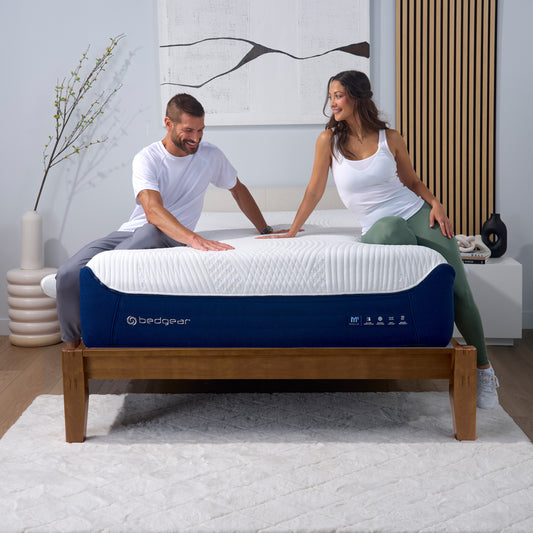
| M3 Performance® Mattress | Couples and changing needs | Swappable comfort layers; each side configured independently |
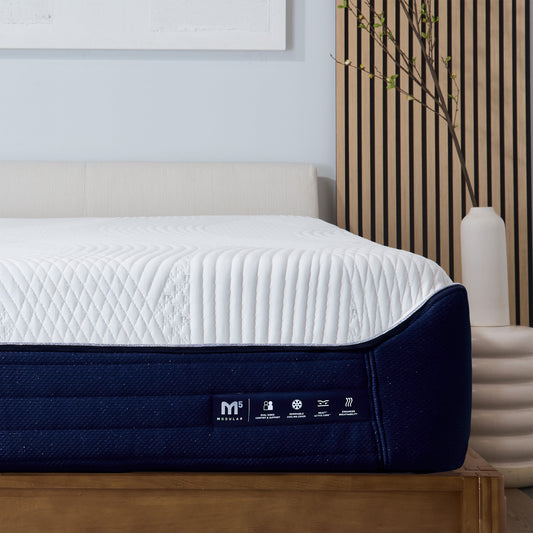
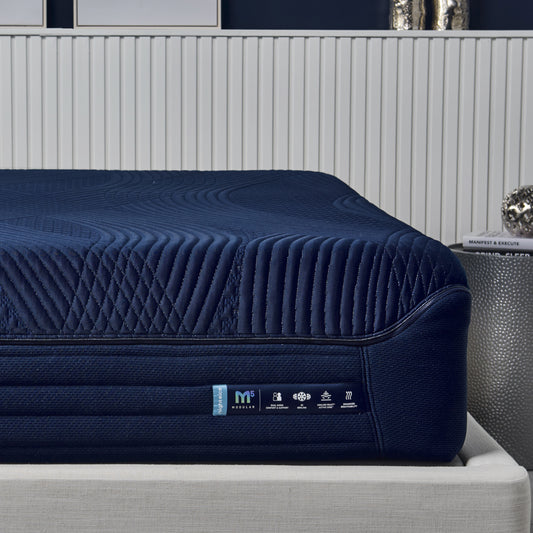
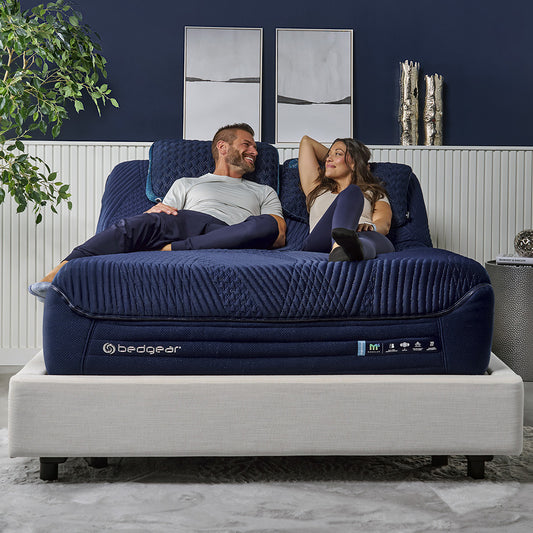
| M5 Night Ice Performance® Mattress | Hot sleepers who want plush | 3X cooling technology plus modular firmness configuration |
Best for Shoppers Who Know Their Feel: S Performance® Mattress
If you've already worked through the variables above and landed on a feel, the S Performance® Mattress delivers it without extras you don't need. It comes in Plush, Medium, and Firm, with a cool-to-the-touch cover and breathable construction at every level. Pick the firmness that matches your position and weight, and the support system handles the rest.
It's also the right entry point for first-time performance mattress buyers replacing a worn-out traditional bed. The upgrade in airflow and pressure relief is immediate, and the three-feel lineup maps cleanly onto the firmness chart earlier in this guide.
Best Balanced Hybrid: H Performance® Mattress
The H Performance® Mattress is the answer for sleepers who keep gravitating to the middle of the scale. Foam comfort layers contour at the surface while individually wrapped coils provide responsive support and constant airflow underneath. The result lands in the medium-firm range that research most consistently supports.
Combination sleepers do especially well here. The coil base makes changing positions easy, and the foam top relieves pressure in side sleeping without letting the hips sink in back sleeping. If you want one well-judged feel rather than a configurable one, this is it.
Best for Couples and Changing Needs: M3 Performance® Mattress
The M3 Performance® Mattress is where adjustable firmness lives. Swappable comfort layers let each side of the bed be configured independently and re-configured whenever life changes the requirements. It's the direct answer to both the couple's compromise and the firmness-is-forever myth.
The Ver-Tex® cooling cover keeps the surface cool to the touch, and the coil system isolates motion so one partner's midnight position change stays on their side of the bed. For two sleepers with two different ideal feels, there's no closer fit on the market.
Best for Hot Sleepers Who Want Plush: M5 Night Ice Performance® Mattress
The M5 Night Ice exists for the sleeper caught in the foam-heat tradeoff: the one who wants a softer, contouring feel but wakes up sweating on every plush mattress they try. 3X cooling technology dissipates heat at the surface while ventilated layers keep air moving through the build, so a plusher configuration doesn't come with a thermal penalty.
Like the M3, it's modular, so firmness can be tuned per side and adjusted over time. For couples where one partner runs hot and both have strong feel preferences, it's the most complete package we make.
Mattress Firmness Is Personal; Find Yours Instead of Guessing
Mattress firmness isn't a universal ranking where some numbers are better than others; it's a fit between a surface and a specific body. Your sleep position sets the range, your body weight adjusts it, and your bed partner complicates it. The medium-firm middle of the scale serves the most people, the firmer-is-better myth deserves retirement, and no firmness decision should be treated as permanent, because your body won't treat it that way either.
The smartest way to handle mattress firmness is to stop betting on it. Test properly, in your real position, for real minutes. Match the feel to your variables, not the showroom's lighting. And if your needs are likely to change, or your partner's needs differ from yours, choose a mattress built to change with you. That's the standard we engineer to, and it's why the right feel on night one can still be the right feel in year eight.
Frequently Asked Questions
Still working out your ideal feel? Here are the firmness questions we hear most often.
What Is the Best Mattress Firmness?
What Mattress Firmness Is Best for Side Sleepers?
Is a Firm Mattress Better for Your Back?
How Do I Know if My Mattress Is Too Firm or Too Soft?
Can You Change the Firmness of a Mattress?
Find the Feel That Fits You
Firmness matched to your position, your body, and your partner. Adjustable when life changes. Cool at every level.
You May Also Like
-
 Regular price $3,499.99Sale price $3,499.99 Regular priceUnit price per
$3,999.99Sale -
 Regular price $3,999.99Sale price $3,999.99 Regular priceUnit price per
$4,499.99Sale
