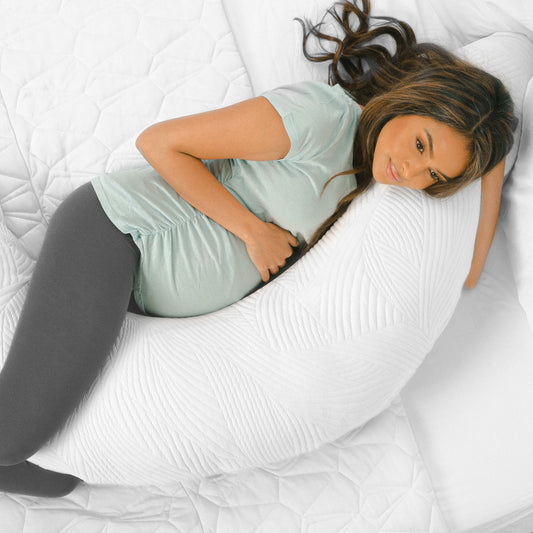
Body pillows have a reputation problem. Most people associate them exclusively with pregnancy, and we get that, but you really should not. Sure, it's the giant wraparound pillow that appears sometime in the second trimester and lives on the bed for the next several months, but that's not all it is.
You'll find that people use these pillows in all stages of life. Dedicated side sleepers use body pillows year-round. People recovering from hip or knee surgery use them for positional stability. Anyone who wakes up with lower back pain from side sleeping and hasn't figured out why yet is often one body pillow away from understanding what's been happening overnight.
This guide covers body pillow dimensions, how alignment actually works at this scale, who genuinely benefits from one, and what BEDGEAR's Body Pillow brings to the category.
Body Pillow Size Dimensions
A standard body pillow measures 54 inches long by 20 inches wide. That length is the defining feature because 54 inches covers the full torso-to-knee span for most adults, which is exactly what makes a body pillow structurally useful rather than just a large pillow you're hugging for comfort.
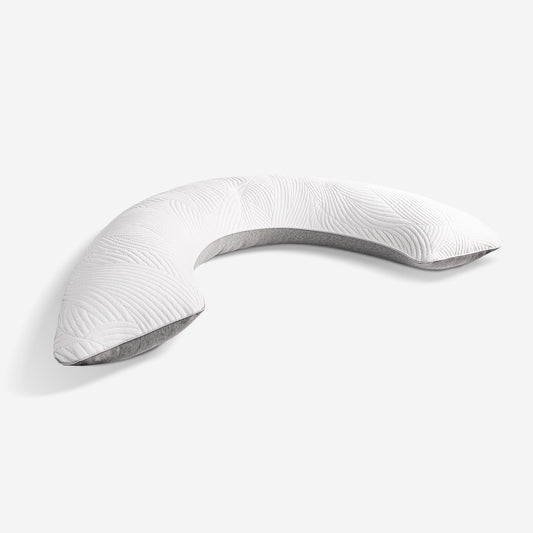
That being said, you'll find that our Body Pillow measures 54 inches long by 15 inches wide with a 6-inch height profile, so a different (in a good way). In fact, the narrower width is intentional. A 15-inch pillow sits between the knees and along the torso without creating a thick wall of fill that pushes the body out of position. It supports without overcorrecting; it holds without taking over the bed.
20×26"
20×36"
26×26"
15×54"
Body — 54" × 15"
The longest pillow in the lineup by a wide margin. Built to run from neck to knees — supporting the torso, hips, and leg stack simultaneously for side sleepers who need full-length alignment support.
| Size | Dimensions | Primary Purpose | Fits |
|---|---|---|---|
| Standard | 20" × 26" | Head and neck support; all sleep positions | Standard pillowcases |
| Queen | 20" × 30" | Head and neck; more surface for side sleepers | Queen pillowcases |
| King | 20" × 36" | Head and neck; king and Cal King beds | King pillowcases |
| Euro | 26" × 26" | Decorative; propped sitting support | Euro shams |
| Body This Page | 54" × 15" (BEDGEAR) | Full-length alignment; hip and knee support; side sleeping | Body pillowcases |
How a Body Pillow Actually Supports Alignment
Side sleeping is the most common sleep position; it's also the one that creates the most alignment issues when the support layer isn't quite right. The problem isn't the position itself, though, it's what happens to the hips and lower back when there's nothing between the knees overnight.
When you sleep on your side without knee support, the top leg drops forward. That forward drop rotates the hip, which pulls the pelvis out of neutral, which loads the sacroiliac joint and lower spine in a sustained twist that lasts for hours. Most side sleepers don't feel it in the moment; they feel it in the morning as stiffness, hip ache, or lower back tightness that they've been attributing to the wrong cause for years.
A body pillow placed between the knees interrupts that chain at the source. The top knee stays elevated and the hips stay stacked. The spine stays in neutral. The muscles don't have to compensate for a rotational load overnight. That's the functional case for a body pillow, and it has nothing to do with pregnancy at all.
Top knee drops toward the mattress. Hip rotates forward. Pelvis tilts out of neutral. Lower spine absorbs a sustained rotational load through the night. Morning stiffness in the lower back and hips is common.
Top knee stays elevated on the pillow. Hips stay stacked. Pelvis stays neutral. Lower spine stays aligned. Less rotational loading overnight means less stiffness and soreness in the morning.
Length Is the Key Variable for Body Pillows: Not Loft
With standard and king pillows, loft is the primary variable. It determines how high the pillow sits under the head and whether the cervical spine stays neutral. With a body pillow, the geometry changes entirely.
A body pillow isn't sitting under your head — it's running along your torso and between your legs. The relevant variable shifts from height to firmness under lateral compression. A body pillow needs to be firm enough that it doesn't collapse completely when the top knee presses down on it; if it flattens out, the knee drops anyway and the alignment benefit disappears.
The good news? BEDGEAR's Body Pillow sits at a 6-inch height profile, which is substantial enough to maintain knee elevation through the night without being so thick it pushes the body out of position from the other direction.
Who Actually Benefits from a Body Pillow
The short answer is: side sleepers, primarily. The longer answer covers a few specific situations where the case is especially strong. Learn about the various groups who can benefit from a body pillow below.
Dedicated Side Sleepers with Hip or Lower Back Pain
If you're a consistent side sleeper who wakes up with lower back tightness, hip soreness, or sacroiliac discomfort, the top-knee drop pattern described above is almost certainly a contributing factor. A body pillow between the knees addresses the mechanical cause directly. It's one of the simplest changes a side sleeper can make, and for people in this situation, the difference is usually noticeable within a few nights.
This is the largest non-pregnancy use case for body pillows, and it's the one most people don't know about. If you've been blaming your mattress for hip and lower back soreness and the mattress is fine, check the alignment first.
Pregnant Sleepers
During pregnancy, side sleeping becomes the recommended position — and the alignment challenges of side sleeping intensify as the center of gravity shifts and the belly grows. A body pillow provides support between the knees, under the belly, and along the back depending on positioning. It keeps the hips stacked and reduces lower back and hip pressure during the trimesters when both are most acute.
A straight body pillow like BEDGEAR's works well for knee-to-belly support. For sleepers who want full wraparound support including the back, a U-shaped or C-shaped pregnancy pillow provides more comprehensive coverage and may be a better fit for later pregnancy.
Post-Surgery or Injury Recovery
Hip replacement, knee surgery, and lower back procedures all involve recovery periods where positional stability during sleep is important. A body pillow provides a consistent support surface that prevents the operated limb or joint from dropping into positions that stress the surgical site. It's passive, comfortable, and doesn't require conscious effort to maintain position overnight.
If you're recovering from a procedure and using a body pillow for this purpose, confirm positioning with your care team — proper placement varies by procedure and individual recovery protocol.
Anyone Who Wakes Up Feeling Like They Fought the Bed
Some people are just active sleepers, and it may feel like you lost a fight with your bed. Sleepers shift, roll, kick, and generally turn sleeping into a contact sport.
A body pillow gives that movement something to work with — a stable reference point that keeps the body from rotating too far in any direction. It won't stop the movement, but it creates a natural barrier that tends to moderate it.
BEDGEAR's Body Pillow
BEDGEAR offers one body pillow: The Body Pillow. It measures 54 inches long by 15 inches wide with a 6-inch height profile. It's built with the same performance-fabric construction as the rest of the BEDGEAR pillow lineup; breathable, moisture-wicking, and designed to keep the sleep surface cooler than a standard fill pillow of the same size.
The 15-inch width is narrower than the 20-inch industry standard. That's a deliberate choice. A narrower body pillow supports the knee and torso stack without creating an oversized fill mass that heats up against the body or takes up half the bed.
It does the alignment job without the bulk that makes some body pillows feel more like sleeping next to furniture than using a pillow.

54 inches of full-length alignment support for side sleepers. Breathable, moisture-wicking construction. Narrower 15-inch width keeps the support focused without the bulk. Built for the sleepers who need it year-round, not just seasonally.
For maximum alignment benefit, hug the upper portion of the body pillow with both arms while placing the lower section between your knees. The goal is to keep the top knee elevated enough that the hip doesn't drop forward. A slight bend at the knee (not a fully straight leg) is the natural resting position that works best with body pillow support.
Body Pillow vs Pregnancy Pillow: What's the Difference?
Body pillows and pregnancy pillows can be tricky to tell apart. They serve overlapping purposes but aren't interchangeable. A body pillow is a straight rectangular pillow, long enough to run from the neck to the knees. It supports through length and firmness.
A pregnancy pillow is typically U-shaped or C-shaped, designed to wrap around the body and support both the front and back simultaneously.
For early pregnancy and for non-pregnant side sleepers, a straight body pillow is usually sufficient. It handles the knee-to-hip alignment problem cleanly and doesn't take up the full width of the bed. However, for a later pregnancy, when belly support and back support both become necessary at the same time, a shaped pregnancy pillow often serves better because it addresses more angles in one piece.
| Feature | Body Pillow | Pregnancy Pillow |
|---|---|---|
| Shape | Straight rectangle | U-shaped or C-shaped |
| Typical dimensions | 54" × 15–20" | Varies; typically 55–60" total span |
| Supports | Knee, hip, torso stack | Belly, back, knees, hips simultaneously |
| Best for | Side sleepers year-round; early pregnancy; recovery | Mid-to-late pregnancy; full wraparound support |
| Bed space used | Moderate; stays on one side | Significant; wraps across more of the bed |
| BEDGEAR option | The Body Pillow — 54" × 15" | Not in BEDGEAR's lineup |
Body Pillow Bed Fit: What Beds Work
A 54-inch body pillow fits on any full-size or larger bed. On a twin, the pillow is the same length as the mattress width... it works for a solo sleeper, but there's no margin. Full and queen beds accommodate a body pillow comfortably for one person. King and California king beds give you enough room to use the body pillow without crowding a partner.
| Bed Size | Body Pillow Fit | Notes |
|---|---|---|
| Twin (38" × 75") | Tight | Fits lengthwise but leaves minimal margin; solo use only |
| Full (54" × 75") | Solo Only | Works well for one sleeper; no room for a partner with a body pillow |
| Queen (60" × 80") | Good Fit | Comfortable for solo sleeper; manageable for couples if partner doesn't mind a narrower share |
| King (76" × 80") | Best Fit | Plenty of room for body pillow use without crowding a partner |
| California King (72" × 84") | Best Fit | Same as king; the extra length gives additional room to position the pillow lengthwise |
Body Pillow Size: Built for Side Sleepers Who Need the Full-Length Support
Body pillow size is simple: 54 inches long, wide enough to fill the knee gap and support the torso, firm enough to hold position through the night. The dimensions serve the alignment function. Everything else — breathability, cover material, construction quality — determines how well the pillow performs that function over time.
If you're a dedicated side sleeper and you've never used a body pillow, it's worth trying. The mechanical benefit is real, it shows up quickly, and it works independently of whatever else is in your sleep setup. BEDGEAR's Body Pillow delivers that benefit with the same performance construction as the rest of the lineup. Narrower profile, less bulk, more breathable. Built for the sleepers who actually use it every night.
Side Sleeper? Your Hips Will Thank You.
A body pillow isn't a pregnancy accessory. It's a year-round alignment tool for side sleepers who are tired of waking up stiff. BEDGEAR's Body Pillow is built for exactly that.
Frequently Asked Questions About Body Pillow Size
Common questions about body pillow dimensions, alignment benefits, and who should use one.