

Pillowcases vs. Pillow Protectors: What's the Difference?
A pillowcase and a pillow protector look like the same product solving the same problem. They are not, and the difference shows up about two years later when you replace a pillow you did not have to replace.
The case is the comfort layer you touch. The protector is the barrier underneath it, keeping sweat, oils, and allergen out of the fill.
The order is not optional: protector on the bare pillow first, pillowcase over the top.
Most people buy a good pillow and then put a cotton case on it and consider the job finished. Sounds easy enough, right? However, two years later the pillow is flat, discolored, and heading for the trash. And at the end of the night, the case was never the thing standing between the pillow and everything your head leaves behind overnight.
This is why it's important to understand pillowcases vs pillow protectors.
The good news? This post covers what each layer actually does, which order they go in, and why the pair works better than either one alone.
So, while It's a short answer with a long explanation, make sure you stick around for the full story.
Pillowcases vs. Pillow Protectors: The Short Answer
A pillowcase is the outer comfort layer. You choose it for fabric, feel, temperature, and how it looks on the bed, and you wash it weekly along with the rest of your bedding.
A pillow protector, on the other hand, is a barrier layer that goes on the bare pillow first, usually with a zip closure, and stays hidden underneath the case. You choose it for what it blocks, not for how it feels, and you wash it far less often because the case above is taking the daily contact.
They are complementary, not competing. The case protects nothing, and the protector was never meant to be the surface you sleep on, so this is not some kind of all-out brawl between the products and what you need.
In fact, sometimes it helps to use both.
What a Pillowcase Actually Does for Your Pillow
The pillowcase is the most-touched textile in your entire bedroom. Your face is against it for hours every night, which makes it a comfort decision above all else.
But what else can it help with? Or is comfort all it provides? We answer these questions below.
The Layer Your Face Is Against All Night
Everything you notice about a pillow while falling asleep is really the case. The smoothness, the temperature on first contact, the amount of drag against your skin and hair, the sound it makes when you shift; all of that is the outer fabric rather than the fill underneath.
That is why swapping a case can change how a pillow feels without changing the pillow at all. If a pillow you like has started sleeping warm, the case is the cheapest variable to test first, and you might get lucky with a quick fix.
Fabric Choice Drives Everything
Thread count gets most of the attention and deserves very little of it. What actually determines how a case performs is the fiber and the weave: how well it moves moisture, how quickly it sheds heat, and how much friction it creates against skin and hair.
Cotton is familiar and breathable but holds moisture once it is damp. Performance fabrics are engineered to move that moisture instead of storing it. Silk and satin weaves cut surface friction, which is why people concerned about hair and skin gravitate toward them. Linen sleeps cool and gets softer with age, and wool regulates in both directions.
That said, there is no single best answer, which is the point; the right case depends on what your nights actually go wrong from.
What a Pillow Protector Actually Does for Your Pillow
The protector is the layer nobody sees and almost nobody thinks about, which is exactly why pillows die early. Even your favorite pillow can wear down over time.
And while pillow protectors have one clear job, a pillowcase simply cannot do it.

A Barrier Against Sweat, Oils, and Allergen
Your head produces sweat and skin oils all night, and hair products transfer straight onto the surface you are lying on. A single layer of ordinary cotton slows that down; it does not stop it. Over months, all of it soaks past the case and into the fill, where it stays.
That is what turns a white pillow yellow, and it is also what makes an old pillow a reservoir for dust mite allergen and pet dander. A barrier protector interrupts the whole process by keeping the fill dry and clean in the first place. So, a pillow protector is one of the quickest ways to make your pillow allergy-friendly.
Why the Closure Matters
A pillowcase has an open end. Most have a simple envelope flap at best, and every time you move, air and everything suspended in it move through that opening.
A proper protector zips shut around the entire pillow. That closure is what separates a genuine barrier from a second layer of fabric, and it is the first specification worth checking on any protector you are considering.
What a Pillow Protector Is Not
A pillow protector is not a decorative layer and it is not a spare pillowcase. A protector is thin, plain, and designed to disappear under the case rather than to look like anything.
It is also not a comfort upgrade on its own. If a pillow is the wrong loft or the wrong firmness for you, no protector will fix that; that is a pillow problem and it needs a pillow solution. A protector can help, sure, but it won't be able to finish the job.
Where the two layers sit relative to each other is the part that trips people up most often, so here it is laid out plainly.
- Pillowcase The comfort surface. Washed weekly. Goes on last
- Pillow Protector The barrier. Zipped shut. Washed monthly. Goes on first
- Your Pillow The thing you are actually protecting. The investment
Read it from the outside in. The pillowcase is what you touch; the protector is what does the work.
Side by Side: How Pillowcases and Protectors Compare
Once the stacking order is clear, the rest of the differences follow from it.
Here is the full comparison of pillowcases and pillow protectors in one place.
| Feature | Pillowcase | Pillow Protector |
|---|---|---|
| Main job | Comfort, feel, and appearance | Barrier protection for the fill |
| Position | Outer layer, goes on last | Directly on the pillow, goes on first |
| Closure | Open end or envelope flap | Zip closure on the better ones |
| Wash cadence | Weekly, with the sheets | Every one to two months |
| Blocks moisture | No | Yes, on waterproof constructions |
| If you skip it | The protector becomes your sleep surface | The pillow absorbs everything and ages fast |
Why You Want Pillow Protectors and Pillowcases on the Bed
The case-only approach is the default for most households, and it is the one that quietly costs the most.
Two arguments make the case for running both pillowcases and pillow protectors. We cover them in detail below.
A Pillow Protector Costs Less Than a Pillow
This is the entire economic argument and it is not close. A protector is a small fraction of what a good pillow costs, and it is the difference between replacing that pillow on schedule and replacing it early because it is stained and saturated.
Pillows have a natural lifespan regardless of how you treat them, and it is worth knowing how often a pillow should be replaced so you can tell normal wear from avoidable damage.
A protector will not make a pillow last forever, no, but it stops you from throwing one out years before its structural life is up.
Hygiene Between Wash Days
Be honest about your laundry schedule. Really honest. Most people wash pillowcases weekly at best, and plenty of weeks slip. In the meantime, everything the case absorbs sits against the pillow with nothing between them.
The protector covers that gap without adding to your workload, because it only needs washing every month or two. It is the layer that keeps the pillow clean during all the days the case is doing the collecting.
How to Choose Each One
The two decisions use completely different criteria, which is worth saying out loud because people often apply pillowcase logic to a protector and end up with something that fails at both.
Choosing a Pillow Protector
Four things matter, in this order. First, barrier construction: the fabric needs a weave tight enough to actually block what you are trying to block.
Second, a zip closure rather than an open envelope, so there is no gap for anything to travel through.
Third, breathability. This is the one that decides whether the protector stays on the bed or ends up in a drawer, because a plastic-backed barrier traps heat and moisture against your face all night.
Fourth and finally, machine-washability, since a barrier only keeps working if it gets laundered.
Choosing a Pillowcase
Start with the problem you are solving rather than the fabric you like the sound of. Sleeping hot points toward a performance fabric engineered to move heat and moisture. Hair and skin friction points toward a smoother weave. General comfort with no specific complaint points toward cotton.
Then check the size. Cases and protectors both size to the pillow rather than the bed, and a standard case on a queen pillow will pull tight and shorten the life of both.
Our pillow size guide covers how the sizing lines up.
Not Sure What Your Setup Is Missing?
Our sleep experts can work through the whole stack with you, from the pillow up. No upsell to the most expensive option on the floor.
Washing and Care: Two Different Schedules
Running pillowcases and pillow protectors means running two laundry cadences, and they are not the same.
Here is how the schedule breaks down.
- Wash the pillowcase weekly: With the rest of your bedding. It takes the daily contact, so it needs the frequent cycle.
- Wash the protector every one to two months: It is shielded by the case, so it does not need the same attention; more often if you have allergies or if the season is working against you.
- Follow the care label rather than a general rule: Several of our protectors specify a cold gentle cycle and a low-heat tumble dry, and hot water can shorten the life of a performance fabric.
- Skip fabric softener and dryer sheets on both: They coat performance fibers and degrade the moisture-wicking behavior you paid for.
- Dry the protector completely before it goes back on: Residual dampness in the fill works directly against everything the barrier is doing.
None of this adds meaningful work to a week, so don't panic about changing your workload at home.
At the end of the night, the protector cadence is the one people forget, so it helps to tie it to something you already do monthly rather than trying to remember it on its own.
BEDGEAR's Pillow Protectors
We build protectors from breathable performance fabric rather than plastic film, which is the direct answer to the heat problem that makes people abandon them.
Three options cover most setups.

Dri-Tec Pillow Protector
The Dri-Tec Pillow Protector is built around moisture management. The fabric moves sweat and humidity away from the sleep surface and lets it evaporate instead of soaking downward into the fill.
For anyone who runs warm or wakes up damp, this is the everyday pick. You get the barrier layer and a drier pillow environment in the same product.

iProtect Pillow Protector
The iProtect Pillow Protector is simple protection done properly. It is engineered from breathable, moisture-wicking fabric and built to shield your pillow from pet dander, dust mites, and allergens.
It is waterproof and machine washable, it zips fully closed, and the fabric carries OEKO-TEX Standard 100 certification. If you want one thing that covers the barrier job without any additional features to think about, this is it.

Stretchwick Pillow Protector
The Stretchwick Pillow Protector is built around fit. The stretch construction conforms to the pillow instead of compressing it, which matters on high-loft and shaped pillows where a rigid protector flattens the profile you paid for.
If a protector has ever changed how your pillow feels, fit was almost certainly the reason. You can read more about the Stretchwick fabric and where else it shows up in the lineup.
And the Pillowcase That Goes Over It
Once the protector is on, the case is a pure comfort decision, and that is where the fabric choice earns its keep. Plus, this makes your life a lot easier because you can just choose based on what you need.
The Ver-Tex Pillowcase is the cool-to-the-touch option, built for sleepers whose main complaint is heat at the surface, while the Dri-Tec Pillowcase Set matches the protector underneath, prioritizing moisture movement over instant cooling.
The Hyper-Cotton Pillowcase Set is the familiar route for anyone who wants cotton with better performance than a standard weave. As you can see, we have a little something for everyone over here at BEDGEAR.
What's more, all three do the same structural job and feel completely different doing it, which is exactly why the case is the layer worth experimenting with.
Browse the full range of performance pillowcases to see how the fabrics compare.
Pillowcases vs. Pillow Protectors: Getting the Order Right
The pillowcases vs. pillow protectors question has a boring answer and a useful one. The boring answer is that you want both and the useful one is that they go in a specific order, and the order is what makes the pair work.
Protector on the bare pillow, zipped shut. Pillowcase over the top, washed weekly. The pillow underneath stays dry and clean, and it reaches the end of its actual lifespan instead of an early one.
At the end of the night, it's the cheapest upgrade available to anyone who has already spent real money on a pillow.
Frequently Asked Questions
Still sorting out which layer does what? We get it. These are the questions we hear most often.
What Is the Difference Between a Pillowcase and a Pillow Protector?
A pillowcase is the outer comfort layer you rest your face on, and it is chosen mostly for feel, fabric, and appearance. A pillow protector is a barrier layer that goes on the pillow first, underneath the case, and it is built to keep sweat, oils, and allergen out of the pillow itself. They are not interchangeable; the case handles comfort and the protector handles protection.
Do You Need a Pillow Protector if You Already Use a Pillowcase?
A pillowcase alone does not stop moisture and oils from soaking through into the pillow, because it is a single layer of ordinary fabric with an open end. A protector adds a barrier and usually a zip closure, which is what actually keeps the fill clean. Since a protector costs a fraction of what a pillow costs, using both is the cheaper approach over time.
Does a Pillow Protector Go Under or Over the Pillowcase?
Under. The protector goes directly on the bare pillow and gets zipped closed, then the pillowcase goes over the top of it. Putting the protector on the outside leaves the pillow exposed to everything the case lets through, which defeats the purpose of having one.
How Often Should You Wash a Pillow Protector?
Every one to two months for most sleepers, compared with weekly for the pillowcase over it. The protector is shielded by the case, so it does not need the same cadence. Always follow the care label rather than a general rule; several of our protectors specify a cold gentle cycle and low tumble dry.
Do Pillow Protectors Make You Sleep Hot?
A vinyl or plastic-backed protector will, because it traps heat and moisture against you with nowhere to go. A protector built from breathable, moisture-wicking performance fabric behaves very differently, moving heat and humidity away from the surface instead of holding it. If you have given up on a protector before, the material is almost always the reason.
Will a Pillow Protector Change How My Pillow Feels?
A well-made protector is thin and stretchy enough that the loft and feel of the pillow come through largely unchanged. What you may notice is a slightly smoother surface and, with a performance fabric, a cooler one. Bulky quilted protectors are the ones that mute a pillow's feel, which is why fit and fabric weight are worth paying attention to.
Protector First. Pillowcase Over It.
Two layers, two jobs. Build the stack once and your pillow lasts the life it was built for.
You May Also Like
-

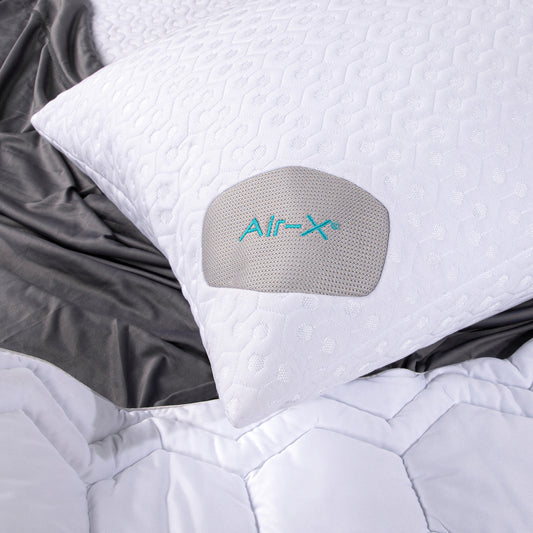 Regular price $24.99Sale price $24.99 Regular priceUnit price per
 -

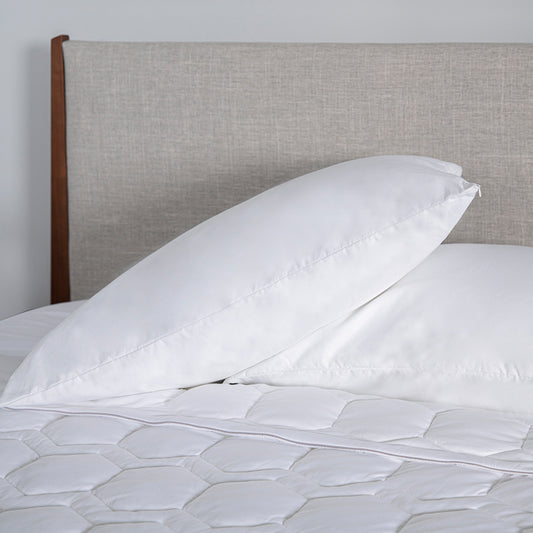 Regular price $19.99Sale price $19.99 Regular priceUnit price per
$19.99


