Somebody in your house snores; it happens to almost everyone. Maybe it is you and you only found out because a partner told you, or maybe you are the one lying awake at 2am doing the math on how many hours are left. Either way, the internet is full of pillows promising silence, and it is fair to be skeptical of all of them. So, can your pillow help reduce snoring?
Here is the honest version: a pillow cannot make snoring disappear; it is a piece of foam and fabric, not a medical device. What it can do is change the angle of your head and neck, and that angle has a direct effect on how open your airway stays overnight. Whether a pillow can reduce snoring for you depends entirely on what is causing the noise in the first place.
The good news? This guide walks through what actually causes snoring, what your pillow can and cannot influence, and how to pick a loft that supports your neck instead of kinking it.
No miracle claims; just the mechanics. Read on to learn more below.
What Actually Causes Snoring
When you fall asleep, the muscles in your throat, tongue, and soft palate relax. That relaxation narrows the passage air travels through. Air moving through a narrower space moves faster, and faster air makes the surrounding soft tissue flutter. That flutter is the sound.
Plenty of things make that narrowing worse. Nasal congestion from allergies or a cold forces you to breathe through your mouth. Alcohol relaxes throat muscles more than usual. Extra weight around the neck adds outside pressure. Anatomy plays a role too; some people simply have a smaller airway or a larger soft palate.
Then there is position. Lying on your back lets gravity pull your tongue and soft palate toward the back of your throat, which is why so many people snore louder face up than they do on their side. Position is one of the few causes you can influence from the bed itself, and it is the one your pillow is best positioned to help with.
Where Your Pillow Enters the Picture
Your head weighs roughly as much as a bowling ball, and your pillow decides what angle it rests at all night. Too flat and your head tips backward. Too tall and your chin gets pushed toward your chest, folding your throat like a bent garden hose.
That bent hose comparison is not just a nice image. Chin-to-chest positioning narrows the airway mechanically, on top of whatever narrowing the relaxed tissue is already doing. It is one of the more common self-inflicted causes of louder snoring, and it is almost always a loft problem.
Can a Pillow Reduce Snoring? The Honest Answer
Sometimes, for some people, partially. That is a less satisfying answer than the ads give you, but it is the accurate one.
If your snoring is tied to sleep position or head angle, a pillow with the right loft may help reduce it. You are removing an obstruction you were creating yourself. Plenty of people find that switching from a stack of two flat pillows to one correctly lofted pillow makes a noticeable difference.
If your snoring is driven by congestion, alcohol, anatomy, or an underlying condition, a pillow is not going to move the needle much. Nothing you put under your head changes what is happening inside your nasal passages or how much your throat muscles relax after a nightcap.
The practical read: a pillow is a cheap, low-risk variable to adjust first. If a few weeks with the right loft does not change anything, that is useful information; it points you toward causes a pillow was never going to touch.
Loft Is the Lever That Matters Most
Loft is pillow height, measured from the bed to the top of the pillow when your head is on it. It is the single most important spec for anyone thinking about snoring, and it is the one most people never check.
The goal is neutral alignment. Your head, neck, and spine should form roughly a straight line, the same posture you would have standing with good posture. When that line is straight, your airway has the most room it is going to get.
Here is what goes wrong at each extreme, and it is worth knowing which side you are on before you shop.
| Loft Problem | What Your Head Does | Effect on Airway |
|---|---|---|
| Too low | Tips backward, chin lifts away from chest | May open the throat slightly but strains the neck and often causes morning stiffness |
| Too high | Pushed forward, chin drops toward chest | Folds the throat and narrows the passage; a common cause of louder snoring |
| Two stacked pillows | Pushed well forward at an unstable angle | Same folding problem as too high, plus the stack shifts through the night |
| Correct loft | Head, neck, and spine sit in a straight line | Gives the airway the most open geometry a pillow can provide |
Notice that both extremes cause problems, just different ones. The fix is not "go lower" or "go higher" as a universal rule; it is matching loft to your shoulder width and sleep position. Our complete guide to pillow loft breaks down how to measure that and what each loft level is built for.

Your Sleep Position Changes Everything
Position is the biggest snoring variable you can control from bed, and your pillow is either helping you hold a position or quietly working against it. A pillow built for a side sleeper will feel wrong to a back sleeper, and vice versa.
Each position creates a different gap between your head and the mattress, which means each one needs a different loft to keep your spine neutral. Here is how the three main positions compare when snoring is the concern.
| Sleep Position | Snoring Tendency | Loft You Need | What to Watch For |
|---|---|---|---|
| Side | Generally the quietest position; gravity is not pulling tissue backward | Medium to high, enough to fill the shoulder gap | Rolling onto your back mid-night undoes the benefit |
| Back | Most associated with louder snoring | Low to medium, just enough to keep the head neutral | Over-lofting here is the classic chin-to-chest mistake |
| Stomach | Less snoring, more neck strain | Very low or none under the head | Hardest position on the cervical spine over time |
The pattern is clear enough to act on. If you snore mostly on your back, encouraging side sleeping is the most direct positional change available, and the right pillow makes side sleeping comfortable enough to actually stay there.
We also have some additional resources that can help you learn how to stop snoring.
How to Make Side Sleeping Stick
Knowing side sleeping helps is easy, sure, but staying on your side for seven hours is the hard part. Most people roll back because their setup makes side sleeping uncomfortable, not because they lack willpower.
The good news? A few adjustments tend to help:
- Match your loft to your shoulder width so your neck is not bent up or down all night.
- Put a pillow between your knees to keep your hips stacked and reduce lower back pull.
- Use a body pillow to hug, which gives your top arm somewhere to go.
- Try a contoured shape that cradles your head instead of letting it slide flat.
Comfort is what makes a position sustainable. If you want more detail on matching your setup to how you sleep, our guide on choosing pillows for your sleep position covers each position in depth, and your sleep position is shaping your body explains the longer-term effects.
Pillow Types People Try for Snoring
Go ahead and look for an "anti-snore pillow" and you will find wedges, contours, body pillows, and a fair amount of marketing; the whole nine. That said, they work on different principles, and some suit some people better than others.
Worth saying up front, though: none of these are medical devices, and none of them are guaranteed to change anything. They are different approaches to the same underlying idea of managing head angle and position.

| Type | How It Works | Best Suited To | Tradeoff |
|---|---|---|---|
| Wedge pillow | Elevates head and upper body on an incline | Back sleepers who want elevation without an adjustable bed | Bulky, easy to slide off, and too steep an angle folds the neck |
| Contoured or cervical | Shaped to support the natural neck curve | People who wake with neck stiffness alongside snoring | The fixed shape suits some necks and not others |
| Body pillow | Makes side sleeping comfortable enough to maintain | Chronic back sleepers trying to switch positions | Takes up real estate in a shared bed |
| Correctly lofted performance pillow | Holds head, neck, and spine in neutral alignment | Most people, as the sensible first thing to try | Requires knowing your actual loft rather than guessing |
For most people, the last row is where to start. It is the least disruptive change, it fixes a problem you may not know you have, and a pillow that keeps your spine neutral is worth owning regardless of what happens to your snoring.
What BEDGEAR Builds Into Each Pillow
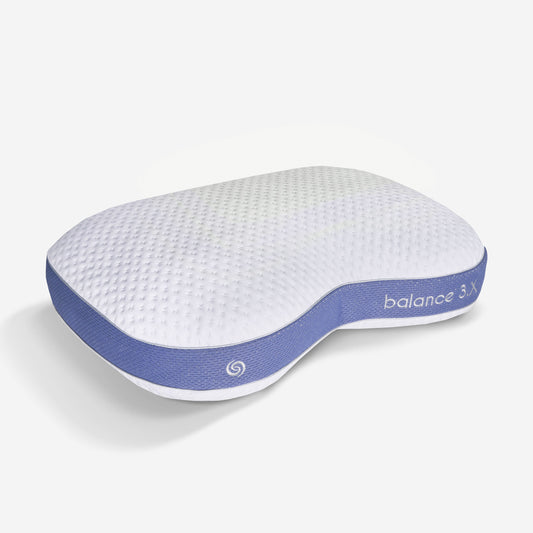
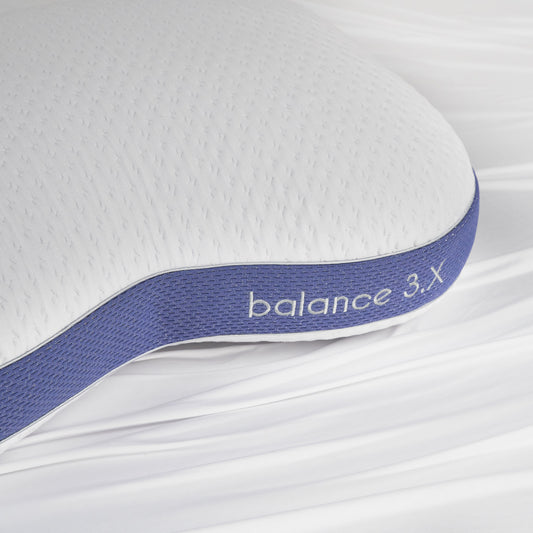
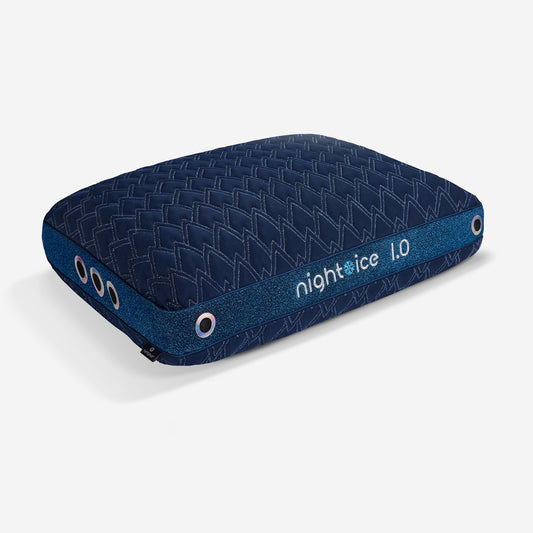
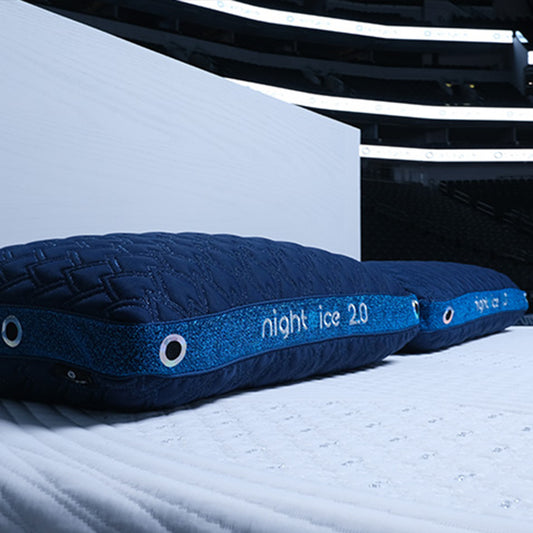
Every BEDGEAR Performance® Pillow is built around loft, first and foremost. Rather than a single one-size shape, the lineup is organized by loft level so you can match the pillow to your shoulder width and sleep position instead of adapting your neck to whatever you bought.
For snoring and sleeping without a stack of pillows, this is huge.
What's more, breathable, moisture-wicking covers keep the surface cool to the touch and help move heat and moisture away from your head. That matters more than it sounds; overheating is one of the most common reasons people flip, shift, and end up back on their back at 3am.
A pillow that stays comfortable is a pillow you stay positioned on, so don't forget about that portion.
| Pillow | Loft Profile | Built For |
|---|---|---|
| Level Performance® | Low | Back and stomach sleepers who need minimal height |
| Balance Performance® | Medium | Combination sleepers and narrower-shouldered side sleepers |
| Storm Performance® | High | Broad-shouldered side sleepers with a bigger gap to fill |
| Balance Cuddle Curve® | Medium, contoured | Side sleepers who want shoulder relief and a cradled head |
| The Body Pillow | Full length | Holding a side position through the night |
If none of those jump out, that is normal; loft is genuinely hard to eyeball.
The Pillow ID quiz measures your shoulder width and sleep position and returns a specific match in about two minutes.
What a Pillow Can't Do
This is the part the marketing skips. At the end of the night, snoring sits on a spectrum, and only part of that spectrum is a bedding problem.
Occasional light snoring after a late dinner or a glass of wine is common and generally not concerning, sure. Loud, frequent snoring that happens most nights, on the other hand, is worth paying attention to, especially if someone tells you your breathing pauses or you gasp during the night.

When to Talk to a Doctor Instead of Shopping for a Pillow
Snoring paired with breathing pauses, gasping or choking during sleep, morning headaches, or daytime exhaustion that does not improve with more hours in bed can point to obstructive sleep apnea. No pillow treats that condition, and swapping bedding is not a substitute for an evaluation.
If any of that sounds familiar, start with your doctor.
Worth knowing on the practical side: certain sleep-related products may be eligible for HSA or FSA funds, sometimes with a letter of medical necessity from your provider.
Our guide to HSA and FSA eligible sleep products walks through how that works and what documentation is typically required. So, don't worry, you always have options at BEDGEAR.
Things Worth Adjusting Alongside Your Pillow
If you are going to change one variable, you may as well look at the ones sitting next to it. These are the usual suspects behind snoring that a pillow cannot reach:
- Alcohol close to bedtime, which relaxes throat muscles beyond their normal state
- Nasal congestion from allergies, dry air, or a lingering cold
- An old pillow that has flattened well below its original loft
- Sleeping flat on your back out of habit rather than preference
That third one catches a lot of people, so it helps to know when it's time to replace your pillow.
Pillows compress gradually enough that you never notice the day your loft stopped working; our guide on how often a pillow should be replaced covers the signs that yours is past it.
How to Dial In Your Pillow Loft in About Two Minutes
You do not need a sleep study to figure out your loft; Let's get that out of the way first. You need a rough measurement and an honest answer about how you sleep.
Stand with your back against a wall and have someone measure from the wall to the outside edge of your shoulder. That distance is the gap your pillow has to fill when you are on your side. Wider shoulders need more loft; narrower shoulders need less.
Then, check your alignment once you are in bed. Lie down in your usual position and have someone look at you from the side. Your nose should be roughly in line with the center of your chest, not tipped up toward the ceiling or tucked down toward your sternum. If nobody is around to take a look, lot's of our shoppers use photos or even videos.
If you would rather skip the tape measure, the Pillow ID quiz does the same math with a few questions. For the fuller picture on how loft, fill, and shape work together, the pillow buying guide is the place to go, and best pillows for side sleepers is worth a read if you are making the switch to sleeping on your side.
The Bottom Line: Can a Pillow Reduce Snoring?
So, can a pillow reduce snoring? At the end of the night, a pillow will not cure snoring, and any product that promises it will is overselling. What a pillow does is control the angle of your head and neck, and that angle is a real factor in how open your airway stays overnight.
If your loft is wrong, you may be actively making the noise worse. The chin-to-chest fold from an over-tall pillow or a stack of two is one of the most common self-created causes there is.
Luckily, fixing that costs you one pillow and a few nights of adjustment. That is a reasonable first move before anything more involved.
If you fix the loft, get comfortable on your side, and nothing changes, you have learned something valuable. The cause is somewhere a pillow was never going to reach, and that is the point to bring it up with a doctor rather than buying a fourth pillow.
Either way, the right loft is worth having. A pillow that keeps your spine neutral means fewer stiff mornings and fewer 3am position changes, whether or not it quiets the room.
FAQs About Pillows for Snoring
Still working through whether a new pillow is worth trying? Here are the questions people ask the most about pillows for snoring.